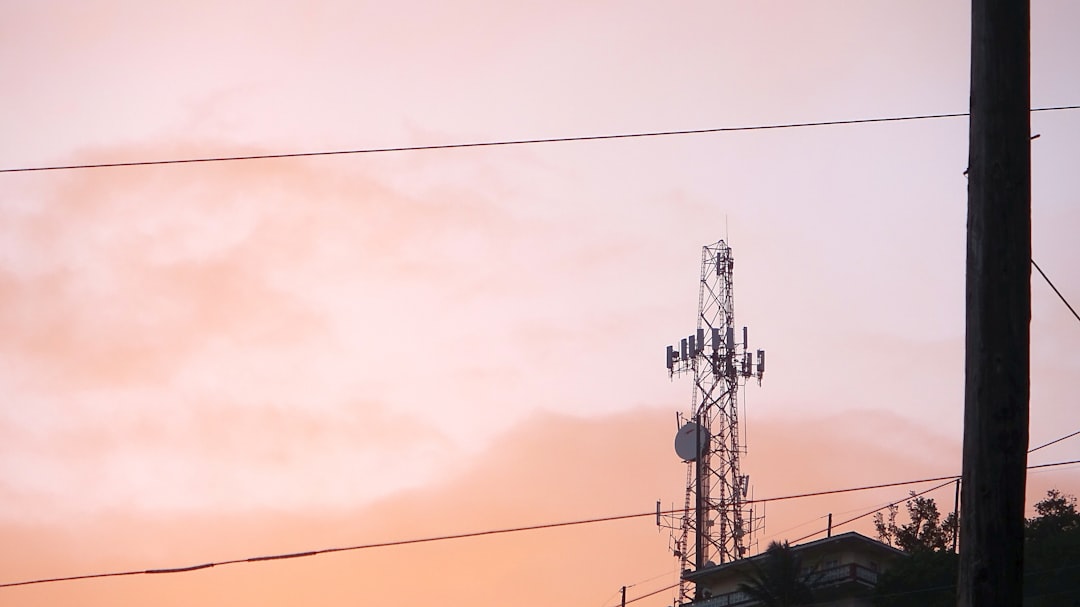
Walk through any neighborhood with a cell tower, and you might notice something: trees near the base sometimes look… different. Thinned canopies. Asymmetric growth. Bark damage on the tower-facing side. Is that EMF, or just coincidence?
This is a surprisingly well-researched question. Over 6,900 studies in PubMed touch on electromagnetic fields and plant biology. The answers are more complex — and more interesting — than either side of the EMF debate typically acknowledges.
What Science Actually Shows: The Big Picture
Plant EMF research falls into three distinct categories with very different conclusions:
- RF from cell towers and WiFi — Mixed results, some concerning field observations, difficult to separate from other environmental factors
- ELF from power lines — Weak and inconsistent effects, mostly negligible at environmental levels
- EMF as agricultural tool — Surprisingly strong evidence that controlled EMF exposure can enhance plant growth (yes, really)
Let’s dig into each.
Cell Towers and Trees: The Most Controversial Evidence
The Waldmann-Selsam Observations (2006–2016)
German physician Cornelia Waldmann-Selsam documented tree damage patterns near cell tower installations across 60 locations in Germany. Her observations, published in Science of the Total Environment (2016), showed:
- 620 trees examined near cell towers vs. controls
- Trees on the tower-facing side showed significantly more damage: crown thinning, premature leaf loss, bark lesions, branch dieback
- Damage was asymmetric — the side facing the tower was worse than the shielded side
- Effects appeared within 3–5 years of tower installation
This was observational, not experimental. Critics rightly point out that towers are often placed in urban areas where trees face many stressors (soil compaction, road salt, air pollution, construction damage). Correlation isn’t causation.
The Bamberg University Aspen Study
Researchers at Bamberg University exposed young aspen trees to controlled RF-EMF at levels comparable to cell tower emissions. After prolonged exposure, they documented:
- Leaf discoloration and lesions
- Changes in photosynthetic electron transport
- Cellular damage visible under electron microscopy
This was a controlled experiment — but with a small sample and artificial conditions that may not reflect real-world tower proximity.
The Indian Agricultural Studies
Several studies from Indian agricultural universities have examined crop performance near cell towers:
- Sorghum near towers: reduced germination, shorter shoots, lower chlorophyll content within 100m (Sharma et al., 2010)
- Tomato plants exposed to 900 MHz: delayed fruit maturation, reduced yield at high exposure levels
- Mung beans near towers: decreased root length and seedling vigor within 50m
These studies are suggestive but often lack rigorous controls and dosimetry. Measuring exactly how much RF actually reaches the plants (accounting for distance, frequency, antenna pattern, and obstacles) is rarely done well.
The Bees, Birds, and Trees Review (Levitt, Lai & Manville, 2022)
One of the most comprehensive reviews of EMF effects on flora and fauna, published in Reviews on Environmental Health, examined hundreds of studies. For plants specifically, they found:
- Oxidative stress — the most consistently reported effect. RF exposure increases reactive oxygen species (ROS) in plant cells, similar to what’s seen in animal cell studies
- Calcium signaling disruption — EMF can alter calcium channel activity in plant cells, affecting growth signaling
- Cryptochrome effects — plants use cryptochrome proteins for light sensing and circadian rhythms. These same proteins are part of the radical pair mechanism that can be influenced by magnetic fields (confirmed in the 2026 Stanford Nature paper on radical pair dynamics)
- Seed germination effects — variable results, sometimes enhanced, sometimes reduced, depending on frequency, intensity, and duration
The review concluded that effects are plausible but evidence is “inconsistent and often contradictory.”
Check your EMF exposure
See cell towers, power lines, and substations near any US address.
Search Your AddressWiFi and Houseplants: What About Your Indoor Garden?
The viral “WiFi kills plants” experiment (a Danish school science project where cress seeds allegedly didn’t grow near a WiFi router) was widely shared but scientifically meaningless — it had no proper controls, consistent conditions, or replication.
What actual research shows about WiFi-frequency (2.4 GHz) effects on plants:
- Most studies use much higher power levels than household WiFi (which typically emits 0.01–0.1 W/m² at 1 meter)
- At real-world WiFi power levels, no consistent plant damage has been demonstrated
- Your WiFi router produces orders of magnitude less RF than a cell tower at close range
- Plants on your windowsill near a router are fine
The concern, if there is one, would be proximity to outdoor cell tower antennas or industrial-scale wireless infrastructure, not your home WiFi.
Power Lines and Plant Growth
ELF magnetic fields from power lines (50/60 Hz) have been studied extensively in agricultural contexts:
The reassuring evidence:
- Large-scale agricultural surveys show no measurable yield reduction in crops grown under or near high-voltage transmission lines
- Trees and vegetation grow directly under power line corridors in utility easements worldwide
- The mechanical clearing for line access, not EMF, explains most vegetation differences near power lines
Some interesting laboratory findings:
- Extremely low-frequency magnetic fields (14.3 Hz, matching the second Schumann resonance) provided a protective effect on wheat plants during drought stress (Mshenskaya et al., 2023, Plants)
- The magnetic field delayed harmful changes in transpiration and photosynthesis by several days during drought conditions
- Under normal (non-stressed) conditions, the magnetic field had almost no detectable effect
This points to a recurring theme in plant EMF research: effects are most visible when plants are already stressed by other factors (drought, disease, pollution). Healthy plants seem remarkably resilient to environmental EMF levels.
The Plot Twist: EMF as Agricultural Enhancement

Here’s where it gets really interesting. A substantial body of research shows that controlled EMF exposure can actually improve plant growth:
Seed Priming with EMF
A comprehensive review in Plant Cell Reports (Bera et al., 2022) examined non-ionizing radiation as a seed treatment method:
- Magnetic field seed priming — soaking seeds in static or alternating magnetic fields before planting improved germination rates by 10–30% across multiple crop species
- Microwave seed priming — brief, controlled microwave exposure enhanced seedling emergence time
- Mechanism: EMF appears to activate enzymatic pathways related to germination, increase membrane permeability to water, and stimulate early root growth
Agricultural EMF Applications
- Magnetic water treatment — irrigating with magnetically-treated water has shown improved crop yields in some studies (though this remains controversial and results are inconsistent)
- Pulsed electromagnetic field (PEMF) on seedlings — can enhance root development and stress tolerance
- UV-B priming — controlled UV exposure before transplanting increases disease resistance
Why Would EMF Help Plants?
The leading theory: hormesis. Low-level stress triggers adaptive responses that strengthen the organism. EMF at certain doses and frequencies may activate antioxidant defense systems, upregulate stress-response genes, and enhance cellular repair mechanisms — the same pathways that protect against drought, disease, and other environmental challenges.
This doesn’t mean “EMF is good for plants.” It means dose matters enormously. A brief, controlled exposure can stimulate defenses. Chronic, high-level exposure may overwhelm them.
What Does This Mean for Your Garden?
If you garden near a cell tower (within 100 meters):
- You may notice asymmetric growth patterns or stress signs on tower-facing sides of trees
- This doesn’t mean your vegetables are dangerous to eat — the research on RF affecting plant nutritional content is essentially nonexistent
- Other environmental factors (soil quality, water, light, air quality) have far more impact on garden health than EMF
- If you’re concerned, a garden behind your house (with the building between you and the tower) gets significant RF shielding from the structure
If you grow plants near WiFi routers:
- Your indoor plants are fine. WiFi power levels are too low to measurably affect plant growth
- The “WiFi kills plants” experiment was bad science that went viral
- If your houseplant is dying, check watering, light, and soil before blaming WiFi
If you have a garden near power lines:
- ELF fields at residential distances from power lines do not measurably impact crop growth
- Utility easement vegetation management (clearing) is a mechanical effect, not an EMF one
- Check our power line EMF calculator for field levels at your distance
The Cryptochrome Connection: Why Plants Might Be More EMF-Sensitive Than We Think
One of the most scientifically intriguing aspects of plant EMF research involves cryptochrome — a blue-light receptor protein found in both plants and animals. In plants, cryptochromes regulate:
- Flowering time
- Seedling development
- Circadian rhythms
- Stem elongation
The 2026 Stanford Nature paper (Burd et al.) demonstrated that RF magnetic fields can directly influence radical pair dynamics in cryptochrome-related systems in living organisms. While that study used an engineered system in C. elegans, plants naturally express cryptochromes as part of their core biology.
If RF can modulate radical pair chemistry in cryptochrome proteins, it could theoretically affect plant development in subtle ways — not through heating or gross damage, but through quantum-level disruption of photoreceptor signaling. This is still largely theoretical for real-world exposure levels, but it provides a physically plausible mechanism for non-thermal EMF effects on plants.
The Honest Assessment
What’s well-established:
- Plants exposed to high-intensity RF in laboratory settings show oxidative stress, growth changes, and cellular damage
- Controlled EMF exposure can enhance seed germination and seedling vigor (hormesis)
- Cryptochrome-based mechanisms provide a plausible pathway for non-thermal effects
What’s uncertain:
- Whether real-world cell tower RF levels cause meaningful tree or crop damage
- How to separate EMF effects from the many other stressors in urban/agricultural environments
- Whether any effects translate to food safety or nutritional concerns
What’s unlikely:
- Your WiFi router harming your houseplants
- Power lines at residential distances affecting your garden
- EMF being a major factor in urban tree decline (compared to soil, water, pollution, and physical damage)
Plants are resilient organisms that evolved under the Earth’s natural electromagnetic environment (including lightning, Schumann resonances, and solar radiation). The question isn’t whether they can sense EMF — they clearly can. It’s whether the EMF from modern technology exceeds their adaptive capacity in ecologically meaningful ways. The honest answer: we don’t have enough high-quality field data to say definitively.
Science Update: A comprehensive 2026 review in Physiological Reviews confirms the radical pair/cryptochrome mechanism is a leading hypothesis for magnetosensation across animals — the same molecular pathway that may explain EMF effects on plant growth.
Frequently Asked Questions
Can cell towers kill trees?
No direct evidence links cell tower RF to tree death. The most cited observations (Waldmann-Selsam) documented asymmetric damage patterns, not mortality. Trees in urban cell tower environments face many simultaneous stressors. However, chronic high-intensity RF exposure in laboratory settings does cause measurable plant stress, so proximity effects at very close range can’t be ruled out.
Does WiFi affect plant growth?
At household WiFi power levels (typically 0.01–0.1 W/m² at 1 meter), no measurable effect on plant growth has been demonstrated in controlled research. The famous “WiFi kills cress” experiment lacked scientific controls and has never been replicated under rigorous conditions.
Are fruits and vegetables grown near cell towers safe to eat?
No research has demonstrated RF effects on the nutritional content or safety of crops grown near cell towers. The biological effects observed in plants (oxidative stress, growth changes) don’t translate to food safety concerns. Your produce from a garden near a tower is as safe as produce from anywhere else.
Can magnets help plants grow?
Surprisingly, yes — some evidence supports this. Magnetic field seed priming (exposing seeds to static or alternating magnetic fields before planting) has improved germination rates by 10–30% in multiple crop species. This appears to work through activation of enzymatic pathways and enhanced water uptake. It’s being explored as an eco-friendly alternative to chemical seed treatments.
Do power lines affect crops grown underneath them?
Large-scale agricultural surveys show no measurable yield reduction from ELF fields at the levels found under or near high-voltage transmission lines. Vegetation differences in utility easements are caused by mechanical clearing for line access, not electromagnetic effects.
Why do some trees look damaged near cell towers?
Asymmetric tree damage near towers has been documented, with more crown thinning and bark lesions on the tower-facing side. Whether this is caused by RF exposure, coincidental urban stressors (construction, reflected heat, soil disturbance from tower installation), or a combination remains unclear. Controlled field studies with proper RF dosimetry near operational towers are essentially nonexistent, making definitive attribution impossible.
Want to check your exposure? Search your address on EMF Radar to see cell towers, power lines, and substations nearby. For a professional assessment, find a certified EMF consultant in your area.