A breaker panel on the other side of the headboard wall is one of the classic findings in a bedroom EMF assessment. It happens because builders put panels wherever the service line enters the house, and bedrooms end up on the other side of those walls more often than anyone would choose.
The short answer: a panel produces a power-frequency magnetic field that drywall and studs do nothing to stop. How strong that field is at your pillow depends on two things you can check in an evening — how much current is flowing through the panel at night, and how many feet separate your head from it. In most homes the field fades to the room’s background level within a few feet, so the fix is usually free: move the bed. The cases that need a professional are the ones where it doesn’t fade.
Why the Wall Doesn’t Help
Your panel produces two kinds of low-frequency field, and the wall treats them very differently.
The electric field comes from voltage. A residential panel sits in a grounded steel enclosure, which contains most of it, and the wall attenuates much of the rest. The World Health Organization notes that house walls substantially reduce electric field levels from outside sources, and the same physics applies inside.
The magnetic field comes from current, and ordinary building materials are transparent to it at 60 Hz. Drywall, wood, plaster, insulation, and brick don’t change it in any meaningful way. Whatever the panel is producing on its side of the wall arrives on yours, reduced only by distance.
Current, not voltage, is what you’re measuring
A panel with almost nothing switched on produces almost no magnetic field, even though it is fully energized. The field rises and falls with the load passing through it: the dryer starting, the heat pump cycling, the oven preheating, an EV charging in the garage.
This has a practical consequence that trips people up. A reading taken at 2 p.m. with the house empty can look perfectly clean, while the same spot at 2 a.m., with the furnace blower and a dehumidifier running, may not. The reading that matters is the one taken under the loads that run while you sleep.
How Fast the Field Fades
Not every magnetic source falls off at the same rate. The geometry of the current decides it, and a panel contains more than one kind of geometry.
| Source geometry | Example | Falloff with distance | Double the distance and the field drops to… |
|---|---|---|---|
| Single conductor or net current | Current returning on a water pipe, unbalanced service conductors | 1/r | one half |
| Close pair of conductors | A hot and neutral running together in a cable | 1/r² | one quarter |
| Compact loop or coil | Transformers, motors, a panel’s internal bus with balanced loads | 1/r³ | one eighth |
Most of a well-wired panel behaves like the bottom two rows. Branch circuits run their hot and return conductors side by side, so their fields largely cancel a short distance away, and what’s left falls off steeply.
NIEHS’s long-standing appliance measurements show what steep falloff looks like in practice. A can opener, another compact source with a motor and coil, had a median of about 600 mG at 6 inches, 150 mG at 1 foot, and 20 mG at 2 feet. Distance does nearly all the work with sources like that, and a panel with balanced loads tends to behave the same way.
The top row is where things go wrong. When current flows on a path with no matching return beside it, the field fades only in proportion to distance and can fill a whole room. That pattern points to a wiring problem, not the panel itself, and it’s the main reason to stop treating the reading as a furniture problem and call someone.
Check your EMF exposure
See cell towers, power lines, and substations near any US address.
Search Your AddressWhat Counts as High
Context first, because the numbers in this field vary by orders of magnitude depending on who is setting them.
- Typical background: The WHO puts the background magnetic field in homes not near power lines at up to about 0.2 µT (2 mG). Most bedrooms away from obvious sources sit well under that.
- The epidemiological signal: In 2002 the International Agency for Research on Cancer classified power-frequency magnetic fields as “possibly carcinogenic” (Group 2B). That rested on pooled analyses showing a roughly two-fold increase in childhood leukemia with average residential exposure above 0.3–0.4 µT (3–4 mG). A 2007 WHO Task Group reviewed the same evidence and concluded it was not strong enough to be considered causal: no accepted biological mechanism, largely negative animal studies, and possible selection bias in the studies. The association is real in the data. Whether it is caused by magnetic fields is unresolved.
- The regulatory limit: ICNIRP’s general-public reference level is 2,000 mG (200 µT), set to prevent acute nerve stimulation. A bedroom panel won’t come anywhere near it.
- The precautionary target: Building biology guidelines aim for under 1 mG in sleeping areas. Our exposure levels guide walks through how these frameworks differ.
The 3–4 mG figure is a time-weighted average over the whole day and night, not a spot reading. A brief spike when the dryer starts is a different thing from a field that sits at your pillow for eight hours. That is the reason the measurement below is built around night-time conditions.
 The field you measure depends on load. The same panel can read near background at midday and noticeably higher once the evening’s heating, cooking, and charging loads come on.
How to Measure It: An Evening Protocol
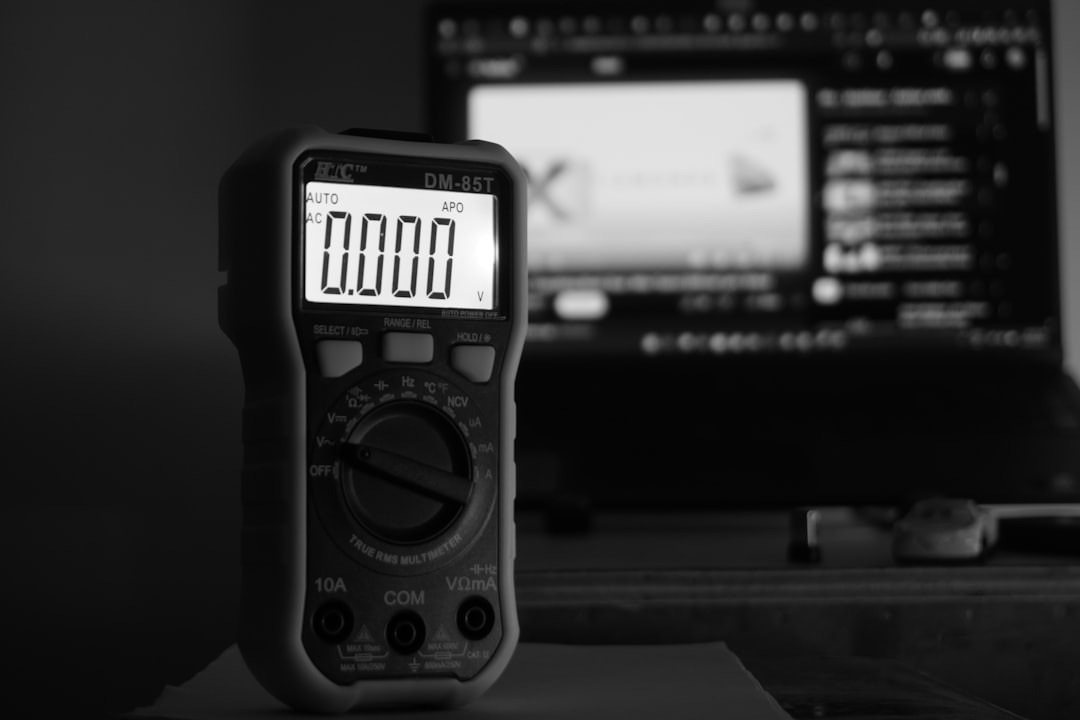
You need a gaussmeter that reads ELF magnetic fields, ideally three-axis, so you aren’t rotating it to find the peak. Phone magnetometers aren’t built for this. For general meter technique, see how to measure EMF.
1. Get your room’s background
Stand in the middle of the bedroom, away from the panel wall, lamps, and chargers. Note the reading. This is your reference, and everything that follows is about how far the bed sits above it.
2. Take a low-load reading
Late evening, with the big appliances off, measure at pillow height where your head actually rests. Then measure along a line straight out from the panel wall: against the wall, then at 1, 2, 3, 4, and 6 feet.
3. Repeat under load
Now switch on what can run while you sleep, plus the heavy hitters: the HVAC system, electric water heater, dryer, oven, and EV charger if you have one. Walk the same line. The difference between the two passes tells you how much of the field is the panel responding to current.
4. Find where it’s coming from
Run the meter slowly over the wall on the bedroom side. If the reading peaks near where the service cable enters the panel, usually at the top, the source is the conductors carrying the whole house’s current. If it peaks along a horizontal or vertical run away from the panel, you’ve found a cable path, often the run from the outdoor meter. If the reading stays elevated everywhere in the room, including the far wall, write that down. That’s the finding that changes the plan.
5. Log a night if you can
If your meter records over time, one overnight log beats any number of spot checks.
| What you find at pillow height | What it usually means | Next step |
|---|---|---|
| At room background under both loads | Panel isn’t reaching the bed | Nothing to do |
| Elevated, but falls to background within a few feet | Normal steep falloff from the panel | Move the bed |
| Elevated only when one appliance runs | A specific circuit behind the wall | Move the bed or reschedule that load |
| Elevated across the whole room, fading slowly | Possible net current or wiring error | Electrician plus EMF consultant |
Fixes, in Order of Cost
Move the bed (free)
This solves most panel findings. Put the headboard on a different wall, or slide the bed along the wall until your pillow is outside the zone your measurements mapped. Because the field from a compact source falls off so steeply, a few feet often takes the reading from clearly elevated to background. Measure again afterward. Don’t assume.
If the bed can’t move, consider swapping rooms. A guest room or office is a better neighbor for the panel than the room where someone sleeps eight hours, especially if that someone is a child. The low-EMF bedroom guide covers the rest of the sleeping-area setup.
Change the timing of big loads (free)
If your measurements show the field is driven by a single circuit, such as an EV charger or water heater whose cable runs behind the bedroom, scheduling it outside sleeping hours solves the problem without touching the wiring.
Have an electrician check the panel (modest)
Ask specifically about neutral and ground handling. In a subpanel the neutrals and grounds must be kept separate; if they’re bonded together downstream of the main disconnect, return current can split onto the grounding path and create exactly the slow-fading net current described above. Loose neutrals are worth checking for both safety and field reasons.
Relocate the panel or reroute the service (expensive)
Moving a panel is a major job involving the utility and a permit, rarely justified for EMF alone — it makes sense mainly when you’re already renovating.
What doesn’t work
RF shielding products do essentially nothing for a 60 Hz magnetic field. Shielding paint, mesh fabric, window film, and a Faraday bed canopy are built to block radio-frequency energy and have no meaningful effect on the field from a panel. Specialized magnetic shielding alloys do exist, but they are a professional, measured intervention, not a weekend project. Any panel cover sold online claiming to block “EMF” deserves a skeptical look and a meter.
When to Call a Professional
Moving the bed handles the ordinary case. Bring in a consultant when:
- The field doesn’t fall off within a few feet of the wall
- Readings are elevated with the panel lightly loaded
- Several rooms, or the whole house, read above background
- Your meter results don’t make sense and you want them checked with calibrated equipment
Those are the signatures of net current, wiring errors, or an outside source, and finding them takes a systematic survey. A certified consultant does that survey, then works with an electrician on the fix. Our guide to hiring an EMF consultant explains what an assessment covers and what it costs, and the EMF consultant directory lists certified professionals by state.
If the whole house reads high, rule out outside sources as well. Check your address on the EMF Radar map for distribution and transmission lines nearby; our power lines guide explains how far those fields carry.
Panels in Bedrooms: The Code Side
Panels are permitted inside bedrooms under the National Electrical Code. They are not permitted in clothes closets or bathrooms. If yours is in the bedroom itself, the code requires a clear working space in front of it, generally 30 inches wide and 36 inches deep, so a dresser or headboard against the panel is a code problem as well as an exposure one. Local amendments vary, so your inspector has the final word.
Frequently Asked Questions
How far should my bed be from an electrical panel? There’s no universal number, because it depends on your panel’s load and wiring. In most homes the field from a panel falls to background within a few feet, but the only way to know is to measure at pillow height under night-time loads and place the bed where readings match the rest of the room.
Is it safe to sleep on the other side of a wall from a breaker box? Usually, once you’ve checked it. Regulatory limits are far above anything a residential panel produces at a bedside. The precautionary question is long-term exposure above roughly 3–4 mG, where research shows a statistical association with childhood leukemia that has not been shown to be causal. If your pillow reads at room background, the panel isn’t contributing.
Does a panel in the garage affect the bedroom above it? It can. Magnetic fields pass through floors and ceilings as readily as walls, so a garage panel or EV charger directly below a bedroom is the same situation turned sideways. Measure at mattress height over the panel’s location.
Can I shield my electrical panel myself? Not with consumer EMF products. Paint, fabric, and canopies block radio frequencies, not 60 Hz magnetic fields. Distance is the practical solution; magnetic shielding is a specialist job that should be designed and verified with measurements.