Best EMF Meters & Detectors
Our tower map shows what's near you — but a meter gives you real, measured readings room by room. We tested the top RF, magnetic, and electric field meters so you can pick the right one.
Our Top 5 Picks
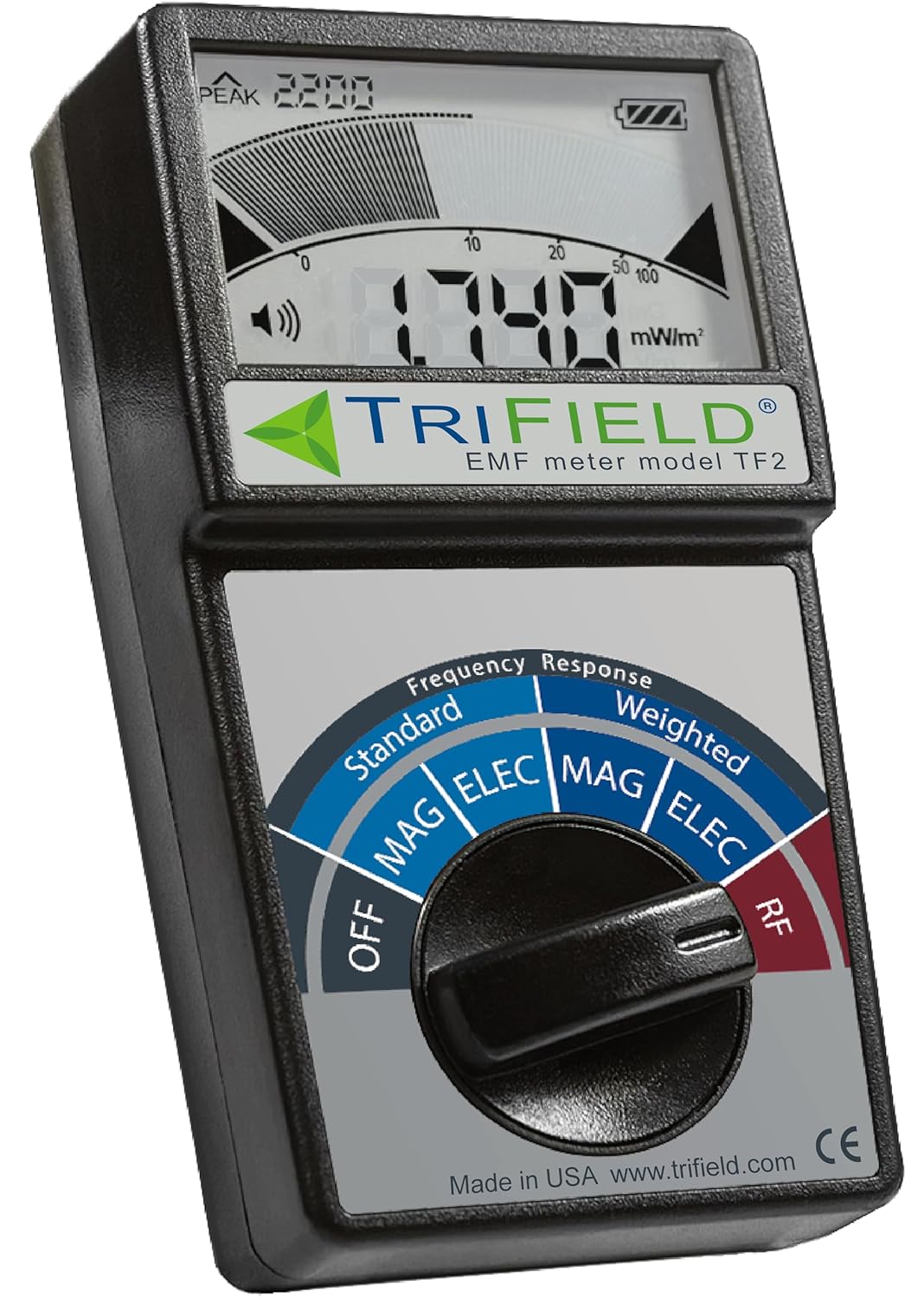 TriField TF2
$175
The gold standard combo meter — measures RF, magnetic, and electric fields in one device.
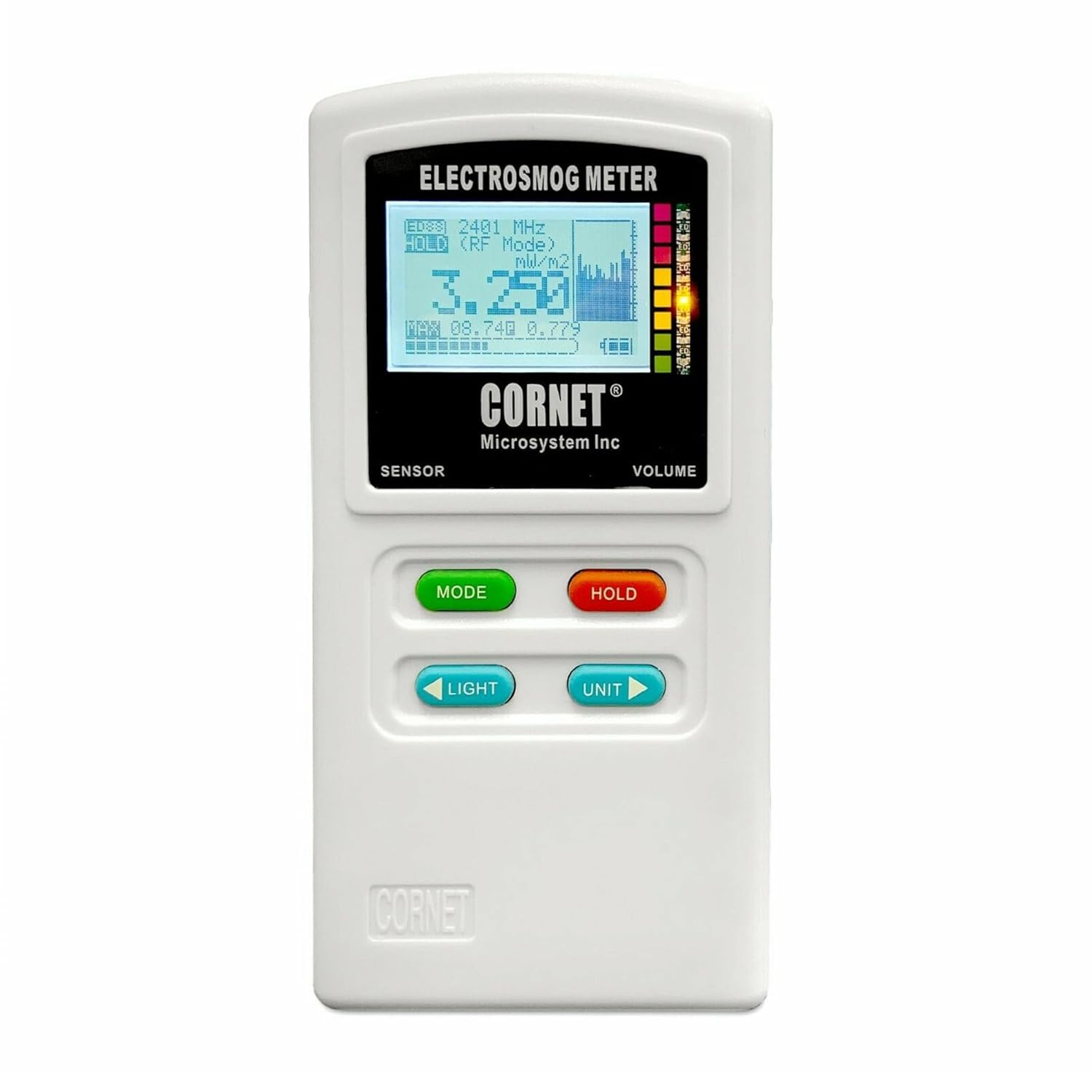 Cornet ED88TPlus5G
$265
Built-in frequency counter identifies exactly which cell towers and antennas are hitting you.
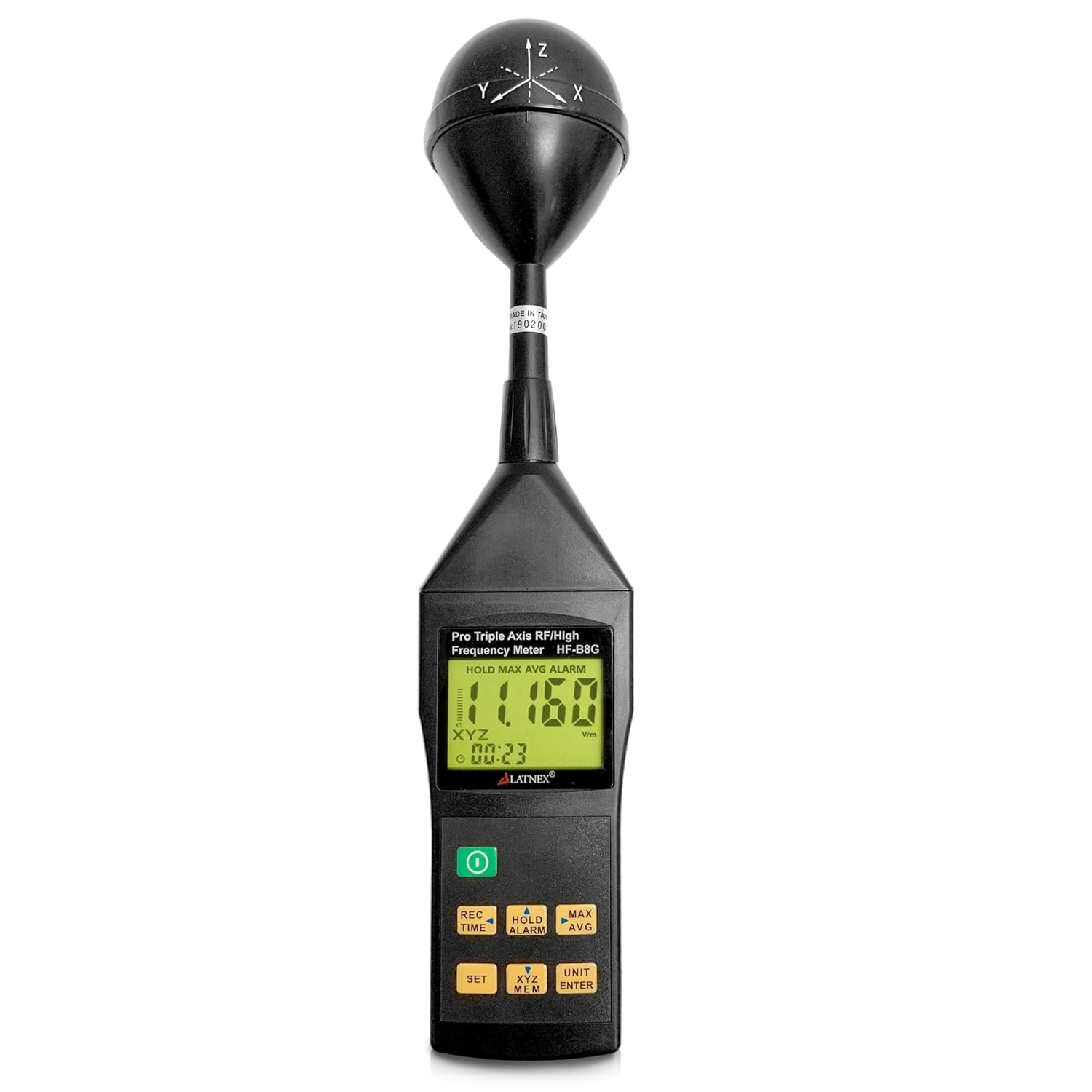 LATNEX HF-B8G
$250
Professional-grade 3-axis RF meter for serious high-frequency measurement.
Side-by-Side Comparison
| Meter | Price | Measures | RF Range | Data Logging | Battery | Weight |
|---|---|---|---|---|---|---|
| TriField TF2 | $175 | RF, Magnetic, Electric | 20 MHz – 6 GHz | No | 9V | 12 oz |
| GQ EMF-390 | $120 | RF, Magnetic, Electric | 10 MHz – 10 GHz | Yes (USB + software) | Rechargeable Li-ion | 7 oz |
| Cornet ED88TPlus5G | $265 | RF, Magnetic, Electric | 100 MHz – 8 GHz | No | 9V | 7 oz |
| LATNEX HF-B8G | $250 | RF only | 10 MHz – 8 GHz | Yes (USB) | 9V (or USB power) | 10 oz |
| ERICKHILL RT-100S | $45 | RF, Magnetic, Electric | 50 MHz – 3.5 GHz | No | 3× AAA | 5 oz |
Detailed Reviews
Pros
- All-in-one: RF, magnetic, and electric field detection
- Weighted frequency response mimics biological impact
- Trusted by professionals and home inspectors
- Simple, intuitive dial interface
Cons
- No data logging or memory
- RF tops out at 6 GHz (misses some 5G bands)
- No backlit display
RF Range
20 MHz – 6 GHz
Measures
RF, Magnetic, Electric
Data Logging
No
Weight
12 oz
Who it's for: Best for most people — especially first-time EMF testers who want one meter that does it all.
Pros
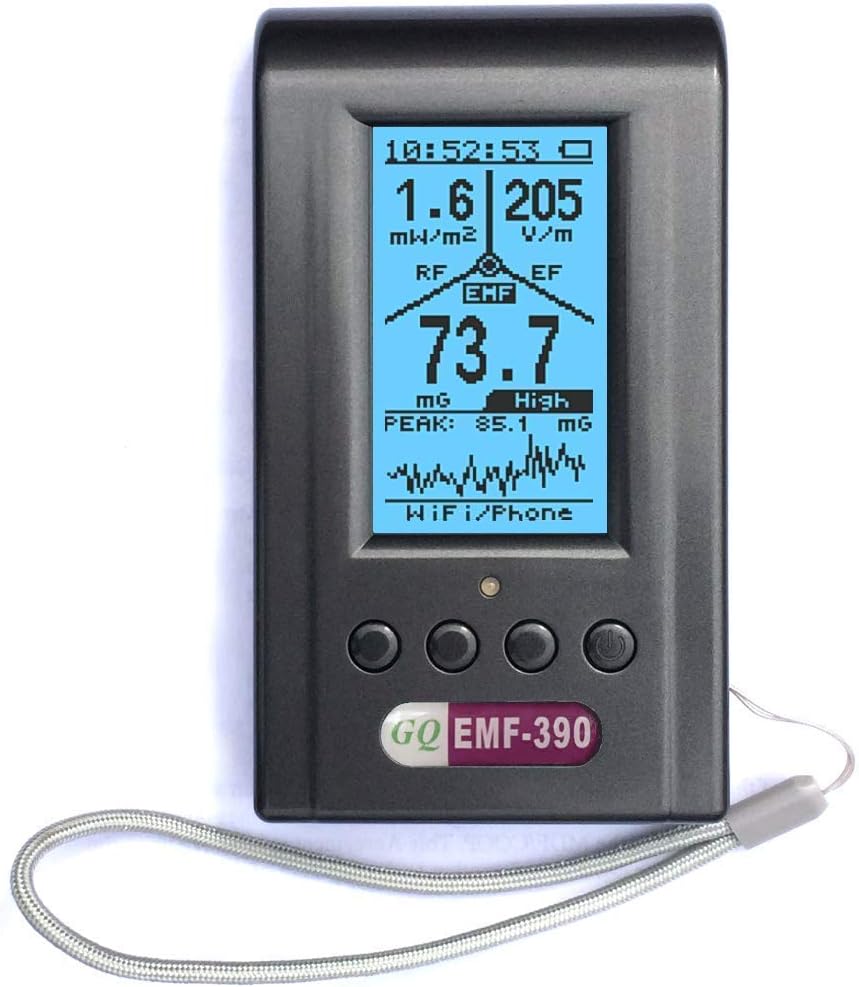
- Widest RF range in its class (10 GHz)
- Built-in data logging with GQ software
- Rechargeable battery — no buying 9Vs
- Real-time RF spectrum graph on screen
Cons
- Learning curve with menus and modes
- Software is Windows-only
- Build quality feels less premium than TriField
RF Range
10 MHz – 10 GHz
Measures
RF, Magnetic, Electric
Data Logging
Yes (USB + software)
Weight
7 oz
Who it's for: Best for data-minded users who want logging, graphs, and the widest RF range without spending $250+.
Pros
- Frequency counter shows exact MHz source
- Identifies 5G, LTE, WiFi by frequency
- Histogram mode for tracking over time
- Sound alert for threshold detection
Cons
- Higher price for a non-logging meter
- Small screen can be hard to read
- RF starts at 100 MHz (misses FM radio band)
RF Range
100 MHz – 8 GHz
Measures
RF, Magnetic, Electric
Data Logging
No
Weight
7 oz
Who it's for: Best for users near cell towers who want to know which frequencies are contributing to their exposure.
Pros
- True 3-axis RF measurement (no rotating needed)
- High accuracy with calibration certificate
- Data logging via USB
- Alarm threshold settings
Cons
- RF only — no magnetic or electric field detection
- Pricey for a single-function meter
- Larger size than pocket meters
RF Range
10 MHz – 8 GHz
Measures
RF only
Data Logging
Yes (USB)
Weight
10 oz
Who it's for: Best for users focused exclusively on RF/wireless exposure who want professional-grade accuracy.
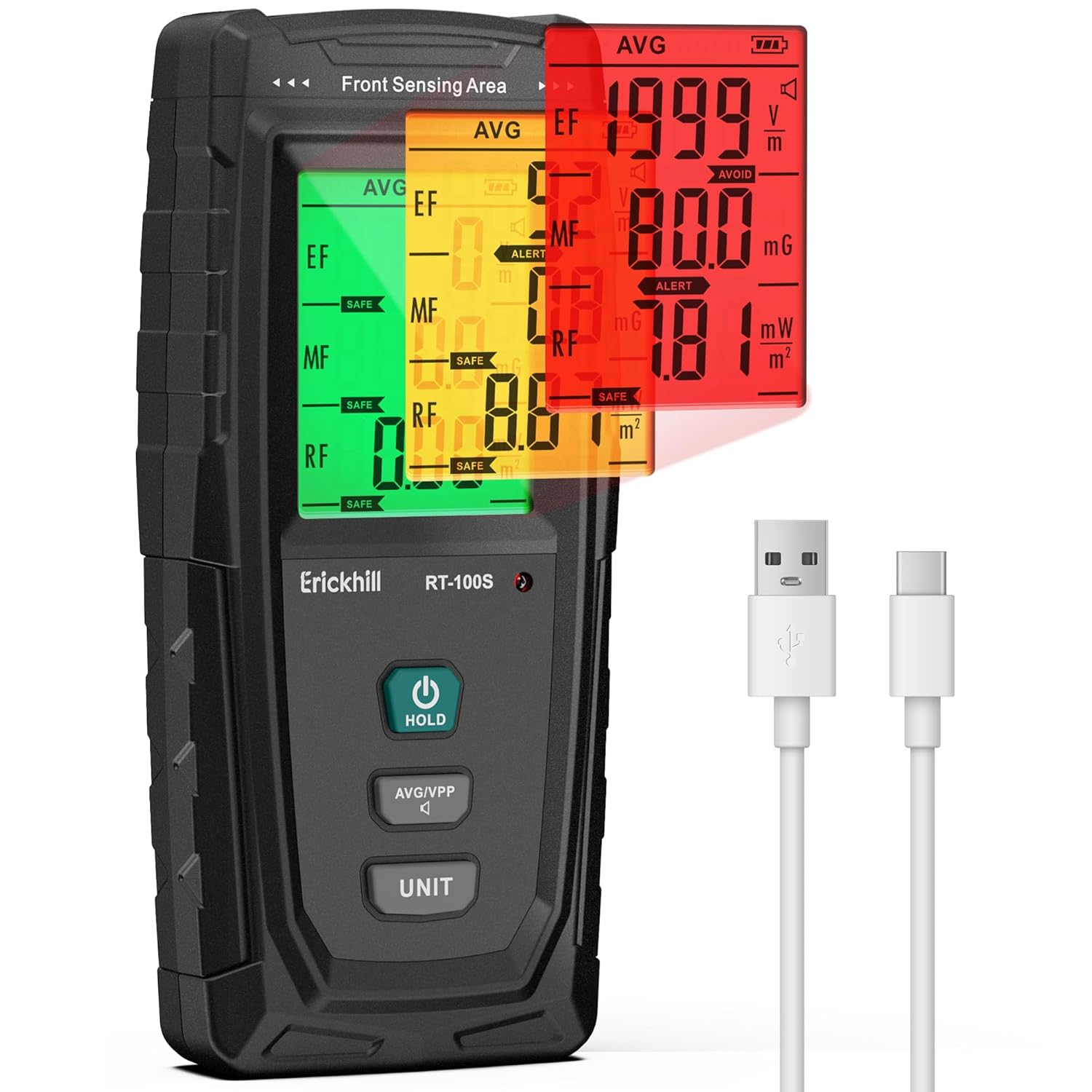
Pros
- Under $50 for all three field types
- Compact and lightweight
- Simple, easy-to-read LCD display
- Sound alarm for high readings
Cons
- Narrowest RF range (maxes at 3.5 GHz)
- Lower sensitivity than pro meters
- No data export or logging
RF Range
50 MHz – 3.5 GHz
Measures
RF, Magnetic, Electric
Data Logging
No
Weight
5 oz
Who it's for: Best for budget-conscious buyers who want a quick, general EMF check without spending hundreds.
How to Choose an EMF Meter
Not all EMF meters measure the same thing. Here's what to consider before you buy.
RF vs ELF
RF meters detect wireless signals (cell towers, WiFi, 5G). ELF meters detect magnetic and electric fields from power lines and wiring. Combo meters do both.
Frequency Range
Higher GHz range means detecting more modern signals. 5G mid-band operates at 2.5–3.7 GHz, while 5G mmWave can go up to 39 GHz. Most meters cover up to 6–10 GHz.
Ease of Use
Simple dial meters (like the TriField) are great for beginners. Feature-rich meters (like the GQ EMF-390) have a learning curve but offer more data.
Budget
Budget meters ($30–$60) give general readings. Mid-range ($100–$200) are accurate enough for home use. Pro-grade ($250+) add features like frequency counters and data logging.
Check Your City Before You Buy
Before investing in a meter, see what our data already shows about your area. We track cell towers, power lines, and substations across 991 US cities.
Frequently Asked Questions
Do I really need an EMF meter?
What's the difference between RF, magnetic, and electric fields?
Can a cheap meter give accurate readings?
How do I use an EMF meter at home?
Will these meters detect 5G?
As an Amazon Associate, EMF Radar earns from qualifying purchases. Our recommendations are based on independent research — we only recommend products we'd use ourselves. Prices are approximate and may vary.