This is part of our Study Spotlight series, where we break down the latest peer-reviewed EMF research into plain language. No hype, no dismissal — just what the science actually says.
Most EMF health research asks one question: is this harmful? Occasionally, a study comes along that flips the script entirely — finding not just “no harm” but actual benefit from radiofrequency exposure. That’s exactly what a Chinese research team has just reported, and the implications are wild.
Their finding: non-thermal radiofrequency radiation at 2856 MHz made hematopoietic stem cells work better — boosting their colony-forming ability, improving their transplantation success, and even helping mice recover faster from radiation injury. If confirmed, this could represent an entirely new therapeutic tool for treating radiation sickness and improving bone marrow transplants.
But it also raises uncomfortable questions for both sides of the EMF debate.
Why This Study Matters
Hematopoietic stem and progenitor cells (HSPCs) are the master cells that produce all your blood — red blood cells, white blood cells, platelets, everything. They live in your bone marrow and are critical for immune function and recovery from injury.
When these cells are damaged (by chemotherapy, radiation exposure, or disease), the consequences are severe: immune collapse, anemia, bleeding disorders. Improving HSPC function is one of the biggest goals in transplant medicine.
This study from Zhichun Lv and colleagues, published in Stem Cell Research & Therapy (February 2026), found that exposing these stem cells to radiofrequency radiation — at non-thermal levels, meaning no measurable heating — made them functionally superior. Not damaged. Not unchanged. Better.
That’s a finding that makes everyone uncomfortable, and for good reason.
The Setup
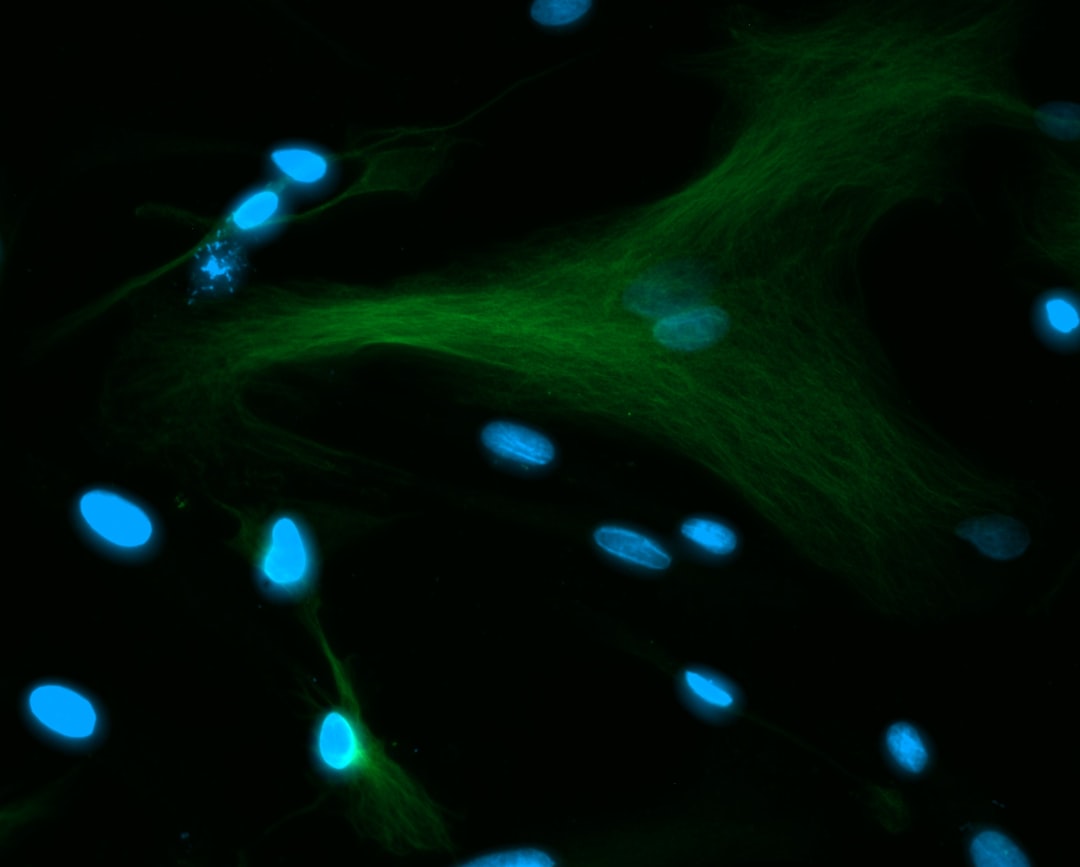
The researchers used 2856 MHz — a frequency in the microwave band, close to the 2.4 GHz used by WiFi and Bluetooth, and within the range of some radar and communications systems. Crucially, they worked at non-thermal power levels, meaning the exposure didn’t raise tissue temperature.
| Parameter | Detail |
|---|---|
| Frequency | 2856 MHz (S-band microwave) |
| Power level | Non-thermal (no measurable temperature increase) |
| Model | Mouse HSPCs (in vitro and in vivo) |
| Key assays | Colony-forming units, competitive transplantation, radioprotection |
| Mechanism tools | Seahorse metabolic analysis, Ca²⁺ fluorescence, FRAP membrane assays |
| Institution | Multiple Chinese research institutions |
This wasn’t a simple “expose and observe” study. The team ran five distinct experimental approaches to characterize what RF does to stem cells and why:
- In vitro colony-forming assays (can RF-exposed cells grow better?)
- Competitive transplantation in mice (do RF-exposed cells win the engraftment race?)
- Radiation injury recovery (can RF preconditioning protect against ionizing radiation?)
- Metabolic profiling (what’s happening inside the cell?)
- Mechanistic inhibition (can we block the effect to prove causation?)
That last one is what elevates this paper above typical observational studies.
Check your EMF exposure
See cell towers, power lines, and substations near any US address.
Search Your AddressWhat They Found
1. RF-Exposed Stem Cells Formed More Colonies
When HSPCs were exposed to non-thermal 2856 MHz radiation and then placed in culture, they produced more colony-forming units than unexposed controls. This is a standard measure of stem cell potency — cells that form more colonies have greater functional capacity.
Importantly, the multilineage differentiation was preserved — RF-exposed cells still produced all the normal blood cell types in the right proportions. The enhancement was in quantity of function, not a distortion of it.
2. RF-Exposed Stem Cells Won the Transplantation Race
This is where it gets interesting. In competitive transplantation assays — where RF-exposed and unexposed stem cells are injected into the same recipient mouse and forced to compete for bone marrow engraftment — the RF-exposed cells outperformed the controls.
Competitive transplantation is the gold standard for measuring stem cell quality. If RF-exposed cells engraft better, they are functionally superior by the most demanding test in the field.
3. RF Preconditioning Protected Against Radiation Injury
Mice that received RF preconditioning before being hit with ionizing radiation (the kind that damages bone marrow) showed:
- Faster recovery of peripheral blood counts (white blood cells, red blood cells, platelets)
- Higher numbers of surviving HSPCs in bone marrow
- More colony-forming units post-injury
The researchers also tested this across multiple dose gradients using non-competitive transplantation models, finding that RF preconditioning increased the radioprotection unit frequency — essentially, fewer transplanted cells were needed to rescue irradiated recipients.
For anyone working in radiation medicine, this is a potentially significant finding. Radiation injury from nuclear accidents, cancer treatment, or space travel remains extremely difficult to treat.
The Mechanism: Membrane Fluidity → Calcium Efflux → Metabolic Quiescence
This is the part that makes the study genuinely important rather than just curious. The team didn’t just report what happened — they identified how and proved it with inhibition experiments.
Here’s the chain of events:
Step 1: RF increases plasma membrane fluidity. Using FRAP (fluorescence recovery after photobleaching) assays, they showed that RF exposure makes cell membranes slightly more fluid — the lipid bilayer becomes more dynamic.
Step 2: Increased fluidity activates PMCA. The plasma membrane Ca²⁺-ATPase (PMCA) is a calcium pump embedded in the cell membrane. When the membrane becomes more fluid, PMCA works more efficiently.
Step 3: More calcium gets pumped out. Activated PMCA pumps more Ca²⁺ ions out of the cell, reducing intracellular calcium levels.
Step 4: Lower calcium = metabolic quiescence. With less intracellular calcium, the stem cells shift into a lower metabolic state — confirmed by Seahorse XF metabolic assays showing reduced oxidative phosphorylation.
Step 5: Quiescent stem cells function better. This is well-established biology: the best stem cells are the quietest ones. HSPCs that maintain low metabolic activity have greater long-term repopulating potential. It’s a conservation strategy — cells that aren’t burning through energy reserves retain their regenerative capacity.
The Proof: Blocking the Pump Blocks the Effect
Here’s the clincher. When the researchers pretreated cells with a PMCA inhibitor before RF exposure, both the functional enhancement and the metabolic suppression disappeared. No PMCA activity → no calcium efflux → no metabolic shift → no improvement in stem cell function.
This pharmacological reversal is strong evidence that the mechanism is real, not an artifact. You can’t fake that kind of specificity.
What This Means (and What It Doesn’t)
This is NOT “cell phones are good for you”
Let’s be very clear about what this study does and doesn’t show:
It shows: Non-thermal RF at a specific frequency and power level can influence cell membrane biophysics in a way that enhances stem cell function in mice.
It does NOT show: That everyday RF exposure from phones, WiFi, or cell towers has any beneficial health effect in humans. The exposure conditions were carefully controlled laboratory parameters, not real-world wireless environments.
For the “RF is completely safe” camp
This study is actually somewhat uncomfortable for people who insist RF radiation has no biological effects below thermal thresholds. The entire finding depends on non-thermal mechanisms — the RF isn’t heating anything, yet it’s clearly changing cell behavior through a specific biophysical pathway (membrane fluidity → calcium signaling).
If non-thermal RF can improve stem cell function, the blanket claim that “non-thermal RF has no biological effects” is obviously wrong. The question then becomes: what other non-thermal effects might exist, and are all of them benign?
For the “RF is dangerous” camp
This study is equally uncomfortable for people who assume all RF biological effects must be harmful. Here we have clear evidence of a beneficial non-thermal effect — one with potential therapeutic applications for radiation injury treatment and bone marrow transplantation.
It’s a reminder that “biologically active” doesn’t automatically mean “dangerous.” Many physical forces (light, sound, mechanical pressure, temperature) have dose-dependent biological effects that can be harmful, neutral, or therapeutic depending on context.
The nuanced view
What this study really supports is the emerging picture that RF radiation has real biological effects at non-thermal levels, and those effects are complex — not uniformly harmful, not uniformly benign, but dependent on frequency, power level, exposure duration, cell type, and biological context.
That’s a much harder message to communicate than “safe” or “dangerous,” but it’s where the science increasingly points.
Limitations Worth Noting
No study is perfect, and this one has important caveats:
Animal model only. All experiments were in mice or mouse-derived cells. Human HSPCs may respond differently to RF exposure. Clinical translation would require extensive additional research.
Single frequency. The study used 2856 MHz specifically. Effects at other frequencies (like the 700 MHz-3.5 GHz bands used by 5G, or the 2.4/5 GHz of WiFi) might be different or nonexistent. Frequency matters in biophysics.
Controlled conditions. Laboratory RF exposure bears little resemblance to real-world wireless environments. The signal was continuous, single-frequency, and precisely controlled — nothing like the complex, intermittent, multi-frequency soup of everyday wireless exposure.
Mechanism specificity. The membrane fluidity → PMCA → calcium pathway is convincing for this specific cell type and outcome. Whether the same pathway operates in other cell types (neurons, cardiac cells, immune cells) is unknown — and those effects might not be beneficial.
Chinese institutional context. While the research appears methodologically sound with strong mechanistic data, independent replication by other groups would strengthen confidence in the findings.
The Bigger Picture
This study joins a small but growing body of research — including our earlier spotlight on EMF as a liver therapy tool — suggesting that electromagnetic fields can be deliberately harnessed for medical benefit.
The practical question for everyday people isn’t really whether controlled laboratory RF can help stem cells in mice. It’s whether the same biophysical mechanisms (membrane fluidity changes, calcium signaling disruption) are occurring at the exposure levels you actually encounter from cell towers near your home or your phone — and if so, whether those effects are beneficial, harmful, or too small to matter.
Right now, the honest answer is: we don’t fully know. Studies like this one prove that non-thermal mechanisms exist and can be significant. Studies like our 26 GHz stress biomarker spotlight show that real-world-level exposures often produce no measurable response in humans.
The resolution of those two findings will require many more years of research — but at least the question is finally being asked with the right tools.
Study: Lv Z, Zhao K, Li J, et al. “Nonthermal radiofrequency radiation promotes hematopoietic stem and progenitor cells function by regulating Ca²⁺ efflux.” Stem Cell Research & Therapy. 2026;17. PMID: 41689083 | DOI: 10.1186/s13287-026-04937-2
Want to check the EMF environment near your home? Use our free interactive map to see cell tower locations and estimated exposure levels for any address in the US.
Related Reading
- Study Spotlight: Stanford Proved Radio Waves Can Control Biology at the Quantum Level — Here’s Why It Doesn’t Mean What You Think
- Study Spotlight: Living Near Cell Towers Changed These People’s Blood — Here’s What Researchers Found
- Study Spotlight: Italian Researchers Blasted Brain Cancer Cells with 4G LTE and WiFi Simultaneously — Nothing Happened
- Study Spotlight: Scientists Blasted People with 26 GHz 5G Millimeter Waves — Their Stress Hormones Didn’t Budge