This is part of our Study Spotlight series, where we break down the latest peer-reviewed EMF research into plain language. No hype, no dismissal — just what the science actually says.
Here’s a question that keeps millions of people up at night: Could the 4G signal my phone is constantly connected to cause cancer?
A team of Italian researchers at the National Research Council of Italy (CNR) designed one of the most thorough experiments yet to find out — and published their results in Environmental Research in March 2026.
Their answer? At the exposure levels they tested, no.
Why This Study Matters
Most lab studies on cell phone radiation test a single signal type in isolation. But that’s not how real-world exposure works. Right now, your body is probably being hit by 4G LTE from a nearby tower, WiFi from your router, Bluetooth from your headphones, and who knows what else — all simultaneously.
This study is one of the first to test what happens when you combine these signals. The researchers from CNR-IREA (Institute for Electromagnetic Sensing of the Environment) in Naples asked three specific questions:
- Does 4G LTE exposure alone cause cancer-related changes in brain cells?
- Does 4G LTE combined with a chemical stressor make things worse?
- Does 4G LTE plus WiFi simultaneously — mimicking real-world multi-signal exposure — cause any effects?
The Setup
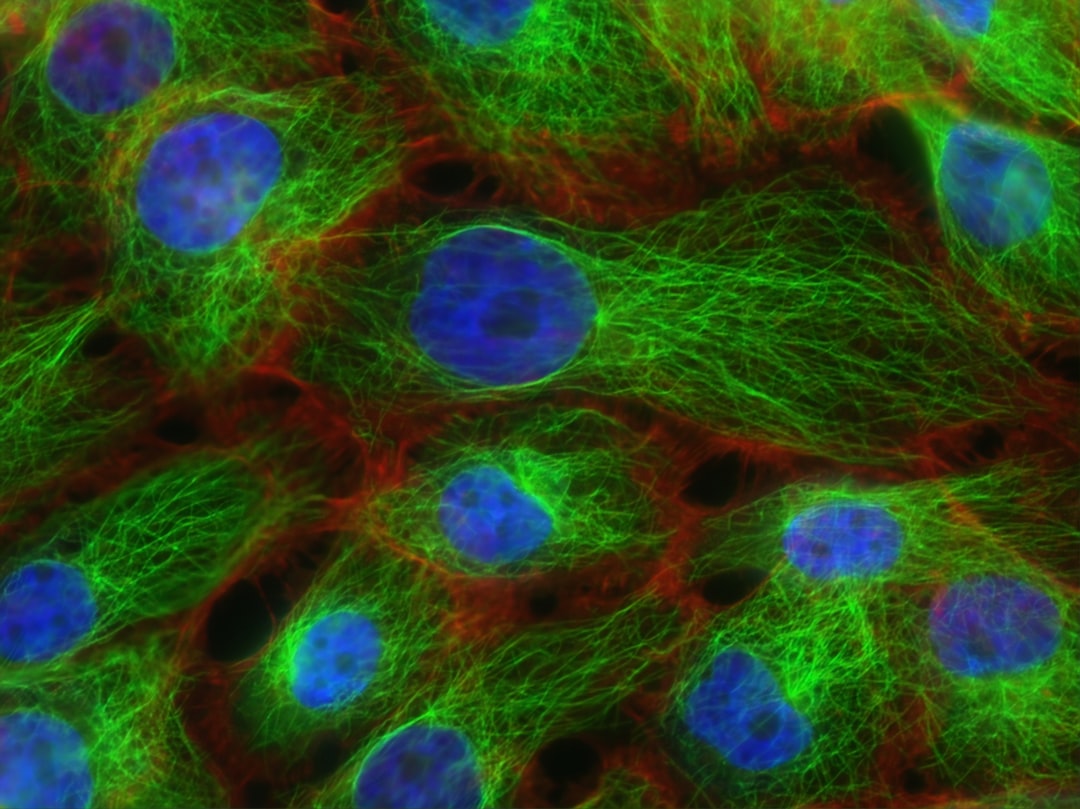
The researchers used human neuroblastoma cells (SH-SY5Y) — a brain cancer cell line commonly used in neurotoxicology research. These cells are specifically chosen because they represent nervous system tissue, the primary concern for head-proximity phone use.
The cells were exposed for three hours to 1950 MHz LTE signal (a standard 4G frequency) using a waveguide-based exposure system that had been rigorously calibrated for both dosimetry (how much energy reaches the cells) and experimental consistency.
They tested two SAR (Specific Absorption Rate) levels:
| SAR Level | Context |
|---|---|
| 0.3 W/kg | Typical real-world phone exposure at moderate distance |
| 1.25 W/kg | Near the FCC limit of 1.6 W/kg for localized exposure |
For the co-exposure experiments, they also added:
- Menadione — a chemical that generates oxidative stress (to see if RF makes chemical damage worse)
- 2450 MHz WiFi — simultaneous with LTE (to test multi-signal effects)
Check your EMF exposure
See cell towers, power lines, and substations near any US address.
Search Your AddressWhat They Measured
The team looked at three cancer-related cellular endpoints using flow cytometry — a precise, quantitative lab technique:
1. Reactive Oxygen Species (ROS): Free radicals that can damage DNA. If RF exposure increases ROS, that’s a potential cancer mechanism.
2. Apoptosis: Programmed cell death. Both too much (cell damage) and too little (cells refusing to die = tumor formation) are concerning.
3. Cell Cycle Progression: Cancer cells divide uncontrollably. Any disruption to normal cell cycle patterns could indicate a cancer risk.
The Results
Across every condition and every endpoint:
Nothing happened.
- LTE alone at 0.3 W/kg → No effect on ROS, apoptosis, or cell cycle
- LTE alone at 1.25 W/kg → No effect
- LTE + menadione → No additional effect beyond what menadione alone caused
- LTE + WiFi simultaneously → No effect
The researchers state it plainly: “Neither LTE exposure alone nor LTE and menadione co-exposure or multiple LTE and Wi-Fi exposure influenced the investigated cellular parameters.”
This is particularly notable for the LTE + WiFi co-exposure result. Anti-5G advocates often argue that it’s the combination of multiple signals that causes harm — a “cocktail effect.” This study tested that hypothesis directly and found no evidence for it.
What Makes This Study Strong

Rigorous dosimetry. The waveguide exposure system was well-characterized from both a dosimetric and experimental standpoint. The cells received precisely the SAR values claimed.
Relevant exposure levels. Testing at 0.3 and 1.25 W/kg covers the range most people actually experience — from typical ambient to near-limit exposure.
Multi-signal testing. Testing LTE + WiFi simultaneously is a real-world-relevant design that few other studies have attempted.
Negative results are hard to publish. There’s a well-known publication bias toward positive findings in science. The fact that this was accepted in Environmental Research (a respected journal with strong impact factor) despite null results speaks to its methodological quality.
Independent funding. The researchers are government scientists at the Italian National Research Council — not funded by telecoms.
The Caveats
Every study has limits, and honesty about them matters:
Three hours isn’t a lifetime. Real-world exposure is chronic — years or decades. This study can’t tell us about long-term cumulative effects.
In vitro ≠ in vivo. Cells in a dish don’t have the complex biological systems of a living body — blood flow, immune responses, repair mechanisms, hormonal signaling. Effects could exist at the organism level that don’t show up in isolated cells.
Only one cell type. Neuroblastoma cells represent one tissue. Effects on other cell types (reproductive cells, immune cells) aren’t addressed here.
Only three endpoints. Cancer is complex. There are mechanisms beyond ROS, apoptosis, and cell cycle — epigenetic changes, DNA methylation, gene expression — that weren’t measured.
Specific frequencies. 1950 MHz (LTE) and 2450 MHz (WiFi) don’t represent all wireless frequencies. 5G at 3.5 GHz or mmWave frequencies might behave differently.
How This Fits the Bigger Picture
This study adds to a growing pile of evidence on both sides:
Reassuring findings (consistent with this study):
- 5G phone SAR simulations show brain exposure at 1.7% of ICNIRP limits
- Operating room workers exposed to WiFi showed exposure <0.4% of limits
- Occupational RF exposure showed no glioma link in Australian workers
- The NTP Lite replication found no cancer at cell phone-level exposures
Concerning findings (that complicate the picture):
- A new study on cell tower proximity found elevated white blood cell counts in people living within 60m of towers
- 3.5 GHz exposure reduced testosterone in rat models
- ICBE-EMF scientists argue current limits are 15-900x too weak for cancer protection
The honest summary? Short-term LTE exposure doesn’t appear to trigger cancer mechanisms in lab cells. But that doesn’t mean decades of chronic, whole-body exposure to multiple signals is definitely safe. The question is far from closed.
The Practical Takeaway
If you’ve been worried specifically about 4G LTE causing brain cancer, this study — alongside several others — is genuinely reassuring at typical exposure levels. Simple steps like using speakerphone or earbuds can further reduce any residual risk.
The bigger questions around chronic, multi-decade, whole-body exposure to the entire electromagnetic spectrum remain open. That’s what the WHO review is supposed to answer — whenever it finally gets published.
📄 Study: Allocca M, Scarfì MR, Romeo S, et al. “Radiofrequency exposure to LTE signal does not alter cancer-related endpoints in human neuroblastoma cell model either alone, or co-exposed to menadione or Wi-Fi signal.” Environmental Research (2026). PubMed | DOI: 10.1016/j.envres.2026.124292
Want to know what’s near you? Search your address on EMF Radar to see cell tower proximity, distances, and exposure estimates.
Related Reading
- Study Spotlight: Scientists Blasted People with 26 GHz 5G Millimeter Waves — Their Stress Hormones Didn’t Budge
- Study Spotlight: Could the Same Radio Waves From Your Phone Help Treat Alzheimer’s?
- Study Spotlight: 48,000 Police Officers Used Radios for 11 Years — No Cancer Link Found
- Study Spotlight: 1,777 UK Telecom Workers’ Cancer Rates — RF Isn’t the Problem, Sunburn Is
Concerned about EMF? Check your address on EMF Radar to see nearby towers and power lines, or find a certified EMF consultant for professional testing.