Study Spotlight: Are Electric Vehicles Safe? Japan’s Most Comprehensive EMF Test Says Yes
In our Study Spotlight series, we break down new EMF research into plain English. No jargon walls. No fear-mongering. Just what the science actually says — and what it means for your daily life.
The Study at a Glance
| 📄 Title | Magnetic Field Measurement of Various Types of Vehicles, Including Electric Vehicles |
| 📰 Journal | Electronics (MDPI, 2025) |
| 🏫 Researchers | Fukui H, Minami N, Tanezaki M, Muroya S, Ohkubo C — National Institute of Information and Communications Technology (NICT) and Jikei University, Japan |
| 🔗 DOI | 10.3390/electronics14152936 |
The Question
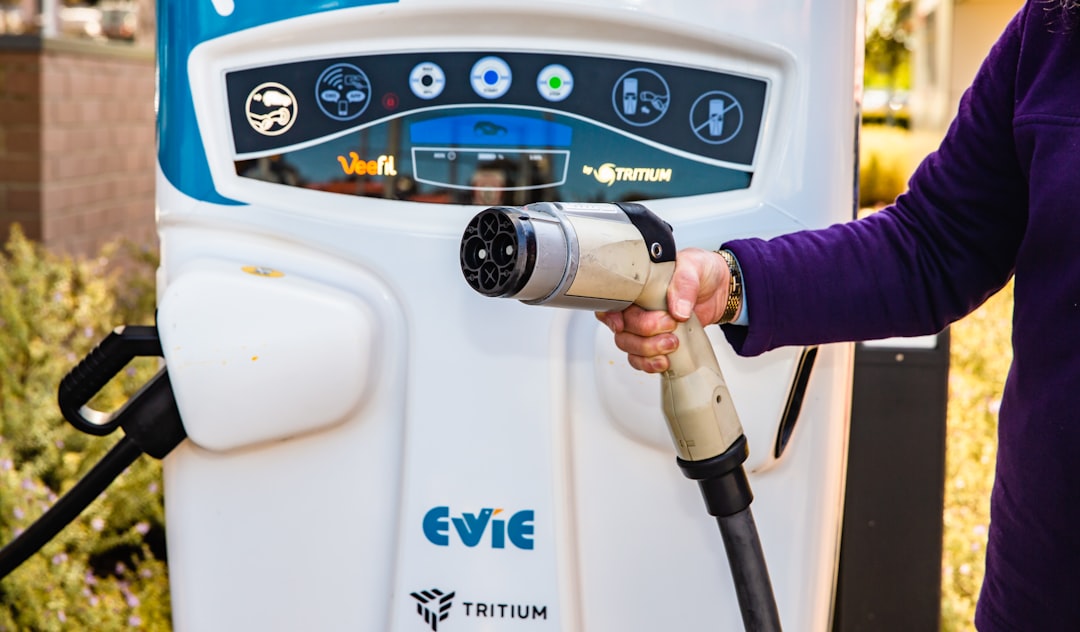
Do electric vehicles expose you to dangerous levels of electromagnetic fields while you drive?
With EV adoption surging worldwide, this question has gone from niche concern to mainstream worry. Some headlines point to an Austrian study that found “astonishingly high” magnetic field pulses inside EVs. Others dismiss the concern entirely.
So a Japanese research team decided to settle it — with the most rigorous test possible.
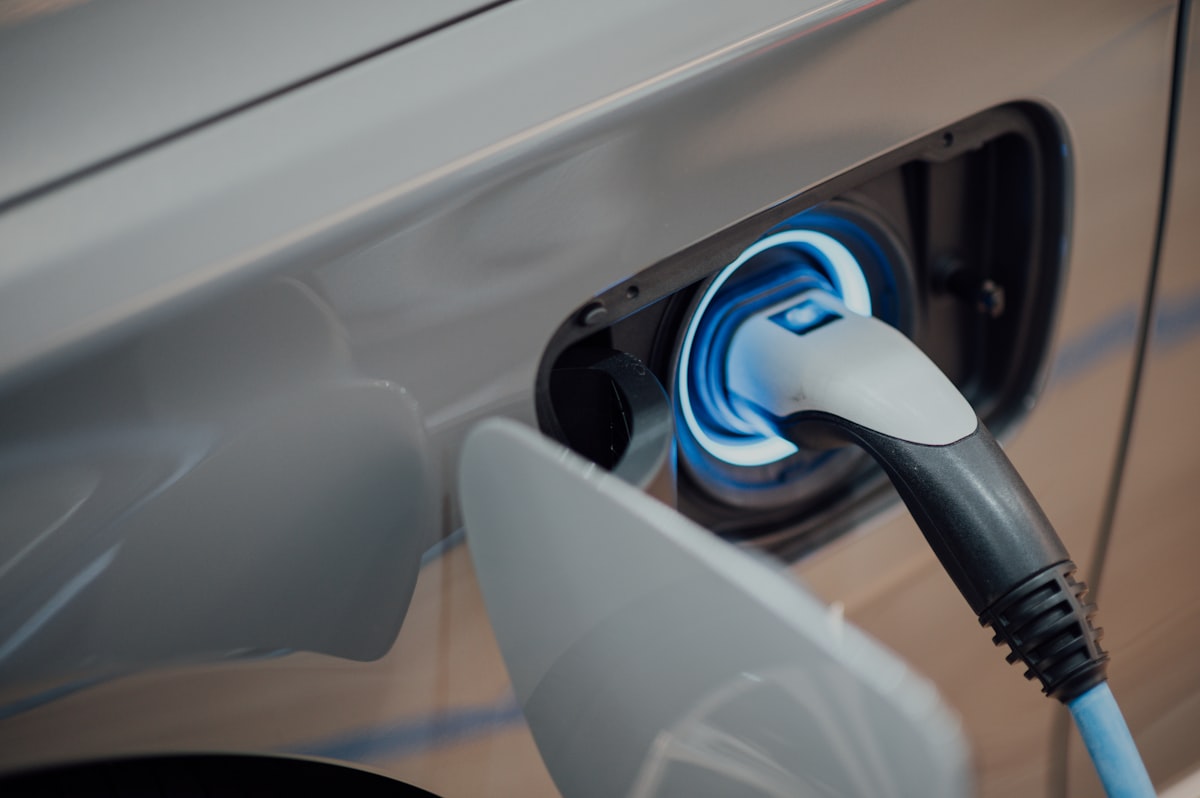
Check your EMF exposure
See cell towers, power lines, and substations near any US address.
Search Your AddressWhat They Did
The researchers tested three vehicles — a battery-electric vehicle (EV), a plug-in hybrid (PHEV), and a traditional gas car (ICEV) — under real driving conditions on a test course in Japan. Not a lab simulation. Actual driving.
They followed the IEC 62764-1:2022 international standard, the gold-standard measurement protocol for vehicle magnetic fields. That means:
- Stationary mode — engine on, car parked
- Steady driving — cruising at about 40 km/h (~25 mph)
- Dynamic mode — hard acceleration and braking, 0 to 90 km/h
- Charging mode — both fast charging and standard charging
They measured magnetic field density at nine positions throughout each vehicle — front seats, rear seats, dashboard, footwells, and near the charging port. Every test was repeated at least three times, and they used the maximum values.
They also ran all the car’s electronics at full blast — AC, audio, wipers, lights — to create a worst-case scenario.
What They Found
Every measurement, in every vehicle, under every condition, was below the ICNIRP safety limits for the general public.
Here’s what makes this especially interesting:
EVs had the lowest magnetic fields. PHEVs were highest (because they have both a battery and a combustion engine working together), followed by the traditional gas car. The pure EV came in last.
Let that sink in: the electric vehicle produced less electromagnetic exposure than the gas car.
Where the Fields Were Strongest
- EVs and PHEVs: Rear seats (near the battery wiring that runs under the floor)
- Gas cars: Driver’s side dashboard (near the wiper motor and other electronics)
The highest readings in all vehicles came during hard acceleration and braking — moments when large currents flow between the battery and motor. But even these peak values stayed well within safety limits.
Surprise Source: Your Tires
One of the study’s most interesting findings had nothing to do with the drivetrain. Magnetized steel belts inside tires generate their own low-frequency magnetic fields (6–29 Hz) that scale with driving speed. These fields were measurable in all vehicle types — gas cars included — and contributed a non-trivial portion of the total exposure.
So if you’re worried about EMFs in your EV, your tires might be a bigger factor than the battery.
What About the Austrian Study?

Earlier research from Seibersdorf Laboratories in Austria made headlines by reporting “astonishingly high” transient magnetic fields in EVs — brief pulses that could exceed European reference limits.
The Japanese researchers directly compared their results with Seibersdorf’s data and found consistently lower values across all vehicle types.
Why the difference? It comes down to measurement windows:
- Seibersdorf captured ultra-short transients — spikes lasting less than 200 milliseconds (like the moment you turn on the car)
- The Japanese study followed the IEC standard, which uses 1-second averaging
Both approaches are valid, but they measure different things. The Seibersdorf study caught the very peak of momentary spikes. The Japanese study measured what your body actually absorbs over time — which is what safety standards are designed to assess.
Think of it like this: a camera flash is incredibly bright for a split second, but nobody worries about light exposure from camera flashes. The average matters more than the peak for health effects.
How Current Cars Compare to Older Models
The researchers also compared their 2025 measurements with data from 2013. The result: magnetic field levels haven’t increased over the past decade, even as EVs have gotten more powerful with larger batteries.
This suggests manufacturers are getting better at shielding and routing — containing the electromagnetic byproducts of higher-performance drivetrains.
Why This Matters
The Good News
- All vehicles tested — EV, hybrid, and gas — are within safety limits
- EVs actually produce the lowest magnetic fields of the three types
- Fields haven’t increased despite bigger batteries and more powerful motors
- Real-world driving conditions were tested, not just lab simulations
The Nuance
- PHEVs have the highest exposure because they combine battery and combustion systems
- Rear-seat passengers in EVs/PHEVs get slightly more exposure (battery wiring runs under the floor)
- Brief transient spikes during startup and hard braking need more study
- Only three vehicles tested — more models and manufacturers should be measured
What This Means for You
If you drive or are considering an EV, this study provides solid evidence that magnetic field exposure inside the cabin is well within established safety limits — and actually lower than in a gas car.
The researchers explicitly designed this study for risk communication — getting accurate data to the public so people can make informed decisions rather than reacting to scary headlines.
Practical tips based on the findings:
- Rear-seat passengers in hybrids get slightly more exposure — not dangerous, but worth noting if you’re the cautious type
- Hard acceleration and braking produce the highest momentary fields — smooth driving reduces exposure
- Tire choice matters — magnetized steel belts contribute to cabin EMF. Aluminum wheels generate less than steel wheels
- All tested vehicles were safe — don’t let EMF concerns alone drive your purchasing decision
The Bottom Line
This is one of the most thorough real-world EMF measurements of passenger vehicles ever published in Japan. It directly addresses public anxiety about EV safety with actual data from actual driving — and the answer is reassuring.
Electric vehicles don’t just meet safety standards. They actually expose you to less electromagnetic radiation than the gas car sitting in the next lane.
The debate about ultra-short transient pulses remains open, and more vehicles need testing. But for the question most people are asking — “Is my EV safe to drive?” — the science says yes.
Related Reading
- Electric Car EMF Exposure: How Much Radiation Do EVs Produce? — our comprehensive EV EMF guide
- EV Charging Station EMF Exposure — what about while charging?
- Tesla EMF Levels: Model-by-Model Breakdown — specific Tesla measurements
- How to Read an EMF Meter — test your own vehicle
- Is EMF Bad for You? What Science Actually Says — the full evidence overview
Study details: Fukui H, Minami N, Tanezaki M, Muroya S, Ohkubo C. “Magnetic Field Measurement of Various Types of Vehicles, Including Electric Vehicles.” Electronics 14(15):2936, 2025. Read the full paper (open access)
Concerned about EMF? Check your address on EMF Radar to see nearby towers and power lines, or find a certified EMF consultant for professional testing.