Depression affects over 280 million people worldwide, and people are increasingly asking whether the electromagnetic fields surrounding us — from power lines, cell towers, WiFi, and devices — could be contributing to the mental health crisis. It’s not a fringe question: there are genuine biological pathways through which EMF could theoretically influence mood.
But what does the evidence actually show? The answer involves one of the largest occupational health studies ever conducted, a plausible but unproven mechanism involving your sleep hormone, and a therapeutic paradox that complicates the entire narrative.
 The relationship between EMF and depression involves multiple biological pathways — but the epidemiological evidence is mixed.
The 138,905-Worker Study
The landmark study in this field is a massive investigation of 138,905 male electric utility workers tracked over their careers. This study didn’t just look at depression diagnoses — it examined suicide rates, which serve as a more objective outcome measure less susceptible to reporting bias.
Key findings:
- Workers with the highest cumulative EMF exposure showed an elevated suicide rate compared to the lowest-exposure group
- The association was dose-dependent in some analyses — more exposure correlated with more risk
- However, the overall risk increase was modest, and confidence intervals were wide
- Confounding factors (workplace stress, shift work, physical demands) could not be fully controlled
This study is important because of its enormous sample size and objective outcome measure. But it’s also limited: correlation between working near power lines and suicide doesn’t prove EMF caused depression. Utility workers face many occupational stressors beyond electromagnetic fields.
Replication Attempts
Several smaller studies have attempted to replicate these findings:
- Some occupational studies found weak associations between workplace EMF and depressive symptoms
- Residential studies (living near power lines) have generally found no consistent association with depression rates
- A few studies found associations that disappeared after controlling for noise pollution — power lines hum, and chronic noise is a known depression risk factor
The Melatonin-Serotonin Pathway
The most biologically plausible mechanism connecting EMF to depression runs through your pineal gland and the melatonin-serotonin axis:
How It Could Work
-
EMF suppresses melatonin production. Several studies (both animal and human) have found that electromagnetic fields — particularly ELF from power lines — can reduce melatonin secretion from the pineal gland.
-
Melatonin and serotonin are biochemically linked. Melatonin is synthesized from serotonin. If EMF disrupts this pathway, it could theoretically affect serotonin availability.
-
Serotonin deficiency is linked to depression. The serotonin hypothesis of depression — while oversimplified — remains clinically relevant. Most antidepressants work by increasing serotonin availability.
-
Sleep disruption causes depression. Even if the primary EMF effect is only on melatonin (and therefore sleep quality), chronic sleep disruption is one of the strongest predictors of depressive episodes.
The Evidence Is Inconsistent
While this pathway is plausible, the evidence at each step is mixed:
- Not all studies find melatonin suppression from EMF
- The magnitude of suppression, when found, is typically small
- Whether this level of suppression would meaningfully affect serotonin is unproven
- Many other factors (light exposure, stress, genetics) have much larger effects on the melatonin-serotonin axis
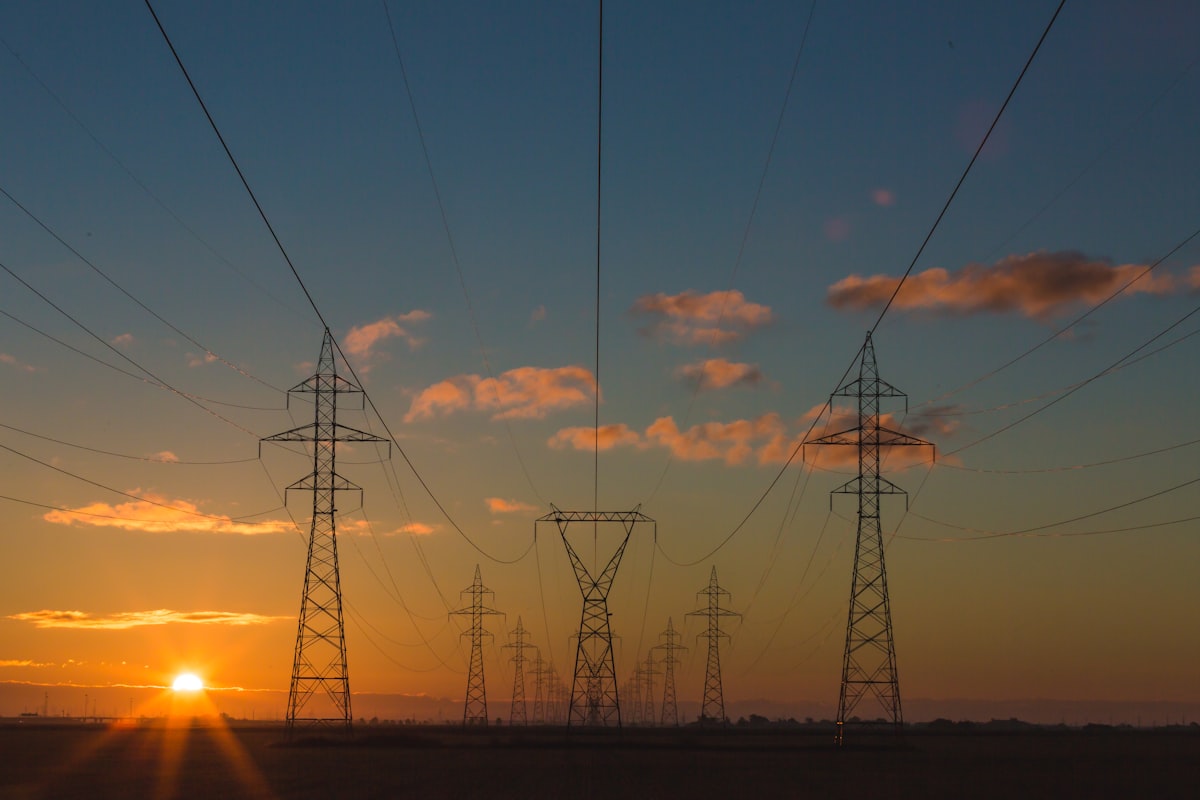 The largest EMF-depression study tracked electric utility workers, but occupational stress — not just EMF — likely contributed to findings.
Check your EMF exposure
See cell towers, power lines, and substations near any US address.
Search Your AddressCell Towers and Mental Health
What about the RF-EMF from cell towers rather than ELF from power lines?
Base Station Studies
Several surveys of residents living near cell tower base stations have reported higher rates of:
- Depressive symptoms
- Fatigue
- Sleep disturbance
- Irritability
The most-cited include:
- Abdel-Rassoul et al. (2007) — Egyptian residents near a rooftop base station reported significantly more neuropsychiatric complaints, including depressive symptoms
- Navarro et al. (2003) — Spanish survey found dose-dependent increases in depression-related symptoms with proximity to cell towers
- Hutter et al. (2006) — Austrian study found associations between measured RF power density and depressive tendencies
The Nocebo Problem
These studies face a fundamental challenge: people who believe EMF is harmful report more symptoms. This isn’t dismissing their experience — it’s a well-documented psychological phenomenon:
- In blinded studies (where subjects don’t know if they’re being exposed), symptom reporting drops dramatically
- People who can see a cell tower from their window report more symptoms than those who are equally close but can’t see it
- Media coverage of EMF health concerns correlates with increased symptom reporting in surveys
This doesn’t prove EMF is harmless. But it means self-reported depression near cell towers could reflect awareness of the tower’s presence rather than a direct biological effect.
The Therapeutic Paradox
Just as with Parkinson’s and Alzheimer’s, there’s a striking therapeutic paradox with depression:
Transcranial Magnetic Stimulation (TMS) for Depression
TMS is an FDA-approved treatment for depression — and it works by applying electromagnetic fields directly to the brain:
- Repetitive TMS (rTMS) targeting the left dorsolateral prefrontal cortex has response rates of 50-60% in treatment-resistant depression
- The treatment delivers pulsed magnetic fields that induce electrical currents in brain tissue
- Sessions typically involve 20-30 minutes of electromagnetic stimulation, 5 days/week for 4-6 weeks
- Stanford Accelerated Intelligent Neuromodulation Therapy (SAINT) — an intensive TMS protocol — achieved 90% remission rates in a Stanford clinical trial
What This Means
The same fundamental force (electromagnetic fields) that some hypothesize causes depression is being used — with remarkable effectiveness — to treat it. The resolution:
- Parameters matter enormously: frequency, intensity, duration, and targeting determine whether the effect is therapeutic, neutral, or potentially harmful
- Focused vs. ambient: TMS delivers targeted energy to specific brain circuits, while ambient EMF is diffuse and unfocused
- Dose matters: therapeutic TMS uses intensities far above ambient environmental exposure
This doesn’t prove ambient EMF is safe for mental health, but it demonstrates that the relationship between electromagnetic fields and brain function is far more complex than “EMF = bad for mood.”
Screen Time, Blue Light, and the Real Culprits
When evaluating EMF and depression, it’s crucial to separate the electromagnetic exposure from other aspects of device use that are well-established depression risk factors:
- Social media use has strong associations with depression, particularly in adolescents — this has nothing to do with EMF
- Blue light from screens suppresses melatonin far more effectively than ambient EMF — affecting sleep and circadian rhythm
- Sedentary behavior enabled by devices is an independent depression risk factor
- Social isolation from excessive screen time reduces protective social connections
- Sleep displacement from nighttime device use is a major contributor to mood disorders
If someone is depressed and uses their phone 6+ hours daily, the screen time matters more than the EMF the phone emits.
Practical Recommendations
If you’re experiencing depression:
- Seek professional help first. Depression is treatable — therapy and medication are well-supported interventions
- Optimize sleep regardless of EMF concerns — a low-EMF bedroom is also a sleep-optimized bedroom
- Reduce screen time in the evening — this addresses both blue light and social media effects
- Exercise regularly — the antidepressant effect of exercise rivals medication in some studies
- Ask your doctor about TMS if you have treatment-resistant depression — electromagnetic therapy is remarkably effective
If you’re worried about EMF specifically:
- The occupational data shows at most a weak association between very high ELF exposure and depression
- Residential exposure levels are far lower than occupational thresholds
- RF-EMF from cell towers hasn’t been convincingly linked to depression in controlled studies
- Checking your area’s EMF score can provide context about your local exposure
Environmental changes that help both mood and EMF:
- Turn off WiFi at night — improves sleep environment regardless of EMF
- Keep phone out of the bedroom — removes notifications, blue light, AND RF exposure
- Spend time outdoors — nature exposure is antidepressant and reduces indoor EMF exposure
- Ground yourself — whether or not grounding mats work for EMF, outdoor grounding reduces cortisol
The Honest Assessment
The EMF-depression connection is plausible but unproven:
- The melatonin pathway is biologically sensible but the evidence at each step is inconsistent
- The largest occupational study found a signal, but confounders are substantial
- Cell tower proximity studies are contaminated by awareness effects
- The therapeutic use of electromagnetic fields for depression actively contradicts the harm hypothesis
- Behavioral effects of device use (screen time, social media, blue light) likely dwarf any direct EMF effect on mood
If EMF caused meaningful depression, we’d expect depression rates to correlate geographically with EMF infrastructure density. They don’t — depression rates are driven by poverty, social isolation, trauma, genetics, and access to mental healthcare, not by proximity to power lines or cell towers.
That said, optimizing your electromagnetic environment is often synonymous with optimizing your sleep and behavioral environment. Turning off screens at night, creating a dark bedroom, and spending more time outdoors are all interventions that reduce EMF exposure AND improve mental health — regardless of which mechanism matters more.
Explore related research: EMF and anxiety, EMF and sleep, EMF and fatigue, and our comprehensive evidence review.