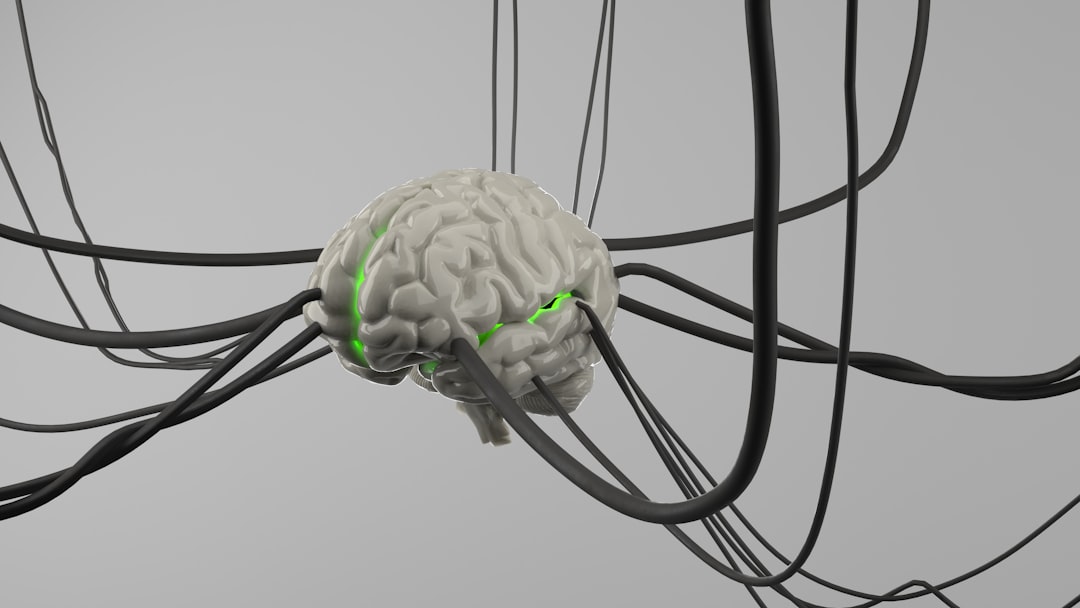
If you or someone you love has Parkinson’s disease, you’ve probably wondered whether the electromagnetic fields around us — from power lines, appliances, or workplace equipment — could be contributing. It’s a fair question: Parkinson’s is a neurodegenerative disease affecting dopamine-producing neurons, and EMF does interact with the nervous system.
The short answer? The largest studies are reassuring. But the full picture is more nuanced — and more interesting — than either “EMF causes Parkinson’s” or “there’s nothing to worry about.”
 Occupational exposure to power-frequency EMF has been studied extensively in relation to Parkinson’s risk.
What the Biggest Studies Actually Found
The 47-Study Meta-Analysis
The most comprehensive analysis to date is Gunnarsson and Bodin’s 2017 meta-analysis, which pooled 47 epidemiological studies examining occupational EMF exposure and neurodegenerative disease risk. Their findings for Parkinson’s disease:
- Overall risk ratio: 1.02 (95% CI: 0.94–1.11)
- Translation: no statistically significant increased risk
- The confidence interval crosses 1.0, meaning the data is consistent with no effect
This isn’t a single study that could be an outlier. It’s 47 studies combined, spanning decades of research across multiple countries. When you pool that much data and the needle doesn’t move, it’s a strong signal.
The UK Biobank: 73,000 Workers
The UK Biobank study tracked approximately 73,000 workers with occupational EMF exposure and found no meaningful increase in Parkinson’s risk among electricians, power line workers, or others with elevated workplace EMF exposure. The sheer sample size makes this one of the most statistically powerful studies on the topic.
The Danish Utility Worker Cohort
A Danish study following utility company workers over decades found a non-significant increase in Parkinson’s among those with the highest EMF exposure. However, the same cohort showed a statistically significant increase in ALS (amyotrophic lateral sclerosis), suggesting that if EMF does affect motor neurons, the mechanism may be disease-specific rather than broadly neurodegenerative.
This is an important nuance: the same workers who showed no Parkinson’s signal did show an ALS signal, which argues against simple reporting bias.
 Parkinson’s disease involves the loss of dopamine-producing neurons in the substantia nigra — but EMF doesn’t appear to accelerate this process based on current evidence.
Why Parkinson’s Was Suspected in the First Place
The hypothesis wasn’t random. Several observations led researchers to investigate:
1. EMF interacts with the nervous system. This is well-documented — transcranial magnetic stimulation (TMS) literally uses electromagnetic fields to modulate brain activity therapeutically. If EMF can affect neurons, could chronic exposure damage them?
2. Occupational exposure patterns. Welders, electricians, and power line workers get substantially higher EMF exposure than the general population. If EMF caused neurodegeneration, these groups would show it first.
3. The dopamine sensitivity hypothesis. Some in vitro studies suggested that electromagnetic fields could affect dopamine metabolism or oxidative stress in neural tissue. Since Parkinson’s specifically targets dopaminergic neurons, this seemed like a plausible mechanism.
4. The ALS connection. Multiple studies have found associations between occupational EMF and ALS. Since both are neurodegenerative motor diseases, researchers wondered if Parkinson’s would follow the same pattern.
Check your EMF exposure
See cell towers, power lines, and substations near any US address.
Search Your AddressThe Therapeutic Paradox
Here’s where it gets genuinely interesting: while researchers were investigating whether EMF causes Parkinson’s, other researchers discovered that certain EMF exposures might actually treat it.
Transcranial Magnetic Stimulation (TMS)
TMS is now an established therapeutic tool for Parkinson’s patients:
- Repetitive TMS (rTMS) has shown improvements in motor symptoms, gait, and bradykinesia
- The treatment uses focused electromagnetic fields to stimulate specific brain regions
- Multiple clinical trials have demonstrated measurable benefits, particularly for motor function and depression associated with Parkinson’s
Deep Brain Stimulation (DBS)
While technically using electrical rather than electromagnetic stimulation, DBS — which involves implanting electrodes in the brain — is one of the most effective treatments for advanced Parkinson’s. The underlying principle shares common ground with EMF research: targeted electromagnetic energy can modulate neural activity.
What This Means
The same physical force (electromagnetic fields) that was suspected of causing neurodegeneration is being used — at specific frequencies, intensities, and targeting — to treat it. This isn’t contradictory; it’s consistent with a dose-response and frequency-dependent model where biological effects depend on the specific parameters of exposure.
The ELF vs. RF Distinction
Most Parkinson’s research focuses on ELF (extremely low frequency) EMF — the 50/60 Hz fields from power lines and electrical equipment — because that’s what occupational exposure studies measure.
Far less research exists on RF (radiofrequency) EMF from cell phones and wireless devices in relation to Parkinson’s specifically. The few studies that exist generally find no association, but the evidence base is much thinner than for ELF.
This matters because:
- If you’re worried about cell towers or WiFi → the Parkinson’s data doesn’t really apply (wrong frequency range)
- If you’re worried about power lines or workplace electrical exposure → the data is reassuring
- If you’re using an EMF meter at home, most readings near power lines are ELF
The Oxidative Stress Question
The most biologically plausible mechanism for EMF-induced neurodegeneration would be through oxidative stress — the same pathway implicated in Parkinson’s naturally.
Some cell studies have shown that EMF exposure can increase reactive oxygen species (ROS) in neural tissue. Dopaminergic neurons are particularly vulnerable to oxidative damage because:
- Dopamine metabolism itself produces hydrogen peroxide
- The substantia nigra has relatively low antioxidant defenses
- These neurons are metabolically demanding with high mitochondrial activity
However, there’s a critical gap between “EMF can increase ROS in a petri dish” and “EMF increases ROS enough to cause Parkinson’s in a living person.” The epidemiological data — those 47 studies — suggests the real-world effect, if it exists, is too small to detect even in high-exposure occupational groups.
Dopamine Sensitization
One interesting avenue of research involves dopamine receptor sensitization from chronic EMF exposure. Animal studies have found that:
- Repeated EMF exposure can alter dopamine receptor density in certain brain regions
- These changes are typically temporary and reverse after exposure stops
- The direction of change (up or down regulation) depends on frequency, duration, and intensity
This research is fascinating from a neuroscience perspective but hasn’t translated into clinical evidence of Parkinson’s risk.
What About Living Near Power Lines?
If you live near high-voltage transmission lines — the large steel towers carrying 115kV+ lines — the Parkinson’s research offers some reassurance:
- Residential EMF exposure is orders of magnitude lower than occupational exposure
- Workers who spend 8+ hours/day near high-power equipment show no increased Parkinson’s risk
- Your home exposure from nearby power lines is a fraction of what those workers experience
- Check your area’s EMF score to see local tower and power infrastructure density
The EMF levels that matter for this research are typically >0.3 µT (microtesla) as measured by occupational dosimeters. Typical residential exposure, even near power lines, is usually well below this threshold.
Practical Takeaways
Based on the current evidence, here’s what’s actionable:
If you have Parkinson’s or a family history:
- The evidence does not support EMF avoidance as a meaningful prevention strategy
- Focus on established risk reduction: exercise, diet, head injury prevention, pesticide avoidance
- Ask your neurologist about TMS if you’re interested in electromagnetic-based therapies
If you work in a high-EMF occupation:
- The Parkinson’s data is reassuring — even heavy occupational exposure doesn’t appear to increase risk
- ALS may be a different story — discuss with your doctor if you have concerns
- Standard workplace safety practices (maintaining distance from high-power equipment) are sufficient
If you’re concerned about household EMF:
- Residential exposure levels are far below occupational thresholds studied
- There’s no evidence suggesting typical home EMF exposure affects Parkinson’s risk
- If you want to reduce exposure for other reasons, see our room-by-room guide
The Bottom Line
Parkinson’s disease research represents one of the clearest cases where the EMF health data is genuinely reassuring. Forty-seven studies, tens of thousands of highly-exposed workers, and the needle hasn’t moved. At the same time, targeted EMF applications are being used therapeutically to treat Parkinson’s symptoms — a striking contrast to the harm hypothesis.
If EMF were a significant Parkinson’s risk factor, we’d expect to see it in electricians, welders, and power line workers who get 100-1,000x more exposure than the average person. We don’t. That’s not a guarantee of perfect safety, but it’s strong evidence that ordinary EMF exposure — from cell towers, WiFi routers, or power lines — is not a meaningful contributor to this disease.
The science on EMF and health is complex. Explore our other deep dives on EMF and the nervous system, memory and cognition, and overall health evidence.