
This is part of our Study Spotlight series, where we break down the latest peer-reviewed EMF research into plain language. No hype, no dismissal — just what the science actually says.
If you want to know whether radio-frequency devices cause cancer, one of the best things you can do is study people who use them heavily, for years, as part of their job. That’s exactly what the Airwave Health Monitoring Study did — and the results are about as clear as epidemiology gets.
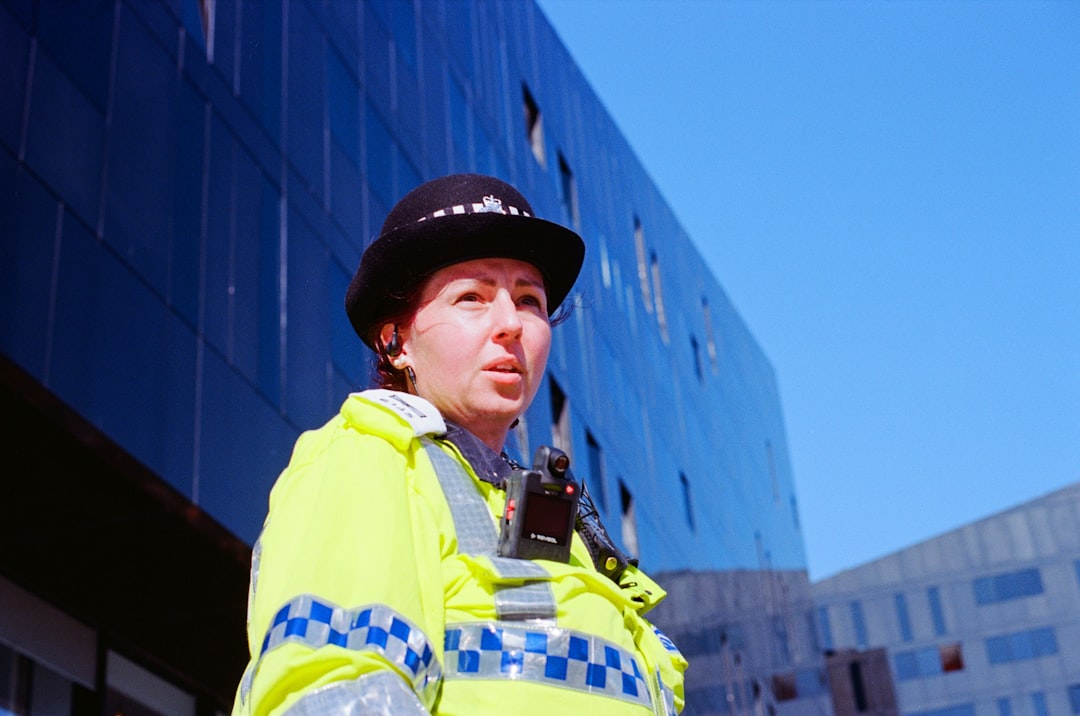
Researchers at Imperial College London followed 48,457 police officers and staff across Great Britain who used TETRA personal radios as part of their daily work. With a median follow-up of 11 years, they looked for any link between radio use and cancer.
They didn’t find one.
The Study: What They Did
Published in the International Journal of Cancer (2026), this study is part of the broader Airwave Health Monitoring Study — one of the largest occupational health studies ever conducted in the UK.
The study population was drawn from police forces across Great Britain, enrolled between 2004 and 2015. What makes this study particularly strong is how they measured exposure:
- Objective data from the Home Office on actual call durations through TETRA radio systems
- Self-reported data from participants on their usage patterns
- Combined modeling using gradient boosting methods to estimate individual exposure
This isn’t just asking people “how much do you use your radio?” — they had actual system records.
TETRA Radios: A Quick Primer
UK police use the TETRA (Terrestrial Trunked Radio) system, which operates around 380–400 MHz — close to the frequency range used by cell phones (700–2600 MHz for 4G/LTE). Officers typically carry these radios on their person and use them throughout their shifts, often holding them near their head.
In terms of RF exposure, police radio users are among the most heavily exposed occupational groups. If RF from wireless devices causes cancer, this is the population where you’d expect to see it.
The Results: No Signal
Across 11 years of follow-up, there were 1,502 incident cancer cases among the 48,457 participants, including 146 cancers of the head, neck, and central nervous system — the sites most directly exposed to RF from handheld radios.
The findings:
| Cancer Type | Hazard Ratio | 95% CI | Interpretation |
|---|---|---|---|
| All cancers | 0.96 | 0.79–1.15 | No association |
| Head, neck & CNS cancers | 0.74 | 0.39–1.38 | No association (trend toward lower risk) |
For dose-response, they also looked at whether doubling the minutes of call duration changed the risk:
| Cancer Type | HR per doubling of minutes | 95% CI |
|---|---|---|
| All cancers | 1.00 | 0.96–1.04 |
| Head, neck & CNS cancers | 1.09 | 0.97–1.22 |
No dose-response relationship for any cancer type. The head/neck/CNS finding (HR 1.09) was not statistically significant — the confidence interval crosses 1.0 — and the point estimate is very close to null.
Results were consistent when they also factored in mobile phone use, and when they restricted the analysis to police officers only (excluding civilian staff).
Check your EMF exposure
See cell towers, power lines, and substations near any US address.
Search Your AddressWhy This Study Matters
1. It’s Big
With nearly 50,000 participants, this is one of the largest studies ever conducted on occupational RF exposure and cancer. Large sample sizes give studies more statistical power to detect small effects — if they exist. The fact that a study this size found nothing is meaningful.
2. It Uses Objective Exposure Data
Most RF-cancer studies rely entirely on people remembering how much they used their phone 10 years ago. This study had actual system records from the Home Office, combined with self-reports through machine learning modeling. That’s a significant methodological improvement.
3. Long Follow-Up
Eleven years is substantial for cancer epidemiology. Many cancers take years or decades to develop, and this study captured a meaningful window. It’s worth noting that some officers in the study had been using TETRA radios since the system’s rollout in the early 2000s, so actual cumulative exposure may extend well beyond the 11-year follow-up period.
4. It Aligns With the Broader Evidence
This study joins a growing body of large-scale epidemiological evidence showing no clear cancer risk from RF exposure at typical levels:
- The Danish Cohort Study (420,000 mobile phone subscribers, 13+ years): no cancer increase
- The Million Women Study (776,000 women, 14 years): no brain tumor increase
- Our Study Spotlight on Australian occupational RF and glioma: no association in 12,000+ workers
- The COSMOS study (250,000+ across 6 countries): no brain tumor increase
What It Doesn’t Tell Us
Ultra-long latency: Cancer latency for some types can exceed 20–30 years. While 11 years is good, it doesn’t fully rule out very late-developing cancers. The study authors acknowledge this.
TETRA vs. 5G: TETRA operates at 380–400 MHz. Modern 5G networks use frequencies up to 39 GHz (millimeter wave). This study doesn’t directly address higher-frequency exposures, though the physics of RF absorption at those frequencies is well-characterized.
Individual variation: Population-level “no association” doesn’t mean every individual is identical in susceptibility. But epidemiology is the tool we have for population-level questions, and this study does it well.
Non-cancer effects: This study looked only at cancer. It doesn’t address other health endpoints like sleep, cognition, or subjective symptoms.
The Bottom Line
The Airwave Health Monitoring Study is exactly the kind of evidence we need more of: large, well-designed, using objective exposure measurements, with long follow-up. And its conclusion is clear — among nearly 50,000 police officers using personal radios for over a decade, there was no increased risk of cancer, including cancers at the sites most directly exposed to RF energy.
This doesn’t “prove” RF is safe forever for everyone in every scenario. No single study can do that. But it’s a strong data point in the reassuring column, and it comes from one of the world’s top research institutions (Imperial College London) using one of the most heavily RF-exposed occupational groups available to study.
For anyone worried about cell tower proximity or everyday phone use, this study provides meaningful context: the people who use RF devices the most intensively, as part of their daily jobs, don’t appear to be getting more cancer because of it.
Study Details
Title: Personal radio use and risk of cancers among police officers in Great Britain: Results from the Airwave Health Monitoring Study
Authors: Di Gravio C, Elliott P, Muller DC
Institution: MRC Centre for Environment and Health, Imperial College London; NIHR Health Protection Research Unit in Radiation Threats and Hazards
Journal: International Journal of Cancer, Volume 158, Issue 9, Pages 2289–2297 (May 2026)
DOI: 10.1002/ijc.70255
PMID: 41251127
Funding: MRC, NIHR, UK Home Office
Conflicts of Interest: None declared
Related Reading
- Study Spotlight: 1,777 UK Telecom Workers’ Cancer Rates — RF Isn’t the Problem, Sunburn Is
- Study Spotlight: Italian Researchers Blasted Brain Cancer Cells with 4G LTE and WiFi Simultaneously — Nothing Happened
- Study Spotlight: Could the Same Radio Waves From Your Phone Help Treat Alzheimer’s?
- Study: NTP Cancer Study Replication — Japan & Korea Results
Concerned about EMF? Check your address on EMF Radar to see nearby towers and power lines, or find a certified EMF consultant for professional testing.