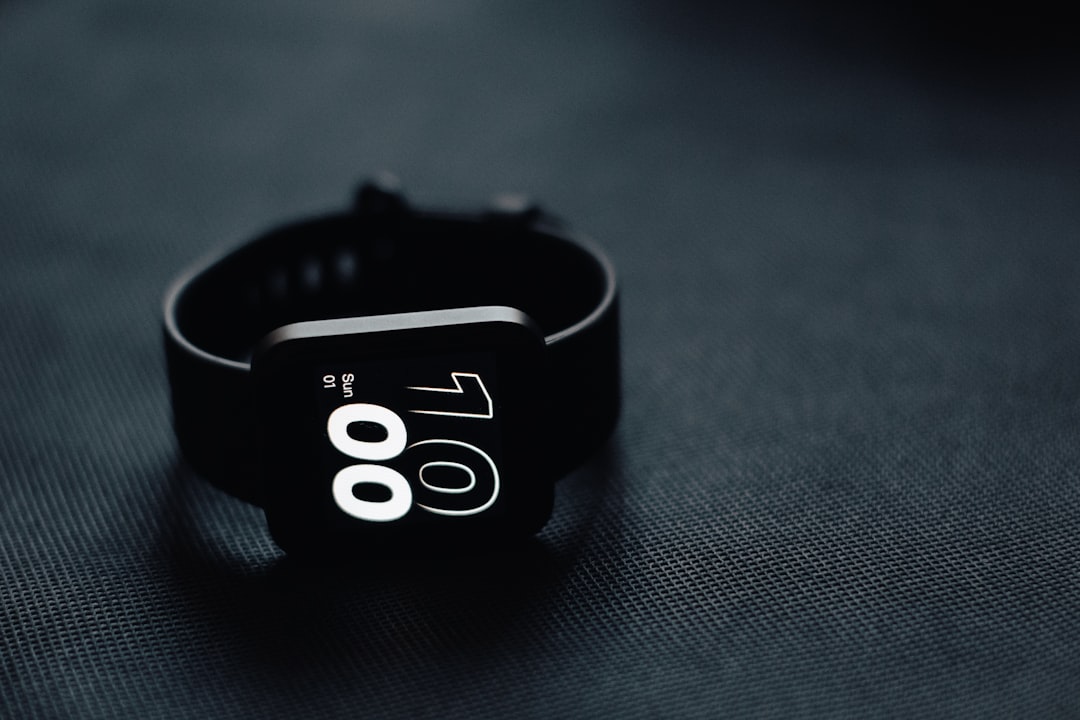
You wear it to bed. You wear it in the shower. You wear it during workouts, at your desk, and on every walk. Your Apple Watch — or Galaxy Watch, Fitbit, or Oura Ring — is the one device that literally never leaves your body.
That’s what makes the EMF question different for smartwatches than for any other device you own. Your phone sits on a table sometimes. Your laptop is a foot away. But your wearable? It’s pressing against your skin 24 hours a day, 7 days a week.
Here’s what the actual data says about smartwatch EMF exposure — not the fear-mongering version, and not the “it’s totally fine” dismissal either.
What Kind of EMF Does a Smartwatch Emit?
Every smartwatch emits three types of electromagnetic radiation:
1. Radiofrequency (RF) radiation — from Bluetooth, WiFi, and cellular connections. This is what SAR ratings measure, and it’s the primary exposure concern.
2. Extremely low frequency (ELF) magnetic fields — from the battery, processor, and electrical circuits. Small but constant.
3. Electric fields — from voltage differences in the circuitry. Minimal compared to RF.
The key difference from a phone: a smartwatch has multiple simultaneous radio transmitters in constant skin contact. Most modern smartwatches run Bluetooth (always on for phone pairing), WiFi (for data sync), and potentially cellular (LTE/5G on GPS + Cellular models) — all at once.
Apple Watch SAR Levels: The Actual Numbers
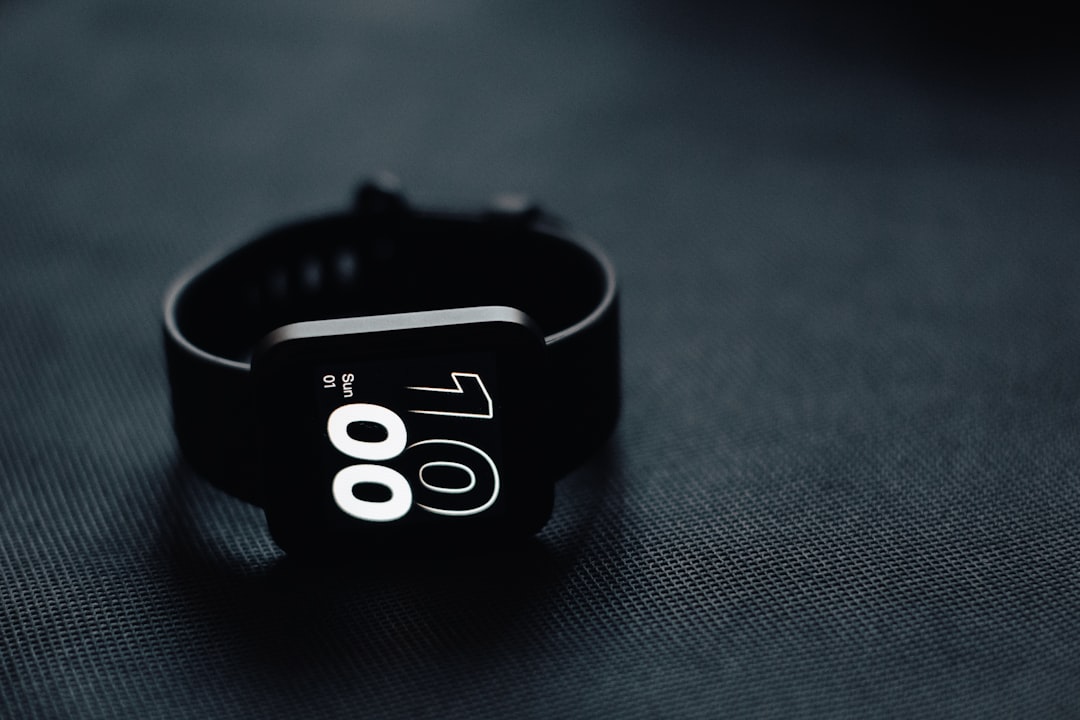
Apple publishes SAR (Specific Absorption Rate) data for every Watch model, measured in watts per kilogram (W/kg). The FCC limit is 1.6 W/kg averaged over 1 gram of tissue.
Here’s how every Apple Watch generation compares:
| Model | Year | SAR (W/kg) | Connectivity |
|---|---|---|---|
| Apple Watch Series 10 (GPS + Cellular) | 2024 | 0.55 | BT + WiFi + LTE |
| Apple Watch Ultra 2 | 2023 | 0.47 | BT + WiFi + LTE |
| Apple Watch Series 9 (GPS + Cellular) | 2023 | 0.52 | BT + WiFi + LTE |
| Apple Watch Series 9 (GPS only) | 2023 | 0.28 | BT + WiFi |
| Apple Watch SE (2nd gen, GPS + Cellular) | 2022 | 0.50 | BT + WiFi + LTE |
| Apple Watch Ultra | 2022 | 0.46 | BT + WiFi + LTE |
| Apple Watch Series 8 (GPS + Cellular) | 2022 | 0.48 | BT + WiFi + LTE |
| Apple Watch Series 8 (GPS only) | 2022 | 0.27 | BT + WiFi |
| Apple Watch Series 7 (GPS + Cellular) | 2021 | 0.46 | BT + WiFi + LTE |
| Apple Watch Series 7 (GPS only) | 2021 | 0.25 | BT + WiFi |
| Apple Watch Series 6 (GPS + Cellular) | 2020 | 0.42 | BT + WiFi + LTE |
| Apple Watch Series 3 (GPS + Cellular) | 2017 | 0.38 | BT + WiFi + LTE |
The pattern is clear: GPS + Cellular models emit roughly double the SAR of GPS-only models. That cellular radio is the biggest contributor to RF exposure from your wrist.
How Does Apple Watch Compare to a Phone?
For context, the iPhone 15 Pro has a SAR of 1.14 W/kg (head) and 1.12 W/kg (body). So an Apple Watch Series 10 at 0.55 W/kg is roughly half the SAR of a modern iPhone.
But here’s the catch: SAR comparisons between devices worn differently are misleading.
Your phone isn’t pressed against your skin 24 hours a day. Your watch is. The total cumulative exposure from a device worn continuously can exceed the exposure from a device used intermittently — even if the per-use SAR is lower.
Check your EMF exposure
See cell towers, power lines, and substations near any US address.
Search Your AddressOther Smartwatches and Wearables: SAR Comparison
Apple isn’t the only player. Here’s how other popular wearables stack up:
| Device | SAR (W/kg) | Connectivity | Always-On? |
|---|---|---|---|
| Samsung Galaxy Watch 6 (LTE) | 0.53 | BT + WiFi + LTE | Yes |
| Samsung Galaxy Watch 6 (BT) | 0.26 | BT + WiFi | Yes |
| Google Pixel Watch 2 (LTE) | 0.49 | BT + WiFi + LTE | Yes |
| Google Pixel Watch 2 (BT) | 0.24 | BT + WiFi | Yes |
| Fitbit Sense 2 | 0.18 | BT + WiFi | Yes |
| Fitbit Charge 6 | 0.08 | BT only | Yes |
| Garmin Fenix 8 | 0.12 | BT + WiFi | Yes |
| Oura Ring Gen 3 | 0.0003 | BT only | Yes |
| Whoop 4.0 | 0.48 | BT only | Yes |
The takeaway: devices with cellular radios (LTE) emit 2-5x more RF than Bluetooth-only devices. The Oura Ring, which only uses Bluetooth and has no screen or WiFi, has an extraordinarily low SAR — Oura publishes 0.0003 W/kg, over 1,000x below an Apple Watch with cellular.
The 24/7 Skin Contact Problem
This is where smartwatches diverge from every other EMF discussion. The physics of RF absorption follow the inverse-square law: double your distance from the source, quarter your exposure.
At zero distance — direct skin contact — you’re absorbing the maximum possible energy from the transmitter. There’s no air gap. No case. No distance whatsoever.
Consider the math:
- Phone in pocket (1-2 cm gap from skin): exposure reduced roughly 25-50% vs. direct contact
- Laptop on desk (30-50 cm): exposure reduced ~99% vs. direct contact
- Smartwatch on wrist: 0 cm. Full contact. No reduction.
Now multiply that by hours of daily wear:
| Scenario | Daily Exposure Hours | Weekly Hours |
|---|---|---|
| Phone (active use) | 4-6 hours | 28-42 |
| Laptop (near body) | 6-8 hours | 42-56 |
| Smartwatch (worn) | 16-24 hours | 112-168 |
Even at a lower SAR per second, the cumulative dose from a smartwatch can exceed your phone simply due to duration and proximity.
What Does the Research Say?

There’s limited research specifically on smartwatch EMF effects — the devices are relatively new. But relevant findings from adjacent research include:
Wrist and Forearm Tissue Absorption
A 2023 computational modeling study (Varsier & Wiart, Bioelectromagnetics) found that wrist tissue absorbs RF differently than head tissue due to the proximity of bone, tendons, and the radial/ulnar arteries. The thin skin and shallow blood vessels on the inner wrist create a more efficient pathway for RF energy absorption compared to thicker body regions.
Bluetooth and Short-Range RF
Most smartwatch communication uses Bluetooth Low Energy (BLE) at 2.4 GHz. A 2021 review (Wall et al., Environmental Research) found that while BLE power levels are low (typically 1-10 mW vs. 200-600 mW for cellular), the continuous duty cycle means the device is transmitting frequently — heart rate syncs, notification pushes, and sensor data uploads happen throughout the day.
The Earphone Magnetite Connection
A 2025 study by Zhang et al. (ACS Nano, PMID 41774862) found that magnetic fields from devices worn near the head can promote magnetite nanoparticle accumulation in brain tissue. While this studied earphones specifically, the principle of chronic low-level magnetic field exposure from body-worn devices applies to wrist wearables too — though the wrist is farther from the brain.
Circadian Disruption and Sleep
If you wear your smartwatch to bed — as most health trackers encourage — you’re exposing yourself to pulsed RF during sleep. Research on EMF and sleep quality shows that RF exposure during sleep may affect melatonin production and sleep architecture, though the evidence for low-power Bluetooth devices is less clear than for cellular frequencies.
GPS-Only vs. Cellular: A 2x Difference
The single biggest factor in your smartwatch EMF exposure is whether it has a cellular radio.
GPS + Cellular models (Apple Watch with LTE, Galaxy Watch LTE) have a full cellular transmitter that connects directly to cell towers. When your phone isn’t nearby, the watch uplinks independently — at higher power levels than Bluetooth.
GPS-only models use Bluetooth to relay through your phone. They never transmit directly to cell towers. Their SAR is consistently 40-50% lower.
If EMF exposure matters to you, choosing GPS-only over cellular is the single most effective step — more impactful than any shielding product.
How to Reduce Smartwatch EMF Exposure
Here’s what actually works, ranked by impact:
High Impact
- Choose GPS-only over Cellular — Skip the LTE model. Use your phone for calls and data. This cuts SAR roughly in half.
- Take it off at night — Charge your watch on a nightstand, not your wrist. You don’t need sleep tracking badly enough to add 8 hours of RF exposure.
- Enable Airplane Mode when possible — Most watches support airplane mode. Use it during workouts if you don’t need live notifications.
Medium Impact
- Disable WiFi when near your phone — If your phone is nearby, the watch only needs Bluetooth. Turn off WiFi in watch settings.
- Reduce notification frequency — Every notification triggers a Bluetooth transmission. Batch or limit which apps can ping your wrist.
- Wear it on the outside of your wrist — The outer wrist has thicker skin and less vascular exposure than the inner wrist.
Low Impact (But Still Helpful)
- Keep your phone nearby — When the watch can reach your phone via Bluetooth, it won’t need to boost WiFi or cellular power.
- Update your software — Newer watchOS/Wear OS versions often optimize Bluetooth power management.
What Doesn’t Work
- “EMF blocking” watch bands — These products claim to block radiation but the watch transmits from its back and sides. A band can’t shield the case without breaking connectivity.
- Stickers or patches — No peer-reviewed evidence that adhesive “harmonizers” reduce measurable RF exposure.
- Copper or metal bands — May slightly alter the antenna pattern but won’t meaningfully reduce SAR at the skin contact point.
The Oura Ring Alternative
If you want health tracking with minimal EMF exposure, the Oura Ring is worth considering:
- SAR: ~0.003 W/kg (vs. 0.55 for Apple Watch Cellular)
- Bluetooth only — no WiFi, no cellular
- Intermittent sync — only transmits data periodically, not continuously
- No screen — no need for constant Bluetooth connection for notifications
The tradeoff: no notifications, no apps, no calls. It’s purely a health tracker. But from a pure EMF perspective, it’s roughly 180x lower exposure than an Apple Watch with cellular.
Should You Stop Wearing Your Smartwatch?
This isn’t a “throw it in the trash” situation. The SAR levels from smartwatches are within FCC limits, and there’s no definitive research linking smartwatch-specific EMF exposure to health effects.
But the precautionary argument is strong:
- We’ve never had a generation wear RF transmitters 24/7 on their skin. The long-term data simply doesn’t exist.
- FCC SAR limits were set in 1996 based on thermal effects only. They haven’t been updated despite ICBE-EMF’s formal challenge and a federal court ruling ordering the FCC to re-evaluate.
- Children wearing smartwatches have thinner skin, developing tissue, and decades more cumulative exposure ahead. The precautionary principle for kids applies doubly here.
The science-based approach: reduce what you can, without anxiety.
Choose GPS-only. Take it off at night. Use airplane mode when you can. And check your total daily EMF exposure to see where your smartwatch fits into the bigger picture.
Related Reading
- EMF at the Gym: Treadmills, Spin Bikes, and Fitness Equipment Ranked — Your smartwatch plus gym equipment motors: understanding your total workout EMF exposure
Frequently Asked Questions
How much EMF radiation does an Apple Watch emit?
The Apple Watch Series 10 (GPS + Cellular) has a SAR of 0.55 W/kg. GPS-only models are lower at around 0.28 W/kg. Both are within the FCC limit of 1.6 W/kg, but the watch is worn in continuous skin contact — unlike a phone, which is intermittently used.
Is the Oura Ring safer than an Apple Watch for EMF?
From a pure EMF perspective, yes — significantly. The Oura Ring has a SAR of approximately 0.003 W/kg, about 180x lower than an Apple Watch with cellular. It only uses Bluetooth and syncs intermittently rather than maintaining constant connections.
Should I wear my smartwatch to bed?
If EMF exposure concerns you, charging your watch overnight rather than wearing it is a simple way to reduce 6-8 hours of daily RF exposure. Most sleep tracking data can also be captured by placing the watch on your nightstand — some newer models offer bedside charging modes that still track room conditions.
Does airplane mode on a smartwatch reduce EMF?
Yes, airplane mode disables Bluetooth, WiFi, and cellular radios, reducing RF emissions to near zero. The watch still emits minimal ELF from its battery and processor, but RF — the primary exposure concern — is eliminated. You lose notifications and connectivity but keep basic timekeeping and onboard features.
Are smartwatch EMF blocking bands effective?
There’s no peer-reviewed evidence that EMF-blocking watch bands meaningfully reduce SAR from a smartwatch. The watch transmits from its entire case, not just the band area. A band that actually blocked all RF would also prevent the watch from connecting to your phone or cellular network.
Is it safe for children to wear smartwatches?
Children have thinner skin, smaller wrists, and developing tissue that may absorb RF energy more efficiently than adults. The FCC SAR limits were designed based on adult tissue models. If your child wears a smartwatch, choose a GPS-only model with Bluetooth only, and consider having them remove it at night and during school hours.
Concerned about EMF in your environment? Check your address on EMF Radar to see nearby cell towers and power lines, or find a certified EMF consultant for professional testing.