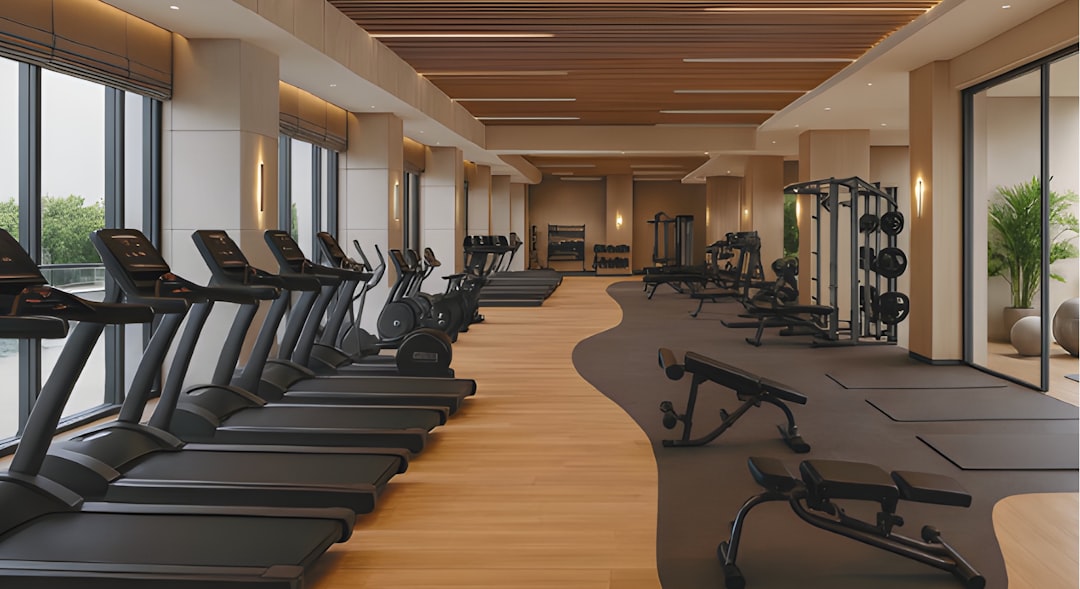
You go to the gym to get healthier. But if you’re EMF-conscious, you might have wondered: how much electromagnetic radiation are you absorbing from that treadmill, spin bike, or elliptical?
The short answer: gym equipment produces measurable ELF magnetic fields from electric motors, and modern connected equipment adds WiFi/Bluetooth RF on top. The exposure is real but typically brief, and there are easy ways to minimize it.
Let’s break down every major type of gym equipment by actual EMF output.
Why Gym Equipment Produces EMF
Fitness equipment creates electromagnetic fields from three sources:
1. Electric Motors (ELF Magnetic Fields — 60 Hz)
The dominant source. Treadmills, ellipticals, stair climbers, and motorized bikes all contain DC or AC motors that produce strong ELF magnetic fields. Motor size and power directly correlate with field strength.
2. Built-In Screens and Electronics (RF + ELF)
Modern “connected” gym equipment (Peloton, NordicTrack iFIT, Life Fitness, Technogym) contains WiFi modules, Bluetooth, and sometimes cellular radios for streaming content. The touchscreens also produce ELF from their power supplies.
3. Building Electrical Infrastructure
Commercial gyms have significant electrical loads — HVAC, lighting, sound systems, and dozens of machines on the same circuits. The building’s wiring and transformer proximity contribute ambient ELF that’s independent of any single machine.
Every Major Equipment Type, Ranked by EMF
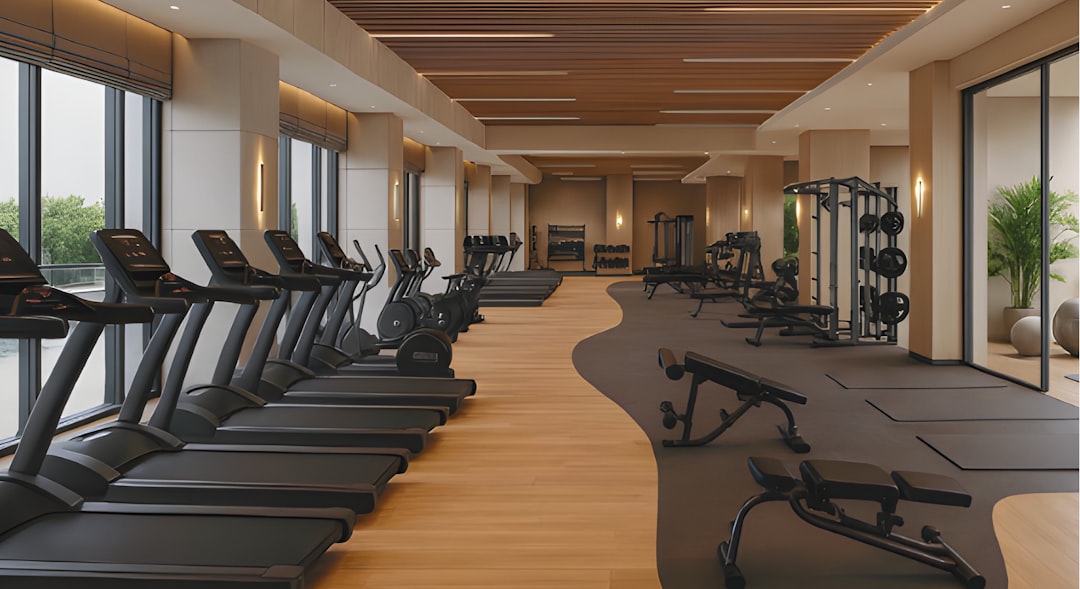
Based on typical ELF magnetic field measurements at user position (where your body actually is during exercise):
Tier 1: Highest EMF (15–100+ mG at user position)
Treadmill — The EMF king of the gym
- Motor: 2.0–4.0 HP continuous duty (the largest motor of any consumer fitness equipment)
- ELF at user position: 15–60 mG at waist level while running; 40–100+ mG at the motor housing (rear base)
- Why so high: The motor runs continuously at high power, the belt mechanism requires significant current, and your feet are directly above the motor/electronics
- The incline factor: Incline treadmills draw even more current — up to 15 amps at steep grades — increasing magnetic fields proportionally
- Connected models (Peloton Tread, NordicTrack X32): Add WiFi RF from the screen, typically 0.001–0.01 mW/cm² at face distance (12–18 inches)
Stair Climber / StairMaster
- Motor: 1.5–3.0 HP for the step mechanism
- ELF at user position: 10–40 mG at hip level
- Unique factor: Your hips (and reproductive organs) are at motor height on most models
Tier 2: Moderate EMF (3–15 mG at user position)
Elliptical Trainer
- Motor: 1.0–2.0 HP for resistance (self-powered stride mechanism means motor does less work than a treadmill)
- ELF at user position: 3–15 mG, varies significantly by model
- Advantage: Many ellipticals are partially self-powered — the motor primarily provides magnetic resistance rather than driving the movement, so current draw is lower than treadmills
Motorized Spin Bike / Connected Bike (Peloton Bike, NordicTrack, Echelon)
- Resistance motor: Magnetic resistance using electromagnet or eddy current brake
- ELF at user position: 5–15 mG at saddle/pedal area
- Connected models: WiFi screen at 18–24 inches from face during use, Bluetooth to heart rate monitor and headphones
- Vs. friction-based bikes: Older friction-pad resistance bikes have near-zero EMF (no motor)
Rowing Machine (Motorized)
- Motor: Electromagnetic resistance, typically 0.5–1.5 HP equivalent
- ELF at user position: 3–10 mG at seat level during stroke
- Cable/chain proximity: The magnetic brake is near the flywheel housing, which is at arm’s length during full extension
Tier 3: Low EMF (0.5–5 mG at user position)
Cable Machine / Functional Trainer
- Motor: Weight stack selection motor (if electronic), otherwise gravity-only
- ELF at user position: 0.5–3 mG (electronic selection) to <0.5 mG (pin selection)
- Most models are mechanical — pure cable and pulley with pin-selected weights. Effectively zero motor EMF.
Smith Machine / Power Rack
- No motor in standard models
- ELF: Only ambient gym levels (0.5–2 mG from building wiring and nearby machines)
- Exception: Some modern Smith machines have motorized safety catches — still minimal
Plate-Loaded Equipment (Leg Press, Hack Squat, etc.)
- No motor, no electronics in standard models
- ELF: Ambient only (<1 mG)
Tier 4: Minimal/Zero EMF
Free Weights (Dumbbells, Barbells, Kettlebells)
- Zero EMF from the equipment itself
- Only ambient gym fields apply
- The ultimate low-EMF workout equipment
Bodyweight / Calisthenics Area
- Zero equipment EMF
- Pull-up bars, dip stations, suspension trainers — all passive
Manual Treadmill (Curved / Non-Motorized)
- Self-powered by your stride — no motor, no electronics (basic models)
- ELF at user position: <1 mG
- Examples: AssaultRunner, TrueForm Runner, Woodway Curve
- This is the low-EMF answer to the treadmill problem — same workout, virtually zero EMF
- Caveat: Some models (like the Peloton Tread+) are “manual” in design but still have large motors
Manual Spin Bike (Friction Resistance)
- Felt-pad or leather-strap resistance — no electromagnet
- Zero motor EMF
- Examples: Schwinn IC Classic, basic Spinner models
- Trade-off: less smooth resistance than magnetic models
Air Bike (Assault Bike, Rogue Echo)
- Fan resistance — powered entirely by your effort
- Zero motor EMF
- High-intensity workout with negligible electromagnetic exposure
Check your EMF exposure
See cell towers, power lines, and substations near any US address.
Search Your AddressThe Connected Equipment Problem
The trend toward WiFi-enabled, screen-equipped gym machines creates a new layer of EMF exposure:
| Equipment | Screen Distance | WiFi Power | Bluetooth | Session Duration |
|---|---|---|---|---|
| Peloton Bike | 18–24 in | ~100 mW | Yes (HR + headphones) | 20–60 min |
| Peloton Tread | 12–18 in | ~100 mW | Yes | 20–45 min |
| NordicTrack iFIT (any) | 12–24 in | ~100 mW | Yes | 20–60 min |
| Mirror/Lululemon Studio | 36–72 in | ~100 mW | Yes | 30–60 min |
| Technogym LIVE | 18–24 in | ~100 mW | Yes | 20–60 min |
At these distances, WiFi RF exposure is comparable to standing 2–3 feet from your home router. The difference: your home router runs 24/7, while your gym session is 30–60 minutes.
The real question isn’t “is gym WiFi dangerous?” — it’s “does gym WiFi meaningfully add to my daily exposure?” For most people who already live with WiFi at home and work, the gym contribution is modest.
But if you’re someone who minimizes WiFi exposure at home (wired connections, airplane mode at night), then an hour on a Peloton represents a concentrated RF session you might want to optimize.
Your Gym EMF Exposure Budget
A typical 60-minute gym session on mixed equipment:
| Activity | Duration | ELF Exposure | RF Exposure |
|---|---|---|---|
| Treadmill warmup | 10 min | 30 mG avg | WiFi screen + Bluetooth |
| Free weight circuit | 20 min | <1 mG | Bluetooth headphones only |
| Spin bike intervals | 15 min | 10 mG avg | WiFi screen + Bluetooth |
| Cable machine finisher | 10 min | <2 mG | None (mechanical) |
| Stretching | 5 min | <1 mG | None |
Total weighted ELF exposure: ~10 mG average over 60 minutes Comparison: Sitting at a desk with a laptop for 8 hours ≈ 2–5 mG average (but 8× longer)
The gym session is higher intensity but shorter duration. Your cumulative daily exposure from an office job almost certainly exceeds your gym exposure.
10 Tips for a Lower-EMF Gym Experience

Ranked by impact:
High Impact (Free)
-
Choose manual/air-powered equipment over motorized — a curved treadmill, air bike, or friction spin bike eliminates motor EMF entirely while providing equivalent or better workouts
-
Prioritize free weights and bodyweight — zero equipment EMF, superior functional fitness benefits, and you’re not locked into a fixed position near electronics
-
Step off the treadmill for breaks — if you do intervals on a motorized treadmill, step to the side rails during rest periods. The motor typically runs continuously even at rest.
-
Use the outdoor track or stairs — running outside or using building stairs ≈ zero EMF from equipment. Many gyms have outdoor areas.
Medium Impact (Free)
-
Pick machines away from the electrical panel — every gym has a main electrical panel and sub-panels, often near equipment rows. The ambient ELF field near panels can add 5–20 mG.
-
Use speaker mode or wired headphones — instead of Bluetooth earbuds at your temples during a 45-minute session, use your phone’s speaker (if gym allows) or wired earbuds
-
Disable WiFi on connected equipment if possible — some machines let you skip the login/WiFi connection. Use the basic manual program instead of streaming.
Lower Impact
-
Don’t rest your hands on the treadmill console — the console houses the electronics and display. The magnetic field is highest there. Use the side rails.
-
Choose older/simpler machines — that basic LifeFitness treadmill from 2010 with no screen produces only motor ELF. The 2025 model with a 22-inch WiFi touchscreen adds RF.
-
Home gym advantage — building a home gym with manual/free-weight equipment gives you complete control over your EMF environment
Home Gym vs Commercial Gym: EMF Comparison
| Factor | Commercial Gym | Home Gym |
|---|---|---|
| Ambient ELF | 2–10 mG (building, HVAC, other machines) | 0.5–2 mG (residential wiring) |
| Equipment motor ELF | High (commercial treadmills: 2.5–4.0 HP) | Moderate (home treadmills: 1.5–3.0 HP) |
| WiFi density | High (building WiFi + dozens of connected machines) | Low (your router only) |
| Duration flexibility | Fixed by class/schedule | Unlimited — can use low-EMF equipment anytime |
| Equipment choice | Whatever the gym has | You pick low-EMF options |
| Cost | $30–200/month | One-time investment |
For the EMF-conscious, a home gym with manual equipment is the clear winner. A curved treadmill ($2,500–4,500), adjustable dumbbells ($300–500), pull-up bar ($30–100), and resistance bands ($20–40) covers most fitness needs with virtually zero equipment EMF.
The Exercise vs EMF Trade-Off
Here’s the honest perspective: the health benefits of regular exercise overwhelmingly outweigh any theoretical EMF risk from gym equipment.
Exercise provides:
- 30–50% reduction in cardiovascular disease risk
- 20–30% reduction in cancer risk (colon, breast)
- Significant improvement in sleep quality, mental health, cognitive function
- Weight management, bone density, immune function
The EMF from gym equipment:
- Brief duration (30–60 minutes)
- Well below occupational safety limits
- No epidemiological evidence linking gym EMF to any health outcome
- Easily reduced with equipment selection
Not exercising because of gym EMF would be like avoiding hospitals because they have WiFi. The dose makes the poison, and the “dose” of exercise benefit is enormous compared to the “dose” of equipment EMF.
If EMF concern is your barrier to going to the gym, choose free weights and bodyweight exercises. Problem solved — zero equipment EMF, maximum health benefit.
Check what cell towers are near your gym →
Frequently Asked Questions
Do treadmills emit EMF radiation?
Yes — treadmills produce ELF magnetic fields from their motors (15–60 mG at user position) and, if connected, WiFi RF from built-in screens. The motor EMF is the dominant source. It drops to negligible levels about 4–5 feet from the machine, but you’re typically standing directly on it during use.
Is it safe to use a Peloton or connected bike?
Yes. The EMF exposure from connected bikes is comparable to using a laptop near a WiFi router — moderate ELF from the electromagnetic resistance, plus WiFi RF from the screen. For a 30–60 minute session, this isn’t a health concern by any established guideline. If you want to reduce exposure, use basic programs without WiFi when available.
Are free weights better than machines for EMF?
From an EMF perspective, absolutely. Free weights produce zero electromagnetic fields — they’re just metal. No motors, no electronics, no WiFi. They also provide superior functional strength and stabilizer muscle activation. If EMF is a concern, free weights are the perfect answer.
Do gym Bluetooth headphones increase EMF exposure?
Bluetooth earbuds add a small RF exposure (1–4 mW peak, <1% duty cycle) very close to your brain for the duration of your workout. For a 45–60 minute session with earbuds, this is a more concentrated Bluetooth exposure than typical daily use. Wired headphones eliminate this entirely. See our Bluetooth headphones brain safety guide for the detailed research.
Is a manual treadmill better than motorized for EMF?
Yes — dramatically. Manual/curved treadmills like the AssaultRunner or TrueForm Runner have no motor, producing virtually zero ELF magnetic fields. You power the belt with your stride. They also provide better running form and higher calorie burn. The trade-off: they’re more expensive ($2,500–4,500) and harder to run on at first. From a pure EMF perspective, they’re the best cardio option available.
Should I avoid the gym because of EMF?
No. The health benefits of regular exercise far outweigh any theoretical EMF risk from gym equipment. If you’re concerned, prioritize free weights, bodyweight exercises, and manual equipment — you’ll get a better workout with less EMF. The worst health outcome would be avoiding exercise entirely because of EMF fear.
Concerned about EMF in your home? Check your address on EMF Radar to see nearby cell towers and power lines, or find a certified EMF consultant for a professional home assessment.