
“Is EMF causing my hair loss?” shows up in Google autocomplete with surprising frequency. If you’re noticing your hair thinning and wondering whether your phone, WiFi router, or a nearby cell tower could be the culprit, here’s the short answer: there is no scientific evidence that environmental EMF causes hair loss.
But the full story is more interesting than a simple “no” — because electromagnetic fields are actually being studied as a treatment for baldness. Yes, seriously.
What the Research Actually Shows
Let’s start with the gap: despite thousands of studies on EMF and human health, not a single published study has demonstrated that exposure to cell phone, WiFi, or cell tower radiation causes hair loss. This isn’t because nobody looked — the absence is telling.
Compare this to other EMF health topics:
- EMF and sperm quality: 441+ studies, consistent signals of oxidative stress effects
- EMF and sleep: hundreds of studies on melatonin and sleep architecture
- EMF and headaches: large population surveys with dose-response data
- EMF and hair loss: essentially zero direct evidence
Hair loss is one of the most studied conditions in medicine. If RF-EMF were causing or accelerating it, dermatologists and trichologists would have noticed patterns in their patients. They haven’t.
The Plot Twist: EMF as a Hair Loss Treatment
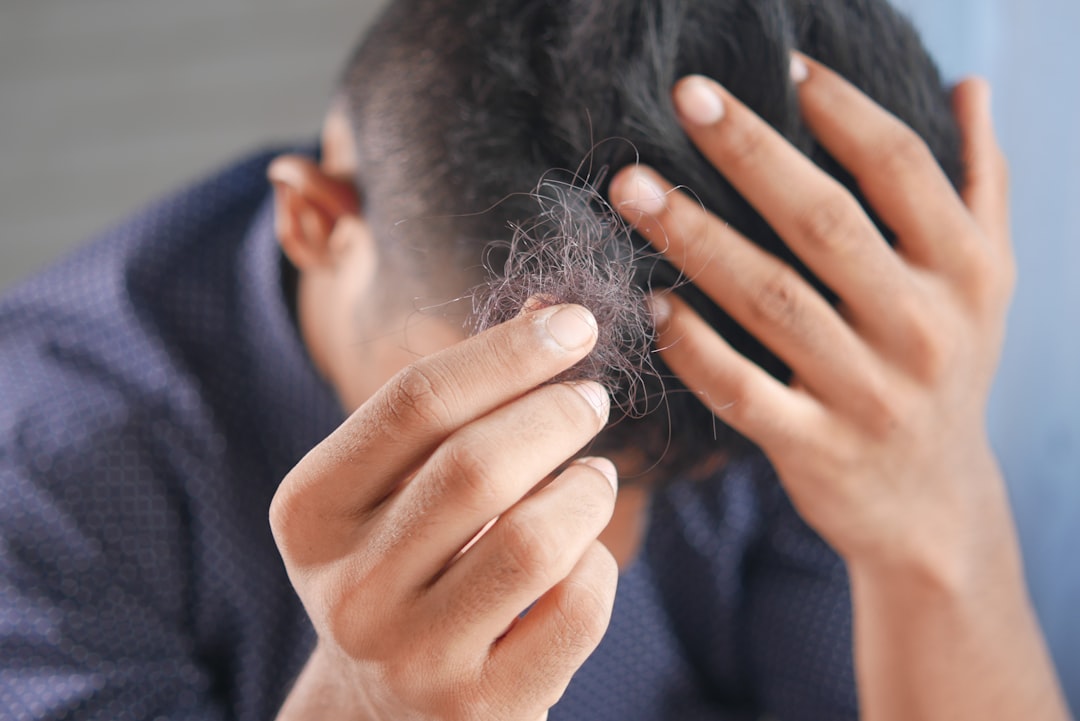
Here’s where it gets counterintuitive. While there’s no evidence environmental EMF causes hair loss, researchers are actively using controlled electromagnetic fields to grow hair back:
PEMF Therapy for Androgenetic Alopecia
Gentile & Lee 2025 published a multicentric study in Aesthetic Plastic Surgery testing pulsed electromagnetic field (PEMF) therapy combined with photobiostimulation for hair loss:
- 40 patients with androgenetic alopecia (20 males, 20 females)
- PEMF + light therapy group showed 14 additional hairs per 0.65 cm² after 16 weeks
- Statistically significant improvement (p = 0.0325) vs. light therapy alone
- Hair count increased from 27 ± 2 to 41 ± 2 hairs per target area
How ELF-EMF Stimulates Hair Follicles
The mechanism was explored by Ki et al. 2020 at Dongguk University:
- Extremely low-frequency EMF (70 Hz) stimulated human dermal papilla cells (the master regulators of hair growth)
- Increased expression of anagen-related molecules — collagen IV, laminin, ALP, and versican (all markers of active hair growth phase)
- Activated the GSK-3β/ERK/Akt signaling pathway — the biochemical cascade that tells hair follicles to grow
- Increased β-catenin and Wnt3α expression — the key “grow hair” signals
- Optimal intensity: 10 Gauss at 70 Hz
RF Currents and Hair Follicle Regeneration
Martínez-Pascual et al. 2024 tested radiofrequency electric currents (448 kHz) on hair follicles donated by alopecia patients:
- RF treatment increased cell proliferation (Ki67 marker up) and decreased cell death (TUNEL assay down)
- Melanoblasts increased in the hair follicle bulge region — meaning RF stimulated the stem cell niche
- Epidermis surrounding hair follicles thickened
- β-catenin differentiation markers increased
- All effects occurred at subthermal levels — meaning the mechanism wasn’t just heating
This is a genuine paradox: the same type of energy people worry causes hair loss is being developed as a treatment for it.
Check your EMF exposure
See cell towers, power lines, and substations near any US address.
Search Your AddressWhy People Connect EMF to Hair Loss
Even without scientific evidence, the concern makes psychological sense:
1. Stress Connection
EMF anxiety itself causes stress, and stress is a known cause of hair loss. Telogen effluvium (stress-induced shedding) can cause noticeable hair thinning 2–3 months after a stressful period. If someone becomes anxious about EMF exposure and then notices hair loss, they may attribute the effect to the wrong cause.
2. Coincidental Timing
Hair thinning typically begins in the late 20s to 30s — the same age range when people become more health-conscious and start Googling environmental risks. The coincidence creates a false association.
3. EHS Symptom Lists
Some electromagnetic hypersensitivity (EHS) advocacy websites include hair loss in their symptom lists. However, no controlled study has validated this connection. The WHO factsheet on EHS notes that symptoms attributed to EHS are real, but double-blind provocation studies have not shown a causal link to EMF exposure.
4. The Oxidative Stress Bridge
The theoretical argument goes: EMF can cause oxidative stress → oxidative stress can damage hair follicles → therefore EMF might cause hair loss. Each step has some evidence:
- EMF and oxidative stress: well-documented in cell and animal studies
- Oxidative stress and hair loss: 95 PubMed studies confirm oxidative stress plays a role in alopecia
But this logical chain hasn’t been validated end-to-end. The oxidative stress from typical EMF exposure is far less than from, say, UV radiation, pollution, or smoking — all of which have much stronger associations with hair damage.
What Actually Causes Hair Loss
If EMF isn’t the culprit, what is? Understanding the real causes might redirect your energy (pun intended) more productively:
Genetics (Androgenetic Alopecia)
The #1 cause. About 50% of men experience noticeable hair loss by age 50, and 40% of women by age 60. It’s driven by dihydrotestosterone (DHT) sensitivity in hair follicles, which is largely genetic.
Hormonal Changes
Thyroid disorders, pregnancy, menopause, PCOS — all can trigger hair loss. If you’re losing hair, get your thyroid checked before worrying about your WiFi router.
Nutritional Deficiencies
Iron, zinc, vitamin D, biotin, and protein deficiencies all contribute to hair thinning. These are common and easily tested.
Stress (Telogen Effluvium)
Acute stress pushes hair follicles into the resting phase prematurely. The shedding shows up 2–3 months later. Major life events, illness, surgery, and chronic stress are all triggers.
Autoimmune Conditions
Alopecia areata is an autoimmune condition where the immune system attacks hair follicles. It affects about 2% of the population.
Medications
Chemotherapy, blood thinners, beta-blockers, retinoids, and some antidepressants can cause hair loss. Check your medication side effects.
Traction and Styling
Tight hairstyles, heat styling, and chemical treatments can cause traction alopecia — physical damage to follicles over time.
What If You’re Still Concerned?

If you want to minimize EMF exposure regardless of the hair loss connection, the standard precautionary steps apply:
- Keep your phone away from your head when not on calls — use speakerphone or wired earbuds
- Don’t sleep with your phone on the pillow — this one’s more about sleep quality than hair
- Maintain distance from your WiFi router — a few feet of separation significantly reduces exposure
- Check your proximity to cell towers — use EMF Radar’s map to see what’s near you
But if hair loss is your primary concern, here’s a more productive checklist:
- Get bloodwork done (thyroid, iron, vitamin D, zinc, hormones)
- Assess your stress levels honestly
- Review your medications with a doctor
- Look at your family history
- Consider seeing a dermatologist or trichologist
These steps are far more likely to identify the actual cause than measuring your WiFi signal strength.
The Irony of the PEMF Connection
There’s a certain irony in the fact that people Google “EMF causing hair loss” while researchers are using electromagnetic fields to regrow hair. The difference is in the parameters:
- Environmental EMF (cell phones, WiFi): continuous, uncontrolled, varying frequencies and intensities
- Therapeutic PEMF: controlled pulses at specific frequencies (typically 10–70 Hz), specific intensities (5–100 Gauss), limited duration
This distinction matters in EMF research generally. The dose, frequency, duration, and delivery method can mean the difference between beneficial, neutral, and harmful effects. It’s the same reason sunlight can both cause skin cancer and produce essential vitamin D — the dose and exposure pattern determine the outcome.
Bottom Line
EMF and hair loss: there’s no evidence for it. Zero studies demonstrate that cell phones, WiFi, or cell towers cause hair thinning or baldness. The theoretical pathway through oxidative stress exists on paper but hasn’t been validated in practice.
If you’re experiencing hair loss, the cause is almost certainly genetic, hormonal, nutritional, stress-related, or medication-related. See a doctor.
And if you’re curious about electromagnetic treatments for hair regrowth — that’s a real and growing field of research, with preliminary clinical evidence showing promise.
Frequently Asked Questions
Can 5G towers cause hair loss?
No published study has linked 5G (or any cell tower) radiation to hair loss. 5G frequencies include sub-6 GHz (similar to 4G) and millimeter wave (which barely penetrates the outer skin layer). Neither has been associated with hair follicle damage.
Does wearing Bluetooth headphones cause hair loss?
No. Bluetooth devices transmit at extremely low power levels (typically 1–100 milliwatts, far less than a cell phone). There is no evidence linking Bluetooth radiation to hair loss or any hair follicle changes.
Can EMF make alopecia areata worse?
Alopecia areata is an autoimmune condition. While some researchers have investigated whether EMF affects immune function generally, no study has specifically linked EMF exposure to alopecia areata onset or flare-ups.
What is PEMF therapy for hair loss?
Pulsed electromagnetic field therapy uses controlled, low-frequency electromagnetic pulses to stimulate hair follicle activity. Clinical studies show it can increase hair count by stimulating dermal papilla cells and activating growth-signaling pathways (Wnt/β-catenin, GSK-3β/ERK/Akt). It’s available at some dermatology clinics, though it’s still considered experimental.
My hair started falling out after moving near a cell tower — could it be related?
Correlation doesn’t equal causation. Hair loss often develops gradually and becomes noticeable during or after stressful life events — like moving. If you’ve recently relocated, stress, water quality changes, climate differences, and routine disruption are all more likely explanations. See a dermatologist to identify the actual cause.
Is there any form of radiation that does cause hair loss?
Yes — ionizing radiation (X-rays, gamma rays) at high doses can cause hair loss, which is why chemotherapy and radiation therapy patients often experience it. These are fundamentally different from the non-ionizing radiation produced by cell phones and WiFi, which operates at energy levels millions of times too low to cause the same type of cellular damage.
Related Reading
- EMF and Male Fertility: Can Your Cell Phone Affect Your Sperm?
- EMF Exposure While Pregnant: What the Research Says and How to Reduce Your Risk
- Baby Monitor EMF Radiation: Should Parents Be Concerned?
- Electric Car EMF: How Much Radiation Do EVs Produce?
Want to check your exposure? Search your address on EMF Radar to see cell towers, power lines, and substations nearby. For a professional assessment, find a certified EMF consultant in your area.