Electric Car EMF Exposure: How Much Radiation Do EVs Produce?
Quick Answer: Electric vehicles produce measurable magnetic fields (ELF-EMF) from their batteries, motors, and power electronics — typically 0.5-5 µT inside the cabin during normal driving. These levels are well below the ICNIRP guideline of 100 µT, but 2-10x higher than in gasoline vehicles. The highest exposure occurs during acceleration and at foot level near the battery. No study has found health effects from EV magnetic field exposure, but research is ongoing.
Key Facts
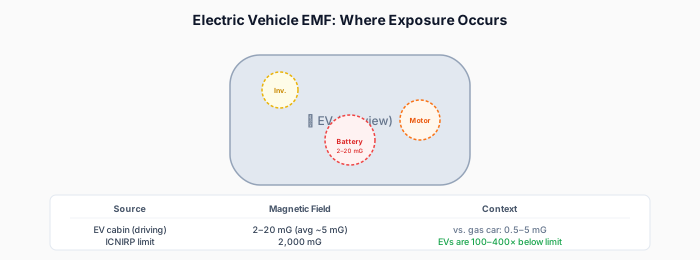
- EVs produce primarily magnetic fields (ELF-EMF), not RF radiation — from high-current DC batteries, inverters, and electric motors
- Cabin levels are typically 0.5-5 µT — about 0.5-5% of the ICNIRP safety limit (100 µT)
- Gas vehicles produce 0.02-0.5 µT — lower, but not zero (alternator, spark plugs, electronics)
- Highest exposure in EVs: foot/floor area near battery, during hard acceleration, rear seats over battery pack
- Driver exposure is highest during acceleration, lowest at constant speed or stopped
- No epidemiological studies have examined long-term health effects of EV-specific EMF exposure
- The magnetic field type matters: EV fields are primarily low-frequency (DC to ~20 kHz), similar to household appliances — not the RF radiation from cell towers
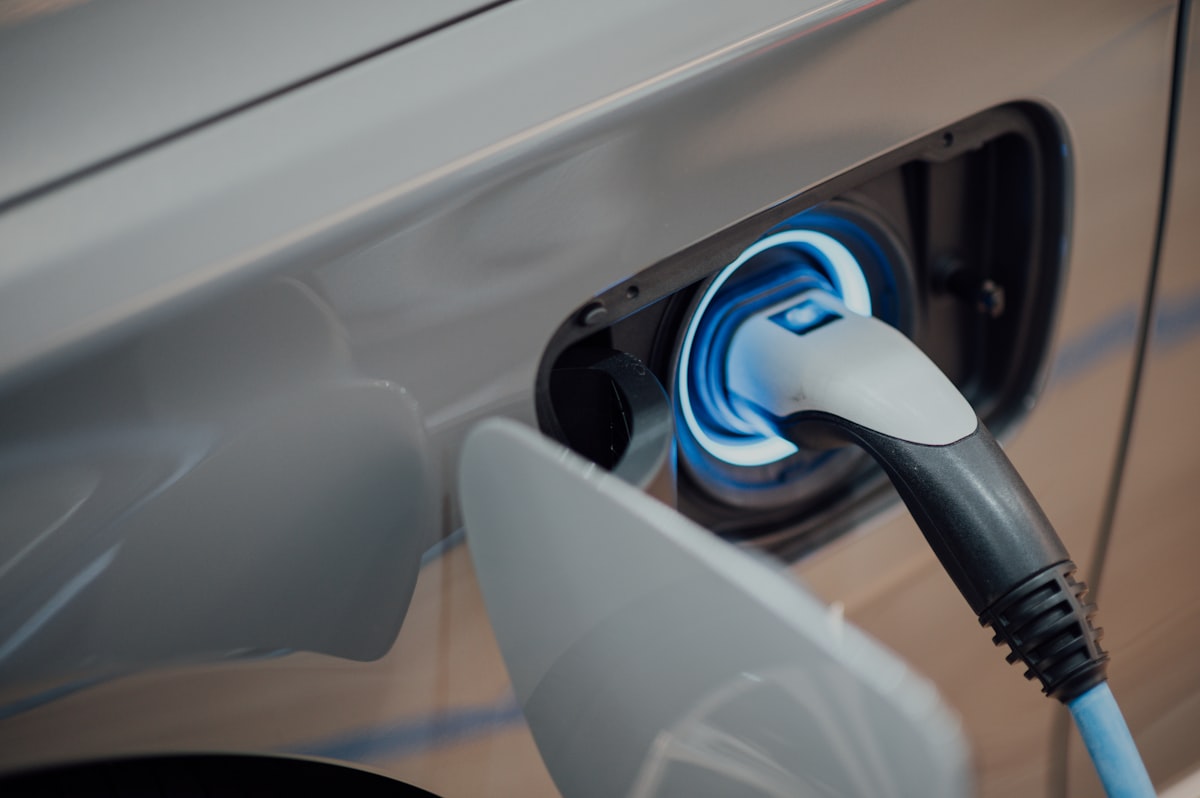
What Kind of EMF Do Electric Cars Produce?
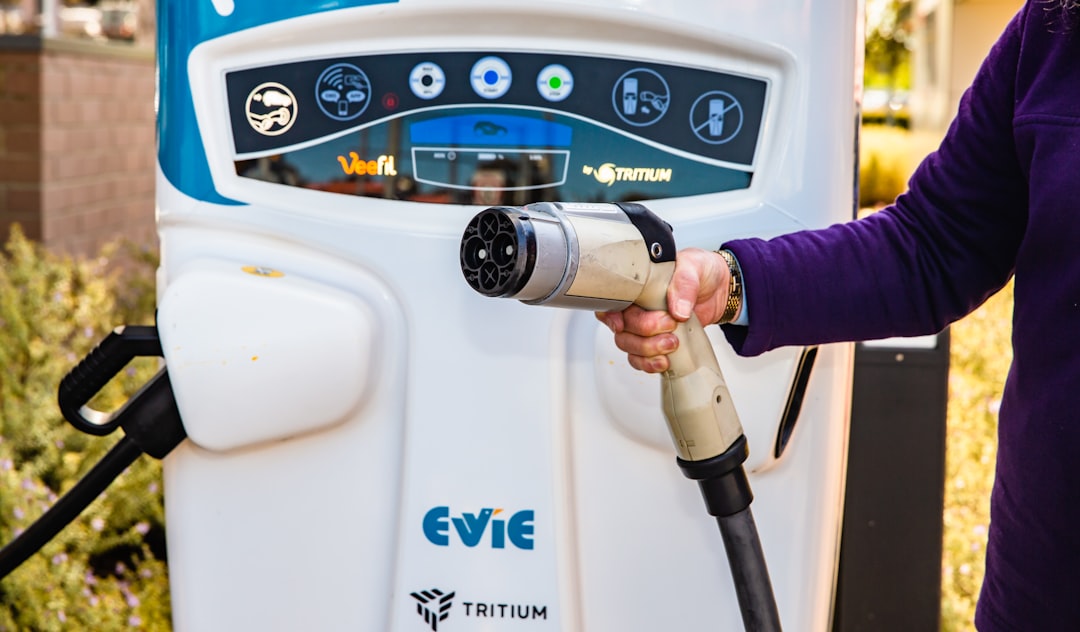

Understanding this distinction is important: electric cars produce a different type of EMF than cell towers or WiFi.
Cell towers and WiFi: RF Radiation (Radio Frequency)
- Frequency: 700 MHz to 6 GHz
- Type: Electromagnetic waves traveling through air
- This is what EMF Radar measures for your home
Electric cars: ELF-EMF (Extremely Low Frequency Magnetic Fields)
- Frequency: DC (0 Hz) to ~20 kHz
- Type: Magnetic fields from high-current electricity flowing through cables, motors, and battery packs
- Same type as power lines, household wiring, and appliances
- Drops off extremely rapidly with distance
EVs Also Have RF Sources (But They’re Minor)
- Bluetooth: phone connection, ~0.01 V/m
- WiFi: infotainment systems, ~0.05 V/m
- Cellular: built-in connectivity (Tesla, etc.), ~0.1 V/m
These RF sources exist in gas cars too and are identical in both vehicle types. They’re not an EV-specific concern.
Check your EMF exposure
See cell towers, power lines, and substations near any US address.
Search Your AddressMeasured EMF Levels Inside Electric Vehicles
The Most Comprehensive Study: EU EM-Safety Project (2015)
The European Commission funded the EM-Safety project, which measured magnetic fields inside multiple EVs under real driving conditions using 14 sensors placed throughout the vehicle cabin.
Results (during normal driving, microTesla):
| Vehicle | Driver Head | Driver Feet | Rear Seat | Peak (acceleration) |
|---|---|---|---|---|
| Nissan Leaf | 0.3 µT | 2.1 µT | 1.5 µT | 5.2 µT |
| Renault Fluence ZE | 0.2 µT | 1.8 µT | 1.2 µT | 4.1 µT |
| Mitsubishi i-MiEV | 0.4 µT | 3.2 µT | 2.0 µT | 6.8 µT |
| Volkswagen e-Golf | 0.2 µT | 1.5 µT | 0.9 µT | 3.5 µT |
ICNIRP reference limit: 100 µT (for general public, 50/60 Hz)
Key findings:
- Highest fields at foot level (closest to battery pack and power cables under the floor)
- Head-level exposure was consistently low (0.2-0.5 µT)
- Acceleration peaks were 2-3x higher than cruising levels
- Regenerative braking also increased fields temporarily
- All measurements were well below 10% of ICNIRP limits even at peak
SINTEF Study (Norway, 2017)
Norwegian research institute SINTEF measured multiple EVs including the Tesla Model S.
Tesla Model S results:
- Driver position (cruising): 0.4-0.8 µT
- Driver position (acceleration): 1.5-3.0 µT
- Rear seat (over battery): 1.0-2.5 µT
- Charging (cabin, stationary): 0.1-0.3 µT
French UTAC Study (2019)
Measured 8 EVs and hybrids for the French government:
Average results across 8 vehicles:
- Front seats: 0.3-1.5 µT (driving)
- Rear seats: 0.5-2.0 µT (driving)
- Peak acceleration: up to 7.2 µT
- Stationary/idle: 0.05-0.2 µT
Comparison: Gas Cars
For context, internal combustion engine (ICE) vehicles also produce magnetic fields:
| Source | Level |
|---|---|
| Engine running (idle) | 0.02-0.1 µT |
| Driving (normal) | 0.05-0.3 µT |
| Near alternator | 0.5-2.0 µT |
| Near spark plug wires | 0.3-1.0 µT |
Gas cars produce roughly 5-10x less cabin EMF than EVs during normal driving, but they’re not zero.
How EV EMF Compares to Everyday Sources
| Source | Magnetic Field Level | Duration of Exposure |
|---|---|---|
| Earth’s magnetic field | 25-65 µT | Constant |
| MRI scanner | 1,500,000-3,000,000 µT | Minutes |
| Hair dryer (at head) | 6-2,000 µT | Minutes |
| Electric shaver (at face) | 15-1,500 µT | Minutes |
| Microwave oven (at 30cm) | 4-8 µT | Minutes |
| Vacuum cleaner (at hand) | 2-20 µT | Minutes |
| Electric blanket | 1-5 µT | Hours |
| Electric car (driving) | 0.5-5 µT | Hours |
| Desktop computer (at 30cm) | 0.5-3 µT | Hours |
| Gas car (driving) | 0.05-0.3 µT | Hours |
| Background in home | 0.01-0.2 µT | Constant |
Key insight: EV exposure levels are comparable to sitting near a desktop computer or using an electric blanket — sources that people rarely worry about. The combination of moderate level and longer duration (commuting) is what distinguishes EV exposure from brief appliance use.
What the Research Says
ICNIRP Position
The International Commission on Non-Ionizing Radiation Protection sets the general public limit at 100 µT for 50/60 Hz magnetic fields. EV cabin levels (0.5-5 µT) are 2-5% of this limit. ICNIRP considers these levels safe based on the established biological effect (induced electric currents in tissue).
WHO Position
The World Health Organization classified ELF magnetic fields as “possibly carcinogenic” (Group 2B) in 2002 — the same category as coffee and pickled vegetables. See our overview of EMF and cancer research for more context. This classification was based primarily on epidemiological studies showing a statistical association between residential power line exposure above 0.3-0.4 µT and childhood leukemia. The association is not proven to be causal.
Important nuance: The epidemiological concern is about chronic, long-term residential exposure, not the intermittent exposure during driving. However, for people with very long commutes (2+ hours daily), the duration argument is worth considering.
Studies Specific to EVs
-
Halgamuge et al. (2020) — Systematic review in International Journal of Environmental Research and Public Health. Concluded: “The magnetic field exposure levels in EVs are generally below international exposure guidelines, but higher than in conventional vehicles. Long-term health effects remain unknown.”
-
Tell and Kavet (2016) — Published in Bioelectromagnetics. Measured multiple EVs and concluded: “Exposure levels in all cases were well below applicable reference levels… the results should allay concerns about EV magnetic field exposures.”
-
Vassilev et al. (2015) — EU EM-Safety project final report. Found that “in no case did the measured fields inside electric vehicles exceed the 2010 ICNIRP reference levels” and recommended no changes to EV design based on EMF concerns.
The Honest Assessment
The scientific consensus is that EV magnetic fields are well below established safety limits. However:
- The limits are based on acute effects (tissue heating, induced currents), not long-term chronic exposure
- No large-scale epidemiological study has tracked EV drivers over decades
- The WHO’s 2B classification of ELF magnetic fields means the question isn’t fully settled at any exposure level
- EV technology is evolving — newer vehicles with better shielding generally produce lower fields
Which EVs Have the Lowest EMF?
EMF levels vary significantly by vehicle design, battery placement, motor configuration, and shielding:
Factors That Affect EV EMF
-
Battery position: Floor-mounted batteries (standard) create higher foot-level fields. Skateboard platforms (Tesla, Rivian) spread the field more evenly.
-
Motor type: Single rear motor tends to produce lower cabin fields than dual motor or front-motor configurations, since the motor is farther from passengers.
-
Inverter placement: The inverter (converts DC battery power to AC for the motor) is a major EMF source. Front-mounted inverters increase front-seat exposure.
-
Shielding: Some manufacturers add mu-metal or aluminum shielding under the cabin floor. This varies by model and is rarely advertised.
-
Cable routing: High-current cables running under the cabin contribute to magnetic fields. Routing along the vehicle’s edges (vs center) reduces occupant exposure.
General Guidance by Vehicle Type
| Category | Typical Cabin EMF | Notes |
|---|---|---|
| Large EVs (Model X, EQS) | 0.3-2 µT | More distance between passengers and components |
| Mid-size EVs (Model 3, ID.4) | 0.5-3 µT | Standard floor-mounted battery |
| Small EVs (Leaf, e-208) | 0.5-4 µT | Less room for shielding, components closer to cabin |
| Plug-in hybrids | 0.3-2 µT | Smaller battery, less current flow |
| Mild hybrids | 0.1-0.5 µT | Very small electric component |
Note: These are general ranges. Individual vehicles vary. The only way to know your specific car’s levels is to measure with a gaussmeter.
How to Measure EMF in Your Electric Car
If you want to know your actual exposure:
Equipment Needed
- Gaussmeter/magnetometer — measures magnetic field in µT or mG (1 µT = 10 mG)
- Recommended: TriField TF2 ($190) — has a magnetic field mode. See our complete EMF meters guide for more options
- Budget option: Any ELF gaussmeter from Amazon ($30-60)
Measurement Protocol
-
Establish baseline: Measure inside the car with it turned off. Note ambient levels.
-
Stationary, on: Turn the car on (ready-to-drive state). Measure at:
- Driver head position
- Driver waist/lap
- Driver feet/floor
- Center console
- Rear seat (over battery area)
- Passenger feet
-
Driving — constant speed: Have someone else drive at a steady 30-40 mph while you take readings at the same positions.
-
Driving — acceleration: Note peak readings during hard acceleration (0 to 60 mph type pulls).
-
Regenerative braking: Note readings during coasting with regen braking active.
-
Charging: Measure inside the cabin while the vehicle is charging (levels are typically lowest here, since no motor current is flowing).
What to Look For
- Foot-level readings are usually the highest — that’s where the battery is
- Acceleration peaks may be 2-3x cruising levels
- Anything under 5 µT is consistent with published measurements
- Anything under 1 µT at head level is excellent
Practical Tips for Reducing EV EMF Exposure
If you want to minimize your exposure while still driving electric (which we encourage — the environmental benefits are substantial):
1. Keep Distance from the Floor
- Use thick floor mats (rubber/foam adds a small amount of distance)
- Avoid placing feet directly on the floor when stopped — use the footrest
- In theory, higher-riding EVs (SUVs, trucks) place occupants slightly farther from the battery
2. Drive Smoothly
- Gentle acceleration produces lower magnetic fields than hard launches
- Use cruise control on highways for steady current draw
- Moderate regenerative braking settings (if adjustable) reduce braking-related field spikes
3. Choose Seating Wisely
- Front passenger seat often has the lowest exposure (farther from motor, less floor-level equipment)
- Rear center seats can have higher exposure in some models (directly over battery center)
- For child car seats: rear seats are generally fine, but if concerned, position toward the rear edges rather than center
4. Check Your Specific Vehicle
- Measure your car with a gaussmeter — it takes 30 minutes and gives you actual data
- Different models vary by 5-10x based on design decisions
- If shopping for an EV, consider measuring at a dealership test drive
5. Perspective on Exposure Budget
If you drive 1 hour per day at ~2 µT average, your EV commute adds less to your daily magnetic field exposure than:
- Living within 50 meters of a power line
- Using a desktop computer for 4 hours
- Sleeping with an electric blanket
The question isn’t “does my EV produce EMF?” (yes, all do) — it’s “does this meaningfully change my total daily exposure?” For most people, it doesn’t.
EV Charging and EMF
Home Charging
Level 1 (120V, standard outlet):
- Current: ~12A — very low magnetic fields
- At 1 meter from charger: <0.1 µT
- Inside the car during charging: negligible
Level 2 (240V, home EVSE):
- Current: 20-50A
- At 1 meter from charger: 0.1-0.5 µT
- At 3 meters (typical bedroom distance from garage): <0.05 µT
- Inside the car during charging: 0.05-0.2 µT
Practical tip: If your charger is mounted on a wall shared with a bedroom, the magnetic field on the other side of the wall during overnight charging is typically 0.05-0.3 µT — within the range of normal household background. If concerned, charge during the day or position the charger on a non-bedroom wall.
DC Fast Charging (Level 3)
- Current: 100-350A — significant current flow
- Near the charging cable: 1-5 µT
- Inside the car: 0.1-0.5 µT
- Fast charging sessions typically last 20-45 minutes
Practical tip: You don’t need to sit in the car during DC fast charging. Step outside for the duration — exposure drops to background levels at 3-5 meters from the vehicle.
The Environmental Argument
A brief note on the bigger picture: even if EV magnetic fields carry some theoretical risk, the environmental and health benefits of reduced air pollution likely outweigh any EMF concern by a large margin.
The WHO estimates 4.2 million premature deaths per year from outdoor air pollution, much of it from vehicle exhaust. EVs produce zero tailpipe emissions. The trade-off is:
- Eliminated: exhaust particulates, nitrogen oxides, carbon monoxide (proven health hazards)
- Added: 0.5-5 µT magnetic field during driving (no proven health effects at these levels)
This doesn’t mean EMF concerns are invalid — it means they should be weighed against the alternatives. Reducing your commute, biking, or taking transit reduces both air pollution exposure and EV EMF exposure.
Frequently Asked Questions
Do electric cars emit more EMF than gas cars?
Yes — electric cars produce 2-10x higher magnetic fields inside the cabin compared to gasoline vehicles. This is because EVs use high-current electricity to drive the motor, which creates magnetic fields. Typical EV cabin levels are 0.5-5 µT during driving, versus 0.05-0.3 µT in gas cars. Both are well below the ICNIRP safety guideline of 100 µT.
Are Teslas safe in terms of EMF?
Tesla vehicles produce magnetic fields comparable to other EVs — typically 0.4-3.0 µT inside the cabin during normal driving. Independent measurements of the Model S and Model 3 show levels well below ICNIRP guidelines. Tesla’s skateboard battery platform distributes the field relatively evenly. No study has found health effects from Tesla-specific or EV-specific magnetic field exposure.
Is it safe for pregnant women to drive electric cars?
No research has specifically examined pregnant women and EV magnetic fields. The cabin levels (0.5-5 µT) are comparable to other everyday magnetic field sources like computers and household appliances, which are not restricted for pregnant women. The WHO’s concern about magnetic fields and pregnancy (based on some residential power line studies) relates to chronic exposure above 0.3-0.4 µT — a level many homes exceed regardless of car type. If concerned, driving smoothly and using thick floor mats are simple precautions.
Can I measure the EMF in my electric car?
Yes — any gaussmeter or magnetometer that measures ELF magnetic fields will work. The TriField TF2 ($190) is a popular choice. Measure at driver head, waist, and foot level while the car is off, idling, cruising, and accelerating. Foot level near the battery will have the highest readings. See our measurement protocol above for step-by-step instructions.
Do electric car chargers produce EMF in my house?
Home Level 2 chargers (240V) produce magnetic fields of 0.1-0.5 µT at 1 meter, dropping below 0.05 µT at bedroom-wall distances (3+ meters). This is within normal household background levels. If your charger shares a wall with a bedroom, the field on the other side during charging is typically comparable to being near a refrigerator. Level 1 chargers (standard 120V outlet) produce negligible fields.
Should I worry about EV EMF for my children in the back seat?
Rear seat magnetic fields can be slightly higher in some EVs because rear seats sit directly over the battery pack. Typical rear seat levels are 0.5-2.5 µT during normal driving. For context, this is comparable to sitting near a desktop computer. No research has found health effects at these levels. If concerned, positioning car seats toward the rear edges (rather than center) may reduce exposure in some vehicle designs.
Curious about the EMF environment around your home and workplace? Search your address on EMF Radar to see nearby cell towers, power lines, and substations — the fixed sources that contribute to your total daily EMF exposure, whether you drive electric or not.
For more on reducing EMF in daily life, see our guide to reducing EMF exposure at home.
For RF-specific exposure from phones, Bluetooth, and WiFi inside any vehicle, see our comprehensive guide to EMF in your car.
Related Reading
- EMF Exposure While Pregnant: What the Research Says and How to Reduce Your Risk
- EMF and Headaches: Can Wireless Devices Cause Pain?
- Tesla EMF Levels: How Much Radiation Does a Tesla Produce?
- EMF Protection During Pregnancy — Room-by-Room Guide
Concerned about EMF in your environment? Check your address on EMF Radar to see nearby cell towers and power lines, or find a certified EMF consultant for professional testing.