Baby Monitor EMF Radiation: Should Parents Be Concerned?
Quick Answer: Baby monitors do emit RF radiation, but the levels are typically very low — far below international safety limits. WiFi monitors emit more radiation than DECT (digital) models, which emit more than analog monitors. The most effective step parents can take is placing any monitor at least 3 feet (1 meter) from the crib. Audio-only monitors and wired camera options produce the least EMF.
Key Facts
- All wireless baby monitors emit RF radiation — this is how they transmit audio/video
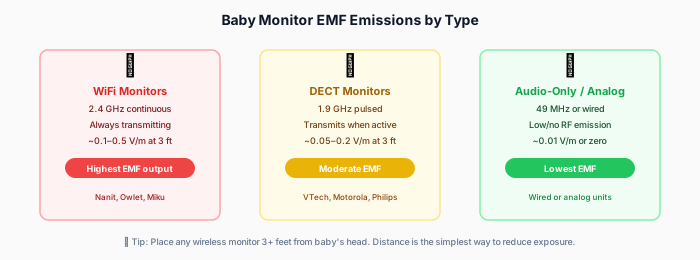
- WiFi monitors transmit the most RF (continuous data streaming for video)
- DECT monitors are moderate (pulsed digital signal, audio-only or low-res video)
- Analog monitors emit the least but are mostly discontinued
- Distance is the single most effective variable — RF drops with the square of distance
- No study has found health effects from baby monitors specifically at typical use distances
- International safety limits (ICNIRP) are set with large safety margins, and baby monitors operate well below them

How Baby Monitors Work (And Why They Emit EMF)
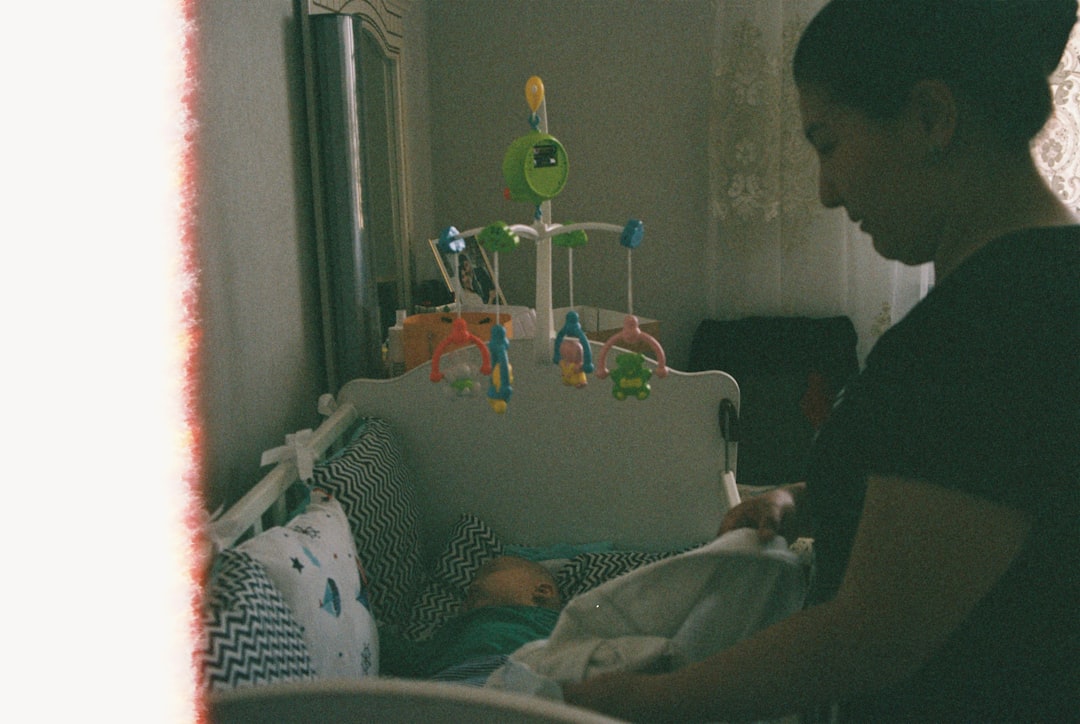
Baby monitors are two-way radios. The baby unit in the nursery contains a microphone (and often a camera) that converts sound and images into radio frequency signals, transmitted to the parent unit or your phone.
Types of Baby Monitors by Technology
| Type | Frequency | EMF Level | Video | Range | Still Available? |
|---|---|---|---|---|---|
| WiFi (IP camera) | 2.4 / 5 GHz | Highest | HD video | Unlimited (internet) | ✅ Most popular |
| DECT | 1.88-1.9 GHz | Moderate | Some models | 300-1,000 ft | ✅ Common |
| FHSS Digital | 2.4 GHz | Moderate | Some models | 600-1,000 ft | ✅ Common |
| Analog | 49 MHz / 900 MHz | Lowest | No | 200-600 ft | ❌ Mostly discontinued |
| Wired (ethernet camera) | N/A (no RF) | None* | HD video | Unlimited (network) | ✅ Niche |
*Wired cameras still connect to ethernet, which doesn’t emit RF. You may access them via WiFi on your phone, but the camera unit itself produces no RF near the baby.
Check your EMF exposure
See cell towers, power lines, and substations near any US address.
Search Your AddressMeasured RF Levels from Baby Monitors
Independent measurements of popular baby monitors provide concrete data on what parents are actually dealing with.
WiFi Video Monitors
WiFi monitors are the highest-emitting category because they stream continuous video data over 2.4 GHz or 5 GHz WiFi.
Measured levels (at 1 meter from device):
- Typical WiFi baby monitor: 0.05-0.3 V/m (RF electric field strength)
- During active video streaming: peaks up to 0.5-1.0 V/m
- In standby/VOX mode: drops to 0.01-0.05 V/m (only transmits when sound detected)
For reference, the ICNIRP guideline for continuous 2.4 GHz exposure is 61 V/m — WiFi monitors operate at roughly 0.1-1% of the safety limit even at close range.
Popular WiFi monitors measured:
- Nanit Pro: ~0.2 V/m at 1m during streaming
- Owlet Cam: ~0.15 V/m at 1m during streaming
- Infant Optics DXR-8 Pro (WiFi mode): ~0.1 V/m at 1m
DECT Monitors
DECT (Digital Enhanced Cordless Telecommunications) monitors use a pulsed digital signal at ~1.9 GHz. They’re the same technology as cordless home phones.
Measured levels (at 1 meter):
- Typical DECT monitor: 0.02-0.1 V/m
- With ECO/VOX mode: 0.001-0.01 V/m (only transmits when sound detected)
DECT monitors are lower-emitting than WiFi because they transmit audio only (much less data) and many models support “ECO mode” that reduces power when no sound is detected.
Analog Monitors (Legacy)
Analog monitors on 49 MHz or 900 MHz use the least power because they transmit simple, uncompressed audio.
Measured levels (at 1 meter):
- Typical analog monitor: 0.005-0.05 V/m
Analog monitors are largely discontinued due to poor sound quality, limited range, and lack of encryption (anyone with a scanner can listen in).
What the Research Says
No Studies on Baby Monitors Specifically
No published study has examined health effects of baby monitor radiation on infants. The evidence we have comes from broader RF research:
Relevant Research Areas
1. Low-level RF and children: The World Health Organization’s International EMF Project notes that children may absorb more RF energy per unit body weight than adults due to their smaller size, higher water content, and thinner skulls. This is the primary rationale for precautionary approaches — not evidence of harm, but recognition that children’s exposure characteristics differ.
2. WiFi-level RF exposure studies: Multiple studies have examined WiFi-level RF exposure (similar to what baby monitors produce):
- A 2018 systematic review by Foster and Moulder in Health Physics found no consistent evidence of health effects from WiFi-level RF (0.002-0.2 W/m²)
- The ARPANSA (Australian Radiation Protection and Nuclear Safety Agency) 2021 assessment found WiFi devices operate at exposure levels “well below” levels that could cause known health effects
3. ICNIRP safety margins: The International Commission on Non-Ionizing Radiation Protection sets exposure limits with a 50x safety factor below the threshold for established biological effects (tissue heating). Baby monitors operate at roughly 100-1,000x below these already-conservative limits.
4. Precautionary perspective: Some researchers, including the BioInitiative Working Group, argue that non-thermal effects may occur below ICNIRP limits. While this view is not the scientific consensus, it has motivated precautionary recommendations from some European health agencies to minimize children’s RF exposure where practical.
The Balanced View
The weight of current evidence suggests baby monitor radiation levels are too low to cause established health effects. However:
- Long-term studies on infant RF exposure don’t exist
- The precautionary principle suggests minimizing unnecessary exposure when easy to do
- Simple distance and placement changes can reduce exposure by 90%+ at no cost
How to Reduce Baby Monitor EMF (Practical Steps)

1. Distance Is Everything
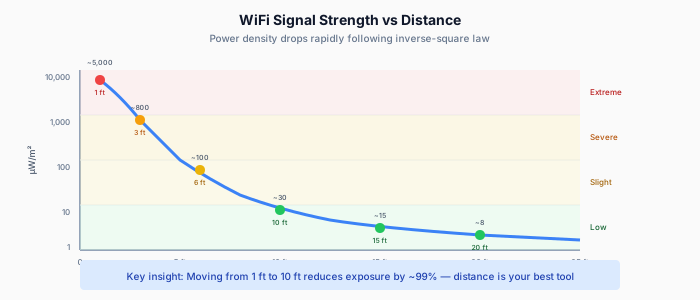
RF power follows the inverse square law. Doubling the distance reduces exposure by 75%.
| Distance from Crib | Relative RF Exposure | Recommendation |
|---|---|---|
| On crib rail (6 inches) | 100% (maximum) | ❌ Never do this |
| 1 foot away | 25% | ❌ Too close |
| 3 feet (1 meter) | 2.8% | ✅ Minimum safe distance |
| 6 feet (2 meters) | 0.7% | ✅ Better |
| Across room (10+ feet) | <0.3% | ✅ Best |
The single most impactful change: Move the monitor unit to at least 3 feet from the crib. Many parents mount them on the crib rail for a good camera angle — this maximizes exposure. Mount the camera on the wall or a shelf across the room instead.
2. Use VOX/ECO Mode
Most modern monitors offer a voice-activated (VOX) or ECO mode that reduces or stops RF transmission when the room is quiet. The monitor only transmits when it detects sound.
Impact: Reduces average RF exposure by 80-95% during quiet sleep periods. Since babies spend most of their sleep time in silence, this dramatically cuts cumulative exposure.
How to enable:
- Philips Avent: Settings → ECO Mode → On
- VTech: Menu → Sound → VOX sensitivity
- Motorola: Settings → ECO Mode
- WiFi monitors: Often called “motion/sound alerts only” mode — camera stops streaming until triggered
3. Choose Audio-Only When Video Isn’t Needed
Video monitoring requires continuous data transmission. Audio-only monitors transmit far less data and can fully stop transmitting during silence (with VOX mode).
If you primarily use the monitor to hear when the baby cries — not to watch them sleep — an audio-only DECT monitor with ECO mode is the lowest-RF wireless option.
4. Consider a Wired Camera
The lowest-EMF video option: an ethernet-connected (PoE) camera in the nursery. The camera unit emits zero RF. You view the feed on your phone or computer via your home network.
Options:
- Reolink E1 (wired version) — PoE IP camera, no WiFi radio. ~$35-50.
- Amcrest IP camera — PoE models available. ~$40-60.
- Any PoE camera + baby monitor app — Use Tinycam, Blue Iris, or Home Assistant to view the feed.
Tradeoff: Requires running an ethernet cable to the nursery. PoE (Power over Ethernet) simplifies this — one cable carries both data and power.
5. Turn Off WiFi on the Monitor
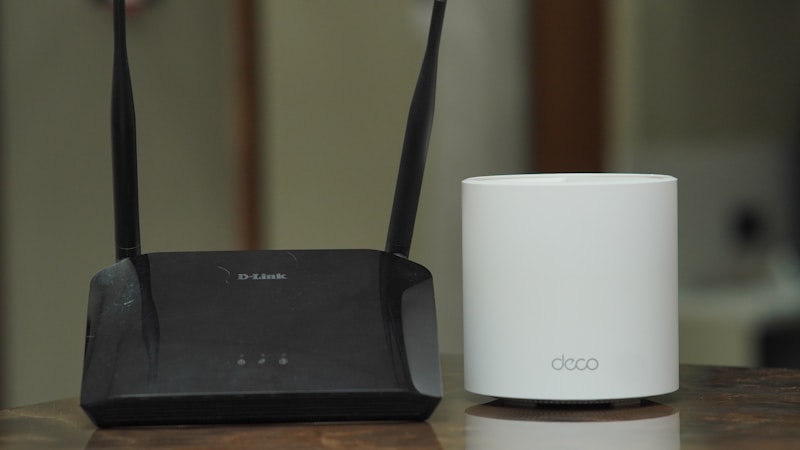
Many WiFi monitors also have a local (FHSS) connection mode that doesn’t use your home WiFi network. This typically reduces RF output because the monitor communicates directly with a parent unit instead of routing through your router.
Infant Optics DXR-8: Uses FHSS by default (not WiFi) — one of the reasons it’s popular with EMF-conscious parents.
6. Turn It Off When Not Needed
The simplest solution: turn the monitor off when you’re in the room or when the baby is awake and supervised. Many parents leave monitors running 24/7 out of habit.
Best Low-EMF Baby Monitors (2026)
Lowest EMF: Audio-Only DECT with ECO Mode
VTech DM221 (~$30)
- DECT 6.0 technology
- Full ECO mode (zero RF when quiet)
- 1,000 ft range
- Two-way talk
- 5 lullabies
Philips Avent SCD502 (~$50)
- DECT with ECO mode
- Smart adaptive transmission (reduces power based on distance between units)
- Crystal clear audio
- Night light on baby unit
Low EMF: Video Without WiFi
Infant Optics DXR-8 Pro (~$160)
- FHSS 2.4 GHz (not WiFi — direct unit-to-unit communication)
- 5” 720p screen
- Interchangeable optical lens (wide angle, zoom, normal)
- VOX power-saving mode
- No internet connection, no app, no cloud — all local
- Temperature display
eufy SpaceView (~$130)
- Direct FHSS connection (not WiFi)
- 5” 720p screen
- 460 ft range (open air)
- VOX mode with adjustable sensitivity
- No monthly fees, no cloud
Lowest Possible EMF: Wired Camera
Reolink E1 (PoE) + Phone App (~$40)
- Ethernet-only connection (disable WiFi in settings)
- 2K resolution, night vision
- Two-way audio
- Pan/tilt
- View via Reolink app on phone over home network
- Zero RF at the crib
Comparison: Baby Monitor EMF vs Other Household Sources
To put baby monitor radiation in context:
| Source | Typical RF at 1 meter | Relative to Baby Monitor |
|---|---|---|
| Cell tower (300m away) | 0.01-0.1 V/m | Similar |
| WiFi router | 0.1-0.5 V/m | 2-5x higher |
| Cell phone (during call, at ear) | 1-5 V/m | 10-50x higher |
| Microwave oven (while running) | 0.5-2.0 V/m | 5-20x higher |
| WiFi baby monitor (streaming) | 0.05-0.3 V/m | Baseline |
| DECT baby monitor (ECO mode) | 0.001-0.01 V/m | 10-50x lower |
| Bluetooth device | 0.01-0.05 V/m | Similar to lower |
A WiFi baby monitor at 3 feet from the crib produces less RF exposure than holding a cell phone or standing near a microwave. It’s a real source of RF, but it’s among the weaker ones in a typical home.
What About Baby Monitor Apps on Phones?
Some parents skip dedicated monitors and use an old phone as a baby monitor (with apps like Baby Monitor 3G, Annie, or Cloud Baby Monitor). This works but has EMF implications:
The concern: A phone placed near the crib emits WiFi and cellular RF simultaneously. Cellular transmission can be significantly stronger than WiFi, especially if cell signal is weak in the nursery (the phone increases power to maintain connection).
If using a phone as a monitor:
- Enable airplane mode, then turn WiFi back on → eliminates cellular RF
- Place at least 3 feet from crib
- Plug in to avoid battery EMF concerns
- Disable Bluetooth if not needed
This gives you WiFi-level RF only, similar to a dedicated WiFi monitor.
For the Anxious Parent: Perspective
If you’re reading this article, you’re probably already thinking carefully about your baby’s environment — and that’s good parenting. For a comprehensive overview, see our EMF and children parent’s guide. Here’s some perspective:
-
Baby monitor RF is among the weakest sources in your home. Your WiFi router, cell phones, and microwave oven all produce more RF.
-
The precautionary steps are easy and free. Moving the monitor 3 feet from the crib and enabling ECO mode reduces exposure by ~95%. You don’t need to spend money on special products.
-
Don’t sacrifice monitoring for EMF concerns. SIDS and suffocation are real, documented risks. A baby monitor provides safety and peace of mind. An unmonitored baby is not safer than a baby with a monitor 3 feet away.
-
Wired ethernet cameras exist if you want zero-RF video monitoring. They cost about the same as WiFi monitors.
-
Measure if you want certainty. A $40 RF meter (ERICKHILL RT-100) lets you measure exactly what your specific monitor produces at your specific placement distance. Real numbers beat anxiety.
Frequently Asked Questions
Is it safe to put a baby monitor in the crib?
No — and not just for EMF reasons. Monitors placed inside or on the crib create strangulation and suffocation hazards from cords. The American Academy of Pediatrics recommends keeping all electronics and cords at least 3 feet from the crib. This distance also reduces RF exposure by over 95% compared to direct crib placement.
Which baby monitor has the lowest EMF?
For wireless options, a DECT audio-only monitor with ECO mode (like the VTech DM221 or Philips Avent SCD502) produces the least RF — effectively zero during quiet periods. For video, the Infant Optics DXR-8 Pro uses direct FHSS (not WiFi) with power-saving mode. The absolute lowest EMF is a wired PoE camera, which produces no RF at the baby unit.
Do WiFi baby monitors emit radiation all the time?
Yes, when in standard streaming mode. WiFi monitors continuously transmit video data over 2.4 or 5 GHz WiFi, even when the baby is sleeping silently. Some models offer motion/sound-activated modes that reduce streaming when nothing is happening. DECT monitors with ECO mode can fully stop RF transmission during silence.
How far should a baby monitor be from the crib?
At minimum, 3 feet (1 meter). This is recommended by both the AAP (for cord safety) and is a practical EMF precaution (reduces RF exposure by ~97% compared to 6 inches). Mounting the camera on the opposite wall at 6-10 feet is even better. Wall or shelf mounting is preferable to crib-rail mounting.
Are baby monitors safe for newborns?
Current evidence indicates that baby monitors operating at normal distances (3+ feet) produce RF levels far below established safety limits. No study has found health effects from baby monitor radiation at typical use distances. The benefits of monitoring (awareness of breathing, crying, and sleep position) are well-established. Use a DECT model with ECO mode and proper distance for the lowest-RF option.
Can baby monitor radiation cause cancer?
No evidence supports this. Baby monitors produce non-ionizing RF radiation at power levels 100-1,000 times below ICNIRP safety limits. The World Health Organization classifies RF radiation as “possibly carcinogenic” (Group 2B) based primarily on heavy cell phone use studies — not low-power devices like baby monitors operating at a distance. The exposure from a baby monitor at 3 feet is roughly equivalent to standing 300 meters from a cell tower.
Should I use a Faraday cage for my baby?
This is unnecessary and potentially counterproductive. A Faraday canopy or cage around a crib would block the baby monitor signal, defeating its purpose. The RF levels from a properly placed baby monitor (3+ feet away, ECO mode) are extremely low. If you’re concerned about external RF sources (cell towers, neighbor’s WiFi), shielding the nursery walls with RF paint or film is more practical — and won’t interfere with your monitor.
Want to check what’s near your baby’s nursery? Search your address on EMF Radar to see nearby cell towers, power lines, and substations. Then check nearby schools on our schools page for EMF data near your child’s future school.
For a complete guide to protecting children from EMF, see our EMF and Children: Parent’s Guide.
Ready to shop? Our Low EMF Baby Monitor Buyer’s Guide has specific product recommendations, setup tips, and a step-by-step wired camera approach.
Related Reading
- EMF-Free Activities for Kids: 75+ Screen-Free Games and Low-EMF Alternatives
- Low EMF Baby Monitors: The Best Options for EMF-Conscious Parents in 2026
- EMF and Babies: What New Parents Need to Know About Electromagnetic Radiation
- EMF and Autism: Can Electromagnetic Fields Cause Autism Spectrum Disorder?
Concerned about EMF in your environment? Check your address on EMF Radar to see nearby cell towers and power lines, or find a certified EMF consultant for professional testing.