Study Spotlight: Mobile Phone Use and Breast Cancer — What an Iranian Study of 226 Women Found
Part of our Study Spotlight series — breaking down new EMF research into plain English. No jargon. No agenda. Just what the science says.
The Study at a Glance
| 📄 Title | Radiofrequency radiation from mobile phones and the risk of breast cancer: A multicenter case-control study with an additional suspected comparison group |
| 📰 Journal | Journal of Research in Medical Sciences (2025) |
| 🏫 Researchers | Tahmasebi S, Mortazavi SMJ, et al. (31 authors) — Shiraz University of Medical Sciences & multiple Iranian medical centers |
| 🔗 DOI | 10.4103/jrms.jrms_679_25 |
| 📊 PMID | 41623445 |
The Question
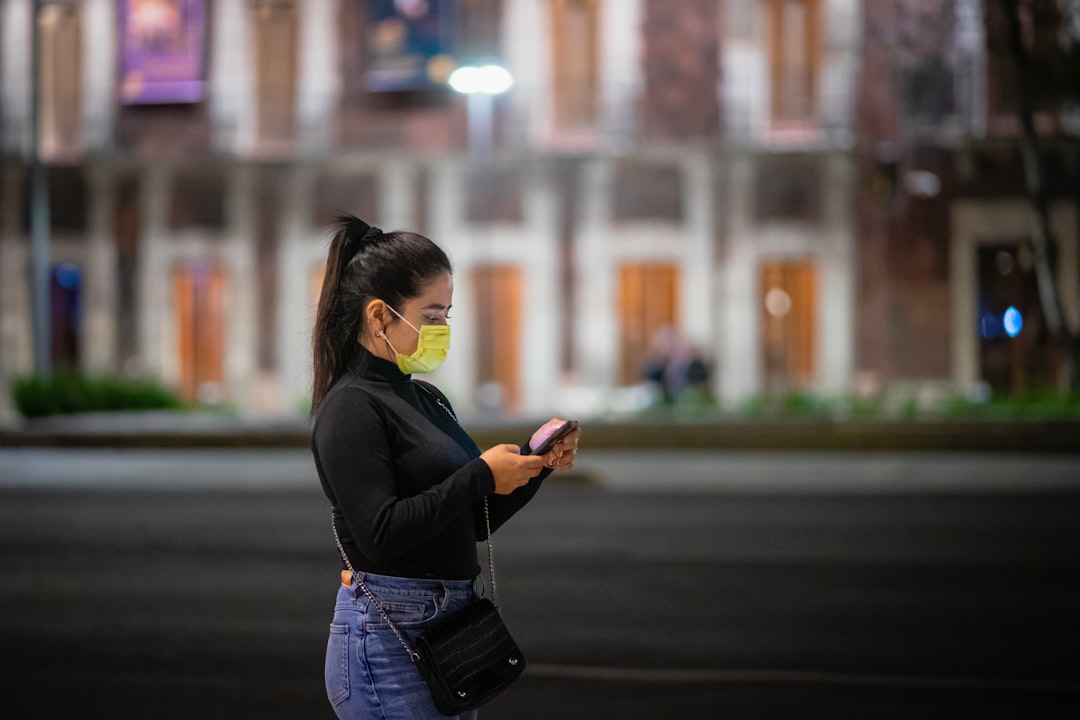
Can carrying your phone close to your body — specifically near your chest — increase your risk of breast cancer?
It’s a question that has circulated for years, particularly after a few case reports described young women developing breast tumors directly under where they habitually kept their phones in their bras. But case reports aren’t evidence of causation — they’re signals that warrant investigation. This study is one of the few attempting a more rigorous look.

Check your EMF exposure
See cell towers, power lines, and substations near any US address.
Search Your AddressWhat They Did
This multicenter case-control study recruited 226 women from diagnostic, mammography, and radiotherapy centers across Iran. The researchers created three groups:
- Controls (n = 97) — women with no history of breast cancer
- Suspected cases (n = 52) — women referred for mammography due to breast-related complaints or physician recommendation
- Confirmed cases (n = 77) — women with histologically verified invasive breast cancer
The “suspected” group is an interesting addition you don’t usually see. It captures women who may be in early or pre-diagnostic stages.
Each participant completed structured questionnaires covering:
- Daily mobile phone call duration
- Daily screen time
- Phone placement habits
- Demographic information (age, education, marital status)
- Reproductive history (age at menarche, pregnancy, breastfeeding)
- Environmental exposures (pollutants, X-ray history)
- Lifestyle factors (smoking, exercise)
The team used multinomial logistic regression, adjusting for confounders in four sequential models — adding demographic, reproductive, environmental, and lifestyle variables progressively.

What They Found
The headline finding: Women who reported more than 60 minutes of daily phone calls had significantly higher odds of breast cancer.
Call Duration Results (fully adjusted model)
| Daily Call Duration | Confirmed Cancer OR (95% CI) | Suspected Status OR (95% CI) |
|---|---|---|
| < 10 minutes | 1.0 (reference) | 1.0 (reference) |
| 10–30 minutes | 1.41 (0.43–4.60) | 1.82 (0.45–7.39) |
| 30–60 minutes | 2.07 (0.60–7.12) | 4.54 (1.04–19.77) |
| > 60 minutes | 3.49 (1.02–11.97) | 10.84 (2.29–51.41) |
The gradient matters: as call duration increased, so did the odds ratio. This dose-response pattern is one of the criteria epidemiologists look for when evaluating causation (though it doesn’t prove it alone).
Other Findings
- Screen time > 4 hours/day was also associated with increased odds
- Later age at menarche was associated with higher risk (counterintuitively — most Western studies show the opposite)
- Environmental pollutant exposure was independently associated
- Lower education level was linked to higher odds
The study explicitly states: “This does not imply causation.”

Why This Study Got Attention

1. It’s one of very few studies specifically looking at phone use and breast cancer. The vast majority of RF-cancer research focuses on brain tumors (glioma, meningioma, acoustic neuroma). Breast cancer and phone use is a much less studied combination.
2. The dose-response gradient is notable. The odds ratios climb steadily from <10 minutes to >60 minutes. In epidemiology, this kind of gradient makes the association more plausible (though it’s still not proof of causation).
3. The suspected group showed even higher odds. Women referred for mammography but not yet diagnosed showed ORs of 10.84 for the highest call duration. This could suggest early-stage effects — or it could reflect the kinds of biases we’ll discuss below.
4. It includes phone placement data. While the published results focus on call duration, the study collected data on where women carry their phones — information that future analyses could use.
The Major Caveats (These Are Significant)
Before anyone panics, this study has serious limitations that the authors themselves acknowledge:
1. Self-Reported Exposure
All phone use data came from questionnaires, not from phone records or dosimetry. People are notoriously bad at estimating their phone use. Worse, recall bias is a real concern: women who already have breast cancer may unconsciously overestimate their phone use while searching for explanations.
2. Small Sample Size
226 women total, with only 77 confirmed cases. This is a pilot-scale study. The wide confidence intervals tell the story — that 10.84 OR for the suspected group has a 95% CI spanning 2.29 to 51.41. When your confidence interval ranges from “modest increase” to “massive increase,” the precision of your estimate is low.
3. The Mechanism Question
Phone calls primarily expose the head and hand to RF radiation, not the breast. Unless women were specifically holding phones against their chests, the exposure pathway isn’t obvious. The study doesn’t separate “phone held to ear during calls” from “phone stored in bra while on speaker.”
4. Confounding
Even with four adjustment models, residual confounding is likely. Education, socioeconomic status, healthcare access, and environmental exposures are all tangled together in complex ways that statistical adjustment can’t fully untangle.
5. Cultural and Geographic Context
Iranian women may have different phone use patterns, environmental exposures, reproductive histories, and healthcare access compared to women in other countries. These results may not generalize broadly.
6. No Biological Measurements
The study measured no biomarkers, no RF dosimetry, no tissue-level exposure. It’s purely an association between self-reported behavior and disease status.
What This Means for You
Should you throw away your phone? Absolutely not. This is a single, small, observational study with significant methodological limitations.
Should you be cautious? A reasonable person might be.
Here’s a practical approach based on the precautionary principle:
- Don’t store your phone in your bra. Even without definitive proof, there’s no good reason to keep a transmitting device pressed against breast tissue for hours
- Use speakerphone or earbuds for long calls — this reduces head and body exposure regardless of cancer risk
- Keep calls reasonable — if you’re talking 60+ minutes daily, some of that could shift to text or video calls on a table
- Keep perspective — breast cancer has many well-established risk factors (genetics, age, alcohol, obesity, hormone therapy) that are far more impactful than phone use
How This Fits Into the Larger Picture
This study joins a small but growing body of research on RF exposure and breast cancer:
- West et al. (2013): Case series of 4 young women who developed breast tumors at phone-carrying sites. Suggestive but not a controlled study.
- Shih et al. (2020): Taiwanese cohort study found no association between cell phone use and breast cancer in 900,000+ women.
- IARC classification (2011): RF fields classified as “possibly carcinogenic” (Group 2B) based primarily on brain cancer data — breast cancer wasn’t the driver.
The evidence is genuinely mixed. Large cohort studies tend to find no association, while smaller case-control studies sometimes find suggestive links. This pattern often means either the effect is too small for large studies to detect or the smaller studies are picking up bias rather than biology.
More research is needed — specifically, large prospective studies that use phone records (not self-reports) and track breast cancer incidence over time.
Related Reading
- EMF and Cancer: What Does the Research Actually Show? — comprehensive cancer risk evidence review
- EMF Protection During Pregnancy — reducing exposure for women’s health
- Do AirPods Cause Cancer? — wireless device proximity concerns
- Cell Phone Radiation vs Cell Tower Radiation — understanding near-body vs ambient exposure
- Is EMF Bad for You? What Science Actually Says — the full evidence overview
📊 Want to understand your EMF environment? Check cell towers near your address with EMF Radar’s free map tool.
🔬 Read more in our Study Spotlight series — balanced, consumer-friendly breakdowns of the latest EMF research.
Concerned about EMF? Check your address on EMF Radar to see nearby towers and power lines, or find a certified EMF consultant for professional testing.