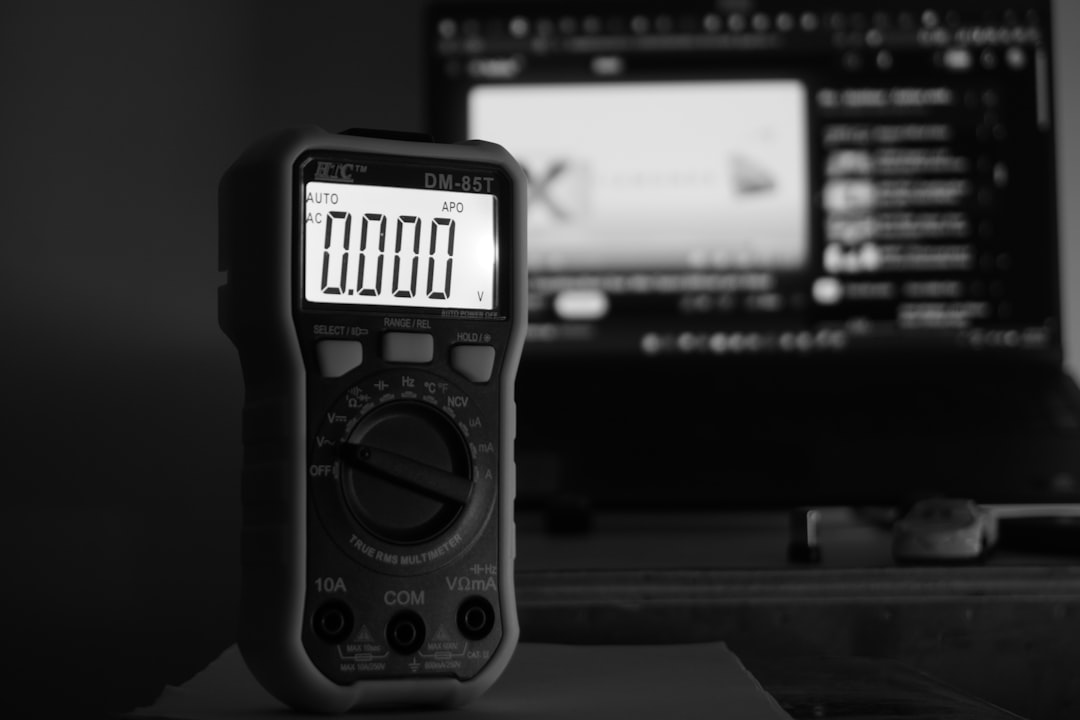
If you’ve ever tried shopping for an EMF meter, you’ve probably been overwhelmed by the options — and confused by what any of them actually measure. Prices range from $30 to $3,000+, product names are alphabet soup (GQ EMF-390, Trifield TF2, Cornet ED88TPlus…), and half the Amazon reviews are from people who don’t understand what they bought.
Let’s fix that. This guide covers what EMF meters actually do, which type you need, and honest comparisons of the most popular models — based on what they measure, not what their marketing says. Once you’ve picked your meter, our room-by-room home testing guide walks you through exactly how to survey every room.
First: Understand What You’re Measuring
EMF isn’t one thing. It’s three different types of fields, and most meters only measure one or two of them:
| Field Type | What Produces It | Unit | Why It Matters |
|---|---|---|---|
| Magnetic fields (ELF) | Power lines, wiring, appliances, transformers | milliGauss (mG) | Linked to childhood leukemia concern; power line distance matters |
| Electric fields (ELF) | Wiring in walls, ungrounded electronics, lamps | Volts/meter (V/m) | Less studied than magnetic, but affects sensitive individuals |
| Radio frequency (RF) | Cell towers, WiFi, Bluetooth, smart meters, 5G | μW/cm², μW/m², mW/m² | The cell tower and phone radiation people worry about |
Critical point: A meter that measures magnetic fields tells you nothing about RF from cell towers. A meter that measures RF tells you nothing about power line fields. This is the #1 mistake people make — buying a $40 magnetic field meter and trying to measure 5G signals with it.
What Type Do You Need?
| Your Concern | Field Type | Meter Type |
|---|---|---|
| Cell tower near my home | RF | RF meter or broadband RF detector |
| Power lines near my house | Magnetic (ELF) | Gaussmeter or ELF meter |
| Smart meter on my wall | RF | RF meter |
| General home survey | All three | Trifield meter (measures all 3) |
| Professional inspection | All three | Multiple dedicated instruments |
| WiFi router distance | RF | RF meter |
| Dirty electricity | High-frequency voltage | Specialized DE meter (Stetzer, Greenwave) |
The 12 Most Popular EMF Meters, Compared
We’ve evaluated each meter based on: what it actually measures, measurement range, accuracy compared to professional instruments, ease of use, and value for the price.
Budget Tier ($30–$80)
ERICKHILL RT-100 (~$35)
Measures: Magnetic field (ELF) + Electric field (ELF). No RF.
| Spec | Value |
|---|---|
| Magnetic range | 0.01–2,000 mG |
| Electric range | 1–1,999 V/m |
| RF capability | ❌ None |
| Data logging | ❌ No |
| Frequency response | 50/60 Hz only |
Verdict: Fine for checking if your bedroom has elevated magnetic fields from wiring or nearby transformers. Useless for cell tower, WiFi, or smart meter concerns. The price is right, but understand what you’re getting. If you just want to know if your house near a power substation has high magnetic fields, this works.
Buy if: Your only concern is power lines or electrical wiring. Skip if: You care about cell towers, WiFi, or 5G.
ERICKHILL EMF Tester RT-200 (~$45)
Measures: Magnetic + Electric (ELF) + RF (broadband)
| Spec | Value |
|---|---|
| Magnetic range | 0.01–2,000 mG |
| Electric range | 1–1,999 V/m |
| RF range | 0.001–19.999 mW/m² |
| RF frequency range | Not specified (likely ~50 MHz–3.5 GHz) |
| Data logging | ❌ No |
Verdict: The cheapest “all-in-one” option. RF readings are very approximate — think of it as a “yes there’s RF here” detector rather than a precision instrument. Adequate for a first pass if you have no idea what’s going on in your home. Don’t make major decisions (moving, shielding investment) based on these readings alone.
Buy if: You want a cheap first look at all three field types. Skip if: You need accurate RF measurements for anything specific.
Mid-Range ($100–$300)
Trifield TF2 (~$180)
Measures: Magnetic (ELF), Electric (ELF), RF (broadband). All three — the original “trifield” design.
| Spec | Value |
|---|---|
| Magnetic range | 0.1–100 mG (standard), 0–20,000+ (peak) |
| Electric range | 1–1,000 V/m |
| RF range | 0.001–19.999 mW/m² (RF power density) |
| RF frequency range | 20 MHz–6 GHz |
| Weighted mode | Yes (frequency-weighted for bioeffects) |
| Data logging | ❌ No |
| Peak hold | ✅ Yes |
Verdict: The most-recommended meter for home users, and for good reason. It’s genuinely useful across all three field types, reasonably accurate, and the weighted mode gives readings that approximate biological relevance rather than raw physics. The RF sensor covers 5G sub-6 GHz bands.
Limitations: The RF reading is broadband — it tells you total RF power but can’t distinguish between WiFi, cell tower, and smart meter signals. The magnetic field range tops out at 100 mG in standard mode (fine for homes, insufficient near substations). No data logging means you’re taking spot readings, not tracking changes over time.
Buy if: You want one meter that does everything reasonably well for home use. Skip if: You need to identify which RF source is dominant, or need professional-grade accuracy.
GQ EMF-390 (~$130)
Measures: Magnetic (ELF), Electric (ELF), RF (broadband)
| Spec | Value |
|---|---|
| Magnetic range | 0–2,860 mG |
| Electric range | 0–2,860 V/m |
| RF range | 0–2,860 mW/m² |
| RF frequency range | 50 MHz–10 GHz |
| Data logging | ✅ Yes (internal memory + USB export) |
| Histogram display | ✅ Yes |
| GPS tagging | ❌ No |
Verdict: More features per dollar than the Trifield — data logging alone is worth the price difference. The wider RF frequency range (up to 10 GHz) covers more 5G bands. The histogram display lets you see field variations over time. Build quality is a step below the Trifield, and the accuracy on all sensors is approximate rather than calibrated.
Buy if: You want data logging and good frequency range on a budget. Skip if: Accuracy matters more than features.
Cornet ED88TPlus (~$200)
Measures: RF (broadband) + Magnetic (ELF) + Electric (ELF)
| Spec | Value |
|---|---|
| RF range | 100 MHz–8 GHz |
| RF sensitivity | 0.0027–1,800 mW/m² |
| Magnetic range | 0.1–600 mG |
| Electric range | 1–1,000 V/m |
| Data logging | ❌ No (but has histogram) |
| SBM-2015 markers | ✅ Yes (building biology reference levels) |
| Frequency display | ❌ Approximate only |
Verdict: Popular in the building biology community. The SBM-2015 reference level markers on the display are genuinely useful — they color-code readings as “no concern,” “slight concern,” “severe concern,” and “extreme concern” based on the German Building Biology guidelines, which are far more conservative than FCC/ICNIRP limits. The RF sensor is higher quality than most at this price point.
Buy if: You want building biology reference levels and decent RF measurement. Skip if: You need data logging or precise frequency identification.
Prosumer Tier ($300–$600)
Safe and Sound Pro II (~$400)
Measures: RF only (broadband)
| Spec | Value |
|---|---|
| RF range | 200 MHz–12 GHz |
| RF sensitivity | 0.065–65,000 μW/m² |
| True RMS | ✅ Yes |
| Peak hold | ✅ Yes |
| Audio feedback | ✅ Yes (distinct sounds for different signal types) |
| Data logging | ❌ No |
Verdict: The best dedicated RF meter under $500. True RMS measurement is a big deal — cheaper meters use peak detection, which can overstate or understate actual exposure depending on the signal type. The audio feedback is surprisingly useful: different modulation patterns (WiFi vs. cellular vs. DECT phone) produce distinct sounds that experienced users can identify by ear. Covers the frequencies that matter for cell towers near you, WiFi, and sub-6 GHz 5G.
Does not measure magnetic or electric fields — you’d need a separate ELF meter.
Buy if: RF from cell towers/WiFi/5G is your primary concern and you want reliable readings. Skip if: You also need ELF measurements or want an all-in-one.
Acoustimeter AM-11 (~$450)
Measures: RF only (broadband)
| Spec | Value |
|---|---|
| RF range | 200 MHz–8 GHz |
| RF sensitivity | 1–100,000 μW/m² (peak), 0.02–2,500 μW/m² (average) |
| Dual display | ✅ Peak and average simultaneously |
| Audio output | ✅ Yes (headphone jack) |
| Speaker | ✅ Yes (built-in) |
| Data logging | ❌ No |
Verdict: The gold standard for building biology professionals doing RF assessments. The dual peak/average display is critical for understanding pulsed signals like WiFi (which have very high peaks but low averages). Audio quality through headphones is excellent for signal identification. Well-built, reliable, and trusted by the EMF consulting community.
Buy if: You’re serious about RF assessment, considering hiring an EMF consultant, or doing consulting yourself. Skip if: You want ELF measurement or this is a one-time check.
Professional Tier ($600+)
Gigahertz Solutions HFW35C (~$900)
Measures: RF only (broadband), 800 MHz–6 GHz
Best-in-class sensitivity for the building biology community. Calibrated, consistent, and the reference instrument for SBM-2015 assessments. Includes calibration certificate. This is what professional EMF consultants use for RF surveys.
Narda NBM-550 (~$3,000+)
Measures: RF (isotropic, calibrated)
Laboratory and regulatory-grade instrument. Used by telecom companies, regulators, and researchers. Interchangeable probe heads for different frequency ranges. If you’re buying this, you already know why.
Check your EMF exposure
See cell towers, power lines, and substations near any US address.
Search Your AddressThe Decision Matrix
| Concern | Budget Pick | Best Value | Best Performance |
|---|---|---|---|
| Power lines / wiring | ERICKHILL RT-100 ($35) | Trifield TF2 ($180) | AlphaLab UHS2 ($400) |
| Cell towers / 5G | ERICKHILL RT-200 ($45) | Cornet ED88TPlus ($200) | Safe and Sound Pro II ($400) |
| WiFi / smart meters | GQ EMF-390 ($130) | Trifield TF2 ($180) | Acoustimeter AM-11 ($450) |
| General home survey | ERICKHILL RT-200 ($45) | Trifield TF2 ($180) | TF2 + Safe and Sound Pro II ($580) |
| Professional work | — | Cornet ED88TPlus ($200) | Gigahertz HFW35C ($900) |
| Dirty electricity | Greenwave EMI meter ($130) | Stetzer Microsurge ($120) | Greenwave broadband ($200) |
What About Phone Apps?
Short answer: they don’t work for RF measurement. Your phone’s magnetometer can give a rough indication of magnetic fields (some apps are decent for ELF), but no phone has hardware to measure external RF power density. Apps that claim to measure “EMF radiation” from cell towers are measuring your phone’s internal sensors, not environmental fields.
The one exception: apps that use your phone’s signal strength indicator (dBm) to estimate your phone’s connection quality to the nearest tower. That’s useful but different from measuring environmental exposure at your location. Our EMF Radar map uses tower location data and distance calculations, which is more reliable than signal-strength guesses.
EMF Meter Reading Reference Levels
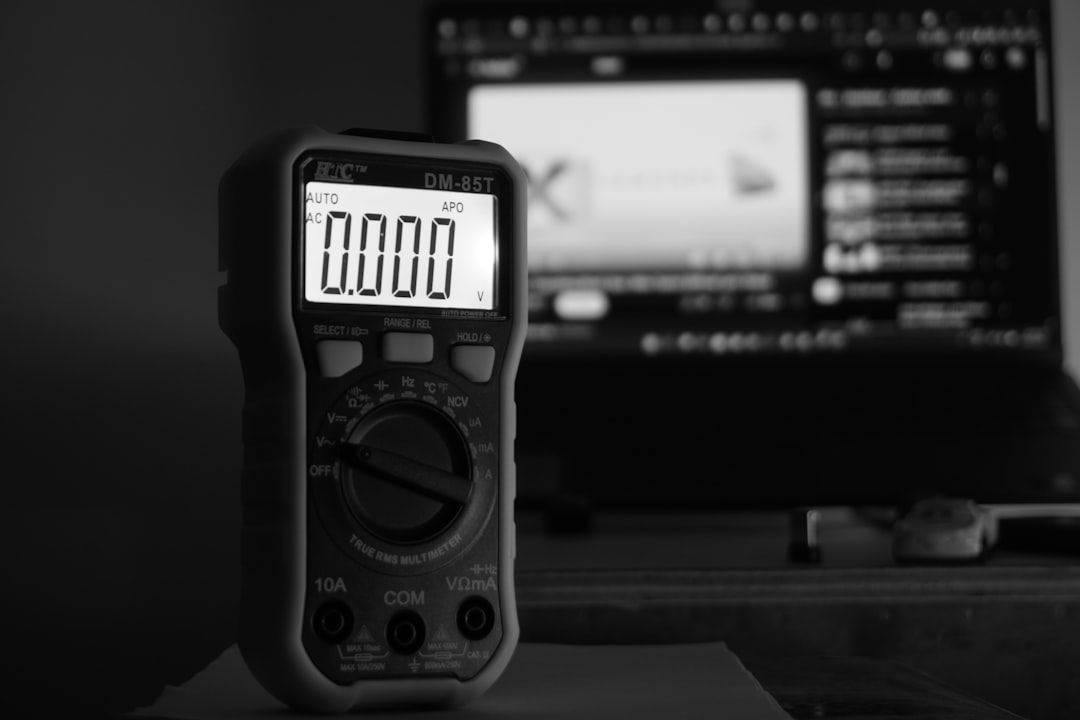
Once you have a meter, you need to know what the numbers mean. Here are the major reference frameworks:
Magnetic Fields (ELF)
| Level | Reading | What It Means |
|---|---|---|
| Background | <0.5 mG | Typical away from sources |
| Slightly elevated | 0.5–2 mG | Common near wiring, appliances at distance |
| Elevated | 2–10 mG | Near appliances, some wiring issues, near power lines |
| High | 10–100 mG | Close to major sources, wiring errors |
| Very high | >100 mG | Immediate proximity to transformers, substations |
Key benchmark: The epidemiological studies linking magnetic fields to childhood leukemia found elevated risk above ~3-4 mG chronic exposure. Building biology guidelines recommend <0.2 mG for sleeping areas.
RF Power Density
| Level | Reading (μW/m²) | Approx. mW/m² | Context |
|---|---|---|---|
| Background (rural) | <1 | <0.001 | No nearby sources |
| Low (suburban) | 1–100 | 0.001–0.1 | Normal residential |
| Moderate | 100–1,000 | 0.1–1 | Near WiFi router, moderate tower exposure |
| Elevated | 1,000–10,000 | 1–10 | Close to cell tower, multiple sources |
| High | >10,000 | >10 | Very close to antenna, industrial |
| FCC limit | 10,000,000 | 10,000 | Maximum allowed for general public |
| Building biology “no concern” | <0.1 | <0.0001 | SBM-2015 sleeping area |
Note: There’s a 100,000× gap between building biology “no concern” levels and FCC limits. This reflects fundamentally different safety philosophies — the FCC protects against acute thermal effects, while building biology guidelines attempt to minimize any exposure. The ICBE-EMF analysis falls somewhere in between, suggesting limits should be 15–900× lower than current FCC standards.
Our Recommendation
For most homeowners doing a one-time survey:
Buy the Trifield TF2 ($180). It measures all three field types, it’s reasonably accurate, and it’s simple enough that you won’t need an engineering degree to interpret the results. Walk through every room, note hot spots, and compare to the reference levels above. If you find elevated readings, you’ll know whether you need professional help — or can handle it yourself.
If cell towers are your primary concern — and you’ve already checked the EMF Radar map and found towers within 500 meters of your home — upgrade to the Cornet ED88TPlus ($200) or Safe and Sound Pro II ($400) for RF-specific accuracy.
If you’re buying a home near power lines or a substation, even the $35 ERICKHILL RT-100 will tell you if magnetic fields are elevated. Use our power line EMF calculator first to estimate expected levels at your distance.
Don’t overspend on your first meter. If readings are concerning, hire a certified EMF consultant who already has $5,000+ in professional equipment. Their one-time fee is cheaper than buying prosumer gear you’ll use once.
Ready to check what’s near you? Start with the EMF Radar map to see cell towers in your area, then use the EMF Exposure Calculator to estimate your daily exposure from all devices.
Related Reading
- EMF Detector Apps: Can Your Phone Measure EMF? — What phone apps can and can’t do (hint: no RF measurement)
- How to Read an EMF Meter: Beginner’s Guide — Room-by-room measurement walkthrough
- EMF Blocking Phone Cases: Do They Work? — Physics analysis of shielding cases and the power compensation trade-off
- EMF Protection Products: What Works and What’s a Scam — Full review of shielding, harmonizers, and stickers