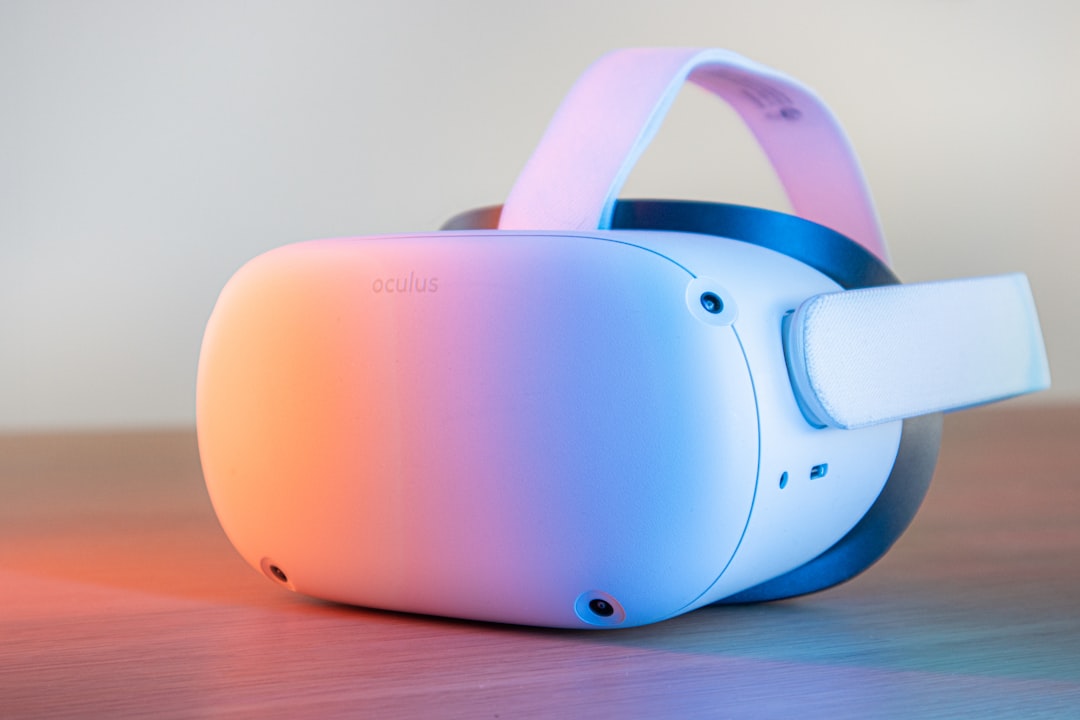
Virtual reality is booming. Apple Vision Pro, Meta Quest 3, PlayStation VR2, and a growing lineup of mixed-reality headsets are reshaping entertainment, work, and education. But as millions of people strap wireless transmitters directly to their faces for hours at a time, a reasonable question emerges: how much EMF radiation are VR headsets actually producing, and should you be concerned?
This isn’t fear-mongering — it’s physics. These devices contain multiple wireless radios operating inches from your brain, eyes, and skin. Let’s look at what’s actually going on.
What’s Inside a VR Headset?
Every modern VR headset is a bundle of wireless transmitters:
| Component | Frequency | Purpose | Present In |
|---|---|---|---|
| WiFi 6/6E | 2.4 GHz, 5 GHz, 6 GHz | Streaming, updates, casting | All standalone headsets |
| Bluetooth 5.x | 2.4 GHz | Controllers, audio, tracking | All headsets |
| Ultra-Wideband (UWB) | 6–8 GHz | Spatial tracking | Apple Vision Pro |
| Hand/Eye Tracking IR | Non-ionizing IR | Input detection | Vision Pro, Quest 3 |
| USB-C/DisplayPort | N/A (wired) | Video signal | PSVR 2, PC VR |
The key difference from a phone: proximity. Your phone spends most of its time in your pocket or on a table. A VR headset sits directly against your forehead, temples, and the bridge of your nose — some of the thinnest skin on your body — for extended sessions.
Headset-by-Headset Breakdown

Apple Vision Pro
Apple’s spatial computing headset is the most radio-dense consumer device ever made:
- WiFi 6E (2.4/5/6 GHz) — tri-band for high-bandwidth spatial video streaming
- Bluetooth 5.3 — for Magic Keyboard, trackpad, and AirPods connectivity
- Ultra-Wideband (UWB) — for precise spatial awareness and hand tracking
- Proximity sensors — IR-based, non-ionizing
The Vision Pro’s FCC filing (ID: BCG-E4204A) shows SAR values within legal limits, but Apple’s own safety documentation recommends the device “should not be used if you have certain medical implants” including pacemakers — an acknowledgment that the RF output is significant enough to potentially interfere with sensitive electronics.
Weight: 600-650g pressed against your face. The external battery pack contains no radios and can be kept at a distance.
Meta Quest 3 / Quest 3S
Meta’s standalone headsets run everything on-device:
- WiFi 6E (Quest 3) or WiFi 6 (Quest 3S) — for Air Link PC streaming, social features, and updates
- Bluetooth 5.2 — for controllers, phone app sync, and audio
- No UWB — uses camera-based inside-out tracking instead
The Quest 3 FCC filing shows SAR values for the head. Meta’s safety guidelines note a minimum separation distance recommendation, though this is somewhat academic for a device designed to be worn on the face.
Key concern: Gaming sessions. The average VR gaming session runs 30–90 minutes. Heavy users report 2-4 hour sessions. During active wireless streaming (Air Link or casting to a TV), WiFi transmit power is at maximum.
PlayStation VR2
The PSVR 2 is the least concerning from an EMF perspective:
- Wired connection — DisplayPort + USB-C to PS5, no WiFi needed during gameplay
- Bluetooth — for controller connectivity only
- No standalone WiFi radio — all heavy data transfer is wired
This makes PSVR 2 the lowest-emission major VR headset. The tradeoff: you’re tethered to a console.
PC VR Headsets (Valve Index, HP Reverb G2)
Tethered PC VR headsets also minimize wireless emissions:
- Wired video — DisplayPort or USB
- Bluetooth — controllers and tracking (some)
- Optional wireless adapters — the Vive Wireless Adapter adds 60 GHz WiGig, which is the highest-frequency consumer wireless technology available
If you use a wireless adapter for PC VR, you’re adding a 60 GHz transmitter to your headset. While 60 GHz signals don’t penetrate skin (they’re absorbed in the outer millimeters), the proximity to eyes and facial tissue is worth noting.
Check your EMF exposure
See cell towers, power lines, and substations near any US address.
Search Your AddressThe Proximity Problem
EMF exposure follows the inverse square law: double the distance, quarter the exposure. This is why VR headsets deserve more scrutiny than, say, a WiFi router across the room.
| Device | Typical Distance from Head | Key Radio |
|---|---|---|
| WiFi router | 3–10 meters | WiFi |
| Smartphone (browsing) | 25–40 cm | WiFi + Cellular |
| Smartphone (call, no speakerphone) | 0–2 cm | Cellular |
| Laptop | 30–50 cm | WiFi |
| VR headset | 0–3 cm | WiFi + Bluetooth + UWB |
A VR headset operating at 0-3 cm is comparable to holding a phone against your head during a call — except with multiple simultaneous radios rather than one, and for much longer durations.
What Do SAR Ratings Tell Us?
VR headsets must pass FCC SAR (Specific Absorption Rate) testing before sale. The FCC limit is 1.6 W/kg averaged over 1 gram of tissue.
All major VR headsets pass this threshold. But here’s what SAR testing doesn’t capture:
- Duration: SAR tests assume 6-minute exposure windows. VR sessions routinely exceed this by 5-15x.
- Multiple radios: SAR testing evaluates individual radio scenarios, not necessarily all radios transmitting simultaneously at maximum power.
- Thermal effects: VR headsets generate heat from processors, displays, and batteries — plus RF energy. Users commonly report facial warmth and sweating. The combination of thermal and RF energy absorption isn’t well-studied for face-mounted devices.
- Eye exposure: The eyes lack the same thermal regulation as skin. They’re directly behind the lenses, in the near-field of the WiFi and Bluetooth antennas.
The Research Gap

Here’s the uncomfortable truth: there’s almost no published research specifically on VR headset EMF exposure and health outcomes.
The existing RF health literature focuses on:
- Cell phones (decades of data)
- Cell towers (epidemiological studies)
- WiFi routers (room-level exposure)
- Occupational RF exposure (industrial workers)
VR headsets are a novel exposure scenario: multi-radio, face-mounted, extended duration, with a unique combination of RF energy, heat, and blue light directly aimed at the eyes and brain. The research hasn’t caught up.
What we do know from related research:
- RF near the head: The INTERPHONE study and NTP study focused on cell phone RF near the head. Results were mixed but led IARC to classify RF-EMF as Group 2B — possibly carcinogenic.
- Thermal effects on eyes: RF energy absorbed by the eye has been linked to cataracts in occupational settings (microwave workers), though at power levels far above consumer devices.
- Children’s exposure: Children’s thinner skulls absorb more RF energy than adults’. VR headset use among kids is growing rapidly.
How to Reduce VR Headset EMF Exposure
You don’t have to give up VR. Here are practical steps ranked by effectiveness:
1. Choose Wired When Possible
PSVR 2 and tethered PC VR headsets eliminate WiFi emissions entirely. If you primarily use VR for gaming on a console or PC, wired is the simplest reduction.
2. Enable Airplane Mode for Offline Content
Meta Quest allows airplane mode for downloaded games. This disables WiFi and Bluetooth (though controllers may need Bluetooth). This eliminates the highest-power radio (WiFi) during gameplay.
3. Limit Session Duration
The simplest harm reduction: shorter sessions. Most VR platforms have session timers and break reminders. Use them.
- Under 30 minutes: minimal concern
- 30-60 minutes: reasonable for most users
- 1-2 hours: consider breaks every 30 minutes
- 2+ hours: extended exposure, take a 15-minute break per hour
4. Download Instead of Stream
Streaming VR content (Air Link, Virtual Desktop, cloud gaming) keeps WiFi at maximum transmit power continuously. Downloading content to play offline significantly reduces WiFi activity.
5. Disable Unnecessary Radios
If you’re not using hand tracking, casting, or social features, disable the features you don’t need. Every disabled radio is less RF emission.
6. Keep the Headset Off When Not in Use
This sounds obvious, but many users leave headsets in standby on a nightstand or charging dock. Standby modes may still maintain WiFi and Bluetooth connections. Power fully off when done.
Children and VR Headset EMF
This deserves special attention. Meta recommends Quest for ages 10+. Apple recommends Vision Pro for ages 13+. Many younger children use VR regularly despite these guidelines.
Children face compounded risk factors:
- Thinner skulls absorb proportionally more RF energy
- Developing nervous systems may be more susceptible to disruption
- Longer lifetime exposure — a child starting VR at 10 has decades more cumulative exposure ahead
- Smaller head size means antennas sit closer to brain tissue
If children use VR, enforce strict time limits and prefer wired headsets when possible. See our complete guide to EMF and children for more context.
The Bottom Line
VR headsets aren’t uniquely dangerous, but they represent a genuinely new EMF exposure scenario that deserves informed attention:
- They place multiple wireless radios directly against your head for longer durations than any previous consumer device
- SAR testing wasn’t designed for this use pattern — face-mounted, multi-radio, hour-long sessions
- The research is essentially nonexistent for VR-specific health outcomes
- Simple precautions work: wired connections, airplane mode, session limits, and download-over-stream
The technology is incredible. The prudent approach is to enjoy it while minimizing unnecessary exposure — the same principle that applies to any RF-emitting device.
Frequently Asked Questions
Do VR headsets emit more radiation than cell phones?
VR headsets contain more simultaneous wireless radios (WiFi + Bluetooth + potentially UWB) than a typical phone call, but individual radio power levels are generally similar. The key difference is duration — VR sessions are often longer than phone calls — and the multi-radio simultaneous transmission pattern.
Is the Apple Vision Pro safe to use?
The Vision Pro passes FCC SAR requirements and Apple has received regulatory approval in multiple countries. However, “passes current regulatory standards” and “proven safe for extended daily use” are different statements. No long-term health studies exist for face-mounted multi-radio devices used hours per day.
Are wired VR headsets safer than wireless ones?
From an EMF perspective, yes. Wired headsets like PSVR 2 eliminate WiFi emissions entirely, leaving only Bluetooth for controller connectivity. This dramatically reduces total RF exposure compared to standalone wireless headsets streaming content over WiFi 6E.
Can VR headsets cause headaches?
Many VR users report headaches, but the cause is typically a combination of vergence-accommodation conflict (eye strain), motion sickness, and facial pressure from the headset weight — not necessarily EMF exposure. However, some individuals who report electromagnetic hypersensitivity symptoms may find that VR headsets exacerbate their discomfort.
How much EMF does a Meta Quest 3 emit?
The Meta Quest 3 emits RF energy from its WiFi 6E radio (2.4/5/6 GHz bands) and Bluetooth 5.2 (2.4 GHz). During active wireless streaming, WiFi transmit power peaks at the maximum allowed under FCC regulations. In offline mode with WiFi disabled, emissions drop to Bluetooth-only levels, which are significantly lower. You can check detailed tower and EMF data for your area using our interactive map.
Should I be worried about VR headsets and eye safety?
The eyes are the most RF-transparent tissue on the face and lack the thermal regulation mechanisms that skin has. While current consumer VR power levels are well below those linked to occupational cataracts, the long-term effects of daily near-field WiFi 6E exposure on ocular tissue haven’t been studied. Using our EMF Exposure Budget Calculator can help you understand your total daily exposure from all devices including VR.
Related Reading
- EMF Exposure While Pregnant: What the Research Says and How to Reduce Your Risk
- Electric Car EMF: How Much Radiation Do EVs Produce?
- EMF and Headaches: Can Wireless Devices Cause Pain?
- EMF Protection During Pregnancy — Room-by-Room Guide
Concerned about EMF in your environment? Check your address on EMF Radar to see nearby cell towers and power lines, or find a certified EMF consultant for professional testing.