
Your baby is finally home, and you’re doing everything right: safe sleep position, room temperature, organic everything. But there’s one question that nags at a growing number of new parents: what about all the wireless devices in the nursery?
Between WiFi baby monitors, smart speakers, phones charging on the nightstand, and the router two rooms away, your infant is surrounded by electromagnetic fields (EMF) from day one. Should you be concerned?
Here’s the honest answer: the science is still catching up to our wireless world, but what we do know suggests babies deserve extra caution — not panic, but thoughtful precaution.
Why Babies Are Different From Adults
This isn’t about fear. It’s about physics and biology.
A baby’s body absorbs radiofrequency (RF) radiation differently than an adult’s, and several factors converge to make infants more vulnerable to any potential effects:
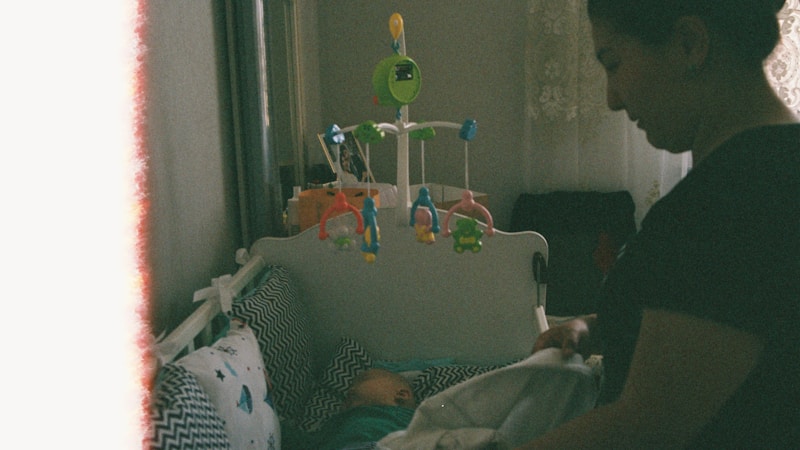
Thinner skulls, smaller heads
The landmark Gandhi et al. study (2012, Electromagn Biol Med) demonstrated that the Specific Absorption Rate (SAR) for a 10-year-old child’s head is up to 153% higher than the standard adult testing mannequin (SAM) used to certify cell phones. When tissue-specific electrical properties are considered, a child’s brain absorption can be over two times greater, and skull bone marrow absorption can be ten times greater than adults.
De Salles et al. (2006, Electromagn Biol Med) confirmed this with FDTD simulations: under identical conditions, the 1g-SAR calculated for children was more than 60% higher than for adults.
For babies — whose skulls are even thinner and softer than a 10-year-old’s, with open fontanelles — the differential is likely even more pronounced, though ethical constraints prevent direct testing on infants.
Developing nervous system
A baby’s brain is undergoing explosive growth. In the first year of life, the brain roughly doubles in size. Myelination (the insulation of nerve fibers) is incomplete. The blood-brain barrier, which protects the brain from toxins in the bloodstream, is still maturing.
This rapid development creates a window of heightened vulnerability. Any environmental factor that could interfere with neural development — whether chemicals, noise, or electromagnetic fields — deserves closer scrutiny during this period.
Cumulative lifetime exposure
A baby born today will accumulate more lifetime EMF exposure than any previous generation. If wireless technology does carry any long-term risks, today’s infants face the greatest cumulative exposure because they start from birth and will live their entire lives in an increasingly wireless world.
This is precisely why the French agency ANSES recommended in 2016 that wireless devices be kept away from young children, and why several European countries have restricted WiFi in kindergartens and nurseries.
What Does the Research Actually Say?

Let’s look at the evidence — both reassuring and concerning — without cherry-picking.
The reassuring findings
MOBI-Kids (2022): The largest international study of mobile phone use and brain tumors in young people (ages 10-24, 14 countries) found no overall increased risk of brain tumors from wireless phone use. However, critics including Hardell and Moskowitz (2022, Rev Environ Health) identified significant methodological concerns, including the use of appendicitis patients as controls — a condition itself potentially linked to RF exposure.
Cognitive function reviews: Ishihara et al. (2020, Int J Environ Res Public Health) reviewed 12 studies on RF-EMF and cognitive function in children ages 4-17. They found that 86% of examined relationships showed no statistically significant effect. The remaining 14% showed negative associations under limited conditions.
WiFi exposure levels are low: The Polish National Institute of Public Health review (Magiera & Solecka, 2020) noted that WiFi devices operate at much lower power than mobile phones, and no studies have found exposures exceeding safety limits in typical home environments.
The concerning findings
Endocrine disruption in children: Sangün et al. (2015, Pediatr Endocrinol Rev) reviewed the impacts of EMF on children’s endocrine systems and found a “growing number of studies reveal the impacts on metabolism and endocrine function,” particularly in reproductive development, thyroid function, adrenal hormones, glucose homeostasis, and melatonin levels.
NICU exposure study: Calvente et al. (2017, Environ Res) measured RF-EMF levels in a Neonatal Medium Care Unit and found mean field strength of 0.81 V/m over 17 hours of monitoring, with higher values near windows and incubators. While below safety limits, the authors noted that premature and newborn infants represent a uniquely sensitive population that warrants precaution.
Brain dose and cognition: Cabré-Riera et al. (2021, Int J Hyg Environ Health) estimated whole-brain RF dose in preadolescents and adolescents across multiple European countries and found some associations with cognitive outcomes, though the authors noted the need for more research.
The Divan Danish Birth Cohort: While focused on prenatal exposure (covered in our EMF and pregnancy guide), this study of 13,159 children found associations between maternal cell phone use during pregnancy and behavioral problems in offspring — including hyperactivity and emotional difficulties at age 7.
The honest summary
No study has proven that typical home WiFi or baby monitor exposure harms infants. But the combination of higher absorption rates, developing systems, and unprecedented cumulative exposure means the precautionary principle — especially for the most vulnerable humans on earth — makes sense.
Check your EMF exposure
See cell towers, power lines, and substations near any US address.
Search Your AddressThe Nursery EMF Audit: What’s Actually in Your Baby’s Room?
Before making changes, understand what’s generating EMF in your baby’s environment.
Baby monitors
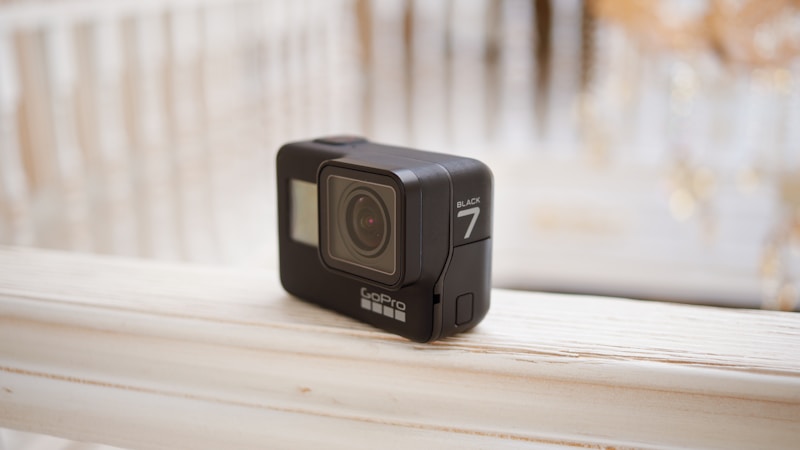
Baby monitors are the #1 EMF source parents ask about. Here’s what you need to know:
WiFi video monitors (Nanit, Owlet, Eufy, etc.) transmit continuously via 2.4 GHz or 5 GHz WiFi. They stream video 24/7, which means constant RF emission from a device often positioned 1-3 feet from your baby’s head.
DECT monitors (many audio-only monitors) use digital enhanced cordless telephone technology, which also transmits continuously — even when the room is silent. DECT operates at 1.9 GHz.
Analog monitors (increasingly rare) transmit only when sound is detected, resulting in much lower total exposure. They use frequencies around 49 MHz or 900 MHz.
Smart monitors with sensors (Owlet sock, Snuza, etc.) add Bluetooth Low Energy (BLE) transmissions from a device worn directly on your baby’s body.
The key variable isn’t the type of radiation — it’s distance and duty cycle. A WiFi monitor streaming video 12 hours a night from 2 feet away delivers vastly more cumulative RF exposure than a router in the next room.
Other nursery sources
- WiFi router: If in the nursery or adjacent room, it’s a constant RF source. Typical router power: 50-100 mW
- Smart speakers (Alexa, Google Home): Always listening, constantly connected to WiFi
- Smartphones charging on nightstand: Even in airplane mode, may emit EMF from the charging circuit
- Smart plugs, smart lights, smart humidifiers: Each maintains a WiFi or Zigbee/Z-Wave connection
- Tablet propped up for white noise: Broadcasting WiFi continuously while streaming
A nursery with a WiFi baby monitor, smart speaker, phone charger, smart plug, and nearby router has 5+ simultaneous EMF sources — more than most adults’ bedrooms a generation ago.
Practical Steps to Reduce Your Baby’s EMF Exposure
You don’t need to go off-grid. These steps are ranked by impact and practicality.
1. Increase distance from the baby monitor
This is the single highest-impact change. RF power density drops with the inverse square of distance. Moving a monitor from 2 feet to 6 feet away reduces exposure by approximately 9x.
Place the camera/monitor at least 6 feet from the crib. Most modern cameras have wide-angle lenses and night vision that work perfectly well at this distance.
2. Consider a low-EMF monitor alternative
Our Low EMF Baby Monitor Buyer’s Guide covers this in detail, but the quick version:
Lowest: A wired PoE IP camera (ethernet, zero RF from the nursery unit) — ~$50.
Very low: An audio-only DECT monitor with VOX mode (VTech DM221, ~$25) — only transmits when baby makes noise.
Good: A non-WiFi video monitor (Infant Optics DXR-8 Pro, eufy SpaceView) — DECT/FHSS, no internet connection.
Skip: Wearable monitors that attach to your baby (Owlet sock, clip-on sensors) unless medically recommended for a specific condition. The BLE transmitter sits directly against your baby’s skin.
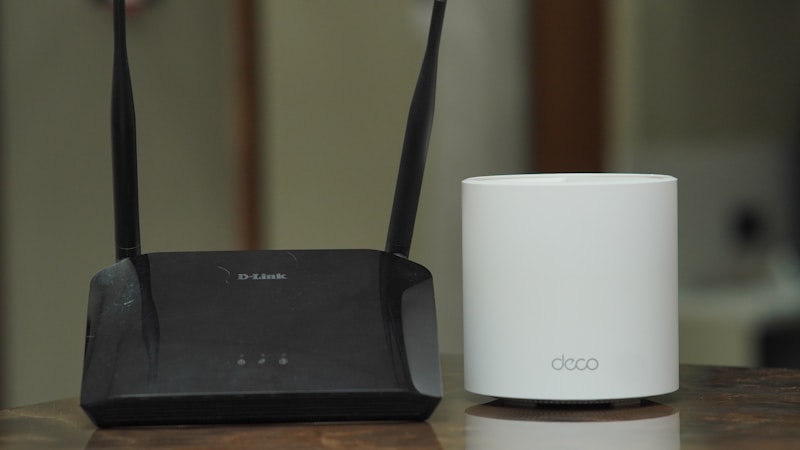
3. Move the WiFi router
If your router is in or adjacent to the nursery, relocate it. Every wall between the router and the crib reduces signal strength. Ideally, the router should be at least 15-20 feet away with at least one wall between it and the sleeping baby.
If you can’t move it, consider putting the router on a timer that reduces power output at night (some routers support this), or simply turn it off at bedtime and rely on your baby monitor’s direct connection.
4. Remove unnecessary smart devices from the nursery
Does your baby’s room really need a smart speaker? A smart plug? Smart lights? Each one is an RF source that provides minimal benefit in a room where the occupant can’t talk to Alexa.
Keep the nursery tech-minimal:
- Baby monitor (at distance)
- White noise machine (standalone, not WiFi-connected)
- Night light (regular, not smart)
That’s it. Everything else can live in the hallway or your room.
5. Use airplane mode strategically
When you’re in the nursery feeding or rocking your baby, put your phone on airplane mode. You’re holding it close to your infant’s head for extended periods during feeds — exactly the scenario where reducing RF exposure matters most.
This doesn’t mean you can’t check messages. It means creating pockets of low-exposure time during the closest-contact moments.
6. Wire what you can
Ethernet cables still exist, and they’re faster than WiFi anyway. If your baby’s room has a streaming device (white noise, camera base station), connecting it via ethernet eliminates its WiFi transmission entirely.
Some baby monitors now offer ethernet connection options. It’s worth checking.
Common Questions From New Parents

“Is my baby monitor safe?”
At current regulatory limits, yes — no baby monitor exceeds safety standards. But those standards were designed for adult exposure models, not infants. The precautionary approach: keep it at maximum practical distance and choose audio-only when possible.
“Should I turn off WiFi at night?”
If practical, it doesn’t hurt. Your baby (and you) will sleep just as well without WiFi. Modern phones can still make calls with WiFi off. The exposure reduction is meaningful because nighttime represents 10-12 hours of continuous exposure for an infant who sleeps most of the day.
“What about my neighbor’s WiFi?”
You can’t control your neighbor’s WiFi, and you shouldn’t stress about it. The signal strength from a router through multiple walls is extremely low. Focus on the sources within a few feet of your baby — those dominate total exposure.
“Are EMF-blocking baby blankets/canopies worth it?”
Most “EMF blocking” baby products are not independently tested and make unverified claims. Some shielding fabrics do reduce RF exposure when properly used, but they need to be between the source and the baby, not just loosely draped. A cheaper and more effective approach: move the source farther away.
“My pediatrician says it’s fine. Who do I believe?”
Your pediatrician is right that no proven harm has been established at current exposure levels. But many precautionary measures (distance, reducing unnecessary devices) have zero downside and are consistent with minimizing any environmental exposure during critical development. You don’t have to choose between trusting your doctor and being thoughtful about your baby’s environment.
“At what age can I worry less?”
By age 3-4, the skull has thickened significantly and rapid brain growth has slowed. The first 1,000 days (conception through age 2) represent the highest-vulnerability window. As children grow, their absorption patterns become more similar to adults’ — but even then, the AAP and WHO recommend limiting wireless device exposure for young children.
What We’d Like to See
As a site that tracks EMF data across the United States, here’s what we think is missing:
- Updated testing standards that include pediatric head models, not just the adult SAM mannequin from 1989
- Baby monitor EMF labeling — parents should know the RF output of nursery devices just like they know the chemical content of baby formula
- Longitudinal studies tracking wireless-exposed infants through childhood — we won’t know the long-term effects until we follow these children
- NICU exposure guidelines — the Calvente 2017 study showed RF levels in neonatal units that warrant standardized protocols
The Bottom Line
The science doesn’t say baby monitors or WiFi are harming your baby. But it also can’t say with certainty that continuous, multi-source RF exposure from birth has zero long-term consequences — because no generation before this one has experienced it.
The good news: the most effective precautions are also the simplest. More distance. Fewer devices. Wired over wireless when practical. None of these cost anything or make your life harder.
Your baby’s nursery should be the lowest-EMF room in your house. Not because we know it’s dangerous — but because when it comes to the most vulnerable members of your family, “probably fine” isn’t quite good enough.
Want to check what’s near your home? Use EMF Radar’s free map tool to see cell towers and power lines in your neighborhood. For room-by-room pregnancy guidance, see our EMF protection during pregnancy guide. For a full nursery/bedroom optimization checklist, see our low-EMF bedroom guide. And for the gadgets in your home, check our guide to smart home EMF radiation.
Related Reading
- EMF and Female Fertility: What Every Woman Should Know — preconception planning and reproductive health research
- EMF and Miscarriage: What the Research Says — Kaiser Permanente studies and 2026 uterine effects review
- Low EMF Baby Monitors: Best Options for Parents — specific product recommendations by EMF type
- EMF and ADHD: Can EMF Affect Your Child’s Attention? — Danish Birth Cohort prenatal exposure findings