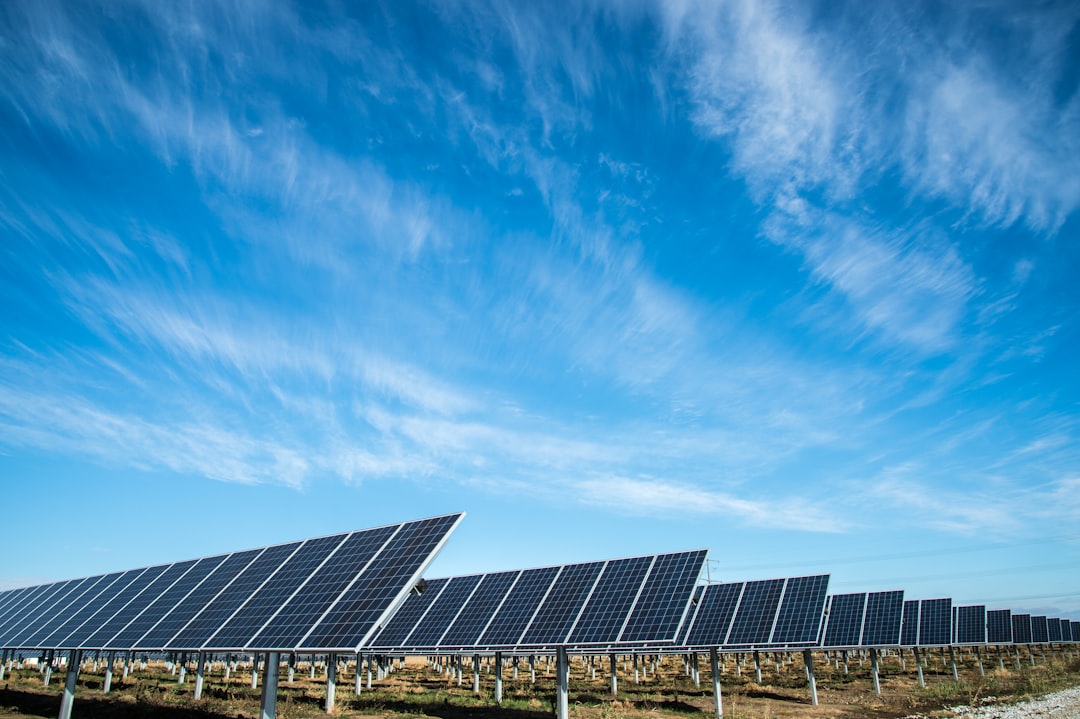
Solar energy is booming. The U.S. added more solar capacity in 2025 than any other energy source, and utility-scale solar farms are popping up in rural and suburban communities across the country. With that growth comes a question we hear increasingly at EMF Radar: do solar farms emit electromagnetic radiation, and should people living nearby be concerned?
It’s a fair question — and one that deserves a real answer, not dismissive hand-waving or fear-mongering. Let’s dig into the actual science and measurements.
How Solar Farms Produce EMF
Solar panels themselves — the photovoltaic (PV) cells that convert sunlight to electricity — produce direct current (DC) power. DC systems generate static electric and magnetic fields, not the alternating fields that most EMF health research focuses on. The EMF from a solar panel is comparable to what you’d get from a battery: essentially negligible at any practical distance.
The real EMF sources at a solar farm are the electrical infrastructure that handles the power after it leaves the panels:
Inverters
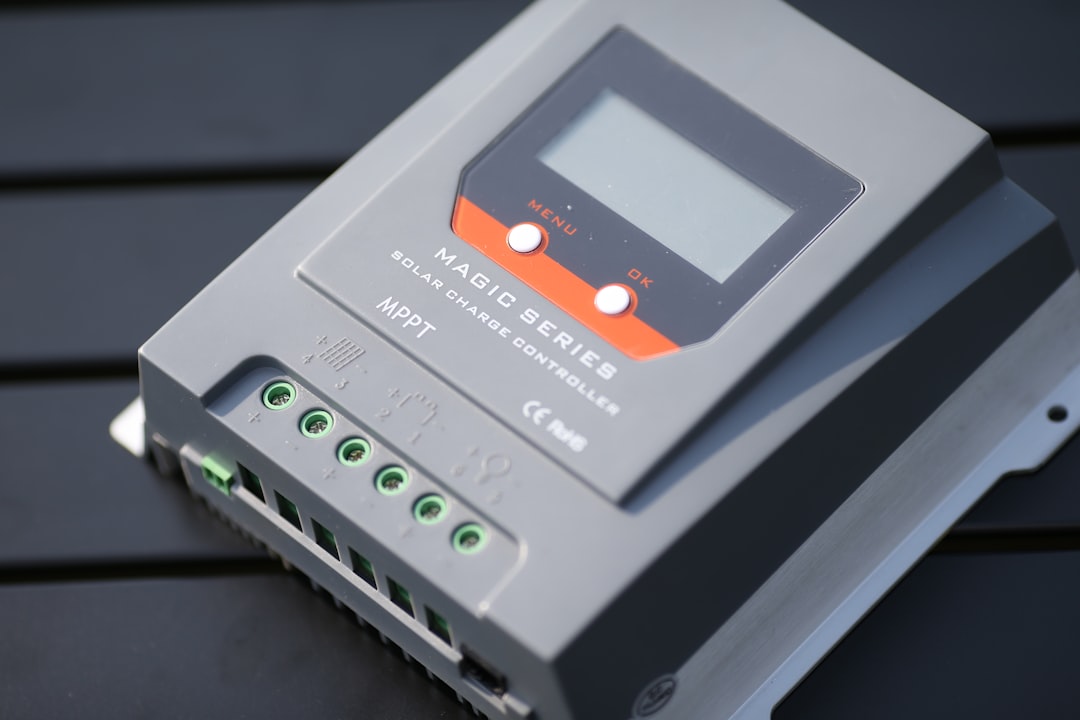
These are the primary EMF concern. Inverters convert DC power from the panels into alternating current (AC) for the grid. This conversion process creates electromagnetic fields at 60 Hz (the grid frequency) plus harmonics. Utility-scale central inverters are large industrial units, typically housed in metal enclosures.
Measured EMF levels from inverters:
- Directly beside a utility-scale inverter: ~1,050 milligauss (mG)
- At 9 feet from a residential inverter: ~0.5 mG
- At 150 feet from a utility-scale inverter: <0.5 mG
- At property line of a typical solar farm (500+ feet from equipment): effectively background levels
For context, the International Commission on Non-Ionizing Radiation Protection (ICNIRP) guidelines set the public exposure limit at 2,000 mG for 60 Hz fields. Even standing nose-to-metal with a large inverter, you’re at about half that limit.
Transformers and Substations
Large solar farms include step-up transformers that boost voltage for transmission. These produce 60 Hz magnetic fields similar to any electrical substation. If you already live near a power substation, a solar farm’s transformer is a comparable — not additional — concern.
Transmission Lines
The power lines carrying electricity from a solar farm to the grid are standard high-voltage transmission lines. Their EMF characteristics are identical to any other power line — the source of the electricity doesn’t change the physics of the wire.
How Solar Farm EMF Compares to Other Sources
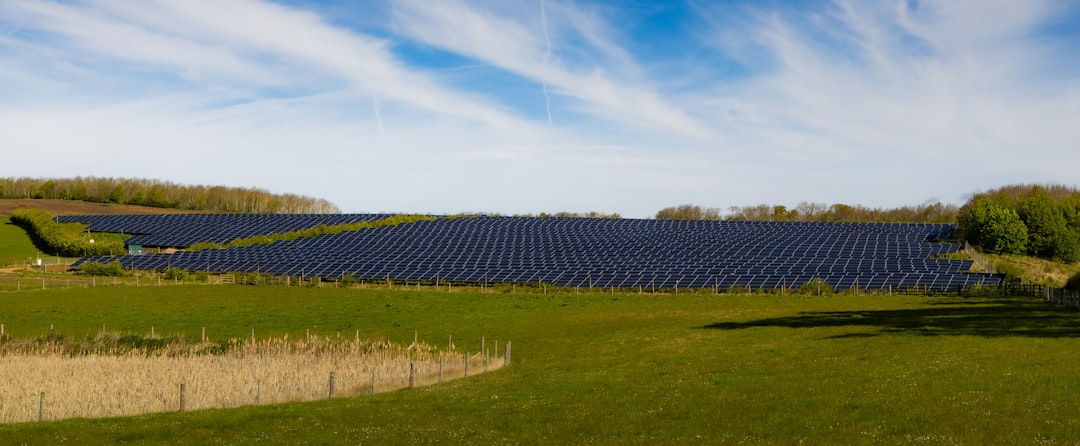
One of the most useful things we can do is put solar farm EMF in context. Here’s how it stacks up against common sources:
| Source | Typical Exposure | Distance |
|---|---|---|
| Electric can opener | 1,000–1,500 mG | 6 inches |
| Hair dryer | 60–200 mG | 6 inches |
| Microwave oven | 100–200 mG | 1 foot |
| Solar farm inverter | ~1,050 mG | Touching |
| Solar farm inverter | <0.5 mG | 150 feet |
| Cell tower (RF) | 0.001–1 mW/cm² | Varies |
| Power lines | 2–60 mG | 100 feet |
| Solar panel (DC) | <1 mG | 1 foot |
| Earth’s natural field | ~500 mG | Always |
The key insight: solar farm EMF drops off rapidly with distance. This is true of all near-field magnetic sources — the field strength decreases roughly with the cube of distance. By the time you’re at a typical property setback (hundreds of feet), the inverter’s contribution is lost in background noise.
Check your EMF exposure
See cell towers, power lines, and substations near any US address.
Search Your AddressWhat Type of EMF Are We Actually Talking About?
This matters because solar farm opponents sometimes conflate different types of electromagnetic radiation:
Extremely Low Frequency (ELF) — 60 Hz: This is what inverters, transformers, and power lines produce. It’s the same frequency as every electrical appliance in your home. The WHO classifies ELF magnetic fields as “possibly carcinogenic” (Group 2B) based on epidemiological associations with childhood leukemia — but this classification applies to all sources of 60 Hz fields, not specifically solar equipment.
Radiofrequency (RF): Some solar farms include monitoring systems that use WiFi or cellular connections. These produce RF fields comparable to a WiFi router — already covered at length in our RF-focused content. This is not a significant source.
DC fields: From the panels and DC wiring. These are static fields with no known health effects at the levels produced by solar equipment.
Solar panels do NOT produce ionizing radiation. Despite what some viral social media posts claim, photovoltaic cells absorb visible light — they don’t emit X-rays, gamma rays, or anything that can damage DNA directly.
The Real Concerns Worth Taking Seriously
While the EMF picture from solar farms is genuinely reassuring compared to, say, living near a cell tower cluster, there are a few legitimate considerations:
Inverter Harmonics and Dirty Electricity
Inverters don’t produce a clean 60 Hz sine wave — they create a stepped approximation that introduces higher-frequency harmonics (180 Hz, 300 Hz, etc.). These harmonics are a form of what some practitioners call “dirty electricity”. Modern inverters are increasingly clean, but older or cheaper models can inject more harmonic noise into the grid.
If you’re on the same local grid circuit as a solar farm, you could theoretically measure higher harmonic content on your home wiring. Whether this has health implications is debated — the evidence is thin and contested. But it’s the one EMF pathway where a solar farm could potentially affect homes beyond its immediate property line.
Battery Storage Systems
Many newer solar farms include battery energy storage systems (BESS). Large lithium-ion battery banks have their own inverters and thermal management systems. The EMF profile is similar to the solar inverters — ELF fields that drop off quickly with distance — but it’s an additional source worth measuring at properties directly adjacent to storage facilities.
Ground Current
Large solar installations can, in some configurations, create stray voltage and ground current issues — particularly if grounding systems interact with local soil conditions and nearby utility infrastructure. This is an electrical engineering concern more than an EMF health concern, but it can cause measurable magnetic fields along the ground near property boundaries.
What the Science Actually Says
There are no published epidemiological studies specifically examining health outcomes of populations living near solar farms. The research gap exists because:
- Utility-scale solar is relatively new — most large installations are less than 10 years old
- Exposure levels are very low at residential distances
- The primary EMF type (60 Hz) is already extensively studied in the context of power lines
What we do have is decades of research on 60 Hz magnetic field exposure from power lines, which is directly applicable since that’s the same type of field solar farm equipment produces. The largest meta-analyses show a statistical association between chronic exposure above ~3-4 mG and childhood leukemia, but no established causal mechanism.
At typical residential distances from a solar farm (500+ feet from electrical equipment), exposure levels are well below 1 mG — far below the threshold where any statistical associations have been observed.
How to Actually Measure It
If you live near a solar farm and want to know your actual exposure rather than relying on estimates, here’s what to do:
-
Get a quality ELF gaussmeter — look for one that measures below 1 mG with reasonable accuracy. The TriField TF2 or AlphaLab UHS2 are solid choices.
-
Measure at your property line facing the solar farm, and inside your home at various locations.
-
Measure at different times — solar farms produce maximum power (and maximum inverter EMF) during peak sun hours. Measure at noon on a sunny day vs. at night for comparison.
-
Check for harmonics if you have the equipment. A Stetzerizer or oscilloscope on your home wiring can reveal whether the solar farm is introducing harmonic distortion.
-
Use EMF Radar’s map tool to check what other EMF sources are in your area — cell towers, power lines, substations. Often the solar farm is the least significant source nearby.
The Bottom Line
Solar farms produce electromagnetic fields primarily from their inverters, transformers, and transmission lines — the same types of 60 Hz fields produced by all electrical infrastructure. At residential distances (typically 500+ feet from equipment), these fields drop to background levels well below any established health concern thresholds.
The nuanced take: Solar farm EMF is genuinely low-risk compared to many sources people encounter daily. The legitimate edge cases are inverter harmonics (dirty electricity injection into the local grid) and properties directly adjacent to battery storage facilities. If you’re concerned, measurement is straightforward and cheap.
What EMF Radar recommends:
- Don’t oppose solar development based on EMF fears — the data doesn’t support it
- If you’re buying property near a solar farm, check the full EMF picture including cell towers and power lines — the solar farm is likely your smallest exposure source
- If you live directly adjacent to inverter equipment (<200 feet), consider getting a baseline measurement
- Focus your EMF reduction efforts on sources actually in your home — they almost certainly contribute more to your daily exposure than any solar farm
Want to know what cell towers, power lines, and other EMF sources are near your location? Check the EMF Radar interactive map →
Concerned about EMF from other renewable energy sources? Read our guide on electric vehicle EMF exposure and EV charging station measurements.