Study Spotlight: Does Working Around RF Equipment Cause Brain Cancer? A Major New Study Says No
Part of our Study Spotlight series — breaking down new EMF research into plain English. No jargon. No agenda. Just what the science says.
The Study at a Glance
| 📄 Title | Is occupational exposure to radiofrequency electromagnetic fields associated with glioma risk? An Australian population-based family case-control study |
| 📰 Journal | BMJ Open (March 12, 2026) |
| 🏫 Researchers | Mate R, Benke G, Loughran SP, Abramson MJ, Vjadic C, Turner M, Turuban M, Cardis E, Karipidis K — Monash University, ARPANSA & Barcelona Institute for Global Health |
| 🔗 DOI | 10.1136/bmjopen-2025-107281 |
The Question
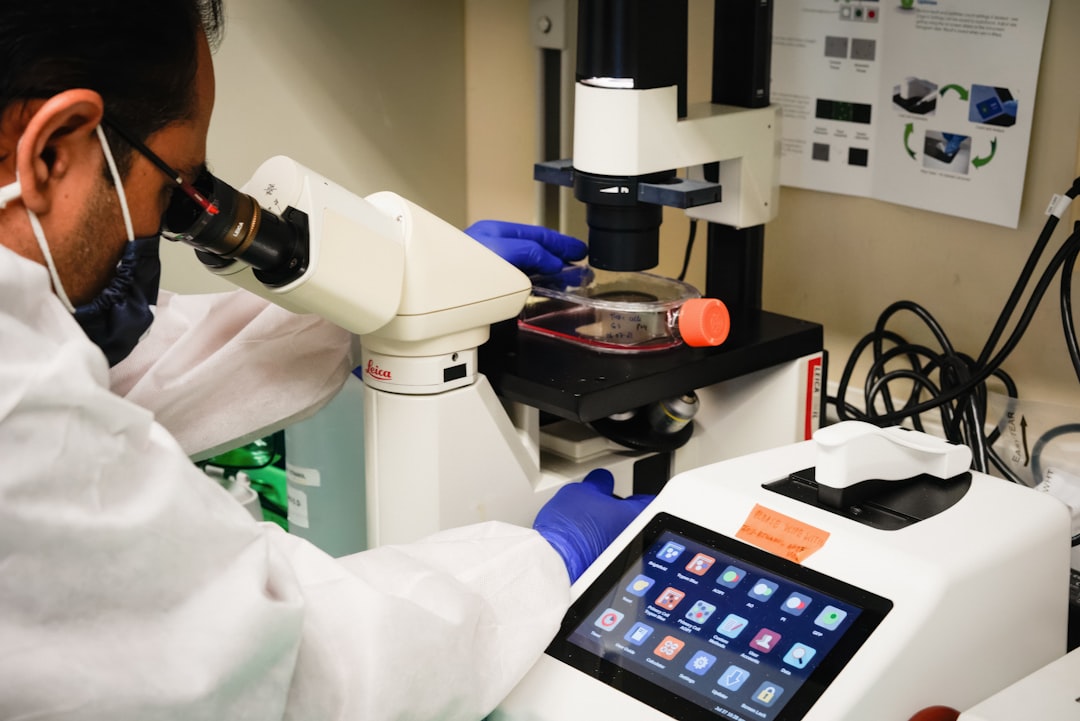
If you work around RF-emitting equipment every day — cell towers, broadcast transmitters, radar systems, welding equipment — are you more likely to develop brain cancer?
This is one of the longest-running questions in EMF research. The World Health Organization classified RF electromagnetic fields as “possibly carcinogenic” (Group 2B) back in 2011, largely based on mobile phone studies. But occupational exposure is different from consumer exposure — workers in telecommunications, broadcasting, and electrical trades can accumulate years of higher-level RF exposure compared to the average phone user.
This Australian study is the most recent large-scale attempt to answer the question.
Check your EMF exposure
See cell towers, power lines, and substations near any US address.
Search Your AddressWhat They Did
Researchers from Monash University, Australia’s radiation protection agency (ARPANSA), and the Barcelona Institute for Global Health analyzed data from the Australian Genomics and Clinical Outcomes of Glioma (AGOG) study — a population-based investigation recruited from hospitals across five Australian states between 2013 and 2017.
The participants:
- 467 cases — people diagnosed with glioma (a type of brain tumor)
- 367 controls — family members without glioma (using family controls helps account for shared genetics and environment)
Each participant completed detailed questionnaires covering their entire occupational history. Researchers then estimated each person’s RF exposure using two independent job-exposure matrices (JEMs):
- INTEROCC JEM — developed for the large multicountry INTEROCC brain cancer study. Estimates both electric and magnetic field exposure by job title.
- CANJEM — the Canadian job-exposure matrix, an independent system using different exposure methodology.
Using two separate tools is smart — if both show the same result, you can have more confidence in the findings.

What They Found
The headline: No increased risk of glioma from occupational RF exposure.
Here are the key numbers for the highest exposure quartile compared to the lowest:
Using the INTEROCC JEM:
- Electric field exposure: OR = 0.74 (95% CI: 0.47–1.15)
- Magnetic field exposure: OR = 0.92 (95% CI: 0.58–1.45)
Using the CANJEM:
- Overall RF exposure: OR = 0.85 (95% CI: 0.54–1.32)
An odds ratio (OR) below 1.0 actually suggests lower risk in the highest-exposed group, though none of these reached statistical significance. The confidence intervals all cross 1.0, meaning the results are consistent with no effect in either direction.
They also checked:
- Different latency assumptions (did exposure 10+ years ago matter more?) — No association
- Different time windows of exposure — No association
- Glioma grade (high-grade vs low-grade tumors) — No association
No matter how they sliced the data, the answer was the same: no link.
Why This Matters

This study is important for several reasons:
1. It’s from BMJ Open — one of the world’s most respected medical journals, with rigorous peer review. This isn’t a conference abstract or a preprint.
2. It used two independent exposure assessment tools — when both JEMs show the same null result, it reduces the chance that the finding is just an artifact of how exposure was measured.
3. It’s population-based — cases came from hospitals across five Australian states, not a single institution. This makes the results more generalizable.
4. Workers get more exposure than you — if people with the highest occupational RF exposure don’t show increased brain cancer risk, this is reassuring for the general public with lower exposure from consumer devices.
The Caveats (Because There Are Always Caveats)
Self-reported job histories. Occupational exposure was estimated from job titles, not from actual RF measurements on each worker. Two people with the same job title can have very different real-world exposures.
JEMs may underestimate exposure variation. Job-exposure matrices assign average exposure by occupation. They can’t capture individual behaviors — a telecom worker who always wears a body-worn antenna tool has different exposure than one who works at a desk.
Sample size. 467 cases and 367 controls is decent but not enormous. Subtle increases in risk (say, a 20% increase) might not be detectable with this sample size.
Healthy worker effect. People who work are generally healthier than the overall population. This can mask small increases in disease risk.
Glioma is rare. Even if RF exposure did increase risk modestly, glioma occurs in roughly 6 per 100,000 people. Detecting a small increase above an already rare baseline requires very large studies.
Selection bias is possible. Only 42% of eligible cases participated, and the study relied on family controls rather than random population controls.
What This Means for You
If you work in telecommunications, broadcasting, electrical trades, or any field involving RF equipment:
- This study is reassuring — no increased brain cancer risk was found, even in the highest-exposure workers
- It adds to a growing body of evidence from occupational studies showing no clear RF-glioma link
- That said, it’s one study. The authors themselves note that “future research should focus on refining occupational RF EMF exposure assessment”
If you’re a regular consumer who uses a cell phone and lives near cell towers:
- Your exposure is lower than the workers in this study. If they showed no increased risk, that’s a positive signal for you
- This doesn’t address other potential health effects (sleep, fertility, etc.) — just brain cancer specifically
- Check your local cell tower environment with EMF Radar’s free map tool to understand what’s near you
The Bigger Picture
The EMF-brain cancer question has been studied for decades, and the evidence remains mixed:
- Interphone study (2010): Modest increase in glioma risk for heaviest phone users, but possible recall bias
- Hardell studies (Sweden): Consistently found increased risk, but methodology has been debated
- Million Women Study (2022): 776,000 women, no increase in brain cancer from phone use
- This study (2026): No occupational exposure-glioma link in Australian workers
The weight of evidence is tilting toward no strong link, but scientists continue studying it — which is exactly what good science looks like.
Related Reading
- EMF and Cancer: What Does the Research Actually Show? — full evidence review including brain cancer studies
- Cell Tower Health Effects by Distance — what research shows at different distances
- EMF and Brain Fog: Can Cell Phones Affect Your Thinking? — neurological effects beyond cancer
- Is EMF Bad for You? What Science Actually Says — the balanced evidence overview
- UK Police Radio Cancer — Airwave Study — another large occupational study
📊 Want to know what cell towers are near your home or workplace? Check your address on EMF Radar — it’s free and takes 10 seconds.
🔬 Read more in our Study Spotlight series — consumer-friendly breakdowns of the latest EMF research.
Concerned about EMF? Check your address on EMF Radar to see nearby towers and power lines, or find a certified EMF consultant for professional testing.