Cell Tower Health Effects by Distance: What Research Shows at Every Range
Quick answer: Research on cell tower health effects consistently shows a distance-dependent pattern. Studies from Germany, Brazil, Israel, and Egypt all found elevated health complaints among residents living within 200–400 meters of cell towers compared to those farther away. At distances beyond 400 meters (about a quarter mile), most studies find exposure levels drop to near-background and reported symptoms decline significantly. However, no regulatory body has established a mandatory health-based setback distance, and the WHO still classifies RF radiation as “possibly carcinogenic” (Group 2B) — meaning the evidence suggests a possible link but isn’t conclusive.
The question isn’t whether cell towers emit radiation — they do, by design. The real question is: at what distance does that radiation stop mattering for your health?
This is where most online guides fail you. They either dismiss all concerns or fearmonger without data. We’re going to do something different: walk through the actual research, study by study, distance by distance, and show you what scientists found at each range.
Then we’ll show you something no other site can — real tower density data for any address in America, so you can see exactly what’s near you.
 Cell towers are increasingly common in residential areas. The average American lives within 0.5 miles of at least one.
How Cell Tower Radiation Works (30-Second Version)
Cell towers (base stations) emit radiofrequency (RF) radiation in the 700 MHz to 6 GHz range to communicate with phones. Here’s what matters for health:
- Power decreases with the square of distance — double your distance, exposure drops by 75%
- Main beam is directional — antennas aim outward and slightly downward, not straight down
- Frequency matters — higher frequencies (5G mmWave) travel shorter distances but carry more energy per photon
- Exposure is continuous — unlike a phone call you end, tower emissions are 24/7
This inverse-square relationship is why distance is the single most important factor in your exposure level.
The Key Studies: What Happens at Each Distance
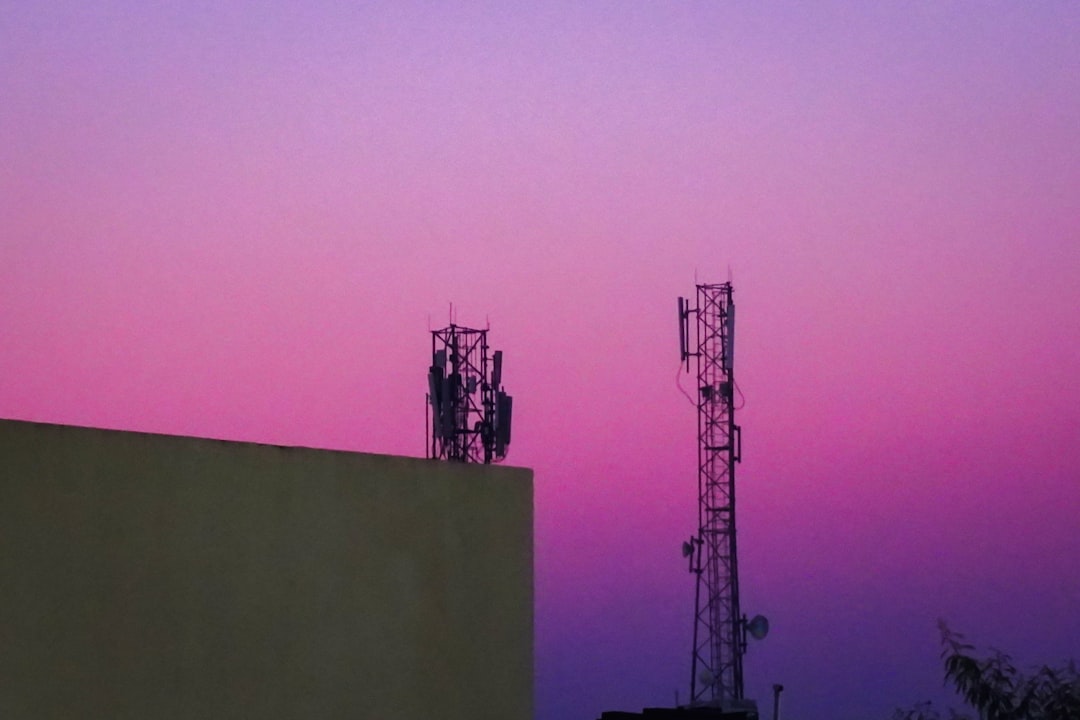
Researchers across multiple countries have studied people living at various distances from cell towers. Here’s what they found, organized by distance zone.
🔴 Zone 1: Under 100 Meters (Under 330 Feet)
This is the highest-exposure zone — and the most studied.
Abdel-Rassoul et al. (2007) — Egypt Researchers at Menoufiya University compared residents living in a building directly opposite a cell tower (within 100 meters on the rooftop across the street) to a control group living far from any tower. The exposed group reported significantly higher rates of:
- Headaches (23.5% vs. 10%)
- Memory difficulties (28.2% vs. 5%)
- Dizziness (18.8% vs. 6.7%)
- Sleep disturbance (23.5% vs. 10%)
- Depressive symptoms (21.7% vs. 8.8%)
Neuropsychiatric testing showed measurably decreased attention and short-term memory in the exposed group.
Santini et al. (2002) — France This survey of 530 people living at varying distances from cell towers found that within 100 meters, residents reported the highest frequency of symptoms including fatigue, headache, sleep disruption, and difficulty concentrating. Complaints decreased steadily with distance, with most symptoms reaching baseline levels beyond 200–300 meters.
What this means: Living directly adjacent to a cell tower — within a football field’s distance — is associated with the highest rates of reported symptoms across multiple studies.
 Rooftop installations put towers within meters of residents in the floors directly below — the shortest exposure distances in residential settings.
🟠 Zone 2: 100–200 Meters (330–660 Feet)
Eger et al. (2004) — Naila, Germany One of the most cited studies in this field. Researchers analyzed cancer incidence among residents within 400 meters of a cell tower in the town of Naila, Bavaria, over a 10-year period (1994–2004). Key finding:
- Residents living within 400 meters had a cancer incidence rate 3.3 times higher than the town average during the second 5-year period (after the tower had been operating for 5+ years)
- The elevated rate was concentrated in residents closest to the tower, with the strongest effect under 200 meters
This study has been criticized for its small sample size and potential confounding factors, but its findings aligned with similar research from other countries.
Wolf & Wolf (2004) — Netanya, Israel Studied cancer cases among residents living within 350 meters of a cell tower versus a control population in a similar neighborhood. Over a 3-year period:
- Cancer rate within 350 meters: 129 per 10,000 (4.15% of residents)
- Cancer rate in control area: 16-31 per 10,000
- The exposed population had an approximately 4× higher cancer incidence
The authors noted that their findings were “preliminary” but warranted further investigation.
What this means: Multiple studies found elevated health concerns between 100–200 meters. This is the zone where RF exposure is still significantly above background but well below regulatory limits — raising the question of whether current limits are adequate for long-term chronic exposure.
🟡 Zone 3: 200–400 Meters (660–1,300 Feet)
Dode et al. (2011) — Belo Horizonte, Brazil The largest and most methodologically rigorous cell tower health study to date. Researchers analyzed 7,191 cancer deaths over a 10-year period (1996–2006) in Belo Horizonte, mapped against the locations of the city’s cell towers. Key findings:
- Cancer mortality was significantly higher among residents living within 500 meters of cell towers
- The strongest correlation appeared within 100–200 meters
- Even at 200–400 meters, cancer rates remained elevated compared to those living beyond 500 meters
- The study controlled for socioeconomic factors and population density
This study is notable for its large sample size and its use of geospatial analysis — similar to the PostGIS-based approach we use at EMF Radar to analyze tower proximity.
 Aerial view of a residential neighborhood. At 200-400 meters, a cell tower may not even be visible from your window — but RF exposure can still be measurable.
🟢 Zone 4: 400+ Meters (Quarter Mile and Beyond)
The consensus dropoff point. Most studies find that beyond 400 meters:
- RF exposure from a single tower drops to levels comparable to background environmental RF
- Reported symptoms reach baseline rates
- Measurable differences between exposed and control groups largely disappear
However, there are important caveats:
-
Tower density matters more than single-tower distance. In urban areas, you may be 400+ meters from the nearest tower but still within range of 5–10 others. Cumulative exposure from multiple towers can exceed single-tower exposure at closer range.
-
Small cells change the equation. 5G small cells mounted on streetlights operate at 50–100 meters from residences. They’re lower power but much closer — and there are a lot more of them.
-
Exposure is chronic. The studies above tracked outcomes over 5–10 years of continuous exposure. Short-term measurements may not capture the effects of long-term, low-level exposure.
Check your EMF exposure
See cell towers, power lines, and substations near any US address.
Search Your AddressWhat Do the Experts Say?
There’s a meaningful gap between what research suggests and what regulators enforce:
World Health Organization (WHO) Classifies RF radiation as “possibly carcinogenic to humans” (Group 2B). This is the same category as lead and DDT. The WHO acknowledges that current safety limits were set based on thermal effects (tissue heating) only, and may not account for non-thermal biological effects from chronic low-level exposure.
International Agency for Research on Cancer (IARC) The Group 2B classification came from IARC’s 2011 evaluation. A re-evaluation was scheduled but has been repeatedly delayed. Many researchers argue the evidence has strengthened since 2011 and should be upgraded to Group 2A (“probably carcinogenic”) or Group 1 (“carcinogenic”).
BioInitiative Working Group A group of independent researchers who reviewed over 1,800 studies on EMF health effects. Their conclusion: current safety limits are thousands of times too high to protect against non-thermal biological effects. They recommend a precautionary limit of 0.1 µW/cm² for outdoor exposure — far lower than the FCC’s limit of 580–1,000 µW/cm².
U.S. Federal Communications Commission (FCC) The FCC’s RF exposure limits haven’t been updated since 1996. In 2021, a federal court ordered the FCC to explain why it hadn’t updated its limits, noting the agency had “failed to provide a reasoned explanation” for dismissing evidence of harm. As of 2026, no update has been implemented.
 The scientific debate continues, but the precautionary principle suggests minimizing unnecessary exposure — especially for children and pregnant women.
What EMF Radar Data Shows About Your Exposure
Here’s where we can show you something unique. Our database contains the location of every registered cell tower in the United States — over 400,000 installations from the FCC and OpenCelliD databases, analyzed using PostGIS geospatial queries.
When you search your address on EMF Radar, we calculate:
- Number of towers within 0.25, 0.5, 1, and 3 miles of your location
- Estimated RF exposure score based on tower proximity, density, and type
- National and state percentile ranking — how your location compares to the rest of the country
- Nearest tower distance and direction — exact proximity to the closest installation
Real Numbers From Our Data
Using our database of American cities, here’s what typical tower density looks like:
- Dense urban areas (Manhattan, downtown LA): 50–200+ towers within 1 mile
- Suburban areas (average suburb): 5–15 towers within 1 mile
- Small towns: 1–5 towers within 1 mile
- Rural areas: 0–1 towers within 1 mile
The health research we reviewed above studied single-tower exposure. In a city like New York, you’re not 200 meters from one tower — you’re 200 meters from potentially dozens. Cumulative exposure is the variable that current research has barely begun to address.
🔍 Want to see your numbers? Search your address on our free map tool and get your complete tower proximity report. It takes 10 seconds.
Practical Distance Guidelines
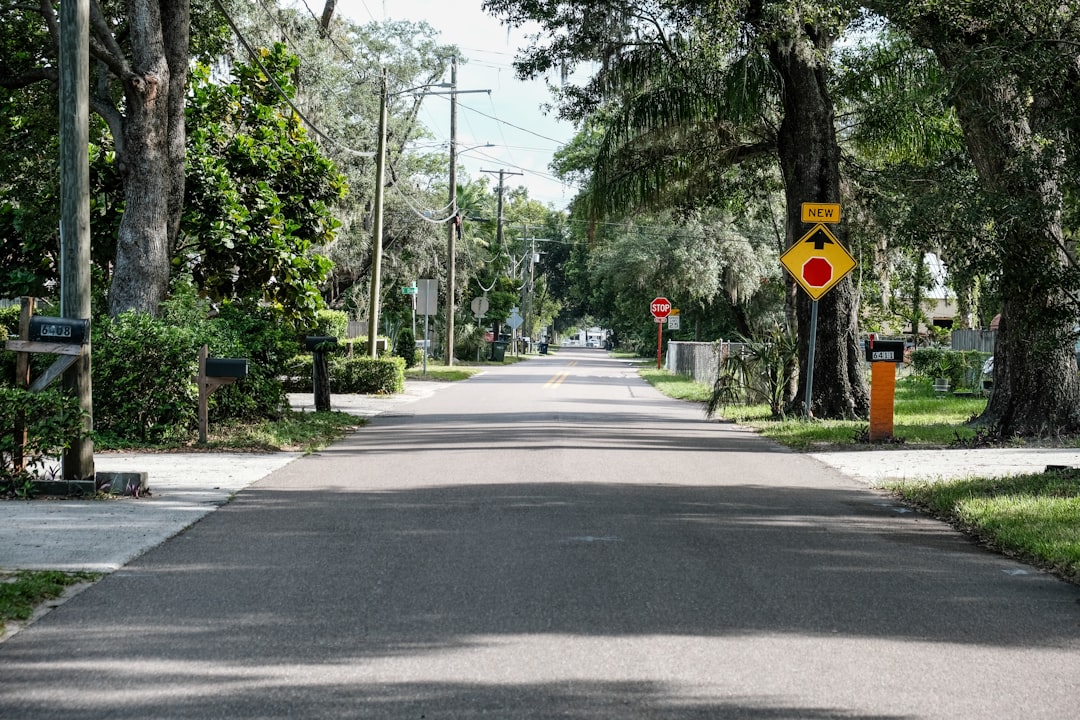
Based on the available research, here’s a precautionary framework:
For Home Buyers & Renters
| Distance from Nearest Tower | Risk Assessment | Recommendation |
|---|---|---|
| Under 100m (330 ft) | Highest exposure zone | Strongly consider alternatives, especially with children |
| 100–200m (330–660 ft) | Elevated exposure | Measure actual RF levels; consider shielding |
| 200–400m (660–1,300 ft) | Moderate exposure | Acceptable for most; measure if concerned |
| 400m+ (0.25 mi+) | Near-background exposure | Minimal concern from single towers |
Important Modifiers
- Multiple towers: If you’re within 400m of several towers, your cumulative exposure may exceed single-tower levels at 100m
- Rooftop installations: Living directly below a rooftop tower is a special case — exposure can be very high on the top 1–2 floors
- Small cells/5G: These operate at much shorter range (30–100m) and are proliferating rapidly in urban areas
- Children: Developing bodies absorb more RF radiation. The AAP recommends reducing children’s exposure when practical
- Pregnancy: Several studies suggest RF exposure during pregnancy warrants extra precaution (read our pregnancy EMF guide)
 When choosing a home, tower proximity is one factor worth checking — alongside school quality, crime rates, and flood zones.
How to Reduce Your Exposure (If You’re Concerned)
Already living near a tower? These steps can meaningfully reduce your indoor RF exposure:
Measure First
Before spending money on shielding, know your actual exposure levels. An RF meter (like the TriField TF2 or Safe Living Technologies Safe and Sound Pro II) can measure power density in your home. Compare readings to the BioInitiative recommendation of 0.1 µW/cm².
Shielding Options
- RF shielding window film — reduces RF transmission through glass by 95%+ (our shielding guide)
- EMF shielding paint — Y-Shield or similar products for walls facing the tower (our paint guide)
- Faraday bed canopy — reduces nighttime exposure during sleep (our canopy guide)
Free Steps
- Identify the direction of the nearest tower using EMF Radar’s map — then use that room less, or place beds/desks on the opposite side of the house
- Keep bedrooms on the far side from the tower when possible
- Use wired internet at home instead of WiFi to reduce indoor RF background
- Turn off WiFi at night — your body does its deepest cellular repair during sleep
The Bottom Line
The research on cell tower health effects is not conclusive — but it’s not nothing, either. Multiple independent studies across different countries found consistent distance-dependent patterns:
- Under 200 meters: Multiple studies found elevated health complaints and, in some cases, elevated cancer rates
- 200–400 meters: Some studies still found elevated effects; most found diminishing risk
- Beyond 400 meters: Most studies found exposure approaching background levels
The precautionary approach is straightforward: know what’s near you, measure if you’re concerned, and take simple steps to reduce exposure if levels are elevated.
Current regulatory limits were designed for short-term thermal effects, not long-term chronic exposure. Until those limits are updated — and they haven’t changed since 1996 — individuals who want to take a precautionary approach have to make their own informed decisions.
That’s exactly what EMF Radar was built for. Search your address and know what’s around you. It’s free, it takes 10 seconds, and the data might surprise you.
Frequently Asked Questions
What is a safe distance to live from a cell tower?
Based on precautionary guidelines and the available research, 400 meters (about a quarter mile) provides a substantial safety margin for most people. At this distance, RF exposure from a typical macro tower drops to near-background levels. For families with children or pregnant women, some researchers recommend 500+ meters. Use EMF Radar’s map tool to check your specific distance.
Do cell towers cause cancer?
The WHO classifies RF radiation as “possibly carcinogenic” (Group 2B). Several epidemiological studies have found elevated cancer rates among populations living near cell towers, particularly within 200 meters over periods of 5+ years. However, the evidence is not considered definitive by most health agencies. The precautionary approach is to minimize unnecessary chronic exposure.
Are 5G towers more dangerous than 4G?
5G uses two types of installations: macro towers (similar to 4G) and small cells (mounted on streetlights, much closer to homes). Small cells operate at lower power but at much shorter distances — often 50–100 meters from residences. The health effects of 5G-specific frequencies (particularly millimeter wave above 24 GHz) have not been extensively studied. Read our 5G safety guide for more detail.
How do I find out what cell towers are near my home?
EMF Radar’s free map tool shows every registered cell tower in the United States. Enter your address to see tower count, distance to nearest tower, estimated RF exposure score, and how your location compares nationally. You can also check the FCC’s ASR database directly, though it’s less user-friendly.
Should I buy a house near a cell tower?
Tower proximity is worth checking, just like school quality, flood zones, and crime rates. While the health evidence isn’t conclusive, properties near visible cell towers often sell for 2–20% less due to buyer perception. Our property values article covers the real estate impact in detail. At minimum, check the address on EMF Radar before making an offer.