Should I Buy a House Near a Power Substation?
Quick Answer: Buying a house near a power substation requires careful consideration of EMF exposure, property values, and personal comfort. Most experts recommend maintaining a distance of at least 200-400 meters from substations to minimize magnetic field exposure. While research on health effects remains inconclusive, proximity to substations can reduce property values by 2-9%. Always measure EMF levels before purchasing and factor in both the immediate surroundings and long-term implications.
Key Facts at a Glance
| Factor | Details |
|---|---|
| Primary Emission | Magnetic fields (measured in milligauss or microtesla) |
| Recommended Distance | 200-400+ meters from substation perimeter |
| Property Value Impact | 2-9% reduction compared to similar homes |
| EMF at Fence Line | Can exceed 50-100 mG during peak load |
| EMF at 100 meters | Typically drops to 1-5 mG |
| EMF at 200+ meters | Usually at background levels (0.5-2 mG) |
| Disclosure Requirements | Varies by state; often not mandatory |

What Is a Power Substation?
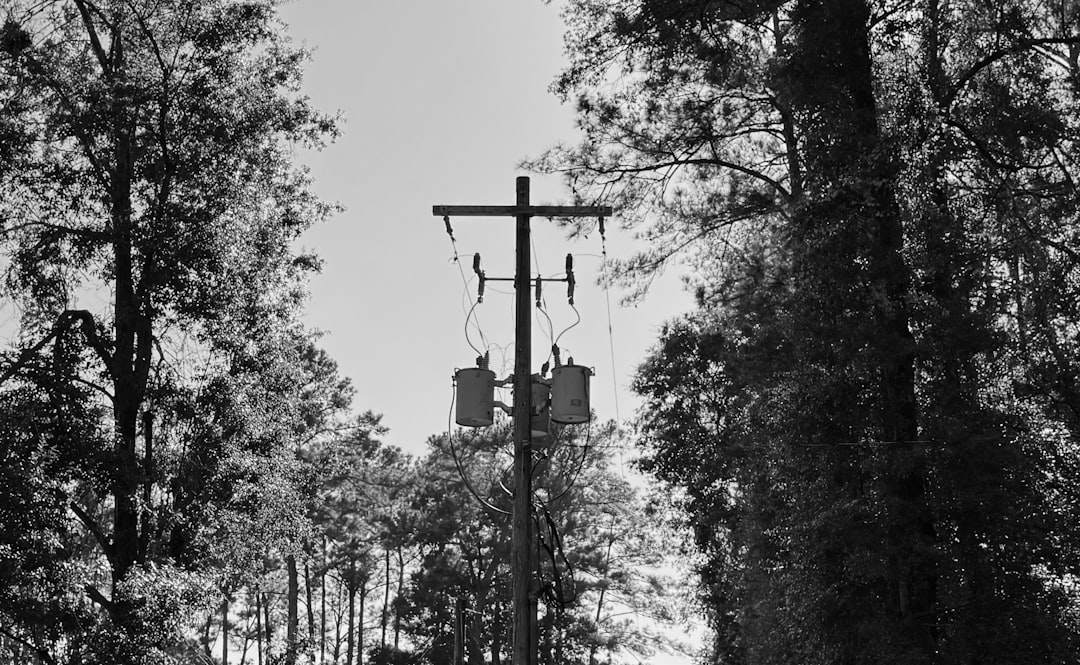
Power substations are critical infrastructure components that transform voltage levels for electricity distribution. These facilities step down high-voltage electricity from transmission lines to lower voltages suitable for homes and businesses, or step up voltage for long-distance transmission.
Substations contain transformers, switches, circuit breakers, and other electrical equipment housed within fenced enclosures. They range from small neighborhood units serving a few blocks to large transmission substations covering several acres. Understanding what type of substation sits near a prospective home helps assess potential EMF exposure.

Types of Substations You Might Encounter
Distribution substations are the most common type found in residential areas. These facilities reduce voltage from transmission levels (69-138 kV) to distribution levels (4-35 kV) and are typically smaller, occupying lots similar in size to a residential property.
Transmission substations handle higher voltages and are usually located in industrial areas or on the outskirts of populated zones. These larger facilities produce stronger magnetic fields and require greater buffer distances.
Switching stations route power between different transmission lines without transforming voltage. While they lack transformers, they still generate magnetic fields from the high-current conductors passing through them.
Check your EMF exposure
See cell towers, power lines, and substations near any US address.
Search Your AddressWhat Do Substations Actually Emit?
Substations primarily emit extremely low frequency (ELF) magnetic fields. Unlike the radiation from cell phones or microwaves, these fields operate at 60 Hz (50 Hz in some countries) and behave differently in terms of how they interact with the environment and human tissue.
Magnetic Fields vs. Electric Fields
Magnetic fields pass through most materials, including walls, fences, and trees. They cannot be effectively shielded without specialized ferromagnetic materials, making distance the primary mitigation strategy. The strength of magnetic fields from substations depends on the amount of current flowing through the equipment at any given time.
Electric fields, by contrast, are largely blocked by buildings, trees, and other structures. While substations do produce electric fields, these rarely extend beyond the facility’s fence line in meaningful concentrations.
How EMF Levels Vary with Distance
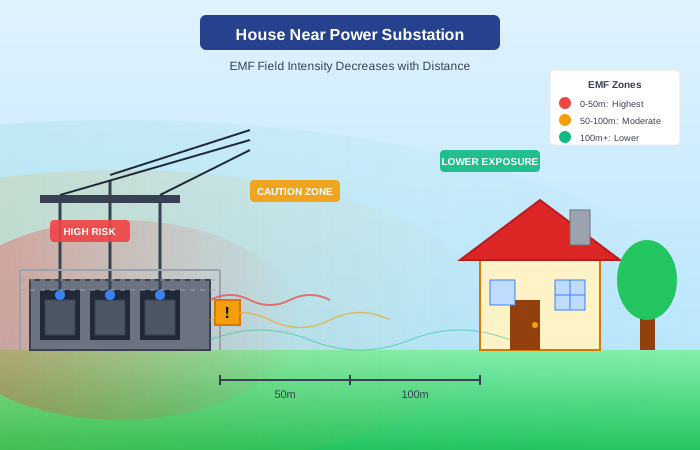
Magnetic field strength follows an inverse relationship with distance, though not always at a predictable rate due to the complex geometry of substation equipment. Field strength typically decreases rapidly within the first 50-100 meters, then tapers off more gradually.
At the fence line of an active substation, magnetic fields can measure anywhere from 10 mG to over 100 mG during peak demand periods. By 50 meters, readings often drop to 5-15 mG. At 100 meters, most substations produce fields of 1-5 mG, and by 200-300 meters, levels typically match normal background readings found in most homes (0.5-2 mG).
These measurements vary significantly based on the substation’s size, voltage levels, current load, and specific equipment configuration. Time of day matters too—peak electricity demand in the afternoon and evening correlates with higher magnetic field levels.
Substations vs. Transmission Lines: Understanding the Difference
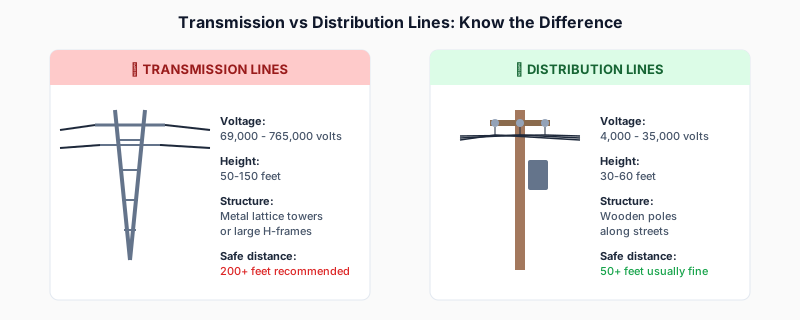
Prospective buyers sometimes confuse substations with transmission line corridors. While both produce magnetic fields, they present different exposure profiles that warrant separate consideration.
Transmission Lines
High-voltage transmission lines carry electricity over long distances, suspended from tall towers or poles. The magnetic fields they produce extend outward from the conductors in a predictable pattern, with intensity dropping as you move perpendicular to the line. A home 100 meters from a major transmission line might experience consistent EMF exposure of 2-10 mG, depending on the line’s voltage and current load.
Substations
Substations concentrate electrical equipment in a defined area, creating a more localized but potentially intense field pattern. Unlike the linear exposure from transmission lines, substation fields radiate outward from a central point, meaning distance in any direction provides similar reduction in exposure.
For home buyers, the practical difference lies in predictability. Transmission line exposure is relatively consistent and easy to model, while substation exposure can vary based on operational factors and equipment placement within the facility.
Safe Distance Recommendations

Establishing a “safe” distance from a substation depends on your personal risk tolerance and how you interpret the available research. No regulatory body has established mandatory setback distances for residences near substations, leaving buyers to make their own informed decisions.
What Research Suggests
Epidemiological studies examining childhood leukemia and magnetic field exposure have focused on the 3-4 mG threshold as a point of interest. While causation has not been established, some researchers recommend precautionary measures when exposure exceeds this level.
Based on typical substation field patterns, maintaining a distance of 200-400 meters generally ensures exposure remains below 2 mG—well within the range found in homes without nearby electrical infrastructure.
Practical Distance Guidelines
For small distribution substations, a distance of 100-150 meters usually provides adequate buffer. Larger transmission substations warrant greater separation—300-500 meters or more, depending on the facility’s size and voltage levels.
These recommendations assume typical residential exposure scenarios. If the house includes outdoor living spaces or children’s play areas facing the substation, you might prefer additional distance for peace of mind.
Property Value Impact: What the Data Shows
Real estate near electrical infrastructure typically sells at a discount. Multiple studies have quantified this effect, with findings ranging from minor to significant depending on proximity and property characteristics.
Research Findings
Academic studies consistently find that homes within 100 meters of substations or high-voltage lines sell for 2-9% less than comparable properties. The discount tends to be largest for homes with direct sightlines to the facility and smallest for homes where the infrastructure is screened by vegetation or other buildings.
A study published in the Journal of Real Estate Research found that properties adjacent to substations experienced value reductions of 5-7%, while homes 200+ meters away showed no statistically significant impact. Similar research in urban markets found discounts of 3-5% for proximity to various types of electrical infrastructure.
Factors Affecting Value Impact
Visual prominence matters more than distance in some markets. A substation hidden behind mature trees may affect values less than a visible facility at greater distance. Lot orientation also plays a role—homes with primary outdoor spaces facing away from the substation typically experience smaller discounts.
Market conditions influence buyer sensitivity to nearby infrastructure. In competitive markets with limited housing inventory, proximity discounts may shrink as buyers compromise on location factors. In buyer’s markets, discounts often increase as purchasers have more leverage to negotiate based on perceived drawbacks.
Negotiating Based on Proximity
Buyers can use documented property value impacts to negotiate purchase prices. Presenting research data and EMF measurements provides factual basis for requesting a discount that reflects the market reality of nearby electrical infrastructure.
Disclosure Requirements: What Sellers Must Tell You
Disclosure laws regarding electrical infrastructure vary significantly by jurisdiction. Most states do not specifically require sellers to disclose proximity to substations or transmission lines, though general disclosure requirements may apply.
State-by-State Variation
California requires sellers to disclose known environmental hazards, which some interpret to include nearby high-voltage facilities. Other states with comprehensive disclosure requirements may similarly capture this information. However, many states have no specific provisions addressing electrical infrastructure.
Even where disclosure is required, enforcement often depends on whether the seller had actual knowledge of the condition. A seller who never measured EMF levels or researched substation impacts may claim no disclosure obligation.
Questions to Ask Regardless of Requirements
Do not rely solely on seller disclosures when evaluating homes near electrical infrastructure. Ask directly about nearby substations and transmission lines, and verify answers through independent research.
Utility companies typically provide information about their infrastructure upon request. Local planning departments can identify the location of easements and utility facilities. Aerial imagery reveals transmission corridors and substation locations that might not be visible from street level.
How to Measure EMF Before Buying
Taking your own measurements provides the most reliable assessment of a home’s magnetic field exposure. This process requires appropriate equipment and measurement protocols to generate meaningful data.
Equipment Options

Consumer-grade EMF meters suitable for measuring magnetic fields cost $30-150 and provide adequate accuracy for home buying decisions. Look for meters that measure milligauss (mG) or microtesla (μT) in the extremely low frequency range. Popular options include the Trifield TF2, Latnex MG-300, and various Gaussmeter devices.
For critical decisions, consider hiring a professional EMF consultant who uses calibrated equipment and follows standardized measurement protocols. Professional assessments typically cost $200-500 and provide documented results you can reference during negotiations.
Measurement Protocol
Measure at multiple times to capture variation in electrical load. Morning, afternoon, and evening measurements on different days provide a representative sample of typical exposure levels. Summer measurements during air conditioning season may show higher readings than winter in some regions.
Check your address with EMF Radar to get preliminary information about nearby electrical infrastructure before scheduling in-person visits.
Take readings at property boundaries, in outdoor living spaces, and inside the home at locations where occupants spend significant time—bedrooms, living areas, and home offices. Record the distance from the substation for each measurement point.
Interpreting Your Results
Background magnetic field levels in homes typically range from 0.5-2 mG, originating from internal wiring, appliances, and neighborhood distribution lines. Readings consistently above 3-4 mG suggest influence from nearby electrical infrastructure and warrant investigation of the source.
Single readings above 10 mG near property boundaries indicate substantial magnetic field presence that deserves careful consideration. Document these findings and factor them into your purchase decision.

Questions to Ask Before Buying
Gathering comprehensive information about a prospective home near a substation requires asking the right questions to the right parties.
Questions for the Seller or Agent
- How long has the substation been at its current location?
- Have any expansions or upgrades occurred since you’ve owned the property?
- Have you ever measured EMF levels in the home?
- Has the proximity affected your use or enjoyment of the property?
- Are you aware of any planned expansions to the electrical facility?
Questions for the Utility Company
- What type of substation is this (distribution, transmission, switching)?
- What voltage levels does the facility handle?
- Are there planned upgrades that would increase capacity?
- Can you provide typical load data that would help estimate EMF levels?
- What is the age of the equipment, and are replacements planned?
Questions for Local Planning Departments
- What are the zoning restrictions around electrical substations?
- Are there buffer zone requirements for new construction?
- Have any variance requests been filed for the substation property?
- Are there proposed changes to electrical infrastructure in the area?
Making an Informed Decision
Weighing the factors involved in buying near a substation requires balancing objective data against personal priorities and risk tolerance.
When Proximity May Be Acceptable
If measurements confirm low EMF levels at living spaces, the home offers significant value advantages, and you’re comfortable with the available research, proximity to a substation may represent an acceptable tradeoff. Some buyers specifically seek these homes for their lower prices, particularly when the substation is not visible from the property.
When Caution Is Warranted
Homes with bedrooms or children’s play areas facing the substation, properties with measurements above 3-4 mG in regularly occupied spaces, or situations involving pregnant occupants or young children may warrant extra caution. The precautionary principle suggests avoiding elevated exposure when practical alternatives exist.
Financial Considerations
Factor potential resale challenges into your decision. Even if you’re comfortable with proximity, future buyers may not share your perspective. The property may take longer to sell and command a lower price than comparable homes without nearby electrical infrastructure.
Consider whether the purchase price adequately reflects these factors. If the home is priced at full market value without accounting for substation proximity, you may be overpaying relative to realistic resale expectations.
Related Reading
Explore these additional resources to understand EMF exposure from electrical infrastructure:
- How Close Is Too Close to Power Lines?
- Understanding EMF Measurements: A Homebuyer’s Guide
- EMF Shielding Options for Your Home
- What Are Safe EMF Levels?
Frequently Asked Questions
Do power substations cause cancer?
Current scientific evidence does not establish a causal link between substation EMF exposure and cancer. Some epidemiological studies have found statistical associations between elevated magnetic field exposure and childhood leukemia, but these studies cannot rule out other explanations. Major health organizations classify ELF magnetic fields as “possibly carcinogenic” based on limited evidence, recommending prudent avoidance while acknowledging uncertainty.
How far should a house be from a power substation?
Most EMF researchers suggest maintaining at least 200-400 meters distance from substations to ensure magnetic field levels remain at typical background levels. Smaller distribution substations may require less buffer, while large transmission substations may warrant additional separation. Taking actual measurements at the specific property provides better guidance than general distance recommendations.
Can you shield a house from substation EMF?
Shielding magnetic fields requires specialized materials that are impractical for whole-house application. Unlike electric fields, magnetic fields pass through conventional building materials, including concrete and metal. Some specialized shielding products can reduce magnetic field levels in specific rooms, but complete shielding is neither practical nor economical for residential applications. Distance remains the most effective mitigation strategy.
Will a substation affect my home insurance?
Standard homeowner’s insurance policies do not typically exclude coverage or adjust rates based on proximity to electrical substations. However, if the substation is considered a fire risk due to age or condition, some insurers might factor this into underwriting decisions. Contact your insurance provider with the specific property address to confirm coverage and pricing.
Are there regulations about building homes near substations?
Most jurisdictions lack specific setback requirements for residential construction near existing substations. Zoning ordinances may restrict new substations from being built near existing homes, but this protection rarely works in reverse. Some municipalities have adopted precautionary policies recommending buffer distances, but these are typically guidelines rather than enforceable requirements.
Should I be concerned about noise from a substation?
Transformers produce a characteristic hum at 120 Hz (twice the electrical frequency), which some residents find noticeable or annoying. Larger substations may also produce occasional louder sounds from cooling fans, switching operations, or equipment malfunctions. Visit the property during quiet evening hours to assess whether noise levels are acceptable for your preferences.
The Bottom Line
Buying a house near a power substation involves weighing EMF exposure concerns, property value implications, and personal comfort against the home’s other attributes and price. Scientific evidence on health effects remains inconclusive, but the precautionary approach suggests maintaining reasonable distance from electrical infrastructure when practical.
Before purchasing, take independent EMF measurements at multiple times, research the specific substation’s characteristics, and factor potential resale challenges into your financial analysis. A distance of 200-400 meters typically ensures magnetic field levels remain at normal background levels, though actual measurements at the specific property provide the most reliable assessment.
If you’re seriously considering a home near a substation, negotiate a purchase price that reflects documented market impacts, budget for professional EMF assessment if desired, and make peace with the tradeoffs involved. For some buyers, the value opportunity outweighs the concerns. For others, proximity to electrical infrastructure represents a dealbreaker regardless of price.
Check your address with EMF Radar to identify nearby substations and transmission lines before you begin your home search, helping you make informed decisions about which properties to pursue.