Power Lines Near My House: Should I Be Worried?
Quick Answer: High-voltage transmission lines on tall metal towers require at least 200 feet of distance to significantly reduce magnetic field exposure. Standard distribution lines on wooden street poles are typically safe beyond 25-50 feet. The only way to know your actual exposure is to measure with a gaussmeter, as field strength varies with electrical load and line configuration.
Key Facts at a Glance
| Question | Answer |
|---|---|
| What is a safe distance from transmission lines? | 200+ feet significantly reduces exposure; 400+ feet provides minimal concern |
| What is a safe distance from distribution lines? | 25-50 feet is typically sufficient for wooden pole street lines |
| Can you shield against power line EMF? | No practical whole-house shielding exists; distance is the only effective solution |
| What magnetic field level is concerning? | Fields above 3-4 milligauss (mG) are associated with increased health risks in studies |
| Which room matters most? | Bedrooms — EMF can affect sleep quality, and you spend 8+ hours there |
| How do you measure power line EMF? | Use a gaussmeter ($30-$300+) and measure at different times of day |
You’ve found a house you love, but there’s a set of power lines running behind the backyard. Or maybe you’ve lived near transmission lines for years and recently started wondering if you should be concerned. You’re not alone—this is one of the most common EMF-related questions people ask.
Here’s the direct answer: High-voltage transmission lines (the big ones on tall metal towers) warrant more caution than distribution lines (the wooden poles along streets). For transmission lines, staying 200+ feet away significantly reduces your exposure. For distribution lines, 25-50 feet is typically sufficient.
But the full picture involves understanding what type of lines you’re dealing with, how magnetic fields actually behave, and what the research shows.
The Two Types of Power Lines (and Why It Matters)

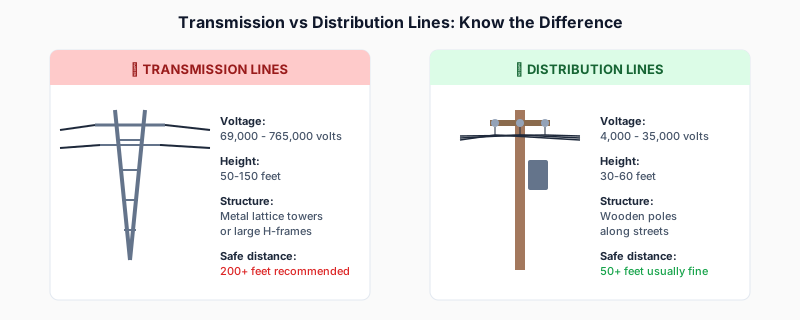
Transmission lines and distribution lines require different safety distances because they carry vastly different voltage levels. The distinction between these two types is crucial for assessing your risk:
Transmission Lines
- Carry 69,000 to 765,000 volts (69kV to 765kV)
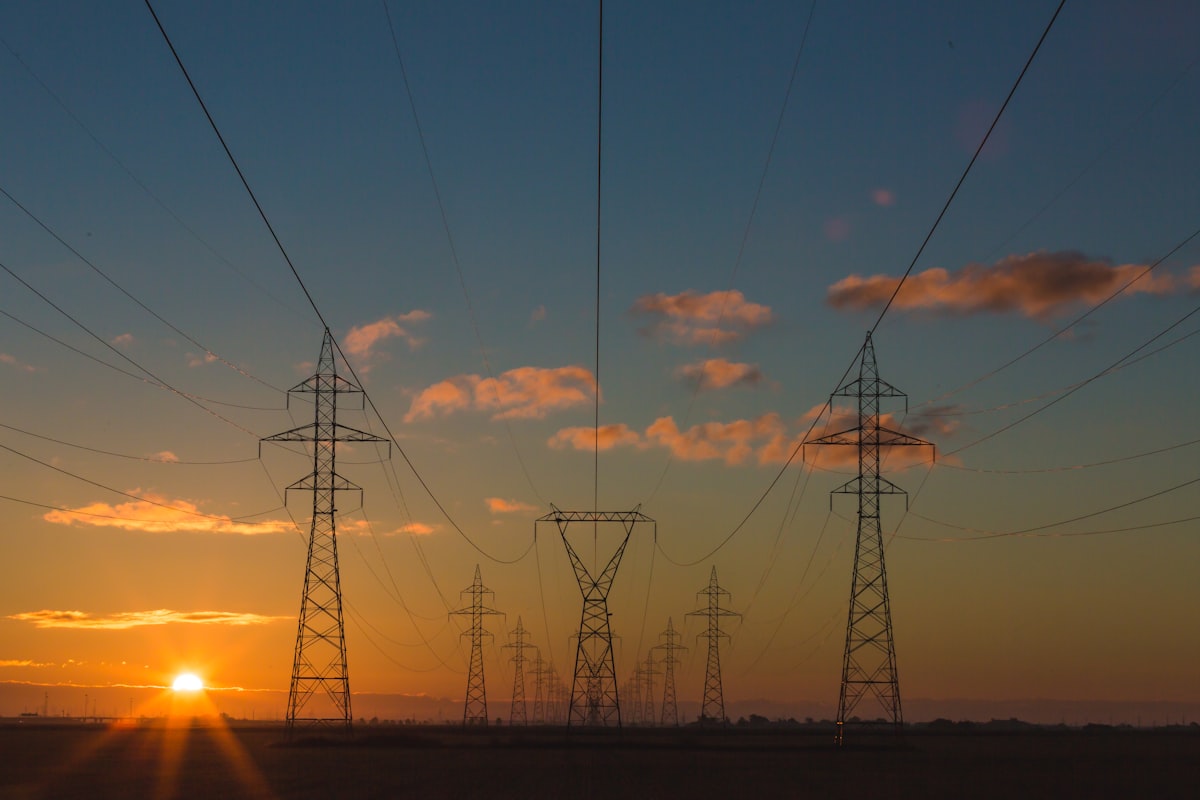
- Mounted on tall metal lattice towers or large wooden H-frames
- Typically 50-150 feet high
- Carry power long distances from generating plants
- Generate stronger magnetic fields that extend further
Distribution Lines
- Carry 4,000 to 35,000 volts (4kV to 35kV)
- Mounted on standard wooden poles along streets
- Typically 30-60 feet high
- Deliver power to neighborhoods and buildings
- Generate weaker fields that drop off quickly
There’s also a third category—service drops—the lines running from the pole to your house. These carry 120/240 volts and generate minimal fields.
The voltage matters because higher voltage generally means higher current, and current is what creates magnetic fields. But the relationship isn’t perfectly linear—a heavily loaded 12kV distribution line can sometimes produce stronger fields than a lightly loaded 115kV transmission line.
Check your EMF exposure
See cell towers, power lines, and substations near any US address.
Search Your AddressHow Magnetic Fields Drop Off With Distance
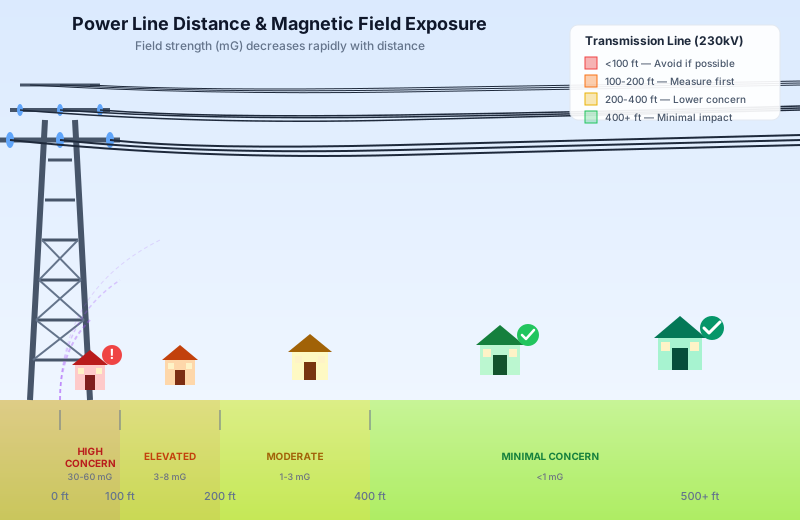
Magnetic field strength from power lines decreases rapidly as you move away from the source. Unlike cell tower RF (which follows inverse square law), magnetic fields from power lines often drop even faster because of how the three-phase currents partially cancel each other out.
Here’s what typical measurements show for a 230kV transmission line:
| Distance | Typical Field Strength | Context |
|---|---|---|
| Directly under | 30-60 mG | Maximum exposure zone |
| 50 feet | 10-20 mG | Still elevated |
| 100 feet | 3-8 mG | Moderate |
| 200 feet | 1-3 mG | Background-level for many areas |
| 300 feet | 0.5-1.5 mG | Approaching typical home background |
| 500 feet | 0.2-0.5 mG | Usually indistinguishable from background |
For distribution lines, the numbers are much lower:
| Distance | Typical Field Strength |
|---|---|
| Directly under | 5-15 mG |
| 25 feet | 1-4 mG |
| 50 feet | 0.3-1 mG |
| 100 feet | < 0.5 mG |
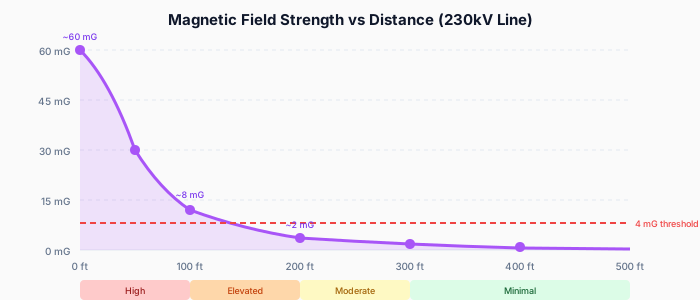
Important: These are typical ranges. Actual fields depend on current load, line configuration, and other factors. The only way to know your actual exposure is to measure.
What the Research Says
The power line question has been studied more extensively than almost any other EMF topic. Decades of epidemiological and laboratory research have produced both concerning findings and unresolved questions.
The Epidemiological Signal Multiple studies have found a statistical association between living near power lines and childhood leukemia. The most-cited finding: children exposed to magnetic fields above 3-4 milligauss (mG) may have roughly double the risk of leukemia compared to children with lower exposures.
This association led the WHO’s International Agency for Research on Cancer (IARC) to classify ELF magnetic fields as “possibly carcinogenic to humans” (Group 2B) in 2002—the same category as coffee was in until 2016.
The Mechanistic Puzzle Here’s where it gets complicated: scientists haven’t identified a clear biological mechanism explaining how such weak fields could cause cancer. ELF fields don’t have enough energy to directly damage DNA like ionizing radiation does. This absence of a proven mechanism is the main reason regulatory bodies haven’t set stricter limits.
However, research into oxidative stress and other indirect pathways continues. Some scientists argue the epidemiological evidence is strong enough to warrant precaution even without a fully understood mechanism.
What Major Organizations Say
- WHO: Acknowledges the epidemiological association but notes lack of proven mechanism
- NIEHS (US): Concluded ELF EMF is a “possible” human carcinogen
- ICNIRP: Sets guidelines based on acute effects (nerve stimulation), which occur at much higher levels than typical residential exposures
Practical Distance Guidelines
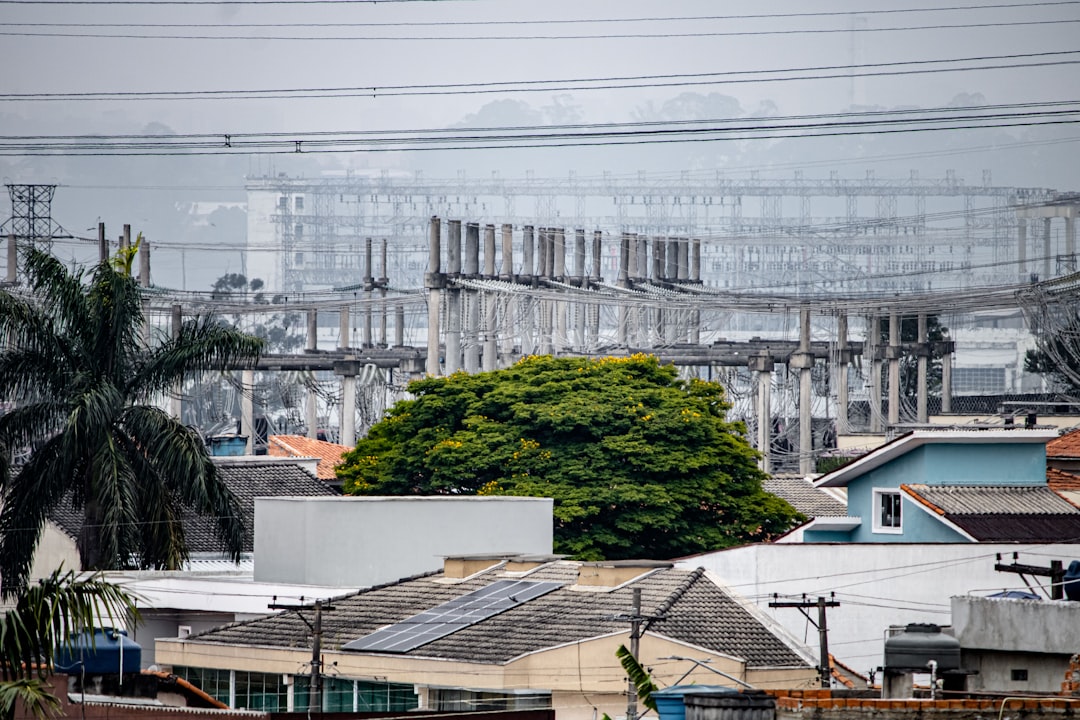
Safe distances from power lines depend on whether you are near transmission or distribution infrastructure. Based on the research and precautionary principle, here are reasonable guidelines:
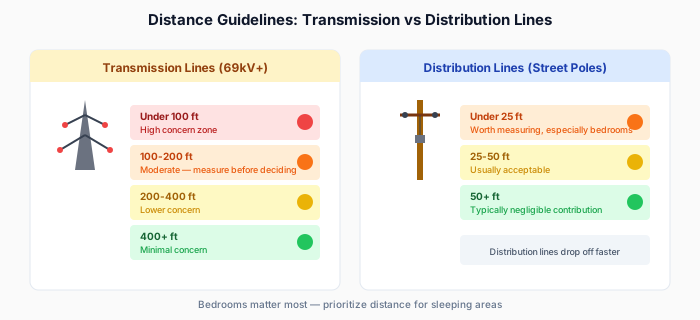
Transmission Lines (69kV+)
| Distance | Assessment |
|---|---|
| Under 100 ft | High concern zone. Consistently elevated fields likely. |
| 100-200 ft | Moderate concern. Measure before deciding. |
| 200-400 ft | Lower concern. May still measure elevated during peak load. |
| 400+ ft | Minimal concern from the transmission line itself. |
Distribution Lines (Street-level wooden poles)
| Distance | Assessment |
|---|---|
| Under 25 ft | Worth measuring, especially for bedroom proximity. |
| 25-50 ft | Usually acceptable, but configuration varies. |
| 50+ ft | Typically negligible contribution to household EMF. |
Substations Electrical substations (the fenced areas with transformers) can generate significant fields. Distance guidelines similar to transmission lines apply — 200+ feet provides meaningful separation. We cover this in depth in Should I Buy a House Near a Power Substation?
How to Assess Your Situation
Assessing your power line exposure requires identifying line type, measuring distance, and taking actual field readings. Follow these four steps for a complete evaluation:
Step 1: Identify What Type of Lines You’re Dealing With
- Metal lattice towers = Transmission (high voltage)
- Large wooden H-frames = Often transmission
- Single wooden poles = Usually distribution
- Visible insulators: More/larger insulators = higher voltage

Step 2: Estimate Distance
Measure or estimate the horizontal distance from the lines to:
- Property boundary
- Exterior walls of the home
- Bedrooms and frequently occupied rooms
Remember: you spend 8+ hours in your bedroom. That’s the room where distance matters most.
Step 3: Measure Actual Fields
A gaussmeter (also called a milligauss meter) measures magnetic field strength. Options range from ~$30 basic meters to $300+ professional instruments. Our complete EMF meters guide covers the best options and how to read the results.
When measuring:
- Take readings at different times (fields vary with electrical load)
- Measure during peak usage hours (evenings, hot summer afternoons)
- Check multiple rooms, especially bedrooms
- Measure both near walls facing the lines and away from them
Step 4: Use EMF Radar’s ELF Score
Our ELF score incorporates distance to nearby transmission lines, substations, and power infrastructure. It’s calculated from HIFLD (Homeland Infrastructure Foundation-Level Data) and gives you a quick assessment of your address. For a complete picture, combine our score with on-the-ground measurements.
What You Can Do If You’re Close to Power Lines
Distance is the only practical protection against power line magnetic fields. If you’re already living near power lines or seriously considering a property that is, here are your options:
Distance-Based Solutions
- Choose bedrooms on the opposite side of the house from the lines
- Spend less time in rooms closest to the lines
- If building new, position the house to maximize distance
The Limitations of Shielding Unlike RF (radio frequency) fields, low-frequency magnetic fields are extremely difficult to shield. They pass through most building materials like they’re not there. Specialized materials like MuMetal can reduce magnetic fields but are expensive and impractical for whole-house solutions.
Some approaches that help slightly:
- Certain metal alloys in construction
- Increasing wall thickness (mass helps marginally)
- Professional magnetic shielding of specific rooms
But honestly, for ELF magnetic fields, distance is really your only practical tool.
Reduce Indoor Sources Too Power lines aren’t your only source of magnetic fields. Inside your home:
- Electrical panels generate strong local fields (don’t put beds against that wall)
- Wiring errors can create elevated whole-house fields
- Appliances generate fields during use (usually only concerning during close, prolonged contact)
A home with wiring issues 500 feet from power lines might have higher magnetic field exposure than a properly wired home 100 feet from the same lines.
Questions to Ask When House Hunting
Property evaluation near power lines should include voltage assessment, distance measurement, and field testing. If you’re evaluating a property near power lines:
- What voltage are the lines? Higher voltage = greater concern at distance.
- How far are the lines from the house? Use the guidelines above.
- Which rooms face the lines? Bedrooms matter most.
- Can you measure? Ideally, take readings during a second showing.
- What’s the property’s ELF score? Check with EMF Radar.
Also consider:
- Property value: Studies show 2-9% lower values for homes near visible transmission lines
- Future development: Could lines be buried or rerouted? (Rare, but sometimes happens)
- Visual impact: Many people find large transmission towers aesthetically unpleasant regardless of EMF concerns
Frequently Asked Questions
How far should you live from high-voltage power lines?
For high-voltage transmission lines (69kV and above), maintain at least 200 feet of distance to significantly reduce magnetic field exposure. At 400+ feet, power line contribution to your EMF exposure becomes minimal. Distribution lines on wooden poles require less distance—50 feet is typically sufficient.
Do power lines cause cancer?
The WHO classifies ELF magnetic fields as “possibly carcinogenic” based on epidemiological studies showing a statistical association with childhood leukemia at exposures above 3-4 milligauss. However, no biological mechanism has been proven, and the absolute risk increase is small. The evidence supports precaution but is not definitive.
Can you block EMF from power lines?
Magnetic fields from power lines cannot be practically shielded in residential settings. Unlike radio frequency EMF, low-frequency magnetic fields pass through standard building materials. Specialized materials like MuMetal exist but are cost-prohibitive for whole-house use. Distance remains the only effective mitigation strategy.
What is a safe level of magnetic field exposure?
Research associates fields above 3-4 milligauss (mG) with increased childhood leukemia risk. Typical home background levels range from 0.2-1 mG. Most experts recommend keeping long-term exposure, especially in bedrooms, below 2-3 mG as a precautionary measure.
How do I know if power lines near my house are dangerous?
First, identify the line type: metal towers indicate high-voltage transmission lines requiring more distance than wooden pole distribution lines. Second, measure distance to your home, prioritizing bedrooms. Third, use a gaussmeter to measure actual field strength at different times of day. Fields consistently above 3-4 mG warrant concern.
Do power lines affect property values?
Studies show homes near visible transmission lines sell for 2-9% less than comparable properties without power line proximity. The impact varies by distance, visibility, and local market conditions. Distribution lines on standard wooden poles have minimal effect on property values.
The Bottom Line
Power lines near your house aren’t an automatic dealbreaker, but they warrant informed consideration:
- Transmission lines (tall metal towers): Aim for 200+ feet of distance, especially for bedrooms
- Distribution lines (street poles): Usually fine beyond 50 feet, but measure if closer
- Measure, don’t guess: Actual fields vary significantly from theoretical estimates
- Bedrooms matter most: Focus on where you spend sleeping hours
- Shielding is impractical: Distance is your best tool for ELF fields
The childhood leukemia research is concerning enough that taking reasonable precautions makes sense—but not so definitive that you need to flee your home if you’re currently near power lines. Context, distance, and actual measurements matter more than proximity alone.
Check your address with EMF Radar’s ELF score for a quick assessment, then measure if you want the full picture.
Related Reading
- Power Lines and Childhood Leukemia: What the Research Shows
- EMF and Dementia: Does Electromagnetic Radiation Affect Brain Aging? — what the research says about EMF exposure and adult neurodegeneration
- What Is a Safe Distance From a Cell Tower?
- How to Measure EMF in Your Home
Last updated: January 2026. This article synthesizes publicly available research and is not medical advice. For personalized guidance, consult with an EMF professional or your healthcare provider.