What Is a Safe Distance to Live From a Cell Tower?
Quick Answer: A safe distance from a cell tower is at least 400 meters (1,300 feet) according to most precautionary guidelines. At this distance, RF exposure from a typical macro tower drops to negligible levels. However, for small cells and 5G installations mounted on streetlights or buildings, a minimum distance of 50-100 feet is recommended since they operate at lower power but are positioned much closer to homes.
Key Facts at a Glance
| Question | Answer |
|---|---|
| Minimum safe distance from macro tower | 400 meters (1,300 feet / 0.25 miles) |
| Minimum safe distance from small cell | 15-30 meters (50-100 feet) |
| How exposure decreases with distance | Follows inverse square law: double the distance = 75% reduction |
| Do cell towers cause health problems? | Research is inconclusive; WHO classifies RF as “possibly carcinogenic” (Group 2B) |
| How to check your exposure | Use EMF Radar’s address lookup or measure with an RF meter |
If you’re house hunting or concerned about the cell tower near your home, you’re asking a question that millions of people search for every year. The science involves nuance, but practical guidance is straightforward once you understand how RF exposure works.

Why Distance Matters: The Inverse Square Law
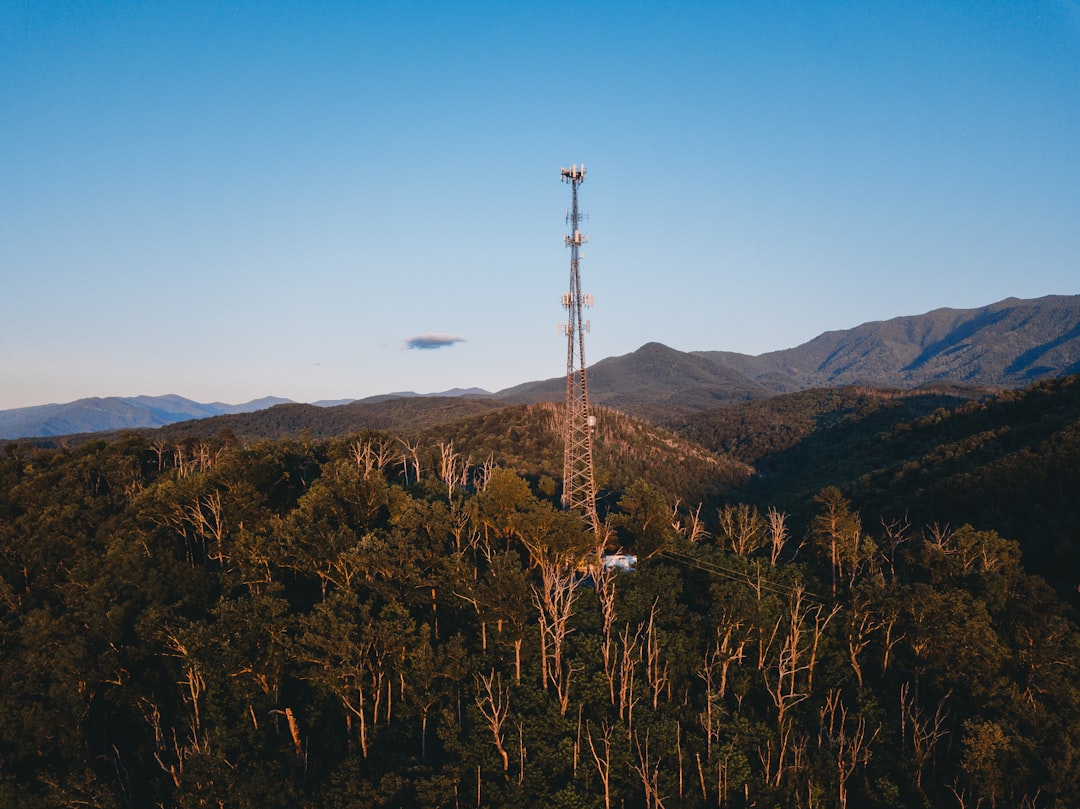
Radio frequency (RF) radiation from cell towers decreases rapidly with distance according to the inverse square law. When you double your distance from a tower, your exposure drops to one-quarter. Triple the distance, and exposure falls to one-ninth.

Here’s what that looks like in practice:
| Distance from Tower | Relative Exposure | Typical Power Density |
|---|---|---|
| 50 meters (164 ft) | 100% (baseline) | 1-10 µW/m² |
| 100 meters (328 ft) | 25% | 0.25-2.5 µW/m² |
| 200 meters (656 ft) | 6% | 0.06-0.6 µW/m² |
| 400 meters (1,312 ft) | 1.5% | 0.015-0.15 µW/m² |
| 800 meters (2,625 ft) | 0.4% | 0.004-0.04 µW/m² |
This is why distance is the most effective way to reduce cell tower exposure. No shielding product can match what simply being further away accomplishes.
Check your EMF exposure
See cell towers, power lines, and substations near any US address.
Search Your AddressRecommended Safe Distances by Tower Type
Different types of cell towers require different minimum distances:
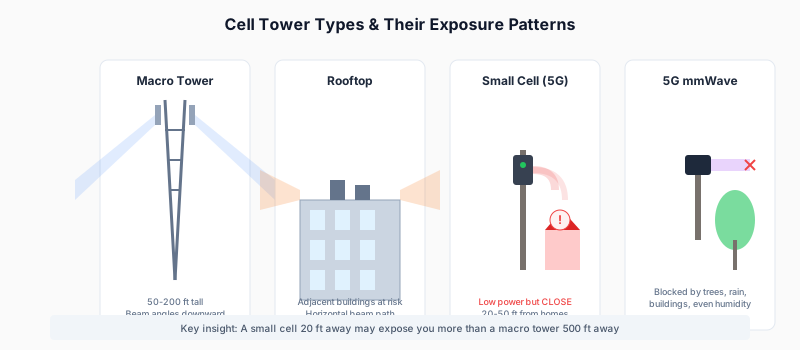
Macro Towers (Large Lattice or Monopole)
- Recommended minimum distance: 400 meters (1,300 feet)
- Height: Typically 50-200 feet tall
- Key fact: Maximum exposure often occurs 50-300 meters away (not directly below) because antennas point outward and downward
Rooftop Cell Installations
- Recommended minimum distance: 200 meters horizontal, or different floors if in the same building
- Key fact: Adjacent buildings at the same height may be in the direct beam path. See our apartment guide for floor-by-floor analysis
Small Cells (5G and Network Densification)
- Recommended minimum distance: 15-30 meters (50-100 feet)
- Key fact: Lower power than macro towers but mounted much closer to homes—a small cell 20 feet from your bedroom window may deliver more exposure than a macro tower 500 feet away
5G Millimeter Wave Antennas
- Recommended minimum distance: 30-50 meters (100-165 feet) with line-of-sight
- Key fact: These high-frequency signals don’t penetrate buildings well and drop off sharply within 100-200 meters
What Different Organizations Recommend
There is no single global standard for safe distance from cell towers. Different organizations use different approaches:
| Organization | Approach | Implication for Distance |
|---|---|---|
| ICNIRP (International) | Limits based on tissue heating (10 W/m²) | No distance specified; ground-level exposure rarely approaches thermal limits |
| BioInitiative Working Group | Recommends 0.001 W/m² based on biological effects | 300-400 meters becomes meaningful buffer |
| Building Biology (Germany) | <0.1 µW/m² = no concern; >1000 µW/m² = extreme concern | Most locations within 200m of tower = “severe concern” |
What Research Says About Cell Tower Health Effects
The scientific evidence on cell tower health effects is mixed and inconclusive.
The World Health Organization’s International Agency for Research on Cancer (IARC) classified RF electromagnetic fields as “possibly carcinogenic to humans” (Group 2B) in 2011. This means there is limited evidence of a cancer link, but it cannot be ruled out.
Studies suggesting potential health effects:
- A 2004 German study found higher cancer incidence within 400 meters of cell towers
- Israeli research reported 4x increased cancer rates within 350 meters of a transmitter
- Multiple studies found increased symptoms (headaches, sleep problems) near base stations
Studies finding no clear effect:
- Large cohort studies in Denmark and UK found no increased cancer risk
- A 2024 WHO systematic review found no consistent evidence that RF exposure causes symptoms
The bottom line: Science cannot definitively prove cell towers are safe or harmful at typical exposure levels. The precautionary principle suggests maintaining reasonable distance when practical.
Distance Zones: A Practical Framework
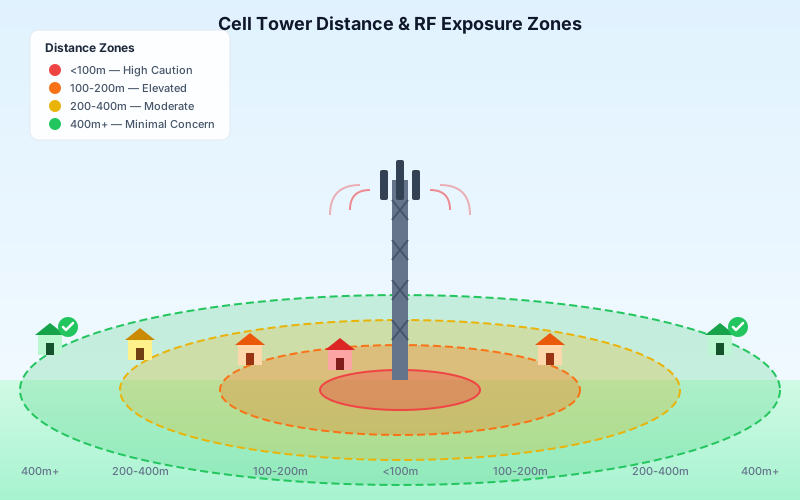
| Zone | Distance from Macro Tower | Recommendation |
|---|---|---|
| Minimal Concern | Beyond 400m (0.25 miles) | RF from tower is negligible compared to other sources |
| Moderate Consideration | 200-400m | Worth measuring; tower may or may not contribute meaningfully |
| Elevated Attention | 100-200m | Likely noticeable contribution to RF exposure; measure before buying |
| High Caution | Under 100m | May exceed precautionary guidelines; generally too close for EMF-conscious buyers |
How to Check Your Cell Tower Exposure
Step 1: Use EMF Radar’s Free Address Lookup Our RF score tool calculates your exposure based on FCC tower registration data, accounting for tower type, distance, and antenna characteristics.
Step 2: Measure with an RF Meter Quality RF meters like the Safe and Sound Pro II or Acoustimeter AM-10 measure actual power density. Take readings at different times since tower output varies with network traffic.
Step 3: Check the FCC Database The FCC ASR database shows registered antenna structures near any address.
Cell Towers and Property Values
Cell tower proximity typically reduces property values by 2-20%, depending on:
- Visibility (towers in direct sight have more impact)
- Distance (effects diminish beyond 500 meters)
- Tower type (large lattice towers affect values more than stealth installations)
Frequently Asked Questions
How far should you live from a cell phone tower?
A safe distance from a cell phone tower is at least 400 meters (1,300 feet or about a quarter mile) for macro towers. For small cells mounted on streetlights or buildings, maintain at least 50-100 feet of distance. At these distances, RF exposure from the tower becomes negligible compared to other everyday sources.
What is a safe distance from a 5G tower?
For 5G small cells and millimeter wave antennas, a safe distance is 50-100 feet (15-30 meters) minimum. 5G millimeter wave signals don’t travel far and are blocked by buildings, so distance is highly effective. For 5G installations on macro towers using lower frequencies, the same 400-meter guideline applies.
Do cell towers cause cancer?
The World Health Organization classifies RF electromagnetic fields as “possibly carcinogenic” (Group 2B), meaning there is limited evidence of a potential cancer link. Some studies have found increased cancer rates near cell towers, while others have not. The science is inconclusive, which is why many experts recommend precautionary distance.
How do I know if I live too close to a cell tower?
You can check your proximity using EMF Radar’s address lookup tool, which calculates your RF exposure based on nearby towers. For precise measurements, use an RF meter to measure actual power density in your home. Power density above 10 µW/m² is considered concerning by Building Biology standards.
Can cell tower radiation go through walls?
Yes, RF radiation from cell towers can penetrate walls, though walls provide some reduction. Brick and concrete reduce signals more than wood or drywall. Low-E windows can significantly reduce RF transmission. However, distance remains more effective than wall materials for reducing exposure.
Is it safe to live near a cell tower if I’m pregnant?
Research on RF exposure during pregnancy is limited and inconclusive. Given the uncertainty, maintaining the recommended 400-meter distance from macro towers and avoiding prolonged exposure near small cells is a reasonable precaution. The precautionary principle suggests minimizing unnecessary exposure during pregnancy.
The Bottom Line
The recommended safe distance from a cell tower is 400 meters (1,300 feet) for macro towers and 50-100 feet for small cells. There’s no magic number that guarantees safety, but these distances reduce RF exposure to negligible levels for most people.
Key takeaways:
- Distance is your most powerful tool—doubling distance reduces exposure by 75%
- Tower type matters: small cells nearby may matter more than distant macro towers
- Measure, don’t assume—actual exposure depends on factors distance alone can’t capture
- Check your address with EMF Radar for a free exposure assessment
Related Reading
- How to Measure EMF in Your Home
- 5G Towers: Health Risks and What the Research Says
- Power Lines Near My House: Should I Be Worried?
Last updated: January 2026. This article synthesizes publicly available research and is not medical advice. For personalized guidance, consult with an EMF professional or your healthcare provider.