How to Reduce EMF Exposure at Home: A Practical Guide
Quick Answer: Reduce EMF exposure at home by increasing distance from sources, minimizing time near them, and using physical shielding. Start with no-cost changes: charge your phone outside the bedroom, turn off WiFi at night with a timer, and use wired connections instead of wireless. These simple steps can reduce your daily EMF exposure by 30-50%.
Key Facts at a Glance
| Question | Answer |
|---|---|
| What is the most effective EMF reduction principle? | Distance. Doubling your distance from a source reduces exposure by 75%. |
| Which room should you prioritize first? | The bedroom, since you spend roughly one-third of your life sleeping there. |
| What is the cheapest way to reduce WiFi exposure? | Use a timer outlet ($10-15) to turn off your router during sleep hours. |
| Should I buy EMF-blocking stickers or pendants? | No. These products have no scientific basis and do not reduce EMF. |
| How can I verify EMF reduction is working? | Use a basic RF meter ($150-200) to measure before and after changes. |
| What four changes have maximum impact? | Phone out of bedroom, WiFi off at night, wired ethernet, and corded phones. |
Whether you’re concerned about potential health effects or simply want to minimize unnecessary exposure, reducing EMF in your home is surprisingly straightforward. Most effective strategies cost nothing and require only small behavioral changes.
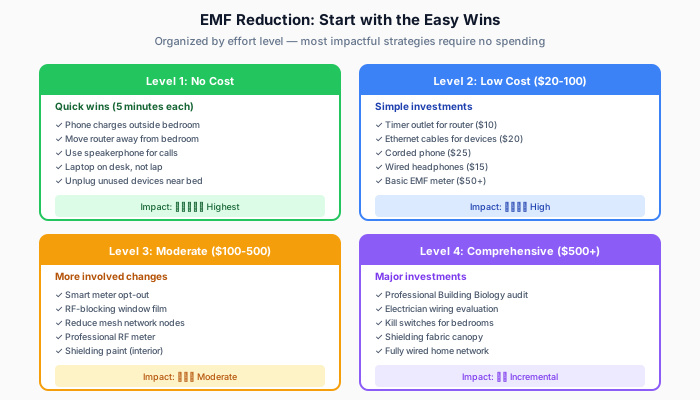
This guide organizes EMF reduction strategies by effort level—start with the easy wins and go deeper based on your comfort level.

The Three Principles of EMF Reduction

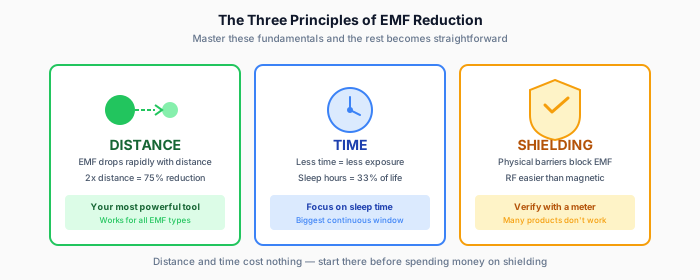
Understanding distance, time, and shielding provides the foundation for all EMF reduction strategies. Before diving into specific tactics, understand the three fundamental principles:
1. Distance EMF intensity drops rapidly with distance. Doubling your distance from a source reduces exposure by 75%. This is your most powerful tool.
2. Time Less time near sources means less total exposure. Reducing nighttime exposure (8 hours of sleep) is especially impactful.
3. Shielding Physical barriers can reduce exposure, but effectiveness varies by EMF type. RF is easier to shield than magnetic fields.
Check your EMF exposure
See cell towers, power lines, and substations near any US address.
Search Your AddressLevel 1: No-Cost Quick Wins
Simple behavioral changes can eliminate the majority of unnecessary EMF exposure in your home. These changes cost nothing and take minutes to implement. Start here.
Bedroom Optimization (Highest Impact)
You spend roughly a third of your life sleeping. Reducing bedroom EMF has outsized impact.
Phone hygiene:
- Charge your phone in another room (not on nightstand)
- Or use airplane mode overnight
- Remove charging pads from nightstand
Router location:
- If router is in or near bedroom, move it
- Minimum 10-15 feet from bed, through walls is fine
- Turn off WiFi at night (use a $10 timer outlet)
Electrical basics:
- Don’t position bed against wall with electrical panel on other side
- Unplug unused devices near bed (especially those with power adapters)
- Move alarm clocks 3+ feet from head (or use battery-powered)
Daytime Device Habits
Keeping your phone away from your body and using wired connections reduces constant low-level exposure throughout the day.
Phone usage:
- Use speakerphone or wired headset for calls
- Don’t keep phone in pocket when not needed; use bag or purse
- Text instead of call when possible (phone transmits less)
Computer work:
- Use laptop on desk, not lap (heat + EMF reduction)
- Prefer wired ethernet over WiFi when practical
- Keep router away from desk area
General:
- Don’t stand in front of microwave while running (not dangerous, but easy to avoid)
- Keep distance from appliances during use
Level 2: Low-Cost Improvements ($20-100)
Modest investments in timers, cables, and corded devices provide meaningful EMF reduction without significant expense. These investments provide meaningful reduction with modest cost.
WiFi Management
Timer outlet (~$10-15):
- Automatically turn off router at night (11pm-7am)
- Reduces 24-hour exposure by ~33%
- Most devices reconnect seamlessly
Ethernet cables (~$10-50):
- Wire desktop computers, smart TVs, gaming consoles
- Reduces WiFi traffic and provides faster connection
- Powerline adapters can extend ethernet through electrical wiring
Corded Alternatives
Corded phone (~$20-40):
- Replace cordless phones with corded landlines, or upgrade to an ECO DECT+ model that shuts off base station transmission in standby
- Cordless bases transmit 24/7, often stronger than WiFi
Wired headphones (~$10-30):
- Replace Bluetooth earbuds with wired alternatives
- Eliminates RF directly next to brain
Wired baby monitor (~$50-100):
- Some models connect via ethernet
- Eliminates RF in nursery
Measurement Tools
Basic RF meter (~$150-200):
- Acoustimeter AM-11 or Safe and Sound Classic
- Allows you to identify actual sources and verify improvements
ELF gaussmeter (~$30-50):
- Trifield TF2 or Latnex MG-300
- Measures magnetic fields from wiring and appliances
See our complete guide: How to Test EMF in Your Home: Room-by-Room
Level 3: Moderate Investment ($100-500)
Reconfiguring smart home devices and addressing smart meters can significantly reduce RF exposure throughout your home. For those wanting more comprehensive reduction.
Smart Home Reconfiguration
Reduce mesh nodes:
- Use minimum number of WiFi access points needed
- Each mesh node is an additional RF source
- Place remaining nodes away from bedrooms
Disable unused radios:
- Turn off WiFi on devices using ethernet
- Disable Bluetooth when not in use
- Some smart home hubs have RF-quiet modes
Smart Meter Solutions
Opt-out program (varies by utility):
- Request non-transmitting meter
- Typical cost: $10-40/month + setup fee
- Availability varies by state
Internal shielding (~$50-200):
- RF-blocking paint on interior wall behind meter
- Creates partial barrier without modifying meter
- See: Smart Meter EMF Exposure
Window Treatments
RF-blocking window film (~$50-150 per window):
- Reduces RF entering through glass
- Useful for bedrooms facing cell towers
- For whole-room solutions, see our EMF shielding paint guide or Faraday bed canopy guide
- Verify with meter before and after
Low-E windows (if replacing anyway):
- Significantly attenuate RF
- Consider for renovations in high-RF areas
Level 4: Comprehensive Solutions ($500+)
Professional assessments and structural modifications provide the highest level of EMF reduction for those seeking maximum protection. For those wanting maximum reduction.
Professional Assessment
Building Biology evaluation (~$300-800):
- Comprehensive measurement of all EMF types
- Professional-grade equipment
- Prioritized recommendations
Wiring evaluation (~$200-500):
- Electrician can identify wiring errors causing elevated fields
- Net current issues, improper grounds
- Sometimes the highest-impact fix for magnetic fields
Structural Modifications
EMF Kill Switches for Bedroom Circuits (~$200-500):
An EMF kill switch (also called a demand switch) automatically disconnects power to designated circuits when no current is being drawn. This eliminates electric fields from bedroom wiring during sleep hours without requiring you to flip breakers manually each night.
When you turn off all lights and unplug devices, the switch detects zero current draw and disconnects the circuit entirely. A small pilot light typically runs on a separate circuit to confirm the system is working. Professional installation costs $200-500 depending on your electrical panel configuration. The investment pays dividends in creating a truly low-EMF sleep environment that requires no daily effort.
Shielded wiring (for new construction):
- MC cable or shielded romex reduces electric fields
- Reasonable cost differential for new builds
- Impractical for retrofitting
RF shielding fabric (~$30-100/yard):
- Create bed canopies or wall hangings
- Reduces RF in sleep area
- Effectiveness varies; verify with meter
Network Architecture
Wired-only network:
- Ethernet to all rooms via structured cabling
- Disable all WiFi radios
- Most extreme but most effective
Demand-based WiFi:
- Timer-controlled WiFi on only when needed
- Smart outlet turns on with a switch when guests need WiFi
- Otherwise off
Room-by-Room Checklist
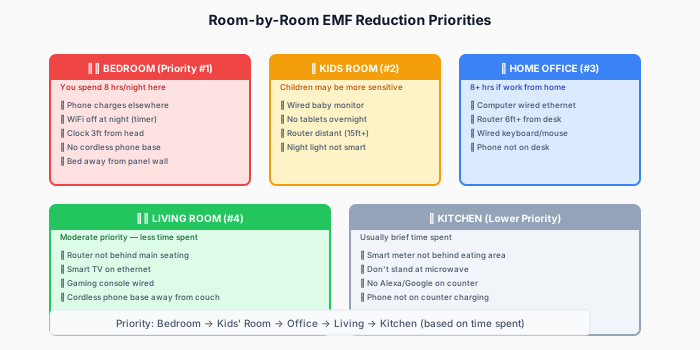
Bedroom (Highest Priority)
- Phone charges in another room or on airplane mode
- Router not in bedroom or adjacent rooms
- Bed not against electrical panel wall
- Clock/alarm 3+ feet from head (or battery-powered)
- WiFi off at night (timer)
- No cordless phone base nearby
- Minimal electronics near bed
Home Office
- Computer wired via ethernet
- Router 6+ feet from desk
- Phone not on desk when not in use
- Wired keyboard/mouse (vs. Bluetooth)
Living Areas
- Router in central location, not near seating
- Smart TV wired via ethernet
- Cordless phone base not near frequent seating
Children’s Rooms
- Baby monitor is wired or distant (analog preferred over digital)
- No WiFi devices in room overnight
- Phone/tablet charging outside room
- Smart speakers and gaming consoles removed or hardwired
- School devices powered off completely when not in use
Kitchen
- Smart meter not directly behind eating area
- Microwave used with door closed (obvious)
Children’s Rooms: Special Considerations
Children’s developing bodies may be more susceptible to environmental exposures, making their rooms particularly important to address. Their thinner skulls, higher tissue conductivity, and longer lifetime exposure potential warrant extra precaution.
WiFi and wireless devices:
- Remove WiFi-connected devices from children’s rooms entirely where possible — tablets, smart speakers, gaming consoles with wireless connectivity
- Baby monitors deserve special attention: analog audio monitors produce significantly less RF than digital or video monitors. If video monitoring is desired, wired camera systems eliminate RF entirely
- Position any monitor at maximum practical distance from the crib or bed
Electronics-free sleep:
- Establish children’s rooms as screen-free zones, particularly in the hours before bed
- Charging stations for family devices should be in common areas, not bedrooms
School-issued devices:
- School-issued tablets and laptops increasingly contain always-on WiFi that cannot be disabled
- Power these off completely (not just sleep mode) when not in use, and position them away from sleeping areas
Prioritization Framework
If you’re feeling overwhelmed, focus on:
Maximum impact, minimum effort:
- Phone out of bedroom at night
- WiFi off during sleep (timer)
- Wired ethernet for desktop/TV
- Replace cordless phones with corded
These four changes address the most common high-exposure scenarios for most people.
What NOT to Waste Money On
Products claiming to neutralize or harmonize EMF without physical shielding are scientifically unfounded and should be avoided. The EMF reduction market has plenty of scams. Avoid:
- Stickers, pendants, or “harmonizers” claiming to neutralize EMF (no scientific basis)
- Plug-in “whole house” EMF protectors (don’t work as advertised)
- Salt lamps marketed for EMF protection (they don’t affect EMF)
- Crystals or minerals claiming to absorb EMF (no effect)
- “EMF blocking” phone cases that cover the screen (may increase transmission power)
Legitimate shielding products exist, but they’re physical barriers (fabric, paint, film) that can be verified with a meter. If it sounds like magic, it’s a scam. For a deeper dive into what products actually work, see our protection products guide and EMF blocking clothing breakdown.
New to this topic? Start with Is EMF Bad for You? for an evidence-based overview of what the science actually shows.
Verification: Measure Your Progress
Measuring EMF levels before and after implementing changes confirms your efforts are working and identifies remaining problem areas. After implementing changes, verify with measurements:
Before and after:
- Measure baseline before changes
- Re-measure same locations after
- Compare to confirm reduction
Focus areas:
- Pillow height in bedroom (most important)
- Desk chair position
- Living area seating
What to expect:
- WiFi timer: dramatic nighttime reduction
- Phone removal from bedroom: eliminates that source entirely
- Wired ethernet: reduces router transmission (fewer devices requesting data)
Check your address with EMF Radar to understand your external RF environment and focus indoor efforts appropriately.
Living With Technology
The goal isn’t to eliminate all EMF—that’s impossible in modern life. The goal is to reduce unnecessary exposure, especially during sleep and in frequently occupied areas.
Practical balance:
- Keep conveniences that matter to you
- Reduce exposures that are easy to avoid
- Focus on sleep hours (largest continuous exposure window)
- Don’t let concern become anxiety
EMF reduction should improve your peace of mind, not create new stress. Implement what feels manageable, verify with measurement, and adjust based on your priorities.
Frequently Asked Questions
How far should I keep my phone from my bed at night?
Your phone should be at least 6 feet away from your bed, or ideally in another room entirely. The safest option is to charge your phone outside the bedroom or enable airplane mode if it must stay nearby. This single change eliminates one of the most common sources of nighttime EMF exposure.
Does turning off WiFi at night really make a difference?
Yes, turning off WiFi at night reduces your 24-hour RF exposure by approximately 33%. Using a simple timer outlet ($10-15) to automatically shut off your router during sleep hours (such as 11pm to 7am) is one of the most cost-effective EMF reduction strategies available.
Are EMF-blocking phone cases effective?
EMF-blocking phone cases that cover the screen can actually be counterproductive. When you block the signal between your phone and the cell tower, the phone increases its transmission power to compensate, potentially increasing your exposure. Cases that shield only the back may help when the phone is in your pocket.
What is the best room to prioritize for EMF reduction?
The bedroom should be your first priority for EMF reduction. You spend approximately one-third of your life sleeping, making this the longest continuous exposure period. Optimizing your bedroom for low EMF provides the greatest benefit relative to effort.
How do I know if my EMF reduction efforts are working?
Use an RF meter (such as the Acoustimeter AM-11, approximately $150-200) to measure EMF levels before and after making changes. Measure at key locations like your pillow, desk chair, and living area seating. Comparing these measurements confirms your changes are effective.
Can I reduce EMF without giving up WiFi entirely?
Absolutely. You can significantly reduce EMF exposure while keeping WiFi by using it strategically. Turn off WiFi during sleep, wire devices that don’t need to be mobile (computers, TVs, gaming consoles), and position your router away from frequently occupied areas. Most people can reduce exposure by 50% or more without eliminating WiFi.
The Bottom Line
Reducing EMF exposure at home requires no special equipment or major lifestyle changes. The most effective strategies are simple: increase distance from EMF sources, reduce time spent near them, and use wired connections when possible. Start with your bedroom by removing your phone and turning off WiFi at night. These two changes alone address the largest continuous exposure window most people experience. Add wired ethernet connections and replace cordless phones for additional benefit. Avoid products that claim to neutralize EMF without physical shielding—if it cannot be verified with a meter, it does not work. Focus on practical, measurable improvements rather than perfection, and remember that the goal is reducing unnecessary exposure, not eliminating all EMF from modern life. Start by checking what’s near your home on our EMF map, then grab an EMF meter to verify your changes are working. If you want professional help, certified EMF consultants can do a full home assessment with calibrated equipment.
Related Reading
- The Complete Guide to a Low-EMF Bedroom — the most important room to optimize, with a step-by-step checklist
- How to Measure EMF in Your Home
- WiFi Router Placement: Safe Distance and Best Practices
- EMF and Sleep: What the Research Shows
- Smart Meter EMF Exposure: Facts and Mitigation
- Dirty Electricity: What It Is and How to Fix It
- Low-EMF Home Security Systems: Wired Cameras and PoE Alternatives — securing your home without adding more WiFi
- How to Reduce EMF in Your Apartment — renter-specific guide with non-destructive, reversible strategies
Last updated: January 2026. Product recommendations are based on current market availability. Verify all shielding products with a meter to confirm effectiveness.