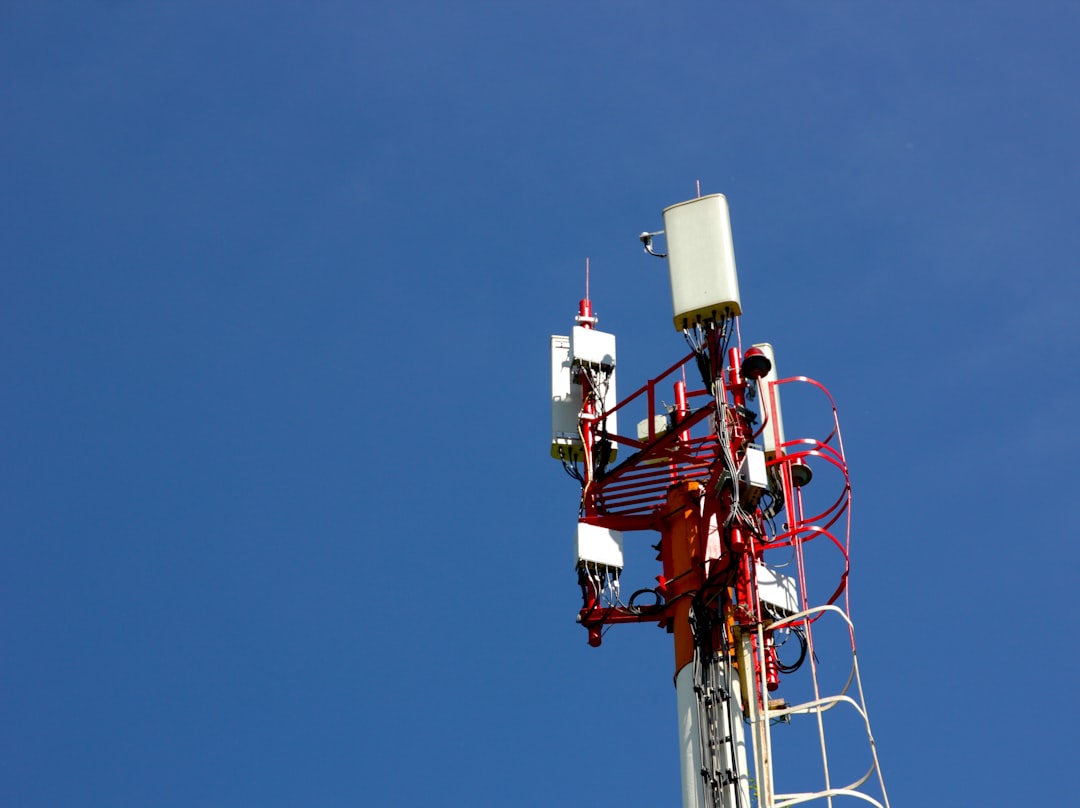
You’re walking through a city. Phones are buzzing, cell towers are transmitting, WiFi networks are leaking signal from every café and apartment. How much of that radiation is actually reaching you?
A new Greek study just answered that question with unprecedented detail — and the results are both reassuring and surprising.
The Study at a Glance
Paper: “RF-EMF bystander exposure in the 5G era measured across various microenvironments in Greece” Authors: Delidimitriou, Babas, Manassas, Wiart et al. Journal: Annals of Telecommunications, 2026 Institution: Researchers from Greece with collaborators including Prof. Joe Wiart (a leading RF exposure measurement expert)
This isn’t a quick snapshot. The team spent two full years (September 2023 to September 2025) walking through cities, suburbs, and rural areas across Greece with professional-grade measurement equipment, capturing 16,900 individual data points across 76 different microenvironments.
That makes it one of the most comprehensive real-world RF exposure studies ever conducted.
What They Measured — and Why “Bystander” Matters

Here’s the key distinction: most RF exposure studies focus on your phone’s radiation to your head. This study measured something different — bystander exposure, meaning the ambient RF radiation hitting you from everyone else’s phones, nearby cell towers, and WiFi networks.
Think of it this way: even if you put your phone away, you’re still being exposed to RF energy from:
- Cell tower downlink signals (towers transmitting to everyone’s phones)
- Other people’s phones uplink signals (phones transmitting back to towers)
- WiFi networks from buildings, cafés, and homes around you
The researchers used an EME Spy Evolution personal exposimeter — a calibrated device that simultaneously measures electric field strength across all cellular bands (2G through 5G at 3.6 GHz) plus both WiFi bands (2.4 GHz and 5 GHz), with a new measurement every 6 seconds.
Check your EMF exposure
See cell towers, power lines, and substations near any US address.
Search Your AddressThe Key Findings
1. 5G Contributes Almost Nothing to Your Average Exposure
The headline result: 5G at 3.6 GHz contributes minimally to average bystander exposure. Despite 5G infrastructure expanding rapidly across Greece during the study period, the new frequency band barely registers as a fraction of total ambient RF energy in most locations.
This aligns with what physics predicts. 5G at 3.5-3.6 GHz uses beamforming — instead of blasting signal in all directions like older towers, 5G antennas focus narrow beams toward active users. If you’re not the target, you get very little exposure.
2. But 5G Peaks Can Be Significant
Here’s the surprise: while 5G’s average contribution is tiny, occasional peaks from 5G reached up to 82% of total received power in certain locations and moments.
This makes sense with beamforming. When a 5G beam briefly sweeps past your location (while tracking a nearby user), you might catch a momentary burst. These peaks are transient — they last fractions of a second — but they’re detectable.
Important context: even these peaks remain far below international safety limits. The ICNIRP reference level at 3.6 GHz is 10 W/m², and real-world measurements typically fall thousands of times below that threshold.
3. What Dominates Your Exposure Depends on Where You Are
The study revealed a clear urban/rural split:
In cities (urban/suburban areas):
- Downlink dominates — cell tower transmissions are the primary source
- This makes sense: dense urban areas have more towers, each transmitting signals to serve thousands of users
- Outdoor locations see more downlink exposure than indoor locations
In rural areas:
- Uplink dominates — other people’s phones are the primary source
- Why? Fewer cell towers means phones have to transmit at higher power to reach distant base stations
- This is counterintuitive: rural areas have fewer towers, but the phones work harder to compensate
4. Indoor vs. Outdoor Exposure Patterns Differ
- Indoors: Greater contribution from uplink (other people’s phones) and WiFi
- Outdoors: Primarily dominated by downlink (cell tower) signals
- 5 GHz WiFi contributes more than 2.4 GHz WiFi to indoor bystander exposure
- 2.4 GHz WiFi contributes roughly equally to both indoor and outdoor exposure (because its longer wavelength penetrates walls better)
What This Means for You
The Reassuring Part
Your total ambient RF exposure from all sources — towers, phones, WiFi, 5G combined — remains far below safety limits. This study joins a growing body of real-world measurement research showing the same thing: the RF environment, while increasingly complex, isn’t approaching levels that concern health authorities.
5G specifically adds very little to your daily exposure dose, despite the proliferation of new antennas.
The Practical Part
If you’re trying to minimize your RF exposure, this study suggests where to focus:
-
Your own phone matters more than towers. The phone you hold against your head produces far more localized exposure than any ambient source. Use speaker mode or wired earbuds.
-
Rural ≠ lower exposure. If you assumed countryside living means less RF, think again — your phone compensates for weak signals by cranking up its own transmitter power.
-
Indoor WiFi is a real contributor. The 5 GHz band especially contributes to indoor exposure. If minimizing exposure matters to you, consider router placement and whether you need 5 GHz in every room.
-
Location matters more than technology generation. Whether it’s 4G or 5G matters less than whether you’re standing next to a tower or in a coverage dead spot.
Study Strengths

- Massive scale: 16,900 data points across 76 locations over 2 years
- Real-world conditions: Measurements in actual everyday environments, not lab settings
- Comprehensive frequency coverage: All cellular bands (2G through 5G) plus both WiFi bands
- Novel “bystander” framing: First study to explicitly separate ambient exposure from personal device exposure at this scale
- Temporal depth: Two years of data captures 5G network expansion in real time
- International expertise: Collaboration including Prof. Joe Wiart, one of the field’s leading RF exposure measurement researchers
Study Limitations
- Greece-specific: Network deployment density and technology mix may differ from other countries (e.g., the US has more 5G mid-band and millimeter wave deployment)
- No millimeter wave (mmWave): The study covered 5G at 3.6 GHz but not higher 5G frequencies (26 GHz, 28 GHz) used in some US and Asian deployments
- Exposimeter body shielding: Personal exposimeters worn on the body inevitably underestimate exposure from certain directions due to body shading (the authors discuss this limitation)
- Average vs. peak: Average exposure tells one story; peak transient exposure tells another. Both matter depending on what health question you’re asking.
- No health outcomes measured: This is an exposure characterization study, not a health effects study. It tells us how much exposure exists, not whether that amount matters biologically.
The Bottom Line
If you’ve been worried about 5G specifically adding a major new source of radiation to your environment, this study offers substantial reassurance: 5G is a small player in your total ambient RF exposure.
The bigger contributors are the same ones that have been there for years — cell tower downlink signals in cities, uplink signals from nearby phones, and WiFi networks leaking through walls.
That said, the finding that 5G peaks can momentarily dominate total received power is worth tracking as 5G densifies. As more small cells are deployed and more users generate beam traffic, these transient peaks may become more frequent. Future measurement campaigns will need to monitor whether average 5G exposure creeps upward over time.
For now, the data from 16,900 real-world measurements says: your ambient RF environment is changing, but it’s not getting dramatically more intense.
This is part of EMF Radar’s Study Spotlight series, where we break down the latest peer-reviewed EMF research in plain language. Want to check the RF environment in your area? Try our free EMF map tool.
Study: Delidimitriou S, Babas D, Manassas A, Wiart J et al. “RF-EMF bystander exposure in the 5G era measured across various microenvironments in Greece.” Annals of Telecommunications (2026). Read the paper