Are 5G Small Cells Dangerous? What the Science Says in 2026
Quick Answer: 5G small cells emit significantly lower RF power than traditional macro cell towers — typically 2-10 watts vs. hundreds of watts. Their closer placement to people (on utility poles, streetlights) raises understandable concerns, but measured RF levels consistently fall well below FCC safety limits. The science doesn’t support the claim that small cells are uniquely dangerous, though long-term studies on millimeter-wave frequencies are still ongoing.
Key Facts at a Glance
| Question | Answer |
|---|---|
| What is a 5G small cell? | A compact, low-power cellular antenna typically mounted on utility poles, streetlights, or building exteriors. |
| How much power do they emit? | Typically 2-10 watts EIRP — far less than a macro tower’s 50-500+ watts. |
| How close are they to people? | Usually mounted 25-50 feet high on poles, often 500-1,000 feet apart in dense areas. |
| Do they use different frequencies? | 5G uses three bands: low-band (600-900 MHz), mid-band (2.5-3.7 GHz), and mmWave (24-47 GHz). Most small cells use mid-band. |
| Are mmWave frequencies dangerous? | Millimeter waves are non-ionizing and penetrate skin less than 1mm. No established evidence of harm at permitted levels, but long-term research continues. |
| What do measurements show? | Field measurements near small cells typically show RF levels 100-1,000x below FCC limits. |
If you’ve noticed small box-shaped antennas appearing on utility poles and streetlights in your neighborhood, you’re seeing 5G small cells. Their rapid deployment — over 400,000 installed in the US by 2025 — has generated significant public concern about safety.
This article examines what small cells actually are, how they differ from traditional towers, and what independent science says about their safety profile.

What Exactly Is a 5G Small Cell?
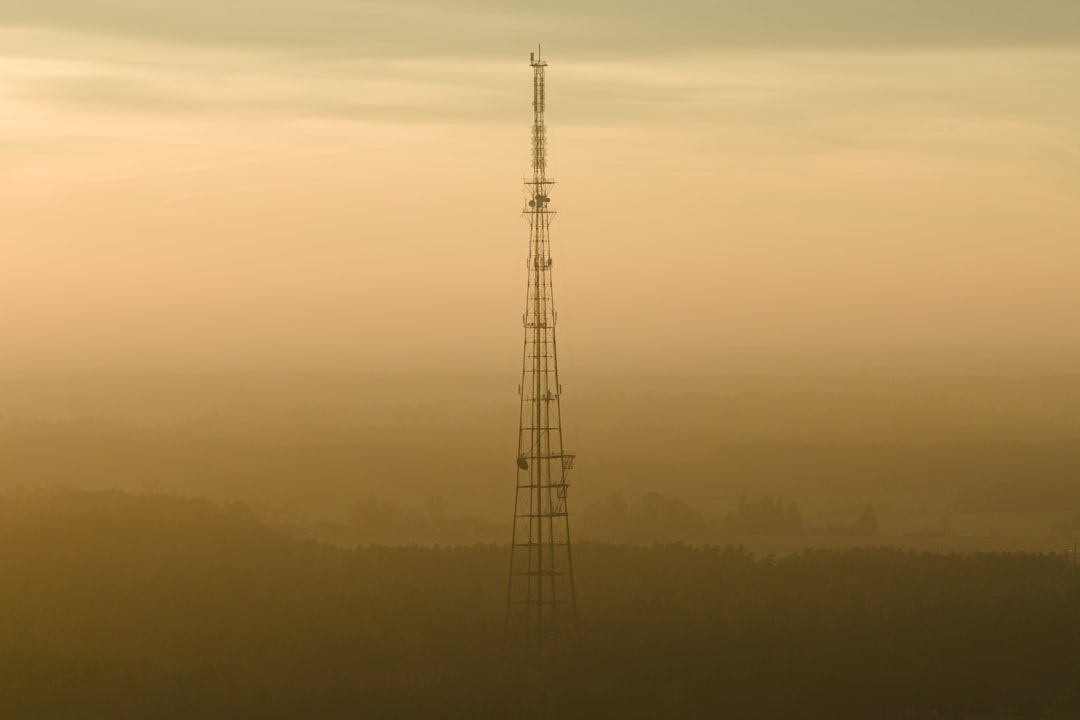
A small cell is a compact radio access node that covers a smaller geographic area than a traditional macro cell tower. Think of it as the difference between a spotlight and a floodlight.
Key Technical Differences from Macro Towers
Traditional macro cell tower:
- Height: 100-300+ feet
- Coverage radius: 1-25 miles
- Transmit power: 50-500+ watts per sector
- Antennas: Large panel arrays
- Sites per carrier: ~85,000 in the US
5G small cell:
- Height: 15-50 feet (mounted on existing structures)
- Coverage radius: 300-2,000 feet
- Transmit power: 2-10 watts EIRP
- Size: Roughly the size of a pizza box or backpack
- Sites per carrier: Growing rapidly, concentrated in urban/suburban areas
The critical distinction: small cells trade range for capacity. Instead of one powerful tower blasting a signal for miles, many low-power units provide high-bandwidth connections across a smaller area. This is fundamental to 5G’s speed promise — you need more access points to deliver gigabit speeds.
Why Are They on Every Pole?
5G’s speed advantage (especially on mid-band and mmWave) comes from using higher frequencies, which have shorter range. You need more antennas closer together. Rather than building thousands of new towers, carriers mount small cells on existing infrastructure:
- Utility poles
- Streetlights
- Traffic signals
- Building exteriors
- Dedicated short poles
This proximity to where people live and walk is the primary source of concern.
Check your EMF exposure
See cell towers, power lines, and substations near any US address.
Search Your AddressThe Three 5G Frequency Bands
Not all 5G is created equal, and understanding the frequency bands matters for evaluating safety claims.
Low-Band 5G (600-900 MHz)
- Who uses it: T-Mobile primarily (600 MHz)
- Range: Miles — similar to 4G LTE
- Speed: Modest improvement over LTE (50-200 Mbps)
- Penetration: Goes through walls easily
- Small cells needed? Not really — works fine from macro towers
- Safety profile: Same frequencies used for TV broadcasting for decades
Mid-Band 5G (2.5-3.7 GHz)
- Who uses it: All three major US carriers
- Range: Several blocks to about a mile
- Speed: 300-900 Mbps typical
- Penetration: Moderate — some wall penetration
- Small cells: Yes, needed for density in urban areas
- Safety profile: Similar to existing WiFi frequencies (2.4 GHz, 5 GHz)
This is where most US 5G small cells operate. The frequencies are close to what WiFi routers have used for years, just deployed outdoors at higher power than a home router but much lower power than a macro tower.
Millimeter-Wave 5G (24-47 GHz)
- Who uses it: Verizon (28/39 GHz), AT&T (39 GHz), limited deployments
- Range: 500-1,000 feet max
- Speed: 1-4+ Gbps
- Penetration: Nearly zero — blocked by walls, glass, trees, rain
- Small cells: Requires very dense deployment
- Safety profile: This is the controversial band. These frequencies are relatively new for widespread consumer deployment.
Millimeter waves are the focus of most safety debates. Let’s look at the science.
What Does the Research Actually Show?
Understanding RF Exposure Fundamentals
All radio frequencies used in 5G are non-ionizing radiation. This means they don’t have enough energy per photon to break chemical bonds or damage DNA directly (unlike X-rays or UV light). The primary biological effect of non-ionizing RF at sufficient power levels is heating — the same principle that makes a microwave oven work.
The question isn’t whether RF can cause thermal effects (it can, at high enough power). The question is whether the power levels from small cells are anywhere near those thresholds.
Measured RF Levels Near Small Cells
Multiple independent measurement studies have assessed real-world RF exposure from deployed small cells:
Australian Radiation Protection and Nuclear Safety Agency (ARPANSA), 2022:
- Measured RF levels from 5G small cells in Sydney and Melbourne
- Maximum recorded level: 0.07% of the Australian safety limit
- Typical levels: 0.001-0.01% of the safety limit
- Conclusion: “5G radio wave levels measured near base stations were similar in magnitude to, or lower than, those from existing 3G and 4G services”
Ofcom (UK Communications Regulator), 2020-2023:
- Conducted hundreds of measurements near 5G sites across the UK
- Highest recorded level: 1.5% of the ICNIRP guidelines
- Most sites: well below 1%
- Found no meaningful difference in ambient RF between 4G and 5G sites
IEEE/FCC Measurements, Various US Cities:
- Sidewalk-level measurements 10-50 feet from small cells
- Typical readings: 0.1-2% of FCC maximum permissible exposure
- Even directly beneath a pole-mounted small cell, levels remained far below limits
What this means in practice: If the FCC limit is the “speed limit,” small cells are consistently traveling at 1-2 mph in a 65 mph zone. The gap between actual exposure and regulatory limits is enormous.
The Millimeter-Wave Question
mmWave frequencies (24+ GHz) are less studied than lower bands because they haven’t been widely used for consumer communications until recently. Here’s what we know:
Skin depth penetration: Millimeter waves at 28-39 GHz penetrate human skin less than 1 millimeter. They’re absorbed almost entirely by the outermost skin layer (the epidermis). This means they cannot reach internal organs, the brain, or deep tissue.
Thermal effects research:
- The primary biological effect at high power levels is surface skin heating
- IEEE/ICNIRP safety limits for mmWave account for this by using power density limits calibrated to prevent skin heating above 1°C
- At the power levels emitted by small cells, skin temperature change is negligible — fractions of a degree
Non-thermal effects debate: Some researchers have explored whether mmWave frequencies could have biological effects that aren’t related to heating. The evidence:
- A 2020 review in the International Journal of Environmental Research and Public Health examined 107 studies on mmWave biological effects
- Found “inconsistent and contradictory results” with no established mechanism for non-thermal harm
- Studies showing effects often used power levels far exceeding real-world exposure or had methodological limitations
- The WHO’s International EMF Project continues to monitor research but has not identified confirmed non-thermal health effects from mmWave
Bottom line: There’s no scientific consensus showing harm from mmWave at small cell power levels, but the research base is still developing. This is a legitimate area for continued study.
Large-Scale Epidemiological Evidence

Several countries with early 5G deployments have monitored health data:
- South Korea (first country with nationwide 5G, 2019): No reported increase in RF-related health complaints corresponding to 5G rollout
- Switzerland: Conducted extensive monitoring of health outcomes near 5G installations, finding no correlation between proximity and health complaints when controlled for awareness of nearby installations
The awareness effect is significant — studies consistently show that people who know a cell installation is nearby report more symptoms than those who don’t, regardless of whether the installation is actually transmitting. This points to a nocebo effect (negative health expectations causing perceived symptoms) rather than RF-related harm.
Why the Concern Feels Different

Even if the RF levels are low, people’s anxiety about small cells is understandable. Several factors make small cells feel different from macro towers:
1. Proximity
A tower 500 feet away on a hill feels far. A small cell 30 feet up on the pole outside your bedroom window feels uncomfortably close. This is the biggest driver of concern.
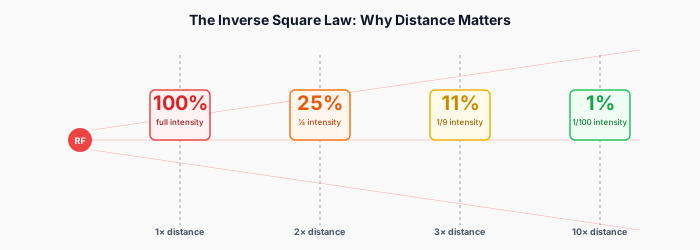
The physics response: RF power decreases with the square of distance (inverse square law). But small cells start with dramatically less power. A small cell at 30 feet may expose you to less RF than a macro tower at 1,000 feet, because the tower’s power is so much higher.
Analogy: Standing 3 feet from a candle gives you less heat than standing 30 feet from a bonfire.
2. Volume of Installations
One new tower is a community debate. Hundreds of small cells appearing on every other block in a few months feels like an invasion. The pace of deployment outran public engagement.
3. Unfamiliar Frequencies
mmWave frequencies sound exotic. “Millimeter waves” sounds like something from science fiction. In reality, 60 GHz has been used in building-to-building wireless links for decades, and mmWave body scanners are routine at airports.
4. Corporate Trust Issues
Telecom carriers haven’t exactly earned the public’s trust. Marketing hype, poor communication about deployment plans, and dismissive responses to community concerns have fueled suspicion. This is a legitimate complaint about process, even if the science on safety is clear.
How to Assess Your Own Exposure
If you’re concerned about a small cell near your home, you can measure actual RF levels yourself:
Tools You’ll Need
- RF meter — TriField TF2 ($188), ERICKHILL RT-100 ($40), or similar
- These measure in milliwatts per square centimeter (mW/cm²) or volts per meter (V/m)
How to Measure
- Baseline: Take readings inside your home with windows closed, in multiple rooms
- Comparison: Take readings outside, facing the small cell and at various distances
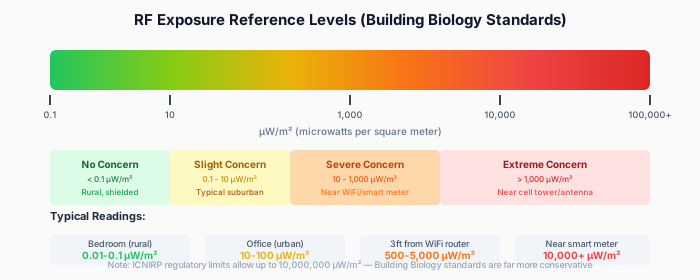
- Context: The FCC limit for general public exposure at cell frequencies is 1.0 mW/cm² (1,000 µW/cm²)
What You’ll Likely Find
- Indoor readings: typically 0.001-0.01 mW/cm² (walls attenuate significantly)
- Outdoor readings near a small cell: typically 0.01-0.1 mW/cm²
- Both are well below the 1.0 mW/cm² FCC limit
Use EMF Radar
EMF Radar shows you the locations and types of cell towers (including small cells) near any US address. You can check what’s near your home, school, or workplace and see estimated RF exposure scores based on distance, frequency, and tower density.
What About Children?
Children’s potential vulnerability to RF is a frequent concern, especially as small cells appear near schools. Several factors are worth considering:
- Children’s skulls are thinner, potentially allowing slightly deeper RF penetration
- They’ll have longer lifetime cumulative exposure than any previous generation
- The developing nervous system may be more susceptible (this is theorized but not proven for RF)
However:
- Small cells near schools emit the same low power as anywhere else
- Measured exposure levels at schools near small cells remain far below safety limits
- The American Academy of Pediatrics recommends reducing children’s cell phone use (held against the head) as a precaution, but has not raised alarms about ambient RF from infrastructure
If you’re a parent concerned about cell tower and small cell exposure near your child’s school, check your school on EMF Radar to see nearby tower data and estimated exposure levels.
Regulatory Oversight
FCC Limits
The FCC’s RF exposure limits (OET Bulletin 65) were last substantially updated in 1996, which is a common criticism. However:
- The limits include a 50x safety factor below levels shown to cause thermal effects in animal studies
- In 2019, the FCC reviewed the limits in response to a court order and concluded they remain protective
- The FDA stated it has “not found sufficient evidence that there are adverse health effects in humans caused by exposures at or under the current radiofrequency energy exposure limits”
International Standards
- ICNIRP (International): Updated guidelines in 2020, including specific provisions for frequencies up to 300 GHz. Concluded existing evidence doesn’t support stricter limits.
- WHO: Classifies all RF as “possibly carcinogenic” (Group 2B) — the same category as pickled vegetables and talcum powder. This classification reflects limited evidence, not established harm.
Local Authority
Many municipalities have tried to regulate small cell placement for health reasons. The FCC has generally preempted local authority on RF safety grounds (Telecommunications Act of 1996, Section 704), while allowing local governments to regulate aesthetics and placement of installations.
The Honest Assessment
What we can say with confidence:
- 5G small cells emit RF power levels consistently measured at 100-1,000x below safety limits
- Low-band and mid-band 5G use frequencies that have been studied for decades
- No established mechanism or consistent evidence for harm at these exposure levels
- The basic physics (non-ionizing, low power, distance attenuation) supports the safety case
What remains uncertain:
- Long-term (20+ year) effects of mmWave exposure at population scale
- Potential cumulative effects from increasing ambient RF across all sources
- Whether current safety limits adequately protect the most vulnerable populations
- Non-thermal biological effects at chronic low-level exposure (inconclusive research)
What would change this assessment:
- Large epidemiological studies showing health outcome differences correlated with 5G deployment
- Replicated laboratory findings of non-thermal biological effects at real-world exposure levels
- Discovery of a plausible biological mechanism for harm at non-thermal RF levels
Practical Recommendations
Whether or not you’re concerned about small cells specifically:
- Measure, don’t assume — actual RF levels are usually far lower than people expect
- Phone exposure dwarfs ambient exposure — your phone against your head produces orders of magnitude more RF exposure than a small cell on a pole outside
- Use EMF Radar — check your address to see nearby towers and estimated exposure
- Engage your local government — aesthetic and placement concerns are valid and can be addressed through zoning
- Follow the science — bookmark reputable sources (WHO EMF Project, ICNIRP, IEEE) rather than activist or industry sites
Related Reading
- 5G Tower Map: How to Find Cell Towers Near You
- Cell Tower Radiation vs Phone Radiation
- 10 Common 5G and EMF Myths Debunked
- Safe Distance from Cell Towers
- What Does a 5G Tower Look Like?
Related Articles
- 5G Towers: Health Risks and What the Research Actually Says
- What Is a Safe Distance to Live From a Cell Tower?
- What Does a 5G Tower Look Like? Visual Guide
- How to Measure EMF in Your Home: A Complete Guide
Concerned about EMF in your environment? Check your address on EMF Radar to see nearby cell towers and power lines, or find a certified EMF consultant for professional testing.