Cell Tower Lease Rates: What Landowners Need to Know in 2026
Quick Answer: Cell tower lease rates in the US typically range from $500 to $3,000+ per month, depending on location, carrier, tower type, and market demand. Prime urban rooftop sites can command $3,000–$10,000/month, while rural ground leases may start at $500–$1,000/month. Lease buyout offers from tower companies are common but often undervalue the long-term income stream.
Key Facts at a Glance
| Question | Answer |
|---|---|
| Average monthly cell tower lease | $1,000–$2,500 for typical sites; urban rooftops can exceed $5,000 |
| Lease term length | 25–50 years (usually 5-year terms with 4–5 renewal options) |
| Annual escalation | 2–3% per year (some leases are flat or CPI-indexed) |
| Who pays property taxes? | Usually the landowner, but tower companies pay their equipment taxes |
| Can I negotiate? | Yes — carriers need your property more than you need theirs |
| Do cell towers lower nearby property values? | Studies are mixed — generally 1–3% reduction within 300 feet, but lease income can offset this |
If a wireless carrier or tower company has approached you about leasing space on your property for a cell tower, you’re sitting on a potentially valuable long-term income stream. But cell tower leases are complex, heavily negotiated documents — and the carrier has done this thousands of times while you’re doing it for the first time.
This guide breaks down what you need to know: typical rates, what drives value, red flags to watch for, and how to make sure you’re not leaving money on the table.

How Cell Tower Leases Work
The Basic Structure
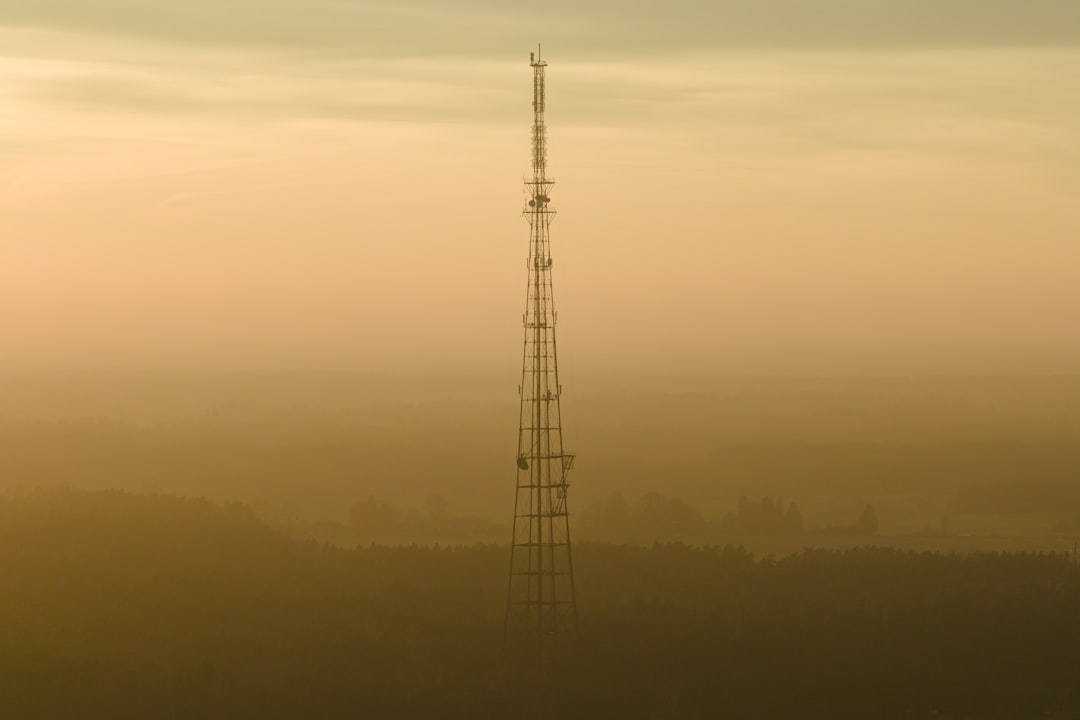
A cell tower lease is a contract between a property owner (you) and either a wireless carrier (AT&T, Verizon, T-Mobile) or a tower company (American Tower, Crown Castle, SBA Communications) that grants them the right to install, maintain, and operate wireless equipment on your property.
The key components:
- Lease area: Typically 2,500–10,000 square feet for ground towers, or a defined rooftop area
- Access rights: The carrier needs 24/7 access for maintenance
- Term: Usually structured as an initial 5-year term with 4–5 automatic renewal periods (25–30 years total)
- Rent: Monthly or annual payments, usually with built-in escalation
- Equipment rights: What the carrier can install, modify, or add
Who Approaches You?
There are several scenarios:
- Carrier directly contacts you — They’ve identified your property as a coverage gap solution. You have the most leverage here.
- Tower company contacts you — Companies like American Tower or Crown Castle build towers and lease space to multiple carriers. Lower initial rates but potential for co-location revenue.
- You proactively market your property — Less common but possible through tower site marketing companies.
- Lease buyout offer — A company offers to buy your existing lease for a lump sum. Proceed with extreme caution.
Check your EMF exposure
See cell towers, power lines, and substations near any US address.
Search Your AddressCurrent Cell Tower Lease Rates (2026)
Typical Rate Ranges
Lease rates vary dramatically based on location, demand, and negotiation. Here’s what the market looks like:
Ground Leases (Tower on Your Land)
| Location Type | Monthly Range | Notes |
|---|---|---|
| Rural | $500–$1,200 | Fewer alternatives, but also less carrier demand |
| Suburban | $1,000–$2,500 | Sweet spot — high demand, reasonable alternatives |
| Urban | $2,000–$5,000 | Premium pricing but more competition from other sites |
Rooftop Leases (Antennas on Your Building)
| Building Type | Monthly Range | Notes |
|---|---|---|
| Low-rise commercial | $1,000–$2,500 | Common for suburban coverage |
| Mid-rise office/retail | $2,000–$4,000 | Height advantage premium |
| High-rise | $3,000–$10,000+ | Premium urban locations with line-of-sight advantages |
| Church steeples | $800–$2,000 | Height in residential areas — increasingly popular |
Small Cell Installations (5G)
| Location | Monthly Range | Notes |
|---|---|---|
| Utility poles | $200–$500 | Municipalities often set rates |
| Building-mounted | $500–$1,500 | Smaller equipment footprint |
| Purpose-built poles | $300–$800 | New construction for 5G coverage |
What Drives Lease Value
Not all cell tower sites are created equal. These factors determine where you fall in the rate range:
High-value factors:
- Height advantage — Your property is the tallest point in the area
- Coverage gap — The carrier has a documented coverage hole that only your site can fill
- Zoning difficulty — If getting permits for alternative sites is difficult, your leverage increases
- Population density — More users = more value to the carrier
- Highway proximity — Carriers need continuous coverage along major roads
- Multiple carrier interest — If more than one carrier wants your site, bid them against each other
- No reasonable alternatives — The #1 factor. If the carrier’s RF engineer has identified your property as the only viable site, your leverage is enormous
Lower-value factors:
- Multiple alternative sites nearby
- Low population density
- Easy zoning environment (carrier can build elsewhere easily)
- Single carrier interest with many other options
Negotiation Tips
Know Your Leverage
The most important thing to understand: the carrier approached you for a reason. They’ve already done an RF propagation study and determined that your property solves a coverage problem. Building elsewhere would cost them time, money, and regulatory headaches.
This doesn’t mean you can demand anything, but it does mean you’re not begging — they need something you have.
Key Negotiation Points
1. Rent Amount Don’t accept the first offer. Initial offers from carriers are typically 40–60% of what they’re willing to pay. Counter with market data and be prepared to negotiate.
2. Annual Escalation Push for 3% annual increases minimum. Some carriers offer flat rates or 2% — this costs you significantly over a 25-year lease. The difference between 2% and 3% escalation on a $1,500/month lease:
- At 2%: $2,428/month after 25 years ($580K total)
- At 3%: $3,143/month after 25 years ($653K total)
- Difference: $73,000+ over the lease term

3. Co-location Rights If a tower company (not a carrier) is the leaseholder, negotiate a share of co-location revenue. When additional carriers add equipment to the tower, you should get a percentage (typically 15–30% of the new tenant’s rent).
4. Lease Term Shorter initial terms (5 years) with carrier renewal options are standard. Push for landlord-favorable termination clauses if the carrier stops using the site.
5. Structural Analysis and Insurance For rooftop installations, require the carrier to pay for structural engineering analysis and carry adequate liability insurance naming you as additional insured.
6. Removal Bond Require a removal or decommissioning bond — money set aside to remove the tower if the lease ends. Tower removal can cost $25,000–$75,000+, and you don’t want to be stuck with the bill.
Red Flags
🚩 Lease buyout offers from third parties. Companies like Landmark Dividend, Tillman Infrastructure, and others buy cell tower lease income streams. Their offers typically represent 50–70% of the lease’s actual present value. They’re betting that the lease will be more valuable over time than what they’re paying you now. Most financial advisors recommend against selling unless you have an urgent need for liquidity.
🚩 “Standard” lease language. There is no standard cell tower lease. Everything is negotiable. If someone tells you “this is our standard form,” that’s a negotiation tactic.
🚩 No attorney review. Cell tower leases are 25–50 year commitments worth hundreds of thousands of dollars. Spending $2,000–$5,000 on a telecom-experienced attorney is essential. Not a general real estate attorney — specifically someone with cell tower lease experience.
🚩 Blanket easements. Some lease drafts include broad easement language that gives the carrier rights beyond the tower area. Read every provision carefully.
How Cell Towers Affect Surrounding Property Values

This is the other side of the equation — what happens to property values near cell towers (but not hosting them)?
What the Research Says
The relationship between cell towers and property values has been studied extensively, with mixed results:
Studies showing negative impact:
- A 2020 Journal of Real Estate Research study found properties within 300 feet of a cell tower sold for 1–3% less than comparable properties farther away
- A National Institute of Building Sciences analysis found a 1–2% discount for properties within 400 feet
- Visual impact is the primary driver — towers visible from the property have more effect than hidden ones
Studies showing minimal impact:
- An Appraisal Journal study found no statistically significant effect beyond 400 feet
- Some markets show no measurable effect at any distance, particularly in urban areas where towers are common
- Properties near concealed/stealth towers (designed to look like trees, flagpoles, etc.) showed no measurable impact
Key nuances:
- Visual impact matters most. A monopole tower visible from your backyard has more effect than a rooftop installation you can’t see.
- Market familiarity matters. In dense urban areas where towers are everywhere, the stigma effect is minimal. In suburban/rural areas with few towers, a new one is more noticeable.
- Proximity is logarithmic. Impact drops rapidly with distance. Beyond 500 feet, most studies find no measurable effect.
- 5G small cells are different. The small form factor of 5G equipment mounted on utility poles doesn’t trigger the same concerns as a 150-foot monopole.
Use EMF Radar to Check Tower Proximity
If you’re evaluating a property — whether to live near or to lease for a tower — search any address on EMF Radar to see all nearby cell towers, their types, distances, and estimated exposure levels. This gives you the data you need to make informed decisions about proximity, whether you’re a potential landowner, buyer, or current resident.
The EMF Angle: Should Landowners Care?
If you’re considering leasing your property for a cell tower, you might wonder about EMF exposure for yourself and your neighbors.
The practical reality:
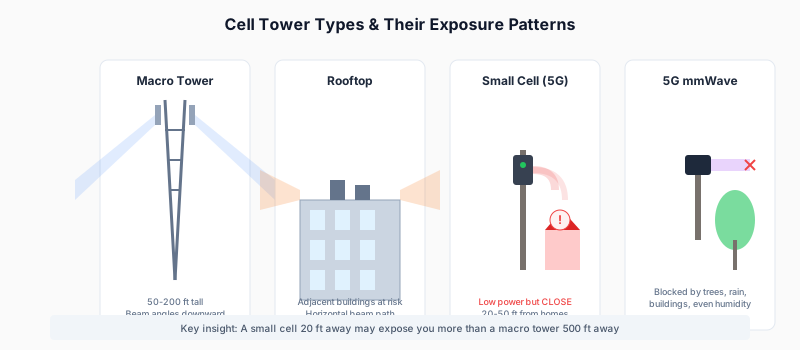
- RF exposure from cell towers at ground level is typically hundreds to thousands of times below FCC safety limits — learn about safe distances from cell towers
- The equipment is installed at height specifically to broadcast over, not into, nearby areas
- Your own cell phone against your head produces far higher personal exposure than a tower 100+ feet away
- Check your current exposure estimates on EMF Radar to see what towers are already near you
This doesn’t mean there are zero concerns — some people prefer to minimize all RF exposure, which is a reasonable personal choice. But from a pure physics standpoint, hosting a tower doesn’t dramatically change your day-to-day exposure because the antennas are pointed outward and upward, not downward into your property.
Tax Implications
Cell tower lease income is taxable. How it’s taxed depends on your situation:
- Individual landowners: Lease income is typically reported as rental income on Schedule E
- Farm/agricultural property: Lease income may be subject to self-employment tax if the IRS considers it part of your farming business
- Business property: Added to business income
- Lump-sum lease buyout: May qualify for capital gains treatment — consult a tax professional
- Property tax: The tower itself is usually assessed as carrier personal property, but some jurisdictions increase the land assessment. Negotiate for the carrier to reimburse any property tax increases caused by the installation.
Action Steps for Landowners
- Don’t respond immediately to unsolicited lease offers. Take your time.
- Research comparable rates in your area — ask neighboring tower hosts what they receive (they’re not bound by confidentiality in most cases).
- Hire a telecom lease consultant or attorney — the $2,000–$5,000 fee pays for itself many times over on a 25-year lease.
- Understand your leverage — are there alternative sites? How badly does the carrier need your property?
- Negotiate escalation, co-location, and removal terms, not just the starting rent.
- Never accept a lease buyout without independent financial analysis.
- Check your existing tower exposure on EMF Radar to understand the RF environment around your property.
Summary
Cell tower leases can be excellent long-term income — $500 to $10,000+ per month with built-in escalation, requiring minimal effort from you. But the lease terms matter enormously over 25–50 years, and carriers are sophisticated negotiators who do this for a living.
Get professional help, understand your leverage, negotiate aggressively on escalation and co-location terms, and don’t be swayed by pressure tactics. Your property has value because they need it — make sure the deal reflects that.
Want to see what cell towers are already near your property? Search any US address on EMF Radar for a complete tower map and exposure analysis.
Related Reading
- Apartment Near a Cell Tower: What Renters Must Know
- Do Cell Towers Affect Property Values? The Research
- Are 5G Towers Dangerous? What the Research Shows (2026)
- What Is a Safe Distance to Live From a Cell Tower?
Concerned about EMF? Check your address on EMF Radar to see nearby towers and power lines, or find a certified EMF consultant for professional testing.