EMF Exposure in Schools: WiFi, Cell Towers, and Your Child’s Daily Dose
Quick Answer: Modern schools expose children to multiple sources of electromagnetic fields (EMFs) for six or more hours daily—including industrial-strength WiFi routers, personal devices, smart boards, and sometimes cell towers on school property. While regulatory agencies maintain current exposure levels are safe, growing scientific literature suggests children may be more vulnerable than adults, prompting some countries to adopt precautionary measures. Parents can take practical steps to reduce their child’s cumulative exposure without abandoning technology altogether.

Key Facts at a Glance
| Factor | Details |
|---|---|
| Average school day exposure | 6-8 hours of continuous EMF from multiple sources |
| WiFi router power | Commercial routers are 5-10x more powerful than home models |
| 1:1 device programs | Over 90% of U.S. schools now provide personal devices to students |
| Cell towers on schools | Thousands of U.S. schools lease rooftop space to wireless carriers |
| Children’s vulnerability | Thinner skulls, developing tissues, and decades of future exposure |
| Countries with restrictions | France, Israel, Belgium, and others limit WiFi in schools for young children |
The Modern Classroom: An EMF Environment

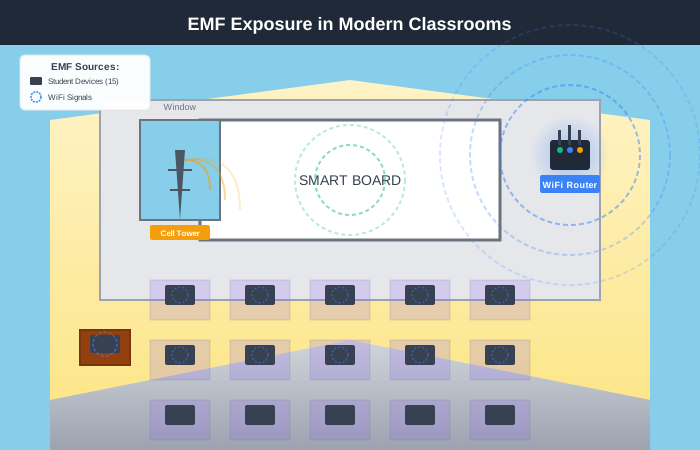
Schools have transformed dramatically over the past two decades. Chalkboards gave way to smart boards. Textbooks became tablets. Wired computer labs evolved into wireless everything. This technological revolution brought undeniable educational benefits—and a new environmental factor that most parents never consider.
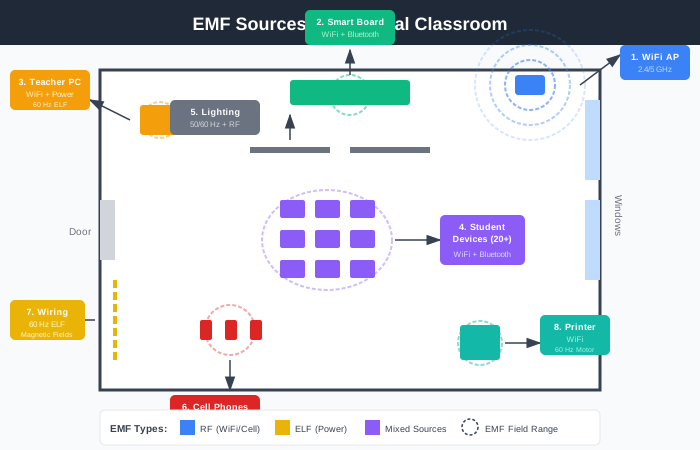
Walk into any modern classroom and you’re entering what some researchers call an “EMF soup.” The invisible electromagnetic fields emanating from WiFi routers, dozens of wireless devices, Bluetooth connections, and nearby cell infrastructure create a constant background of radiofrequency radiation. Unlike the home environment where parents can control technology use, schools represent hours of daily exposure that families have little say over.
The question facing parents isn’t whether to embrace or reject educational technology. It’s whether schools and policymakers are taking adequate precautions—and what families can do to minimize unnecessary exposure while their children learn.
Check your EMF exposure
See cell towers, power lines, and substations near any US address.
Search Your AddressThe EMF Soup: Sources in Your Child’s School
Industrial-Strength WiFi Routers
Home WiFi routers typically serve a handful of devices across a few rooms. School WiFi systems operate on an entirely different scale. Commercial-grade access points must handle hundreds or thousands of simultaneous connections across large buildings, requiring significantly more transmission power.
Many schools install access points in every classroom—sometimes multiple units per room to ensure coverage. These devices broadcast continuously throughout the school day, creating a baseline of radiofrequency exposure that students cannot avoid. The router might sit on a shelf just feet from where children spend hours each day.
Unlike home environments where WiFi usage fluctuates, school networks maintain constant high-demand operation. Every student checking a tablet, every teacher using a smart board, every background system syncing data adds to the electromagnetic environment.
1:1 Device Programs: Laptops and Tablets on Every Desk
One-to-one device programs have become nearly universal in American education. Students receive Chromebooks, iPads, or laptops that they use throughout the day and often take home. These programs democratized access to technology—but they also placed transmitting devices in close proximity to children’s bodies for extended periods.
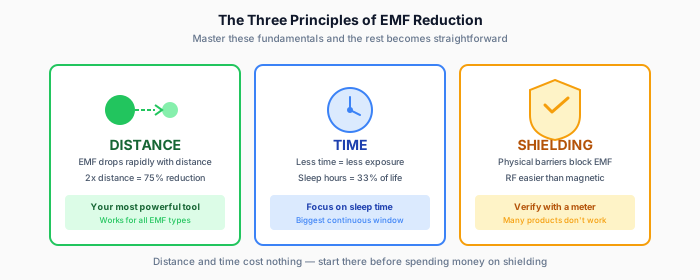
The concern isn’t occasional computer use. It’s the cumulative effect of having a wireless device inches from a child’s body for most of their waking hours at school. When students place laptops directly on their laps or hold tablets close to their faces, the distance between the antenna and their body tissue decreases dramatically. Radiofrequency exposure follows the inverse square law—halving the distance quadruples the intensity.
Many schools encourage or require device use for most classroom activities. Reading assignments, math problems, writing exercises, research projects, and even testing now happen on screens. A student might interact with their device for five or six hours daily, with the wireless radio transmitting throughout.
Cell Towers on School Property
Cash-strapped school districts discovered a revenue stream that requires no effort: leasing rooftop space to wireless carriers. Thousands of schools across the country host cell tower equipment on their buildings or adjacent property, earning anywhere from a few thousand to tens of thousands of dollars annually.
These installations place high-powered transmission equipment in immediate proximity to where children spend their days. While carriers and regulatory agencies insist the exposure levels remain within safety guidelines, the guidelines themselves were developed decades ago based on short-term thermal effects—not the biological effects of long-term, low-level exposure that children would experience.
Some cell tower leases place equipment directly above classrooms. Others position antennas on athletic fields where students exercise daily. The revenue benefits school budgets, but parents often have no idea their child’s school hosts wireless infrastructure until they investigate.
Smart Boards, IoT Devices, and Classroom Tech
The connected classroom extends beyond personal devices. Interactive whiteboards broadcast wireless signals. Classroom printers and projectors connect via WiFi. Some schools have implemented IoT sensors for climate control, security, and attendance tracking.
Each connected device adds to the electromagnetic environment. A single classroom might contain a smart board, a teacher’s laptop, twenty-five student devices, a wireless printer, Bluetooth speakers, and connections to hallway sensors—all transmitting simultaneously.
Cumulative Daily Exposure
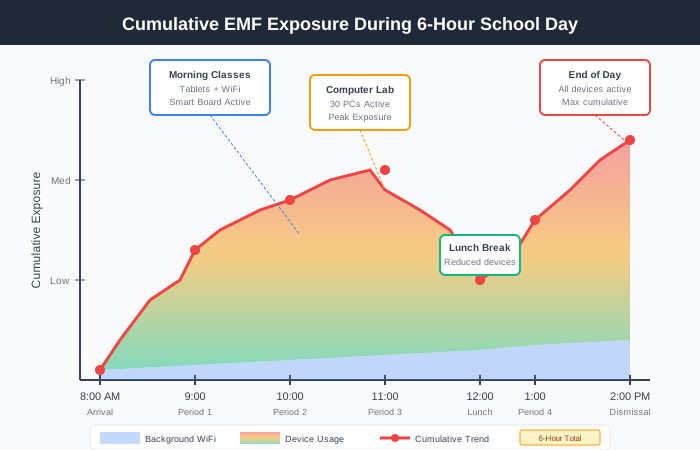
The critical factor isn’t any single source. It’s the combination of all sources over the full school day. A child arrives at school and spends six to eight hours immersed in overlapping electromagnetic fields from every direction.
Consider the typical day: the school bus might have WiFi. The classroom has multiple access points. The student uses a personal device constantly. The cafeteria has its own coverage. The gymnasium might sit near rooftop cell equipment. Specialty classrooms like computer labs concentrate even more devices in smaller spaces.
This represents a fundamentally different exposure pattern than previous generations experienced. The first generation of children to grow up with constant, all-day wireless exposure is still young. Long-term effects won’t be fully understood for decades.
Why Children May Be More Vulnerable
Regulatory safety standards were developed based on studies of adult exposure. Children differ from adults in ways that matter for EMF absorption and potential effects.
Thinner Skulls and Smaller Bodies
Children’s skulls are thinner and contain more fluid than adult skulls. Studies using anatomical models suggest that electromagnetic radiation penetrates deeper into children’s brain tissue compared to adults. The skull provides less shielding, allowing more energy to reach developing neural structures.
Smaller body size also means that proportionally more tissue falls within the highest-exposure zones near devices. When an adult and child hold the same tablet, the child’s vital organs are closer to the antenna relative to their body size.
Developing Tissues and Rapid Cell Division
Children’s bodies are growing and developing rapidly. Their cells divide more frequently than adult cells. If electromagnetic fields have any effect on cellular processes—whether through oxidative stress, DNA expression, or other mechanisms—actively developing tissue may be more susceptible.
The brain continues significant development through adolescence. The blood-brain barrier, which protects neural tissue from toxins, isn’t fully mature in young children. Reproductive organs are developing during exactly the years children spend in school.
Longer Lifetime Exposure
A child starting kindergarten today faces potentially 70 or 80 years of future wireless exposure. Any long-term effects that emerge after decades of exposure will affect today’s children more than any previous generation.
Current safety standards don’t account for this lifetime accumulation. They’re based on the question of whether a given exposure level causes immediate harm—not whether continuous exposure over many decades might contribute to health issues.
The precautionary principle suggests that when long-term effects are unknown, minimizing exposure makes sense—especially for those who will live longest with any consequences.
What Some Countries and Schools Have Done

The United States has taken minimal precautionary action regarding children’s EMF exposure. Other nations have moved more aggressively.
France: Limiting WiFi for Young Children
France banned WiFi in nursery schools serving children under age three. The law requires that WiFi in elementary schools be turned off when not in use for educational purposes. French legislators applied the precautionary principle, determining that potential risks to young children warranted action despite scientific uncertainty.

Israel: Reducing Classroom Exposure
Israel’s Ministry of Health issued guidelines limiting WiFi use in schools. They recommended using wired internet connections when possible, reducing WiFi transmission power, and restricting WiFi hours. The guidelines acknowledge scientific uncertainty while prioritizing children’s protection.
Other National Actions
Belgium banned the sale of mobile phones designed for young children. Several European countries have issued recommendations about children’s wireless device use. These actions reflect a different regulatory philosophy than the American approach of waiting for definitive proof of harm.
Individual Schools Going Wired
Some schools have independently chosen to reduce wireless exposure. They’ve installed ethernet connections to eliminate classroom WiFi, required devices to use airplane mode except when internet access is needed, or removed cell tower equipment from school property.
These schools report that wired connections are actually more reliable than WiFi and can be faster. The infrastructure cost is typically modest compared to overall technology budgets.
Practical Steps for Parents
Parents cannot control the school environment, but they can take steps to reduce their child’s personal exposure and advocate for broader changes.
Device Usage Practices
Teach children to place laptops on desks rather than laps. This simple change dramatically increases the distance between the device and reproductive organs and abdominal tissue. A few inches of distance substantially reduces exposure intensity.
When devices aren’t actively being used for internet-connected activities, airplane mode eliminates wireless transmission while still allowing offline work. Many educational apps function perfectly without a network connection.
Wired headphones eliminate Bluetooth transmission next to the brain. If the school allows personal headphones, wired models provide the same audio without the close-range radiofrequency exposure.
Advocating at School
Ask your school administration about their WiFi infrastructure. How many access points exist? Where are they located relative to classrooms? Are they turned off outside school hours?
Inquire whether the school hosts cell tower equipment. If so, request information about the lease terms and equipment placement. You have the right to know about infrastructure affecting your child.
Suggest that the school consider wired connections for stationary devices. Teacher computers, classroom smart boards, and printers don’t need wireless connectivity—they could use ethernet cables without any loss of functionality.
Request that the school establish device-free zones or times. Lunch periods, recess, and physical education don’t require screen time. Reducing hours of exposure reduces cumulative dose.
Home Practices That Help
Since children also use devices at home, family practices matter for overall exposure. Turn off WiFi routers at night when no one needs internet access. Use wired connections for desktop computers and gaming consoles.
Establish device-free times during evenings and weekends. Beyond reducing EMF exposure, this practice benefits sleep quality, family interaction, and mental health.
Model good habits yourself. Children learn from watching parents. If adults keep phones in pockets and use devices constantly, children will emulate those patterns.
Related Reading
- WiFi Router Placement: Optimizing Coverage While Minimizing Exposure
- EMF and Sleep: How Wireless Devices Affect Rest Quality
- Cell Tower Proximity: What the Research Shows
- Measuring EMF in Your Home: A Beginner’s Guide
Frequently Asked Questions
Are current EMF safety standards adequate for children?
Current safety standards were developed based on preventing thermal effects in adult tissue during short-term exposure. They don’t specifically account for children’s physiological differences, developing tissues, or decades of future exposure. Many scientists argue that standards should be updated to reflect modern research and the precautionary principle, particularly for children who will accumulate lifetime exposure.
Can schools refuse to share information about their WiFi and cell tower infrastructure?
Public schools generally must respond to information requests from parents. You can ask about the number and location of WiFi access points, the power levels they operate at, and whether the school leases space for cell tower equipment. Some schools may require formal public records requests for detailed technical information.
Is WiFi more dangerous than cell phones?
WiFi routers typically transmit at lower power than cell phones, but the exposure patterns differ. Cell phones are used intermittently and held close to the body, while WiFi creates continuous background exposure throughout the school day. Both contribute to cumulative radiofrequency exposure. Reducing either source reduces overall dose.
What about Bluetooth devices like wireless keyboards and headphones?
Bluetooth operates at lower power than WiFi but places transmitting antennas very close to the body or head. Wireless earbuds in particular position antennas adjacent to the brain for extended periods. When practical, wired alternatives eliminate this close-range exposure without sacrificing functionality.
Do EMF shields and blocking products work?
Some shielding products can reduce exposure from specific sources, but effectiveness varies widely. Poorly designed products may be useless or even counterproductive. Before purchasing shields, focus on reducing exposure through distance and limiting device use—these approaches cost nothing and work reliably.
Should I homeschool to avoid school EMF exposure?
EMF exposure is one factor among many in educational decisions. Rather than removing children from school, most parents will find it more practical to advocate for reasonable precautions within the school environment while teaching children habits that reduce personal exposure. Many exposure-reduction strategies can be implemented without changing schools.
The Bottom Line
Modern schools immerse children in electromagnetic fields for most of their waking hours. Industrial WiFi systems, personal devices, smart classroom technology, and sometimes cell towers on school property create an exposure environment unlike anything previous generations experienced.
Scientific understanding of long-term effects remains incomplete. Regulatory agencies maintain current exposure levels are safe, while a growing body of research raises questions about developmental effects, and several countries have adopted precautionary measures specifically protecting children.
Parents don’t need to choose between technology and caution. Practical steps like keeping devices on desks instead of laps, using airplane mode when internet access isn’t needed, and advocating for reasonable school policies can reduce exposure without abandoning educational technology.
The children entering schools today will live with the consequences of current decisions for decades. Taking sensible precautions now costs little and may prove wise as scientific understanding evolves. In matters of children’s health, the precautionary principle deserves serious weight.
Related Articles
- EMF and Children: A Complete Parent’s Guide for 2026
- Are 5G Small Cells Dangerous? What the Science Says in 2026
Check EMF near your child’s school → Use our free interactive map to see cell towers and estimated exposure levels at any address. Enter a school address to see what’s nearby.