EMF and Fertility: What the Research Actually Shows
Quick Answer: Research suggests cell phone RF exposure may negatively affect sperm quality, with meta-analyses showing reduced sperm motility and viability. However, the clinical significance remains uncertain, and evidence for effects on female fertility is limited. Simple precautions like keeping phones out of pants pockets and laptops off laps are reasonable steps for those trying to conceive.
Key Facts at a Glance
| Question | Answer |
|---|---|
| Does cell phone radiation affect sperm? | Meta-analyses show associations with reduced sperm motility (-8.1%) and viability (-9.1%), though clinical significance is uncertain. |
| What is the main biological mechanism? | Oxidative stress is the most consistent finding, with RF exposure potentially increasing reactive oxygen species that damage sperm. |
| Does EMF affect female fertility? | Research is limited and inconsistent, with no clear evidence of RF effects on ovarian function at typical consumer exposure levels. |
| Is laptop heat or EMF the bigger concern? | Laptop heat is a more established concern, capable of raising scrotal temperature by 2-3 degrees Celsius. |
| What do fertility specialists recommend? | Reduce exposure as a precaution but don’t consider EMF a primary cause of infertility. |
| What is the safest place to carry a phone? | In a bag or jacket pocket rather than front pants pocket, especially for men trying to conceive. |
The potential link between EMF exposure and fertility is a growing concern, especially as people spend more time with phones in pockets, laptops on laps, and wireless devices everywhere. This is a topic where both alarmism and dismissiveness can be harmful—the research deserves a careful, honest review.
This article examines what scientific studies have found about EMF effects on both male and female fertility, separating established findings from speculation.

The Concern: Why This Matters
Modern life exposes reproductive organs to unprecedented levels of RF and ELF radiation from wireless devices carried close to the body. This proximity creates legitimate scientific questions about potential health effects:
- Cell phones in pants pockets expose testes to RF radiation for hours daily
- Laptops on laps expose both testes and ovaries to heat and ELF fields
- WiFi routers create constant background RF exposure
- Increasing infertility rates prompt questions about environmental factors
Whether EMF contributes to reproductive problems is a legitimate scientific question—one that’s been studied for decades.
Check your EMF exposure
See cell towers, power lines, and substations near any US address.
Search Your AddressMale Fertility: What Studies Show
Cell phone RF exposure is associated with reduced sperm motility and viability according to multiple meta-analyses, though the clinical significance of these findings remains uncertain.
Sperm Quality Research
According to PubMed, numerous studies have examined cell phone RF exposure and sperm parameters. The research quality varies, but patterns emerge:
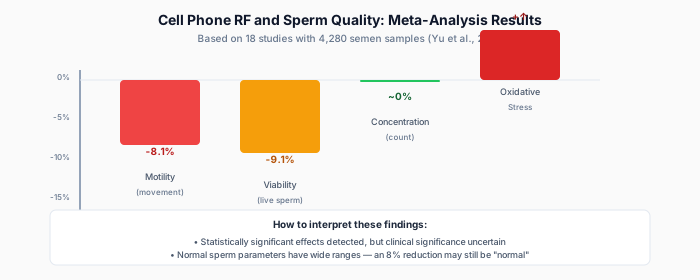
2021 Meta-Analysis: A comprehensive review of 18 studies (4,280 samples) found that cell phone exposure was associated with:
- Reduced sperm motility (movement)
- Reduced sperm viability
- Increased oxidative stress markers
- No significant effect on sperm concentration
The authors concluded: “Radiofrequency electromagnetic radiation emitted from cell phones may have a deleterious effect on sperm quality.” DOI
2014 Meta-Analysis (10 studies, 1,492 samples): Found significant associations between cell phone exposure and:
- Decreased sperm motility (-8.1%)
- Decreased sperm viability (-9.1%)
- No effect on sperm concentration
The Mechanism Question
Oxidative stress is the most consistently observed biological pathway through which RF exposure may affect sperm quality. Several mechanisms have been proposed:
Thermal Effects:
- Testes function optimally 2-4°C below body temperature
- Phones generate heat during use
- Heat stress is a known cause of sperm damage
- However, RF heating at typical phone levels is minimal
Oxidative Stress:
- Most consistent finding in laboratory studies
- RF exposure may increase reactive oxygen species (ROS)
- ROS damage sperm DNA and cell membranes
- Antioxidant levels in semen may decrease
Direct DNA Effects:
- Some studies show increased DNA fragmentation
- Others find no effect
- Mechanism unclear for non-ionizing radiation
Important Caveats
The research has significant limitations:
-
Exposure assessment is poor. Most studies rely on self-reported phone use, not measured RF exposure.
-
Confounders abound. Heavy phone users may differ in lifestyle, stress, occupational exposures.
-
In vitro vs. in vivo. Lab studies exposing sperm directly to RF show effects; whether this translates to phones in pockets is less clear.
-
Clinical significance uncertain. Even significant statistical effects may not translate to infertility. Normal sperm parameters have wide ranges.
-
Publication bias. Studies finding effects may be more likely to be published.
What Major Organizations Say
WHO: Acknowledges research suggesting possible effects but notes inconsistencies and methodological limitations.
ESHRE (European Society of Human Reproduction): Recommends further research; notes evidence is suggestive but not conclusive.
Most fertility specialists: Advise reducing exposure as a precaution but don’t consider it a primary cause of male infertility.
Female Fertility: Less Research, Less Clarity
Research on EMF and female fertility is substantially less developed than male fertility studies, with inconsistent findings and significant methodological challenges.
What Studies Exist
Occupational Studies: According to PubMed, studies of women in high-EMF occupations (physiotherapists using shortwave equipment, electrical workers) have shown mixed results:
- Some show increased miscarriage risk
- Others show no effect
- Exposure levels in these occupations often exceed typical consumer exposure
IVF and RF Exposure (2023): A study examined WiFi-like RF exposure effects on mouse oocytes (eggs) and found:
- Exposure during maturation didn’t affect fertilization rates
- But embryo development was impaired in exposed groups
- The authors suggest caution about chronic exposure during fertility treatment
Pregnancy Outcomes: Several studies have examined EMF exposure during pregnancy:
- Some show associations with miscarriage, particularly for magnetic field exposure
- Others show no effect
- Establishing causation is difficult due to multiple confounders
The Research Gap
Female fertility research lags behind male studies for several reasons:
- Ovaries are less accessible for RF exposure
- Menstrual cycles create more variables
- Pregnancy outcomes have many potential causes
- Ethical constraints limit experimental studies
Heat vs. RF: Separating Effects

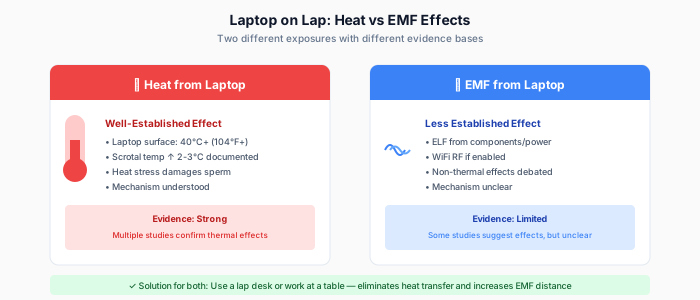
Laptop heat poses a more documented risk to male fertility than electromagnetic fields, with studies showing scrotal temperature increases of 2-3 degrees Celsius during lap use.
Heat from laptops:
- Laptops on laps can raise scrotal temperature by 2-3°C
- Heat damage to sperm is well-established
- This is a thermal effect, not an EMF effect
- Affected by laptop design, duration, clothing
RF from wireless devices:
- Phones in pockets expose testes to RF
- RF at typical levels causes minimal heating
- The question is whether non-thermal effects exist
- Research suggests yes, but mechanism is unclear
The practical implication: Even if you’re skeptical of RF effects, the heat from laptops is a documented concern for male fertility.
Practical Recommendations
Simple behavioral changes can reduce reproductive EMF exposure without significant lifestyle disruption or cost.
For Men Trying to Conceive
Higher confidence recommendations:
- Keep laptops off lap (use desk or lap pad)
- Avoid hot tubs and saunas (general fertility advice)
- Maintain healthy weight and lifestyle
Moderate confidence (precautionary):
- Carry phone in jacket pocket rather than pants
- Don’t keep phone in front pants pocket for extended periods
- Use speakerphone or wired headset to keep phone away from body
- Consider airplane mode when phone is pocketed and not needed
What likely doesn’t matter:
- WiFi router location (unless very close to bedroom)
- Brief phone calls
- Occasional laptop on lap use
For Women Trying to Conceive
Evidence is less clear, but reasonable precautions:
- Avoid laptops directly on abdomen
- Keep phone away from body when possible
- Focus on well-established fertility factors (nutrition, weight, stress)
During pregnancy:
- Follow standard prenatal care
- EMF exposure reduction is reasonable but shouldn’t cause anxiety
- No strong evidence of EMF effects at typical consumer levels
For Everyone Concerned About Fertility
-
Perspective matters. EMF exposure, if it affects fertility at all, is likely a minor factor compared to:
- Age (especially for women)
- Weight and metabolic health
- Smoking and alcohol
- Underlying medical conditions
- Stress and sleep
-
Reducing exposure is easy. Simple changes (phone in bag vs. pocket) have no downside.
-
Don’t delay professional help. If you’re struggling to conceive, see a fertility specialist rather than focusing solely on EMF.
How to Assess Your Exposure
Understanding your personal EMF exposure profile can help you make informed decisions about which precautions are most relevant to your situation.
Phone Pocket Exposure
Your phone’s SAR (Specific Absorption Rate) indicates RF absorption during use. SAR values are:
- Legal limit: 1.6 W/kg (US), 2.0 W/kg (EU)
- Actual exposure varies with signal strength, usage, pocket material
To reduce: Carry phone in bag, use airplane mode when not needed, avoid tight pockets.
Laptop Heat
Measurable with an infrared thermometer:
- Surface temperature can exceed 40°C (104°F)
- Testicular heating of 1-2°C is documented with laptop use
- Air-gap lap desks effectively prevent heat transfer
Home RF Environment
Check your overall RF exposure with EMF Radar. High RF scores near bedrooms might warrant attention for couples trying to conceive.
Frequently Asked Questions
Can cell phones cause male infertility?
Cell phones are unlikely to be a primary cause of male infertility, but research suggests RF exposure may reduce sperm motility and viability. These effects are statistically significant in meta-analyses but their clinical impact on actual fertility remains uncertain. Men trying to conceive may benefit from keeping phones out of front pants pockets as a precaution.
Where is the safest place to carry my phone for fertility?
The safest location is away from the body entirely, such as in a bag or briefcase. If body carry is necessary, a jacket pocket or back pants pocket provides more distance from reproductive organs than a front pants pocket. Using airplane mode when the phone is not needed further reduces exposure.
Does WiFi affect fertility?
WiFi routers produce lower RF exposure levels than cell phones held close to the body. Current research does not provide strong evidence that typical home WiFi exposure affects fertility. However, keeping routers at a reasonable distance from bedrooms is a sensible precaution for those concerned.
Is laptop heat or laptop EMF worse for fertility?
Laptop heat is the more established concern. Studies document that laptops can raise scrotal temperature by 2-3 degrees Celsius, and heat damage to sperm is well-proven. The EMF effects from laptops are less certain. Using a lap desk with an air gap addresses both concerns.
Should women worry about EMF during pregnancy?
Research on EMF and pregnancy outcomes is limited and inconsistent. There is no strong evidence of harmful effects at typical consumer exposure levels. Standard prenatal care should take priority, and while reducing exposure is reasonable, it should not cause anxiety or override medical advice.
How long does it take for sperm to recover from EMF exposure?
Sperm production takes approximately 74 days, so any changes from reducing EMF exposure would not be immediately apparent. Men planning to conceive might consider implementing precautionary measures 2-3 months before trying, though the actual recovery timeline from RF exposure specifically has not been well-studied.
The Bottom Line
EMF exposure may affect male fertility through oxidative stress mechanisms, but it is not a primary cause of infertility and should not overshadow established risk factors like age, weight, and lifestyle.
For male fertility:
- Evidence suggests cell phone RF exposure may affect sperm quality
- Effects are statistically significant but clinical significance is uncertain
- Mechanism likely involves oxidative stress
- Laptop heat is a more established concern than laptop EMF
For female fertility:
- Research is limited and inconsistent
- No clear evidence of RF effects on ovarian function
- Some occupational studies suggest possible effects at high exposure levels
- Pregnancy outcomes research is mixed
What makes sense:
- Simple precautions (phone in bag, laptop on desk) have no downside
- Don’t let EMF concern overshadow established fertility factors
- Reducing exposure is reasonable; anxiety about it is counterproductive
- If struggling to conceive, see a specialist—EMF is not a primary cause of infertility
This is an area where science is genuinely uncertain. Taking reasonable precautions while focusing on factors with clearer evidence is the balanced approach.
Related Reading
- EMF and Sleep: What the Research Shows
- How to Measure EMF in Your Home
- WiFi Router Placement: Safe Distance and Best Practices
Last updated: January 2026. This article synthesizes publicly available research from PubMed and is not medical advice. For fertility concerns, consult with a reproductive health specialist.
Sources:
- Yu G, et al. (2021). “Effect of mobile phone radiation on sperm quality: A systematic review and meta-analysis.” Environmental Research. DOI
- Adams JA, et al. (2014). “Effect of mobile telephones on sperm quality: A systematic review and meta-analysis.” Environment International.
- WHO (2010). “Research Agenda for Radiofrequency Fields.”