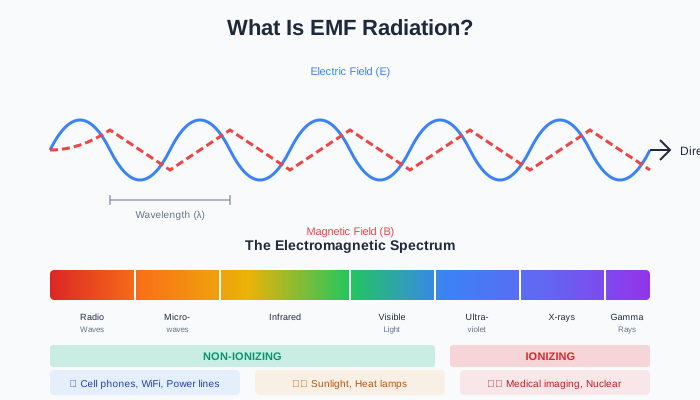
What Is EMF Radiation? The Complete Science Explained
Quick Answer: EMF (electromagnetic field) radiation is energy that travels through space in waves. It includes everything from visible light and radio waves to X-rays. EMFs are produced by both natural sources (sunlight, Earth’s magnetic field) and man-made sources (power lines, cell phones, WiFi). The health debate centers on non-ionizing EMFs from everyday technology—fields too weak to break chemical bonds but potentially capable of biological effects through other mechanisms.
Key Facts at a Glance
| Question | Answer |
|---|---|
| What is EMF? | Energy traveling as electromagnetic waves |
| Two main types | Ionizing (X-rays, gamma) and non-ionizing (RF, ELF) |
| Natural sources | Sunlight, Earth’s magnetic field, lightning |
| Man-made sources | Power lines, cell phones, WiFi, appliances |
| Unit of measurement | Volts per meter (V/m) for electric, milliGauss (mG) for magnetic |
| Health research status | IARC classifies RF as “possibly carcinogenic” (Group 2B) |

Understanding the Electromagnetic Spectrum
Electromagnetic radiation exists on a spectrum organized by wavelength and frequency. All EMFs travel at the speed of light, but their wavelengths range from thousands of kilometers (radio waves) to smaller than an atom (gamma rays).
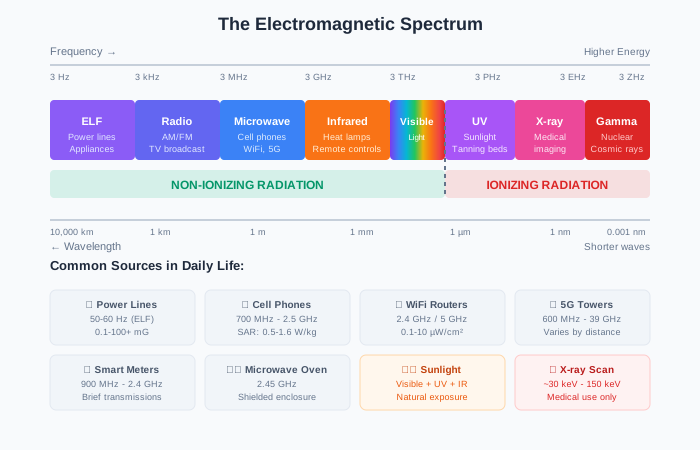
The spectrum divides into two fundamental categories based on energy levels:
Ionizing radiation carries enough energy to knock electrons from atoms, breaking chemical bonds and potentially damaging DNA. This includes X-rays, gamma rays, and ultraviolet light above a certain frequency. Medical imaging, nuclear materials, and cosmic rays produce ionizing radiation.
Non-ionizing radiation lacks sufficient energy to ionize atoms. This includes radio frequencies (RF), microwaves, infrared, visible light, and extremely low frequency (ELF) fields. Cell phones, WiFi routers, power lines, and most household electronics produce non-ionizing radiation.
The distinction matters enormously for health discussions. Ionizing radiation’s dangers are well-established and undisputed. The ongoing scientific debate concerns whether non-ionizing radiation—the type most of us encounter daily—can cause harm through mechanisms other than ionization. Research shows it may: roughly 65% of published studies find that RF-EMF can damage DNA indirectly through oxidative stress, even without ionization.
Check your EMF exposure
See cell towers, power lines, and substations near any US address.
Search Your AddressThe Physics of Electromagnetic Fields
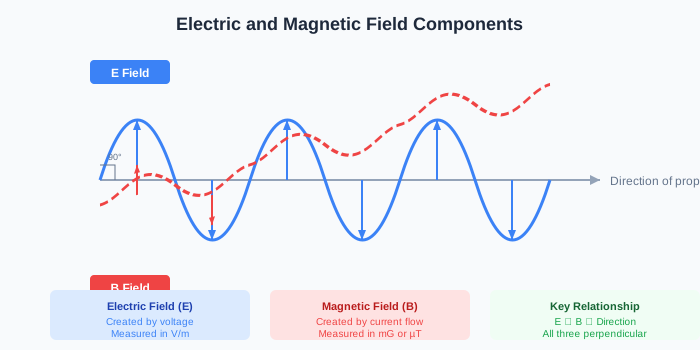
Electromagnetic fields consist of two interrelated components that oscillate perpendicular to each other: an electric field and a magnetic field.
Electric fields are produced by voltage—the pressure pushing electrical current through a wire. They exist even when no current flows, as long as voltage is present. Electric fields are measured in volts per meter (V/m) and are relatively easy to shield with conductive materials.
Magnetic fields are produced by current—the actual flow of electrons through a conductor. They only exist when current flows. Magnetic fields are measured in milliGauss (mG) or microTesla (µT), and they pass through most materials, making them harder to shield.
Frequency describes how many times the wave oscillates per second, measured in Hertz (Hz). Higher frequencies carry more energy per photon. The frequency determines the radiation’s properties and potential biological effects.
Wavelength is inversely proportional to frequency—higher frequencies have shorter wavelengths. Radio waves have wavelengths measured in meters; gamma rays have wavelengths smaller than atoms.
The relationship is expressed as: frequency × wavelength = speed of light
Types of EMF Radiation
Extremely Low Frequency (ELF) Fields: 3-3000 Hz
ELF fields surround anything connected to electrical power. The electrical grid operates at 50 Hz (Europe) or 60 Hz (North America), producing fields that oscillate slowly compared to radio frequencies.
Primary sources:
- Power lines (transmission and distribution)
- Electrical substations
- Building wiring
- Appliances when running
- Electric vehicles during charging
ELF magnetic fields typically range from 0.1-1 mG in homes far from power infrastructure, rising to 3-30 mG near appliances and potentially hundreds of mG directly under high-voltage transmission lines.
The key characteristic of ELF fields is their ability to penetrate almost everything. Unlike higher frequencies, ELF magnetic fields pass through walls, earth, and bodies with minimal attenuation.
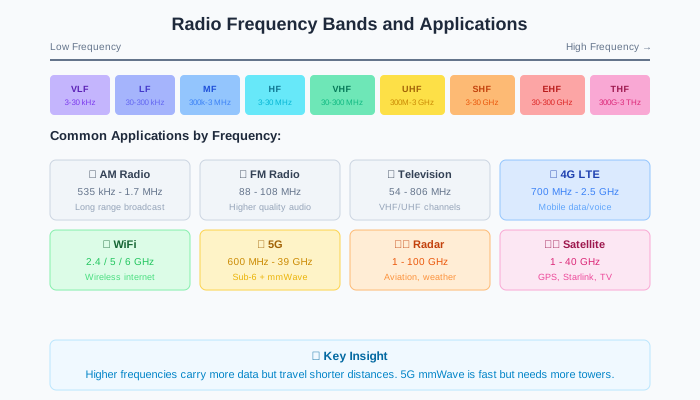
Radio Frequency (RF) Fields: 3 kHz - 300 GHz
RF radiation encompasses a vast range of frequencies used for wireless communication. Different applications use different portions of the RF spectrum.
Common RF sources and frequencies:
- AM radio: 535-1705 kHz
- FM radio: 88-108 MHz
- Television broadcast: 54-806 MHz
- Cell phones (4G LTE): 700 MHz - 2.5 GHz
- WiFi: 2.4 GHz and 5 GHz
- 5G: 600 MHz - 39 GHz (and higher for mmWave)
- Microwave ovens: 2.45 GHz
- Radar: 1-100 GHz
RF exposure is typically measured in power density (microwatts per square centimeter, µW/cm²) or specific absorption rate (SAR, watts per kilogram of tissue).
Intermediate Frequencies: 3 kHz - 3 MHz
This less-discussed range includes frequencies used by:
- Anti-theft systems in stores
- Induction cooktops
- Some industrial equipment
- Compact fluorescent light ballasts
Research on intermediate frequencies is less extensive than for ELF or RF, representing a gap in our understanding.
Optical Radiation: Infrared, Visible, Ultraviolet
Above RF frequencies, we enter optical radiation—infrared heat, visible light, and ultraviolet rays. While technically part of the EMF spectrum, these are usually discussed separately from the “EMF” that concerns most people researching health effects.
Ultraviolet radiation at higher frequencies crosses into ionizing territory, which is why excessive sun exposure causes skin damage and cancer.
Natural vs. Man-Made EMF Sources
Natural EMF Sources
Electromagnetic fields existed long before humans harnessed electricity. Natural sources include:
Earth’s magnetic field (geomagnetic field): A static magnetic field averaging about 500 mG (50 µT), varying by location. This field protects Earth from solar radiation and enables compass navigation. Humans evolved within this field over millions of years.
Atmospheric electricity: The global electrical circuit between Earth’s surface and the ionosphere creates a natural electric field of about 100-150 V/m at ground level during fair weather. Lightning storms produce intense but brief EMF pulses.
Solar radiation: The sun bathes Earth in electromagnetic radiation across the spectrum, from radio waves to X-rays. Visible light and infrared carry the most energy to Earth’s surface.
Cosmic radiation: High-energy particles and rays from space constantly bombard Earth. The atmosphere shields us from most cosmic radiation, but exposure increases at high altitudes.
Biological EMFs: Living organisms generate weak electromagnetic fields through nerve impulses, muscle contractions, and cellular processes. The human heart produces measurable magnetic fields used in magnetocardiography.
Man-Made EMF Sources
The modern environment introduces EMF sources that didn’t exist in human evolutionary history:
Power infrastructure:
- High-voltage transmission lines (can produce >100 mG directly underneath)
- Distribution lines in neighborhoods
- Transformers and substations
- Building electrical wiring
Wireless communication:
- Cell towers and antennas
- Cell phones and tablets
- WiFi routers and access points
- Bluetooth devices
- Smart home devices
Household appliances:
- Microwave ovens (contained RF, plus ELF from motor)
- Induction cooktops (strong localized ELF)
- Hair dryers (high ELF due to motor proximity to head)
- Electric blankets (ELF throughout the night)
- Refrigerators, HVAC systems, pumps
Medical and industrial:
- MRI machines (extremely strong static and pulsed fields)
- Welding equipment
- Industrial induction heaters
- Diathermy equipment
How EMF Interacts with the Human Body
Non-ionizing EMFs interact with biological tissue through several mechanisms, though scientists continue debating which interactions, if any, produce health effects at typical exposure levels.
Thermal Effects
RF radiation can heat tissue when absorbed in sufficient quantities. This is how microwave ovens cook food. Safety limits for RF exposure are primarily designed to prevent thermal damage—keeping tissue temperature rise below harmful levels.
The specific absorption rate (SAR) measures how much RF energy the body absorbs, expressed in watts per kilogram. Regulatory limits (typically 1.6-2 W/kg for devices used near the head) are set well below levels that cause measurable heating.
Induced Currents
ELF magnetic fields induce weak electrical currents in conductive tissues. The human body conducts electricity, so oscillating external fields create corresponding internal currents.
Safety limits for ELF exposure aim to keep induced currents below levels that stimulate nerves or muscles. The threshold for such stimulation is well-established; the question is whether effects occur at much lower levels.
Non-Thermal Biological Effects
The contentious area of EMF research concerns potential biological effects that don’t involve significant heating or nerve stimulation. Proposed mechanisms include:
Oxidative stress: Some studies report increased reactive oxygen species (free radicals) in cells exposed to RF or ELF fields, potentially contributing to cellular damage over time.
Calcium signaling: Research suggests EMFs may affect voltage-gated calcium channels in cell membranes, potentially altering cellular signaling pathways.
Melatonin suppression: Some studies indicate magnetic field exposure may reduce melatonin production, potentially affecting sleep and circadian rhythms.
DNA damage: While non-ionizing radiation lacks energy to directly break DNA, some research suggests indirect damage through oxidative stress or other mechanisms.
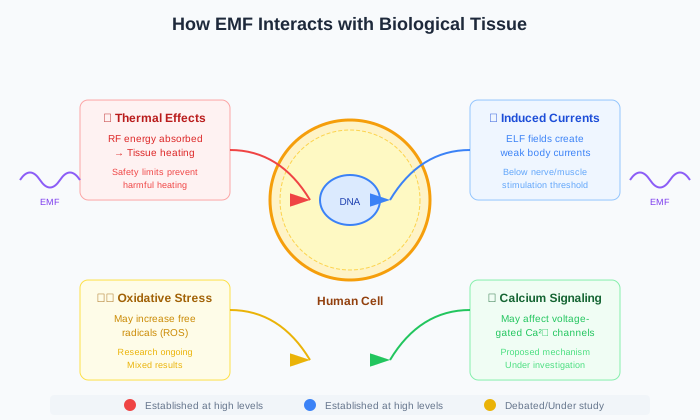
None of these mechanisms are universally accepted. Replication of findings remains inconsistent, and establishing causation from correlation proves difficult in epidemiological studies.
Measuring EMF: Units and Instruments
Electric Field Measurements
Units:
- Volts per meter (V/m)
- Millivolts per meter (mV/m) for weaker fields
Typical levels:
- Natural atmospheric field: ~100 V/m
- Under high-voltage power lines: 1,000-10,000 V/m
- Near appliances: 10-300 V/m
- Background in homes: 1-10 V/m
Magnetic Field Measurements

Units:
- MilliGauss (mG) - common in the US
- MicroTesla (µT) - SI unit, common internationally
- Conversion: 1 µT = 10 mG
Typical levels:
- Earth’s magnetic field: ~500 mG (static)
- Background in homes: 0.1-1 mG (AC)
- Near appliances: 1-50 mG at 1 foot
- Under transmission lines: 10-100+ mG
- ICNIRP guideline: 2,000 mG (for 60 Hz)
RF Field Measurements
Units:
- Power density: microwatts per square centimeter (µW/cm²) or milliwatts per square meter (mW/m²)
- Electric field strength: Volts per meter (V/m)
- SAR: Watts per kilogram (W/kg) for absorbed dose
Typical levels:
- Near cell phone during call: 10-100 µW/cm² at antenna
- Near WiFi router: 0.1-10 µW/cm² at 1 meter
- Near cell tower (ground level): 0.001-1 µW/cm²
- FCC exposure limit: 1,000 µW/cm² (at cell phone frequencies)
Safety Standards and Guidelines
International Guidelines (ICNIRP)
The International Commission on Non-Ionizing Radiation Protection sets guidelines adopted by most countries. ICNIRP limits are designed to prevent established thermal effects and nerve stimulation. However, EMF limits vary dramatically by country — some nations set standards 100x stricter than ICNIRP:
For 60 Hz magnetic fields: 2,000 mG for the general public For RF (cell phone frequencies): SAR limit of 2 W/kg averaged over 10g of tissue
US Standards (FCC)
The Federal Communications Commission regulates RF exposure in the United States: Cell phone SAR limit: 1.6 W/kg averaged over 1g of tissue Environmental limits: Based on frequency, ranging from 0.2-1.0 mW/cm²
Precautionary Guidelines
Some bodies recommend more conservative limits based on research suggesting effects below ICNIRP thresholds:
BioInitiative Report: Recommends 1 mG for prolonged ELF exposure Building Biology guidelines: Categorize levels below 0.2 mG as “no concern” Austrian Medical Association: Recommends total RF exposure below 0.1 µW/cm²
The gap between regulatory limits and precautionary recommendations reflects ongoing scientific uncertainty about low-level, long-term exposure effects.
The Health Research Landscape
What Science Has Established
Ionizing radiation: Proven to cause cancer and genetic damage above certain doses. This is not controversial.
High-level non-ionizing exposure: Thermal effects from RF and nerve stimulation from ELF are well-documented at high exposure levels. Safety limits effectively prevent these acute effects.
Childhood leukemia and power lines: Epidemiological studies consistently show a statistical association between living near power lines and childhood leukemia rates, though no mechanism is confirmed. IARC classifies ELF magnetic fields as “possibly carcinogenic” based on this association.
What Science Debates
Low-level, long-term effects: Whether EMF exposure below safety limits causes health effects over years or decades remains contested. Studies yield conflicting results, and establishing causation is methodologically challenging.
Cell phone and brain cancer: Large studies (Interphone, Danish Cohort) haven’t definitively linked cell phone use to brain tumors, but questions about heavy long-term use persist. The latency period for cancer makes definitive conclusions premature.
Electromagnetic hypersensitivity: Some people report symptoms from EMF exposure, but double-blind provocation studies have failed to demonstrate consistent ability to detect fields. The symptoms are real; the trigger may be psychological rather than electromagnetic.
IARC Classifications
The International Agency for Research on Cancer (part of WHO) classifies agents by cancer evidence:
- RF electromagnetic fields (cell phones): Group 2B - “possibly carcinogenic”
- ELF magnetic fields (power lines): Group 2B - “possibly carcinogenic”
Group 2B means limited evidence of carcinogenicity in humans and less than sufficient evidence in animals. For context, coffee and pickled vegetables are also Group 2B.
EMF in Daily Life: Practical Context
Understanding EMF radiation requires contextualizing exposure levels in everyday life.
Distance Matters Enormously
EMF intensity drops rapidly with distance. For point sources, fields decrease with the inverse square of distance—double the distance, quarter the exposure. This fundamental physics fact means:
- A cell phone held 6 inches from your head exposes you to roughly 1/4 the RF compared to touching your head
- Sitting 3 feet from a WiFi router versus 1 foot reduces exposure by about 90%
- Moving 100 feet from a power line versus directly underneath dramatically reduces magnetic field exposure
Duration Matters
Cumulative exposure over time is what matters for potential long-term effects. Occasional brief exposures differ from continuous chronic exposure. This is why concerns focus on:
- Sleeping near electrical panels or smart meters (8 hours/night)
- Living near cell towers or power lines (24/7 exposure)
- Working in high-EMF environments daily
The Perspective Question
EMF exposure has increased dramatically over the past century, but this occurs alongside:
- Increased lifespan
- Decreased cancer mortality (for many cancers)
- Improved overall health metrics
This doesn’t prove EMF safety, but it provides perspective. If EMF caused dramatic health effects, we might expect clearer population-level signals.
Frequently Asked Questions
What exactly is electromagnetic radiation?
Electromagnetic radiation is energy that propagates through space as synchronized oscillating electric and magnetic fields. It includes everything from radio waves to gamma rays, traveling at the speed of light. Different types are distinguished by their frequency and wavelength, which determine their properties and potential biological effects.
Is all EMF dangerous?
No—visible light is EMF, and it’s essential for life. The relevant question is which frequencies at which intensities might cause harm. Ionizing radiation (X-rays, gamma rays) is definitively dangerous above certain doses. Non-ionizing radiation from everyday technology remains subject to scientific debate at typical exposure levels.
What’s the difference between ionizing and non-ionizing radiation?
Ionizing radiation carries enough energy to remove electrons from atoms, breaking chemical bonds and potentially damaging DNA directly. Non-ionizing radiation lacks this energy. The dividing line falls in the ultraviolet range. Cell phones, WiFi, and power lines produce non-ionizing radiation.
Why do safety limits vary between countries?
Different countries weigh scientific evidence differently and apply varying safety margins. Some base limits purely on preventing established thermal and stimulation effects; others incorporate precautionary factors for uncertain long-term risks. Political, economic, and cultural factors also influence regulatory decisions.
Can I feel EMF radiation?
Most people cannot consciously feel typical environmental EMF exposure. The threshold for perceiving induced currents from magnetic fields is far above normal environmental levels. Some individuals report sensitivity to EMF, though controlled studies haven’t confirmed the ability to detect fields reliably. The symptoms reported may have other explanations.
How do I know how much EMF I’m exposed to?
EMF meters can measure exposure levels in your environment. For ELF fields, a gaussmeter measures magnetic field strength. For RF fields, specialized meters measure power density or field strength. Measurements vary significantly by location, time, and proximity to sources, so multiple readings provide better information than single snapshots.
The Bottom Line
Electromagnetic field radiation is simply energy traveling through space as oscillating electric and magnetic fields—a fundamental physical phenomenon that includes everything from sunlight to radio waves. The modern environment exposes us to man-made EMFs that didn’t exist in human evolutionary history, primarily from power infrastructure and wireless technology. While high-level exposure can cause thermal effects and nerve stimulation, the health implications of low-level, chronic exposure from everyday sources remain scientifically uncertain. Understanding the physics—how fields are generated, how they vary with distance, and how different frequencies interact with tissue—empowers informed decision-making about personal exposure without requiring certainty about contested health claims.
Related Reading
- How to Measure EMF in Your Home
- The Complete Guide to EMF Meters
- EMF and Cancer: A Review of Human and Animal Studies
- How to Reduce EMF Exposure at Home
- Do Power Lines Cause Cancer?
Sources
- World Health Organization. (2023). Electromagnetic fields and public health.
- ICNIRP. (2020). Guidelines for limiting exposure to electromagnetic fields.
- National Institute of Environmental Health Sciences. (2023). Electric and Magnetic Fields.
- IEEE. (2019). IEEE Standard for Safety Levels with Respect to Human Exposure to Electric, Magnetic, and Electromagnetic Fields.
- Bioelectromagnetics Society. Research publications and position statements.
Learn more about EMF levels at specific locations with EMF Radar.