RF Shielding Film for Windows: Cost, Installation, and Effectiveness
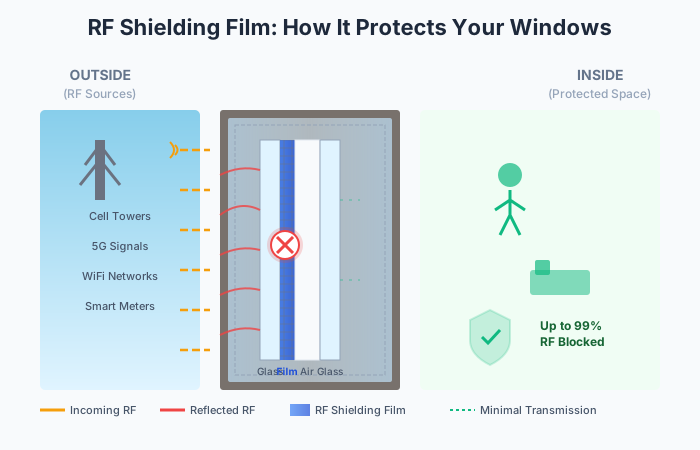
Quick Answer: RF shielding film is a transparent window coating containing metallic particles or mesh that blocks 90-99% of radio frequency radiation from entering your home. It costs $8-15 per square foot for materials or $15-30 installed professionally, and provides 20-50 dB of RF attenuation depending on the product quality.
Key Facts at a Glance
| Question | Answer |
|---|---|
| What does RF shielding film block? | Radio frequencies from 10 MHz to 40 GHz, including cell towers, 5G, Wi-Fi, and radar |
| How effective is it? | 20-50 dB reduction (90-99.999% of RF energy blocked) |
| Material cost | $8-15 per square foot |
| Professional installation | $15-30 per square foot (total) |
| Lifespan | 10-20 years with proper installation |
| Main limitation | Blocks cell signal inside your home as well as outside |
What Is RF Shielding Film?
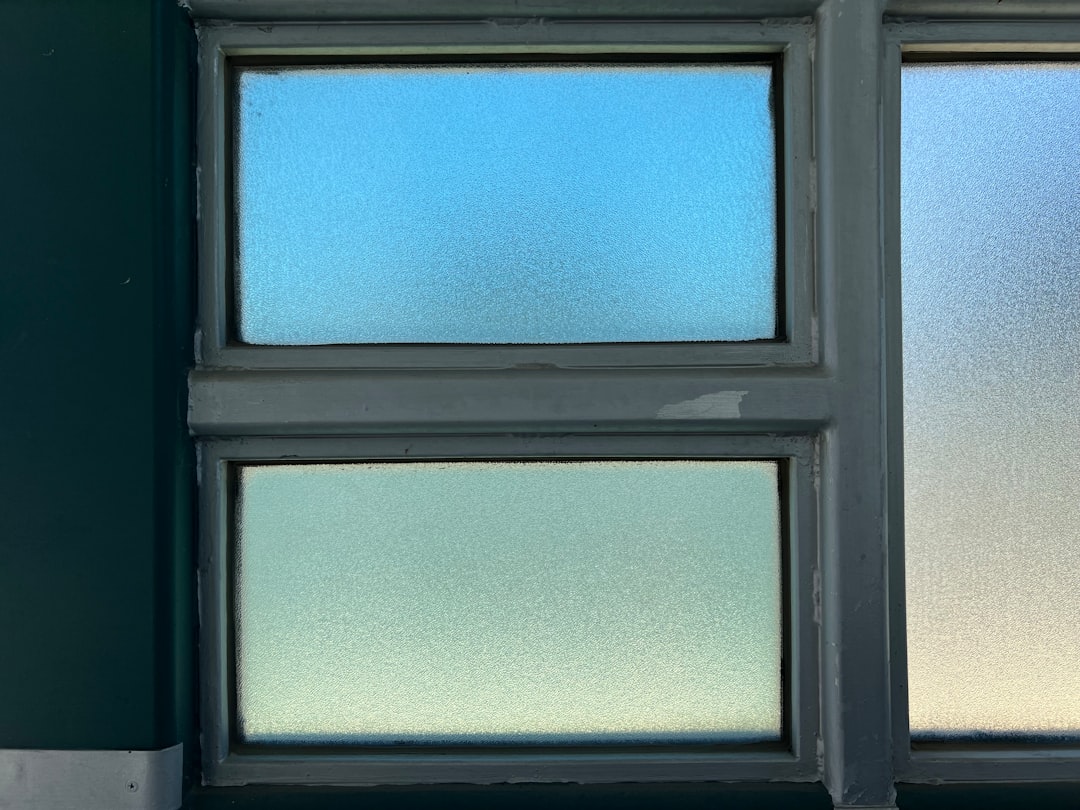
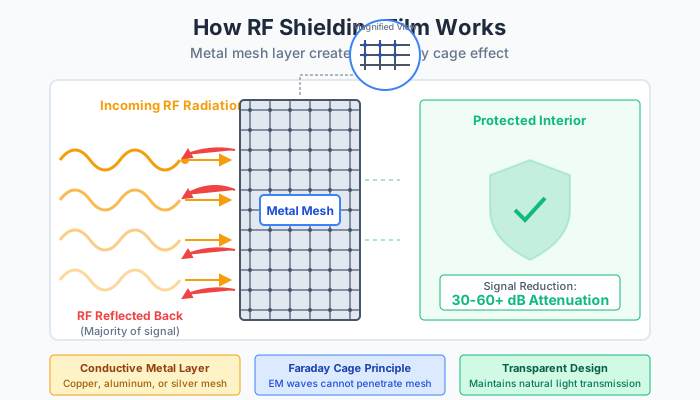
RF shielding film is a specialized window treatment designed to block electromagnetic radiation in the radio frequency spectrum from passing through glass. These films contain embedded metallic elements—typically copper, silver, or aluminum—arranged in microscopic patterns that reflect and absorb RF energy while still allowing visible light to pass through.
The technology originated in military and government applications where secure communications and protection from electronic surveillance were paramount. Over the past decade, consumer-grade RF shielding films have become widely available as concerns about electromagnetic field exposure from cell towers, 5G networks, smart meters, and other wireless infrastructure have grown.
Unlike standard window tinting, which primarily blocks UV rays and reduces heat, RF shielding film specifically targets the electromagnetic spectrum used by wireless communications. Most products appear slightly tinted or have a subtle metallic sheen, though newer formulations offer near-clear options for applications where aesthetics are important.
Check your EMF exposure
See cell towers, power lines, and substations near any US address.
Search Your AddressHow RF Shielding Film Works
RF shielding operates on the principle of electromagnetic interference through conductive materials. When radio frequency waves encounter a conductive surface, three things happen: some energy is reflected, some is absorbed, and some passes through. The goal of shielding film is to maximize reflection and absorption while minimizing transmission.
The Science Behind RF Attenuation
Metal conducts electricity, and when electromagnetic waves hit a conductive surface, they induce electrical currents in that material. These induced currents create their own electromagnetic fields that oppose the incoming waves, effectively reflecting much of the energy back toward its source.
The thickness and conductivity of the metallic layer determine how much RF energy gets blocked. Thicker layers and more conductive metals like silver provide better shielding but may reduce visible light transmission. Manufacturers balance these factors to create films that block significant RF while maintaining acceptable transparency.
Types of RF Shielding Technology
Metal mesh films use a fine grid pattern of conductive material, typically copper or silver. The mesh openings are smaller than the wavelengths being blocked, so RF energy cannot pass through while visible light (with much shorter wavelengths) transmits freely. Mesh-based films typically offer 30-40 dB of attenuation.
Sputter-coated films deposit an ultra-thin layer of metal atoms directly onto polyester film through a vacuum process. These films can achieve 20-35 dB of attenuation with minimal visual impact. They’re often used in commercial buildings where appearance matters.
Hybrid films combine multiple technologies, using both mesh patterns and sputter coating to achieve maximum shielding. Premium hybrid products can deliver 45-50 dB of attenuation, blocking over 99.99% of RF energy.
Effectiveness: Understanding dB Ratings
Decibels (dB) measure the ratio of blocked to transmitted RF energy on a logarithmic scale. Each 10 dB of attenuation represents a 90% reduction in RF power reaching the interior. Understanding these numbers helps you choose the right product for your needs.
| Attenuation Level | RF Reduction | Typical Use Case |
|---|---|---|
| 20 dB | 99% | General EMF sensitivity concerns |
| 30 dB | 99.9% | Living near cell towers |
| 40 dB | 99.99% | High-exposure environments |
| 50 dB | 99.999% | Maximum protection needs |
Real-world effectiveness depends on more than just the film’s rated performance. Gaps around window frames, unsealed edges, and other openings in your home’s envelope can allow RF to bypass the shielded windows entirely. Professional installation with proper edge sealing typically achieves 80-90% of the film’s rated attenuation.
Check your address with EMF Radar to understand the RF exposure levels at your specific location before deciding on a shielding solution.
Frequency-Specific Performance
Most RF shielding films perform differently across the frequency spectrum. A film might block 40 dB at 1 GHz (traditional cell frequencies) but only 25 dB at 28 GHz (millimeter wave 5G). When evaluating products, look for attenuation data across multiple frequencies relevant to your concerns:
- 700 MHz - 2.5 GHz: Traditional cellular, LTE, some 5G
- 2.4 GHz - 5 GHz: Wi-Fi networks
- 24 GHz - 40 GHz: Millimeter wave 5G, radar systems
Premium films maintain consistent performance across this entire range, while budget options may show significant degradation at higher frequencies.
Cost Breakdown: Materials and Installation
RF shielding film represents a significant investment, with total project costs ranging from a few hundred dollars for DIY treatment of a single room to several thousand for whole-home professional installation.
Material Costs
Entry-level RF shielding films start around $8 per square foot and provide 20-25 dB of attenuation. These products work well for general EMF reduction but may not satisfy those seeking maximum protection.
Mid-range options cost $10-12 per square foot and typically deliver 30-35 dB of attenuation. This sweet spot offers good value for most residential applications.
Premium films with 40+ dB ratings cost $12-15 per square foot. These professional-grade products offer the best performance but may be overkill for typical residential situations.
Professional Installation Costs
Labor adds $7-15 per square foot to material costs, bringing total installed prices to $15-30 per square foot. Professional installers ensure proper edge sealing, grounding (when required), and warranty coverage.
A typical home with 200 square feet of window glass faces total costs of:
- DIY with mid-range film: $2,000-2,400
- Professional installation: $3,500-5,000
Some installers charge minimum fees of $500-1,000 for small projects, making professional installation less economical for single-window applications.
Hidden Costs to Consider
Beyond film and installation, factor in these potential expenses:
- Window preparation: Older windows may need cleaning, repair, or seal replacement before film application
- Grounding systems: Some high-performance films require electrical grounding for optimal performance ($100-300)
- Testing equipment: RF meters to verify installation effectiveness ($50-500)
- Complementary shielding: Door seals, outlet covers, and paint for walls to complete the Faraday cage ($200-1,000)
DIY vs Professional Installation
Both approaches can achieve good results, but the right choice depends on your skill level, budget, and performance requirements.
DIY Installation Advantages
Installing RF shielding film yourself saves 40-50% compared to professional installation. The process resembles standard window tinting—clean the glass, cut the film to size, apply with soapy water solution, and squeegee out bubbles.
DIY makes sense when you’re treating a small number of windows, have experience with window film, prioritize cost savings over guaranteed results, or want to experiment before committing to whole-home treatment.
DIY Installation Challenges
RF shielding film is less forgiving than standard window tint. The metallic layers can crease permanently if mishandled, and bubbles are more difficult to work out. Common mistakes include:
- Insufficient cleaning leaving contaminants that create air pockets
- Cutting film too small, leaving unshielded gaps around edges
- Failing to seal edges properly, allowing RF leakage
- Applying in dusty conditions, trapping particles under the film
- Stretching the film during application, distorting the metallic pattern
Most manufacturers void warranties for DIY installation, leaving you responsible if the film fails prematurely.
When to Hire Professionals
Professional installation makes sense for large projects, premium film products, situations requiring performance guarantees, older or irregularly shaped windows, and when you lack DIY experience.
Certified installers have access to commercial-grade tools, understand proper edge sealing techniques, and can test results with professional RF meters. Many offer warranties covering both materials and labor for 5-10 years.
Look for installers with specific RF shielding experience rather than general window tinting companies. Ask for references from EMF shielding projects and verify they test completed installations with appropriate equipment.
Top RF Shielding Film Products
Several manufacturers dominate the residential RF shielding market. Here are the leading options across different price points and performance levels.
Premium Options (40+ dB)
Signal Defense Window Film offers 42 dB of attenuation across 1-10 GHz with excellent optical clarity. At $14 per square foot, it represents the high end of residential products but provides near-commercial-grade performance.
Blocsilver 80 uses a silver mesh pattern to achieve 45 dB of attenuation. The visible mesh pattern may not suit all aesthetics, but performance is exceptional. Priced around $13 per square foot.
Mid-Range Options (30-40 dB)
Y-Shield HSF54 delivers 34 dB of attenuation at $11 per square foot. This German-engineered product offers consistent performance across frequencies and has strong brand recognition in the EMF protection community.
EMF Safety Store Premium Film provides 32 dB of shielding at $10 per square foot. Good availability in the US market and responsive customer support make this a popular choice.
Budget Options (20-30 dB)
Basic RF Window Tint products from various manufacturers offer 20-25 dB of attenuation starting at $8 per square foot. Performance varies significantly between brands, so verify specifications carefully before purchasing.
Product Selection Criteria
When comparing products, evaluate these factors:
- Attenuation rating at relevant frequencies: Ensure testing data covers the frequencies you’re most concerned about
- Visible light transmission (VLT): Higher percentages mean clearer film; most products range from 50-75% VLT
- Warranty terms: Look for at least 10-year coverage against delamination and performance degradation
- Testing certification: Independent laboratory testing from organizations like IEEE or MIL-STD verification adds credibility

Limitations and Considerations
RF shielding film solves one problem while potentially creating others. Understanding these trade-offs helps set realistic expectations.
Cell Signal Inside Your Home
The same shielding that blocks external RF also prevents cellular signals from entering your home. After installation, expect significantly reduced cell reception indoors—often making calls impossible without supplementary solutions.
Workarounds include:
- Wi-Fi calling through your home network
- Femtocells or signal boosters that connect through wired internet
- Designating an unshielded area near windows for cell use
- Using landline phones for calls at home
Wi-Fi and Smart Device Impacts
If your Wi-Fi router sits near shielded windows, signal strength in outdoor areas or detached buildings may decrease. Interior smart devices shouldn’t be affected, but any device communicating with external sources (like smart meters or outdoor cameras) may experience connectivity issues.
Incomplete Protection
Windows represent only one pathway for RF entry. Radio waves also penetrate walls (especially wood-frame construction), enter through doors, and travel along electrical wiring. Shielding windows alone typically reduces whole-room RF exposure by 30-60%, not the 99%+ the film itself might achieve.
Complete protection requires a comprehensive approach: RF shielding paint on walls, door seals, outlet covers, and attention to every potential entry point. For most people, window film alone provides meaningful reduction without the complexity of full-home shielding.
Visual Appearance
All RF shielding films alter window appearance to some degree. Metal mesh films show a visible pattern when viewed up close. Sputter-coated films have a slight mirror effect from outside. Neither looks like untreated glass.
HOA restrictions, historic district requirements, or personal aesthetic preferences may limit your options. Request samples before committing to large purchases.
Alternative RF Shielding Approaches
Window film isn’t the only solution for reducing RF exposure through glass. Consider these alternatives based on your specific situation.
RF Shielding Window Screens
Metal mesh screens install like traditional insect screens but block RF instead of bugs. They offer 30-40 dB of attenuation and can be removed seasonally. Costs run $15-25 per square foot installed, comparable to premium films.
Screens allow windows to open while maintaining shielding—impossible with film. However, they’re more visible than film and may not suit all architectural styles.
RF Blocking Curtains
Fabric curtains woven with metallic threads provide 15-30 dB of shielding when closed. They cost $5-10 per square foot and install like regular curtains.
Curtains offer flexibility—open them for views and light, close them for protection. They’re also renter-friendly since they don’t modify windows permanently. However, they only work when closed and don’t match the attenuation levels of quality film.
Window Replacement
Some specialty windows incorporate RF shielding into the glass itself, using embedded mesh or metallic coatings applied during manufacturing. These provide the cleanest appearance and best durability but cost $300-800 per window.
Window replacement makes sense during renovations or new construction. Retrofitting existing homes with shielded replacement windows rarely justifies the expense compared to film application.
RF Shielding Paint
For walls and ceilings, conductive paint containing carbon or nickel particles provides 20-40 dB of shielding. Combined with window film, paint helps create comprehensive whole-room protection.
Paint costs $50-100 per gallon, covering approximately 100-200 square feet per gallon. It goes on like regular paint but requires grounding for optimal performance.

Planning Your RF Shielding Project
A systematic approach ensures you invest appropriately and achieve meaningful results.
Step 1: Assess Your Exposure
Before purchasing any shielding materials, measure your current RF exposure levels. Consumer RF meters starting around $50 provide basic readings, while professional-grade equipment ($200-500) offers frequency-specific data.
Check your address with EMF Radar for information about nearby cell towers, 5G installations, and other RF sources. This context helps prioritize which windows to treat and what attenuation level to target.
Step 2: Prioritize Windows
Not all windows require the same treatment level. Consider:
- Bedrooms: Highest priority for many people concerned about nighttime exposure
- Home offices: Important for those spending many hours in one location
- Windows facing cell towers: May need higher-attenuation products
- Rarely used rooms: Lower priority, potentially skip entirely
Step 3: Choose Products Appropriately
Match product specifications to your measured exposure and goals. If a window receives 20 μW/m² of RF and you want to reduce it below 1 μW/m², you need at least 13 dB of real-world attenuation (accounting for installation losses).
Over-specifying wastes money; under-specifying leaves you unsatisfied. The measurement-first approach prevents both problems.
Step 4: Decide on Installation Method
For projects under 50 square feet, DIY installation often makes sense if you’re comfortable with the process. Larger projects or situations requiring guaranteed results warrant professional installation.
Get multiple quotes from installers, verifying each has specific RF shielding experience. Ask about their testing protocol and whether they guarantee specific attenuation levels post-installation.
Step 5: Test and Verify
After installation, measure RF levels again to verify results. Compare readings at the same locations and times of day as your baseline measurements. Document the improvement and identify any problem areas requiring additional attention.
Professional installers typically include verification testing. DIY installers should budget for meter rental or purchase to confirm their work achieved the desired results.
Related Reading
- Understanding EMF Exposure Levels
- 5G and Health: What the Research Shows
- Complete Guide to Whole-Home EMF Shielding
- Smart Meter RF Exposure and Shielding Options
Frequently Asked Questions
Does RF shielding film block 5G signals?
RF shielding film blocks 5G signals in both the sub-6 GHz and millimeter wave (mmWave) bands, though effectiveness varies by product. Most films perform well against sub-6 GHz 5G, which operates on frequencies similar to 4G LTE. Millimeter wave 5G (24-40 GHz) requires films specifically tested at these higher frequencies—not all products maintain their rated attenuation above 10 GHz. Check manufacturer specifications for mmWave performance data before purchasing if 5G protection is a primary concern.
Will RF shielding film make my windows look different?
All RF shielding films alter window appearance to some degree, but modern products minimize visual impact. Sputter-coated films typically show a slight tint and subtle reflectivity similar to standard low-E windows. Metal mesh films have a visible pattern when viewed from close range that becomes less noticeable from normal distances. Most products transmit 50-70% of visible light, making interiors somewhat darker. Request samples to evaluate appearance before committing to a product—what’s acceptable varies greatly by personal preference and architectural context.
Can I install RF shielding film on double-pane windows?
RF shielding film installs on the interior surface of any window, including double and triple-pane units. The film doesn’t interfere with the insulating air gap between panes. However, some low-E coatings on modern energy-efficient windows already provide modest RF attenuation (5-15 dB), so you may have partial protection before adding film. The primary concern with multi-pane windows is ensuring proper edge sealing—the larger frame areas on these windows create more potential leakage points requiring careful attention during installation.
How long does RF shielding film last?
Quality RF shielding films last 10-20 years when properly installed and maintained. The metallic layers don’t degrade significantly over time, but adhesive failure, delamination, and surface damage can reduce effectiveness and appearance. Films on south-facing windows in sunny climates may show faster degradation. Most manufacturers offer 10-year warranties against defects and significant performance loss. Extending lifespan requires avoiding abrasive cleaning, keeping windows closed during high winds, and addressing any edge lifting promptly before moisture penetrates the adhesive layer.
Does RF shielding film affect GPS or Bluetooth inside my home?
GPS signals operate at 1.2-1.6 GHz and will be significantly attenuated by RF shielding film, potentially affecting location accuracy for devices near shielded windows. However, most indoor GPS use relies on assisted GPS (A-GPS) that uses cell towers and Wi-Fi for positioning—this functionality depends on your cell signal situation post-shielding. Bluetooth operates at 2.4 GHz and is affected between rooms separated by shielded glass, but devices within the same room communicate directly without passing through windows. Practical impact varies; most users report minimal Bluetooth issues with normal use patterns.
Is RF shielding film effective against smart meter radiation?
RF shielding film on windows facing your smart meter can reduce RF exposure from that source by the film’s rated attenuation—typically 90-99.9% depending on product quality. However, smart meter RF often enters homes through multiple pathways including walls, especially if the meter mounts on an exterior wall. For comprehensive smart meter shielding, you may need to combine window film with RF blocking paint on the adjacent wall section or a dedicated meter shield covering the unit itself. Window film alone provides meaningful but partial protection from smart meter emissions.
The Bottom Line
RF shielding film offers a practical solution for reducing radio frequency exposure through windows, with products ranging from $8-15 per square foot for materials and $15-30 installed professionally. Quality films block 90-99.99% of RF energy across relevant frequency bands, making a measurable difference in overall exposure levels for homes near cell towers, 5G installations, or other significant RF sources.
The technology works through embedded metallic elements that reflect and absorb electromagnetic waves while still transmitting visible light. Installation can be DIY or professional, with the latter recommended for larger projects or when guaranteed performance matters. The main limitation to understand upfront is that the same shielding that blocks external RF also prevents cell signals from entering your home—plan for Wi-Fi calling or other workarounds.
Before investing, measure your actual RF exposure to ensure shielding addresses a real concern at meaningful levels. Check your address with EMF Radar to understand the RF environment at your location. For most residential situations, mid-range products (30-35 dB) professionally installed on priority windows offer the best balance of cost, performance, and practicality. Complete whole-home protection requires additional measures beyond window film, but treating windows alone provides significant reduction for many common exposure scenarios.
Related Reading
- EMF Proof Your Home: Complete Guide — whole-home reduction strategies