Smart Meter EMF Exposure: Facts, Measurements, and Mitigation
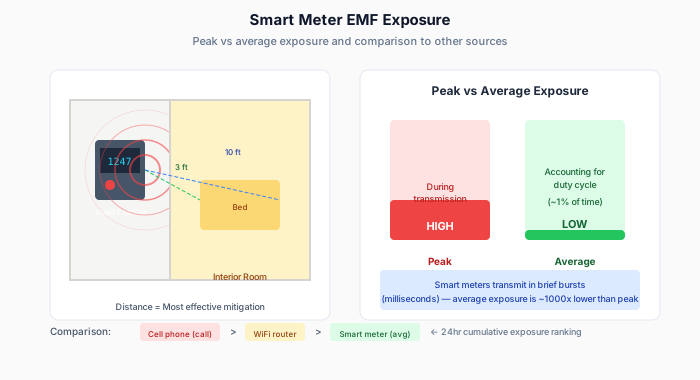
Quick Answer: Smart meters emit RF radiation in brief bursts, with average exposure levels typically 500-1,000 times lower than a cell phone call due to their low duty cycle (transmitting less than 1-2 minutes per day). While peak emissions during transmission can be significant, distance is highly effective mitigation—moving 10 feet from the meter reduces exposure by approximately 90%.
Key Facts at a Glance
| Question | Answer |
|---|---|
| How much RF do smart meters emit? | Peak: 1,000-8,000 µW/m² at 3 feet; Average: 0.1-0.5 µW/m² at 10 feet |
| How often do smart meters transmit? | Brief 2-20 millisecond bursts, totaling under 1-2 minutes per day |
| How does this compare to WiFi? | Average smart meter exposure is roughly 1,000x lower than a WiFi router at the same distance |
| What’s the most effective mitigation? | Distance—doubling your distance reduces exposure by 75% |
| Can I opt out of a smart meter? | Many states offer opt-out programs (see reducing home EMF), typically $10-40/month |
| Should I be more concerned about WiFi or smart meters? | WiFi routers typically contribute more to total RF exposure due to constant transmission |
Smart meters have become one of the most controversial EMF sources in residential settings. They’re on nearly every home, you can’t easily remove them, and utility companies often dismiss health concerns outright.
This guide presents the actual data on smart meter emissions, puts them in context with other RF sources, and provides practical options for those who want to reduce exposure.

What Smart Meters Actually Do
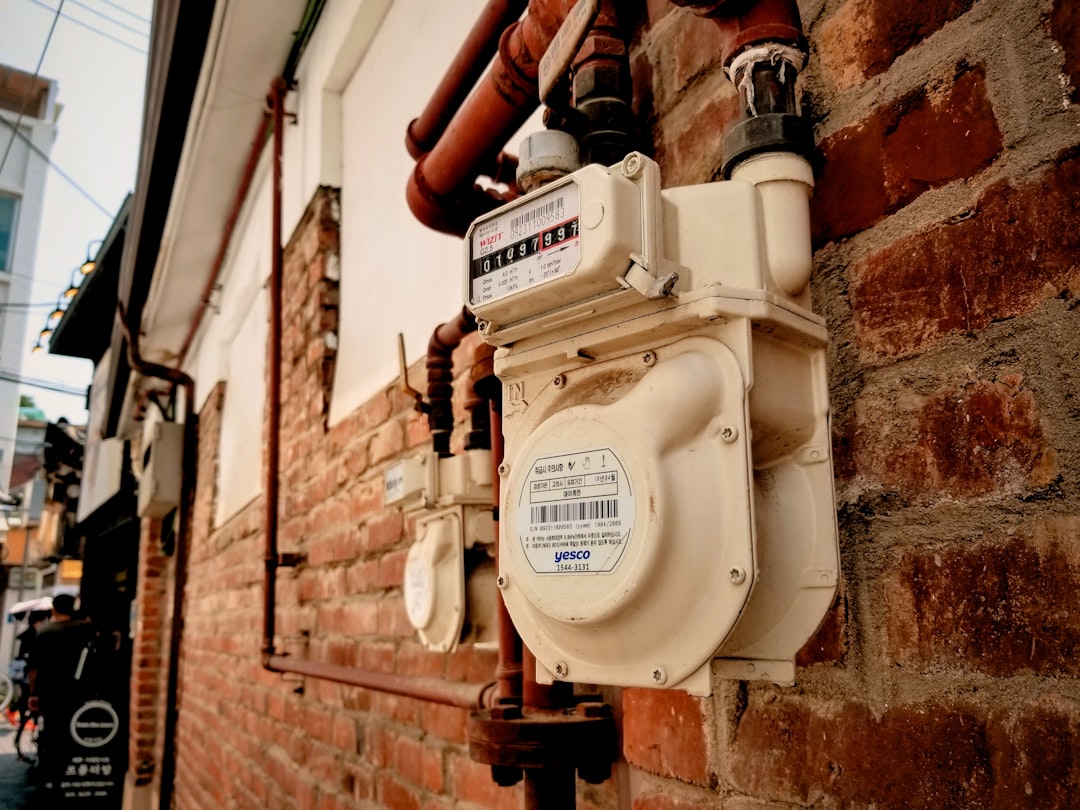
Smart meters are digital utility meters that wirelessly transmit your usage data to the utility company using RF frequencies of 900 MHz or 2.4 GHz. Key characteristics:
Communication Methods:
- RF Mesh Network: Most common. Meters communicate with each other and relay data to collectors. Frequency typically 900 MHz or 2.4 GHz.
- Cellular: Some meters use cell networks directly. Transmission characteristics similar to cell phones.
- Power Line Communication (PLC): Data travels over power lines, minimal RF emissions.
Transmission Pattern: Unlike WiFi routers (always on), smart meters transmit in brief bursts:
- Typical transmission: 2-20 milliseconds per burst
- Frequency: Every few seconds to every few minutes
- Total transmission time: Often under 1-2 minutes per day

However, there’s a catch: in mesh networks, your meter also relays data from neighbors’ meters, potentially increasing transmission frequency.
Check your EMF exposure
See cell towers, power lines, and substations near any US address.
Search Your AddressMeasured Exposure Levels
Independent measurements and peer-reviewed studies consistently show that smart meter RF exposure decreases dramatically with distance. Here’s what the data shows:
At Various Distances (Peak Power During Transmission)
| Distance | Typical Peak Power Density |
|---|---|
| 1 foot | 5,000-50,000 µW/m² |
| 3 feet | 1,000-8,000 µW/m² |
| 6 feet | 200-2,000 µW/m² |
| 10 feet | 50-500 µW/m² |
| 20 feet | 15-100 µW/m² |
Important: These are peak readings during transmission bursts. Average exposure is much lower because meters transmit infrequently.
Average vs. Peak Exposure
According to the California Council on Science and Technology (CCST) report on smart meters:
- Peak power during transmission: comparable to a cell phone call
- Average power (accounting for duty cycle): 1/500th to 1/1000th of a cell phone
- Cumulative daily exposure: Often less than a few minutes of cell phone use
A 2011 study by the Electric Power Research Institute (EPRI) found:
- Average RF exposure from a smart meter at 10 feet: approximately 0.1-0.5 µW/m²
- This is roughly 1,000x lower than a WiFi router at the same distance
Building Biology Perspective
Building Biology guidelines are more conservative than regulatory limits:
| Level (µW/m²) | Assessment |
|---|---|
| < 0.1 | No concern |
| 0.1-10 | Slight concern |
| 10-1,000 | Severe concern |
| > 1,000 | Extreme concern |
By these standards:
- Average smart meter exposure at 10 feet: “slight concern” to “no concern”
- Peak exposure during transmission: “severe” to “extreme concern”
The question becomes: do brief peaks matter, or is cumulative average exposure more relevant? Science doesn’t have a definitive answer.
How Smart Meters Compare to Other Sources
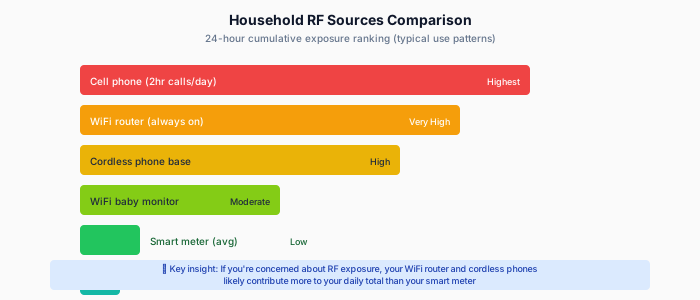
WiFi routers and cordless phones typically contribute more to total household RF exposure than smart meters because they transmit continuously.
| Source | Typical Exposure at 3 feet | Duty Cycle | 24hr Cumulative |
|---|---|---|---|
| Smart meter | 1,000-8,000 µW/m² (peak) | < 1% | Low |
| WiFi router | 200-1,500 µW/m² | 100% (always on) | Very High |
| Cell phone (in use) | 10,000-100,000 µW/m² | Variable | High (if heavy user) |
| Microwave oven | 5,000-50,000 µW/m² | Minutes per day | Low |
| Cordless phone base | 500-3,000 µW/m² | ~100% | High |
Key insight: If you’re concerned about smart meters, your WiFi router and cordless phones likely contribute more to your total RF exposure due to constant transmission.
What Research Says About Health Effects
Current scientific evidence does not show consistent harm from smart meter RF exposure at typical residential levels. Most studies cited are broader RF research applied to smart meter frequencies.
Studies Specific to Smart Meters
Limited research exists on smart meters specifically.
California Council on Science and Technology (2011):
- Concluded smart meters “do not represent a significant health risk”
- Based on comparison to FCC exposure limits and other RF sources
American Academy of Environmental Medicine (2012):
- Called for a moratorium on smart meters
- Cited broader RF research showing potential biological effects
- Disputed by mainstream scientific organizations
Broader RF Research
According to PubMed, the most relevant findings come from general RF exposure research:
WHO 2024 Systematic Review: Found no consistent evidence that RF exposure below guidelines causes cancer, though classified RF as “possibly carcinogenic” based on limited evidence. DOI
Symptom Studies: The 2024 WHO-commissioned meta-analysis found participants could not detect RF exposure at rates better than chance, and self-reported symptoms showed no association with actual exposure. DOI
The Reporting Problem
Many people attribute symptoms to smart meters after installation. While their symptoms are real, controlled studies suggest they may not be caused by RF exposure itself:
- In blinded experiments, symptoms don’t correlate with actual meter transmission
- Awareness of installation correlates with symptom reporting more than RF measurements
- This suggests nocebo effect rather than direct biological response
This doesn’t mean concerns are invalid—it means the relationship is complex.
Practical Mitigation Options
Distance is the most effective way to reduce smart meter RF exposure, reducing exposure by 75% when you double your distance from the meter.
Option 1: Distance (Most Effective)
Smart meter RF follows inverse-square law. Doubling distance reduces exposure by 75%.
Actions:
- Keep beds, desks, and frequently occupied areas away from the meter wall
- If meter is on bedroom wall, move the bed to the opposite side
- Consider which room the meter backs into
Effectiveness: Moving from 3 feet to 10 feet reduces peak exposure by ~90%.
Option 2: Request a Non-Transmitting Meter

Many utilities offer opt-out options:
- Analog meter retention: Available in some states (often with monthly fee)
- Non-transmitting digital meter: Keeps digital recording without wireless
- Manual read schedule: Some utilities will read manually for a fee
Check your state’s policies. California, Maine, Vermont, and others have mandated opt-out programs.
Costs: Typically $10-40/month ongoing fee, sometimes with upfront installation cost.
Option 3: Shielding
RF shielding can reduce exposure from the meter side:
DIY approaches:
- Aluminum foil behind the meter (on your side of the wall): 10-20 dB reduction
- RF-blocking paint on interior wall: 10-30 dB reduction
- Metal mesh screening: Variable effectiveness
Important caveats:
- Shielding can interfere with meter communication, potentially causing utility issues
- External shielding may be illegal (you don’t own the meter)
- Shielding only affects one direction—RF can still enter from other paths
Recommendation: Focus on internal shielding (your side of the wall) rather than modifying the meter itself.
Option 4: Reduce Other RF Sources First
Given that WiFi, cordless phones, and cell phones often contribute more to total exposure:
- Turn off WiFi at night
- Replace cordless phones with corded
- Keep cell phones away from body
- These changes may have more impact than smart meter mitigation
How to Measure Your Actual Exposure
An RF meter allows you to measure your specific smart meter exposure and compare it to other household sources.
What to measure:
- Background RF in your home (meter off, if possible)
- Peak readings near the meter during transmission
- RF levels in rooms adjacent to the meter
Timing matters: You may need to watch for several minutes to catch transmission bursts.
Equipment: See our guide on How to Measure EMF in Your Home for RF meter recommendations.
Using EMF Radar: Our RF score incorporates general RF infrastructure but doesn’t specifically model individual smart meters. On-site measurement is recommended for smart meter concerns.
Should You Be Concerned?
For most people, smart meter exposure represents a small fraction of total household RF, making it a lower priority than constant-transmission sources like WiFi routers.
Arguments for low concern:
- Exposure levels are far below regulatory limits
- Average exposure (accounting for duty cycle) is very low
- No consistent evidence of harm at these levels
- Other sources (WiFi, phones) often contribute more to total exposure
Arguments for precaution:
- Peak exposure during transmission can be significant
- Long-term exposure data is limited
- You have limited control over this source
- Some individuals report sensitivity
- Building Biology standards are more conservative than regulatory limits
Reasonable approach:
- Measure your actual exposure
- Compare to other sources in your home
- Use distance as your primary tool
- Consider opt-out if available and worthwhile
- Don’t let concern about smart meters overshadow larger RF sources you can more easily control
State-by-State Opt-Out Information
Opt-out availability varies by state, with some states like Maine and Vermont mandating free opt-out programs while others charge monthly fees.
- California: Opt-out available, $10/month + $75 setup
- Maine: Free opt-out mandated by law
- Vermont: Free non-transmitting option required
- Texas: Varies by utility, some offer opt-out
- Michigan: Required opt-out program with fees
Check your utility’s website or contact them directly for current options.
The Bottom Line
Smart meters emit RF radiation at levels that are typically much lower than other common household sources when accounting for their brief transmission duty cycle. Average exposure is roughly 1,000 times lower than WiFi routers at the same distance. Distance is the most effective and free mitigation strategy—staying 10 feet or more from your meter reduces exposure by approximately 90%. For those seeking to minimize total household RF, addressing constant-transmission sources like WiFi routers and cordless phones will likely have greater impact than smart meter mitigation alone.
Key takeaways:
- Average exposure is typically lower than WiFi routers
- Brief transmission pulses are high intensity but low duty cycle
- Distance is effective mitigation (10+ feet significantly reduces exposure)
- Opt-out programs exist in many areas
For most people, smart meter exposure represents a small fraction of total household RF. If you’re working to reduce EMF exposure, address constant sources (WiFi, cordless phones) first, then consider smart meter mitigation as a secondary step.
Check your home’s overall RF environment with EMF Radar. To measure your specific smart meter, see our recommended EMF meters — even the $45 Erickhill can detect smart meter pulses. For a full home assessment, find a certified EMF consultant near you.
Frequently Asked Questions
How much radiation does a smart meter emit?
Smart meters emit RF radiation with peak power density of 1,000-8,000 µW/m² at 3 feet during transmission bursts. However, because smart meters only transmit for 1-2 minutes total per day, average exposure is approximately 0.1-0.5 µW/m² at 10 feet—roughly 1,000 times lower than a WiFi router at the same distance.
Are smart meters safe to have on your house?
Current scientific evidence indicates smart meters do not pose a significant health risk at typical residential exposure levels. The California Council on Science and Technology concluded smart meters are safe, and the WHO found no consistent evidence of harm from RF exposure below regulatory guidelines. However, some individuals report sensitivity, and Building Biology guidelines are more conservative than regulatory limits.
How far away should you sleep from a smart meter?
Sleeping at least 10 feet from a smart meter reduces peak exposure by approximately 90% compared to 3 feet. If your smart meter is mounted on a bedroom wall, moving your bed to the opposite side of the room or to a different room entirely is the most effective free mitigation strategy.
Can I opt out of having a smart meter?
Many states offer smart meter opt-out programs, though policies and costs vary. Maine and Vermont mandate free opt-out options, while California charges approximately $10/month plus a $75 setup fee. Contact your utility company directly to learn about opt-out availability in your area.
Is a smart meter worse than WiFi?
Smart meters typically contribute less to total household RF exposure than WiFi routers. While smart meter peak emissions can be higher during brief transmission bursts, WiFi routers transmit continuously (100% duty cycle) compared to smart meters transmitting less than 1% of the time. Cumulative 24-hour exposure from WiFi is generally much higher.
Do smart meter shields work?
RF shielding materials like aluminum foil or RF-blocking paint can reduce smart meter exposure by 10-30 dB when applied to the interior wall behind the meter. However, shielding only blocks RF from one direction and may interfere with meter communication. Distance remains the most effective and problem-free mitigation strategy.
Related Reading
- WiFi Router Placement: Safe Distance and Best Practices
- How to Measure EMF in Your Home
- 5G Towers: Health Risks and What the Research Says
Last updated: January 2026. Smart meter policies and opt-out availability change; verify current options with your utility.