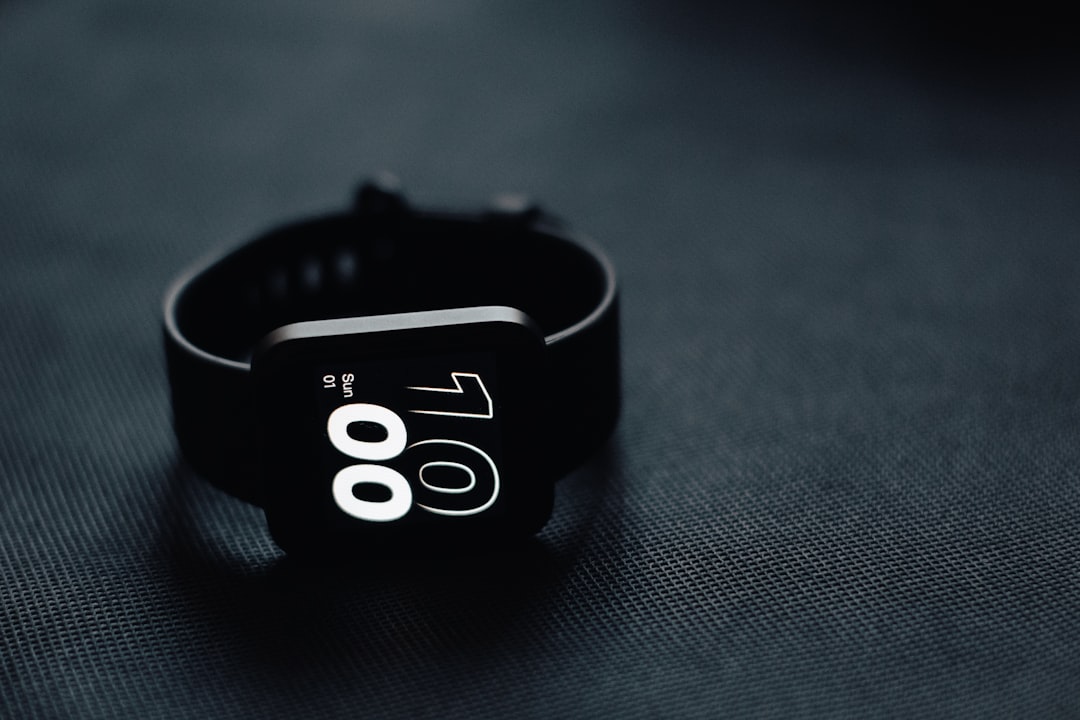
One fact shapes the whole kids-smartwatch comparison: every watch that can actually call you back — Gabb, Gizmo, Fitbit Ace LTE, or an Apple Watch on Family Setup — has a cellular radio on your child’s wrist. That’s not a hidden flaw; it’s the entire point of the product. A watch that lets your kid reach you from the school pickup line has to talk to a cell tower on its own.
So the real question isn’t “does a kids smartwatch emit radiation?” (yes — every connected device does). It’s which radios are running, when, and whether the trade is worth it for your family. Let’s work through it.
The Kids Smartwatch Question Is Really a Radio Question
Kids watches market themselves on what they don’t have — no social media, no browser, no app store. Good for attention and safety — but for EMF, the feature list matters less than the radio list.
Every wearable falls into one of three modes:
| Radio mode | How it connects | What it can do | Relative RF output |
|---|---|---|---|
| Cellular (LTE/5G) | Talks directly to cell towers with its own phone number | Calls, texts, live GPS location anywhere with signal | Highest of the three — cellular radios transmit at far higher power than Bluetooth |
| Bluetooth-only (BLE) | Syncs to a parent’s phone nearby | Activity tracking, chores, games; no calls, no remote location | Very low — BLE transmits at a few milliwatts |
| No radio / airplane mode | Nothing | Tells time, counts steps locally | Effectively zero RF |
In the SAR filings we compared for our Apple Watch and smartwatch EMF guide, cellular models measure roughly double the SAR of their Bluetooth/GPS-only siblings — an LTE radio reaching a tower works much harder than a Bluetooth chip reaching a phone in the next room; that guide has the model-by-model numbers.
Here’s the catch: almost every purpose-built kids watch is cellular. The category exists for the years when your child doesn’t have a phone — so the watch can’t relay through one. The low-EMF Bluetooth option and the “call me after practice” option are, mostly, different products.
What Each Major Kids Watch Actually Runs
Verified against manufacturer specs as of late 2026 — this category changes fast, so double-check before you buy.
Gabb Watch 3 and 3e
Gabb’s watches run on Gabb’s 4G LTE network with their own phone number: calls and texts with up to 100 parent-approved contacts, GPS tracking with safe zones, an SOS button, and Gabb’s own OS — no browser, no social media, no app store. Plans start around $13/month.
Radio reality: LTE plus GPS. “No internet” doesn’t mean no transmitter — the watch stays registered to the cellular network all day so calls and location requests can reach it. (GPS itself is receive-only; the transmission happens when the watch reports its position back over LTE.)
Verizon Gizmo Watch 3 (and Gizmo Watch 4)
The Gizmo line connects directly to Verizon’s network with dual-band LTE and its own number. Parents manage everything through the GizmoHub app: approved contacts only, GPS safe zones, and video calling. Verizon pitches it for ages 3–11, and real-world battery runs about two days.
Radio reality: LTE plus GPS, same standby pattern as the Gabb. The flag here is video calling — sustained two-way transmission for the length of the call, the most radio-intensive thing a kids watch can do. Fine occasionally; worth not making the default way you say hi.
Fitbit Ace LTE (Google)
Google’s entry, launched in June 2024 for ages 7+, takes a fitness-first angle: calls, messaging, and location sharing with parents via the Ace Pass plan, wrapped around activity-based games that unlock with movement.
Radio reality: LTE plus GPS again — the gamified design mostly raises screen-time questions rather than EMF ones.
Apple Watch SE for Kids (Family Setup)
Apple has no “kids model.” You set up a regular Apple Watch — usually the SE, the entry-price model — through Family Setup (now “Apple Watch For Your Kids”), managed from a parent’s iPhone. The key constraint: Family Setup requires a cellular-capable watch, because without an iPhone of their own, the child’s watch must reach the network directly. The current SE 3, released September 2025, carries a 5G-capable radio.
You can skip the cellular plan and lean on known WiFi networks — but then the watch can’t call or text from most of the places you bought it for.
Radio reality: the most capable device here — cellular (LTE/5G), WiFi, Bluetooth, and GPS. For scale, the cellular SE (2nd gen) published a SAR of 0.50 W/kg against the FCC limit of 1.6 — that figure is from the previous generation’s filing; we haven’t checked the SE 3’s, which may differ. It’s also the only watch here designed for sleep tracking — which matters for the habits below.
The Bluetooth-Only Exception: Garmin vívofit jr. 3
If what you actually want is activity tracking rather than communication, the Garmin vívofit jr. 3 is the radio-minimalist option: Bluetooth-only, syncing to a parent’s phone through the Garmin Jr. app. No cellular, no WiFi, no GPS, no calls — and a parent-replaceable battery that lasts up to a year precisely because there’s no power-hungry radio inside. No subscription, either.
The honest trade: dramatically less transmission, and no way for your child to call you. Not a worse Gabb — a different tool.
Check your EMF exposure
See cell towers, power lines, and substations near any US address.
Search Your AddressWhat About SAR Numbers?
Every cellular watch sold in the US carries an FCC ID and a published SAR report, and every one tests under the 1.6 W/kg limit — a condition of sale, not a distinguishing feature. We break down what those numbers do and don’t capture in our guide to SAR ratings explained, but two points matter for kids specifically:
- SAR limits are based on adult tissue models. Children have thinner skin, smaller wrists, and developing tissue. Computational modeling research suggests RF can penetrate proportionally deeper in children — a documented possibility of higher absorption, not demonstrated harm. Our parent’s guide to EMF and children walks through that evidence honestly.
- SAR is a worst-case lab number, not a daily dose. A watch idling in strong signal transmits far below its tested maximum. The variables you control — hours worn, calls made, signal quality — move real exposure more than the difference between one compliant model and another.
The School-Day Reality
School days are where the radio question turns practical.
Watches are getting written into phone bans
The wave of school phone restrictions — laws or statewide policies in more than 30 states as of late 2025 — increasingly names smartwatches explicitly. Utah’s SB 178, signed in March 2025, requires district policies restricting phones and smartwatches during classroom time. Indiana followed with tightened rules covering smartwatches, and New York State’s bell-to-bell ban covers smartwatches and other internet-enabled devices outright. Check your school’s actual policy before you buy — a watch that lives in a backpack cubby from 8 to 3 changes both the value calculation and the exposure math, because off the body, distance does the work.
“School mode” manages attention, not radios
Apple’s Schooltime shows a yellow circle on the watch face, restricts apps, and silences notifications on a parent-set schedule — and the other brands market their own versions of a quieter school-hours watch. These are attention features, and useful ones. But understand what they don’t do: the cellular radio stays on, still checking in with the network, so your calls and location requests still get through. If you want the radios actually off, that’s airplane mode — which also turns off the “find my kid” feature you’re paying for.
Weak signal means harder work
Like phones, watch radios adjust transmit power to conditions: strong signal, low power; weak signal, maximum power. We cover the physics in cell tower vs. phone radiation, and it applies doubly to a small antenna inside a school building. You can’t control the school’s signal — one more reason backpack-during-class is a genuinely good default, required by policy or not.
A Four-Question Decision Framework
Skip the spec sheets and start here.
1. What job are you hiring the watch for? If it’s “call me after practice and show me where they are,” you need cellular — accept it and manage habits. If it’s honestly “activity tracking” or “feeling grown-up,” a Bluetooth-only tracker or a plain digital watch does the job with a fraction of the transmission.
2. How many hours a day will it actually be worn? A watch worn breakfast to dinner is roughly 12 hours of skin contact; the same device, taken off at home and charged overnight outside the bedroom, might be 6. Wear time is the biggest exposure variable you control, and it’s free.
3. What does the school actually allow? If the watch spends class time in a backpack, you’re buying it for commutes, practices, and weekends — which may still be exactly the coverage you want, or may tip you toward waiting a year.
4. What habit are you setting up for the phone years? The watch era is short; the phone era is long. A kid who learns “device off the body when you don’t need it, charging outside the bedroom at night” carries that habit into the years when it matters more.
Habits That Beat Model-Shopping
Whichever watch you land on:
- Off at night, charging outside the bedroom. No child needs wrist-worn sleep tracking. This one habit cuts daily wear time by a third, and it pairs naturally with a WiFi-off-at-night routine for the whole house.
- Keep calls short — and know watch calls are already better than phone calls. They happen on speaker at arm’s length, not pressed against the head: the arrangement health agencies already recommend for kids’ calls.
- Make video calls the occasion, not the default. Highest sustained transmission in the category; save it for grandparents.
- Backpack during class. Policy-compliant and distance-smart.
- Take it off when you’re together. The watch exists for the hours your child is away from you. When you’re in the same house, it has no job to do.
- Skip the anti-radiation watch bands and stickers. A shield that actually blocked the antenna would just make the radio transmit harder — or break the connection you’re paying for.
And keep the whole thing in proportion: measured against a phone held to the head, a tablet on the lap, or hours of close-range screen time, a kids watch used for brief calls and background location is a modest contributor to a child’s total exposure. Their school environment, as we’ve written about, is usually a smaller factor than parents fear, too. The cheap precautions above are worth taking, and nothing in the data calls for alarm.
To see where a smartwatch would rank among your family’s exposure sources, take the 2-minute EMF exposure quiz — it ranks your household’s sources and tells you which changes matter most.
Frequently Asked Questions
Do kids smartwatches emit radiation?
Yes — every kids smartwatch with calling or GPS location (Gabb, Gizmo, Fitbit Ace LTE, Apple Watch on Family Setup) uses a cellular radio, which emits radiofrequency energy whenever it talks to the network. All US models test under the FCC’s 1.6 W/kg SAR limit. Bluetooth-only trackers like the Garmin vívofit jr. 3 emit far less because they have no cellular radio at all.
Is a Gabb Watch or Gizmo Watch safer than an Apple Watch for radiation?
They’re more alike than different: all three are cellular devices tested to the same FCC limit. The Apple Watch adds WiFi and more frequent data activity, while Gabb and Gizmo transmit mainly for calls, texts, and location check-ins. Habits — hours worn, call length, nights off the wrist — change real-world exposure more than the choice among compliant models.
Should my child wear a smartwatch at night?
There’s no good reason to. Children don’t need sleep tracking, and charging the watch overnight outside the bedroom removes about a third of daily wear time at zero cost. It also builds the phone habit — devices charge outside the bedroom — that pays off for years.
Does airplane mode make a kids smartwatch safe at school?
Airplane mode turns off the cellular, Bluetooth, and WiFi radios, reducing RF emissions to effectively zero — but it also disables calling and GPS tracking, which defeats the purpose of the watch. A simpler school-hours arrangement: keep the watch in the backpack during class, which gets you distance while the radios stay available for dismissal time.
Is a Bluetooth-only watch better for kids than a cellular one?
For EMF exposure, clearly — Bluetooth transmits at a few milliwatts versus the much higher power of a cellular radio, and published SAR figures for cellular watch models often run substantially higher than their Bluetooth-only siblings. But a Bluetooth-only tracker can’t call you and has no remote location, so it only “wins” if activity tracking is the job you’re hiring for.
Wondering where your family’s exposure actually comes from? Take the EMF exposure quiz for a room-by-room priority list, or check your address on EMF Radar to see the towers and infrastructure around your home and school.