EMF and Pets: Can Cell Towers and WiFi Affect Your Dog or Cat?
Quick Answer: Animals have been used in EMF research for decades, and some studies show biological responses — particularly in birds (navigation disruption), bees (colony behavior), and rodents (stress markers). For household pets like dogs and cats, the research is limited but suggests they may be more sensitive to environmental stressors than humans in some ways. There’s no proven link between typical household EMF levels and pet illness, but if you’re reducing EMF for your family, including your pets makes sense.
Key Questions
| Question | Answer |
|---|---|
| Are pets more sensitive to EMF than humans? | Possibly — some animals detect electromagnetic fields humans can’t (birds, bees, sharks). Dogs and cats have more sensitive hearing that extends into ultrasonic ranges, and may detect sounds from electronic devices. |
| Can WiFi make my dog sick? | No direct evidence links household WiFi to pet illness. But pets share your environment — if you live near strong RF sources, they’re exposed too. |
| Do cell towers affect wildlife? | Some research shows effects on birds and insects near high-powered transmitters. Effects on domestic pets at typical residential exposure levels haven’t been demonstrated. For effects on plants and trees near towers, see our EMF and plants guide. |
| Should I worry about my pet’s smart collar? | Bluetooth/GPS collars emit very low power. The exposure is minimal, but if you’re concerned, use them only during walks rather than 24/7. |
| What can I do to reduce my pet’s exposure? | The same steps that reduce human exposure — distance from sources, turning off WiFi at night, keeping devices away from pet sleeping areas. |

Why Pets May Be Different from Humans

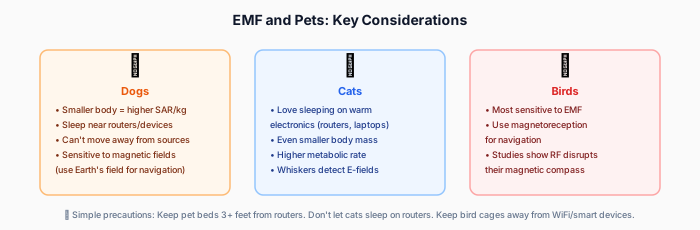
Animals and Electromagnetic Fields
Many animals have electromagnetic senses that humans lack entirely:
Birds: Use Earth’s magnetic field for navigation. Multiple studies have shown that RF pollution can disrupt this magnetic compass. A landmark 2014 study in Nature found that electromagnetic noise in the 2 kHz – 5 MHz range disrupted European robins’ magnetic compass, while a 2018 follow-up narrowed the interference range. This isn’t about health effects per se — it’s about a well-documented biological sensitivity to electromagnetic fields.
Bees: Navigate partly using magnetic field detection. Several studies have examined whether RF from cell towers affects bee colonies:
- A 2010 study in India found that cell phone radiation caused worker bees to stop returning to hives
- A 2011 Swiss study found that active mobile phone handsets near hives caused bees to produce “worker piping” signals associated with swarming
- A 2020 review in Science of the Total Environment found mixed but concerning evidence across 83 studies
- Colony collapse disorder (CCD) is multifactorial — pesticides, parasites, and habitat loss are primary causes — but EMF may be a contributing stressor
Dogs: Have a demonstrated ability to sense Earth’s magnetic field. A 2013 study published in Frontiers in Zoology found that dogs preferentially align their body along the north-south axis when defecating (during calm magnetic field conditions). This suggests dogs have magnetoreception capabilities.
Cats: Less researched for magnetic sensitivity, but cats have been observed responding to electromagnetic changes before earthquakes (which alter local electromagnetic fields). Whether this represents direct EM sensing or detection of other precursors is debated.
Fish: Many species (sharks, rays, eels) have electroreceptive organs that detect extremely weak electric fields. Freshwater and saltwater aquarium fish may potentially be affected by nearby electronic equipment, though this hasn’t been formally studied for household EMF sources.
Physical Differences That Matter
Size: Smaller bodies absorb RF differently. A chihuahua has a very different resonance frequency than a human. Some frequencies may couple more efficiently with a small animal’s body.
Proximity to the ground/floor: Pets spend their time at floor level, where EMF patterns from wiring, underfloor heating, and nearby electronics may differ from head-height human exposure. They also often sleep directly on floors near power cables and outlets.
Time at home: Most pets spend 20+ hours per day inside the home, while many humans spend significant time elsewhere. Total home-environment exposure duration is higher for pets.
Can’t report symptoms: This is the biggest limitation. A dog can’t tell you it has a headache. Changes in behavior (lethargy, anxiety, sleep disruption, appetite changes) are how pet EMF sensitivity would manifest — and these symptoms have dozens of other possible causes.
Check your EMF exposure
See cell towers, power lines, and substations near any US address.
Search Your AddressResearch on EMF and Animals
Laboratory Animal Studies
Most EMF health research uses rodents (mice, rats). Key findings relevant to pet owners:
The NTP Study (2018): The largest-ever study of RF and cancer in animals exposed rats to whole-body RF at 900 MHz for up to 2 years. Male rats showed increased heart schwannomas. While the exposure levels were far above residential levels, this is the most comprehensive animal RF study ever conducted.
Stress markers: Multiple studies have found elevated cortisol and other stress hormones in rodents exposed to RF, even at non-thermal levels:
- A 2016 study in Electromagnetic Biology and Medicine found increased corticosterone (stress hormone) in rats exposed to 2.45 GHz WiFi for 1 hour/day
- A 2019 study found oxidative stress markers in rat brains after 45 days of cell phone frequency exposure
Behavioral changes: Several studies report behavioral effects:
- Increased anxiety-like behavior in rats exposed to 900 MHz (2014, Bioelectromagnetics)
- Reduced memory performance in maze tasks after RF exposure (multiple studies, though results are inconsistent)
- Altered sleep patterns in rodents exposed to WiFi frequencies (2015, Electromagnetic Biology and Medicine)
Important caveats: These studies use controlled lab conditions, specific frequencies, and exposure levels that may not reflect a pet’s home environment. They demonstrate biological plausibility but don’t directly predict what happens to your dog sleeping next to a WiFi router.
Wildlife and Livestock Studies
Cattle near cell towers: A 2012 study in Switzerland found that cows on farms near transmitter stations had slightly higher rates of nuclear cataracts (eye lens opacities) compared to those on farms farther away. A 2015 follow-up found some behavioral differences (reduced rumination time) in cows exposed to higher ambient RF.
Birds and cell towers: A 2014 study published in Nature found that migratory bird populations decreased near cell tower installations, though habitat destruction and collision with towers (physical, not electromagnetic) are also factors.
Insect populations: A 2021 review in Reviews on Environmental Health examined 190 studies on EMF effects on insects. The authors found sufficient evidence to conclude that EMF is a “credible cause for the decline of insect populations” — though emphasizing it acts alongside pesticides, habitat loss, and climate change as one of multiple stressors.
Your Pet’s EMF Environment at Home
Common Household EMF Sources Near Pets
Think about where your pet spends the most time:
Pet bed / sleeping area:
- Is it near a WiFi router? (Many people keep routers on the floor where pets sleep)
- Is it near a power strip or cluster of charging cables?
- Is an electric heating pad used in the pet bed?
- Is there underfloor heating below?
Food and water bowls:
- Near the microwave? (Brief exposure, but multiple times daily)
- Near a smart speaker or hub on the kitchen counter?
- Automated feeders with WiFi connectivity emit constantly
Favorite spots:
- Does your cat sleep on the warm cable box / game console?
- Does your dog lay against the wall where the smart meter is on the other side?
- Is the sunny window spot next to the router?
Wearable tech:
- GPS/Bluetooth pet collars emit continuously when active
- AirTags on collars emit Bluetooth regularly
- Smart pet doors using WiFi/RFID
Quick Assessment
Walk through your home at pet level (literally — get on the floor) and note:
- Where does your pet sleep most?
- What electronic devices are within 3 feet of that spot?
- Are there power cables running under or near the pet bed?
- Is the WiFi router in the same room?
Practical Steps to Reduce Your Pet’s EMF Exposure

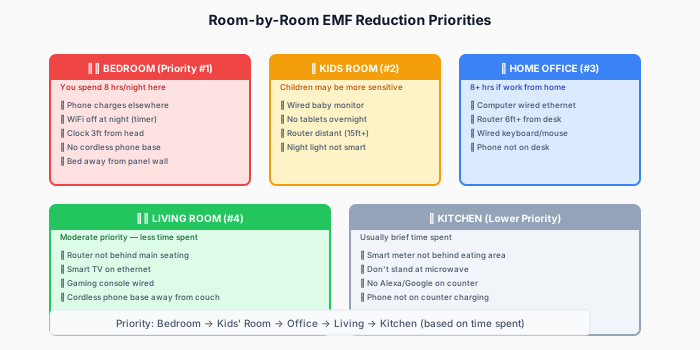
These are easy, free or cheap, and benefit the whole household:
High Priority
1. Move the WiFi router away from pet sleeping areas If your router is on the floor near where your dog beds down, move it to a shelf at human height in a different room. This single change can dramatically reduce your pet’s ambient RF exposure.
2. Turn off WiFi at night Use a $10 timer plug. Your pets (and you) get 8 hours of zero WiFi exposure during sleep, which is when bodies do their repair work.
3. Create a low-EMF sleeping zone Move electronic devices at least 3–6 feet from pet beds. No power strips near sleeping areas. No smart speakers beside the pet bed.
4. Ditch the electric heated pet bed (or use a timer) Electric heating pads generate magnetic fields while active. If your pet needs warmth, use a self-warming pad (reflective material, no electricity), a microwavable heat disc, or limit the heating pad to warming up the bed and unplugging before the pet uses it.
Medium Priority
5. Use GPS/Bluetooth collars only when needed Your dog doesn’t need GPS tracking while sleeping in the house. Put the smart collar on for walks and take it off at home. Same with AirTags — if your cat is indoor-only, they don’t need location tracking 24/7.
6. Hardwire what you can Use ethernet for computers and streaming devices. Every device you switch from WiFi to wired is one less source of ambient RF.
7. Choose non-smart pet products when possible A regular food bowl works as well as a WiFi-connected “smart” feeder for most people. An analog pet door works as well as a WiFi-controlled one.
Lower Priority
8. Consider router placement relative to aquariums If you keep fish, placing the WiFi router directly next to the tank means the RF passes through water (which absorbs RF) and is near animals with potential electromagnetic sensitivity. Move the router at least a few feet away.
9. Be mindful of baby monitors near pet areas DECT-based baby monitors are strong RF emitters. If one is near your pet’s sleeping area, reposition it.
10. If near a cell tower, consider shielding If EMF Radar shows a cell tower within a few hundred feet of your home, and your pet’s sleeping area faces that direction, window film or a shielded pet bed enclosure could reduce exposure. See our bed canopy guide for shielding concepts.
When to Actually Worry (vs. When to Relax)
Reasons for concern:
- Cell tower within 200 feet of your home with line-of-sight to pet areas
- Multiple strong WiFi networks visible (dense apartment building)
- Pet showing unexplained behavioral changes (lethargy, anxiety, appetite loss) after a new cell tower, smart meter, or major electronic addition
- You’ve measured RF levels above 100 µW/m² in pet sleeping areas
Probably fine:
- Standard suburban home with one WiFi router
- Cell towers more than 500 feet away
- Normal electronic device usage
- Pet is healthy with no unexplained symptoms
Definitely see a vet first:
Any health or behavioral changes in your pet should be evaluated by a veterinarian before attributing them to EMF. Changes in appetite, energy, behavior, coat quality, or bathroom habits have many common medical causes (infections, thyroid issues, pain, dental problems, aging) that are treatable.
The Honest Bottom Line
The research on EMF and pets is thin. We know:
- Some animals have electromagnetic senses humans lack
- Lab studies show biological responses to RF in rodents at various power levels
- Wildlife studies suggest EMF is one environmental stressor among many
- No study has specifically examined household EMF and pet health outcomes
What we don’t know:
- Whether typical home WiFi/cell tower exposure affects dogs or cats
- Whether smaller pets are more vulnerable than larger ones
- What long-term chronic exposure at residential levels does to companion animals
- Whether some breeds or species are more sensitive than others
The practical approach: Reduce unnecessary EMF exposure for your pets using the same steps you’d take for your family. It costs nothing to move the router, turn off WiFi at night, and keep electronic devices away from pet sleeping areas. If it helps, great. If the research eventually shows it wasn’t necessary, you’ve lost nothing.
Your pet can’t advocate for themselves. If you’re already thinking about EMF in your home, extending that awareness to your pets is just responsible pet ownership.
Check Your Pet’s Environment
Use EMF Radar to see what cell towers and antennas are near your home. Then walk through at pet level — you might be surprised what’s right next to where they sleep.
Related Reading
- EMF and Human Health: What the Science Actually Says
- Are 5G Towers Dangerous? What the Research Shows (2026)
- What Is a Safe Distance to Live From a Cell Tower?
- Smart Meter EMF Radiation — How Much and How to Reduce It
Want to check your exposure? Search your address on EMF Radar to see cell towers, power lines, and substations nearby. For a professional assessment, find a certified EMF consultant in your area.