Jack Kruse on 5G, EMF, and Mitochondrial Health: What You Need to Know
How Non-Native EMF May Be Disrupting Your Cells — A Plain-Language Explainer


Dr. Jack Kruse — neurosurgeon, mitochondrial health researcher, and one of the most outspoken critics of 5G and artificial electromagnetic fields — has spent over a decade building a framework that connects modern technology to chronic disease through a lens most doctors never learned in medical school. His work sits at the intersection of quantum biology, photobiology, and clinical medicine, and it’s drawn a dedicated following of people who find that his model explains health problems conventional medicine struggles to address.
The concepts he works with are deep, spanning everything from calcium channel biophysics to circadian photoreception to mitochondrial energy dynamics. This article is an attempt to lay out his core framework on nnEMF and 5G in plain terms, with scientific context alongside it, so you can evaluate these ideas for yourself.
The Starting Point: Your Body Is an Electrical System
Before we get to 5G towers and WiFi routers, we need to start with something fundamental. Your body is not just a bag of chemicals reacting in sequence. It’s an electrochemical system — one that depends on precise electrical signals to function properly.
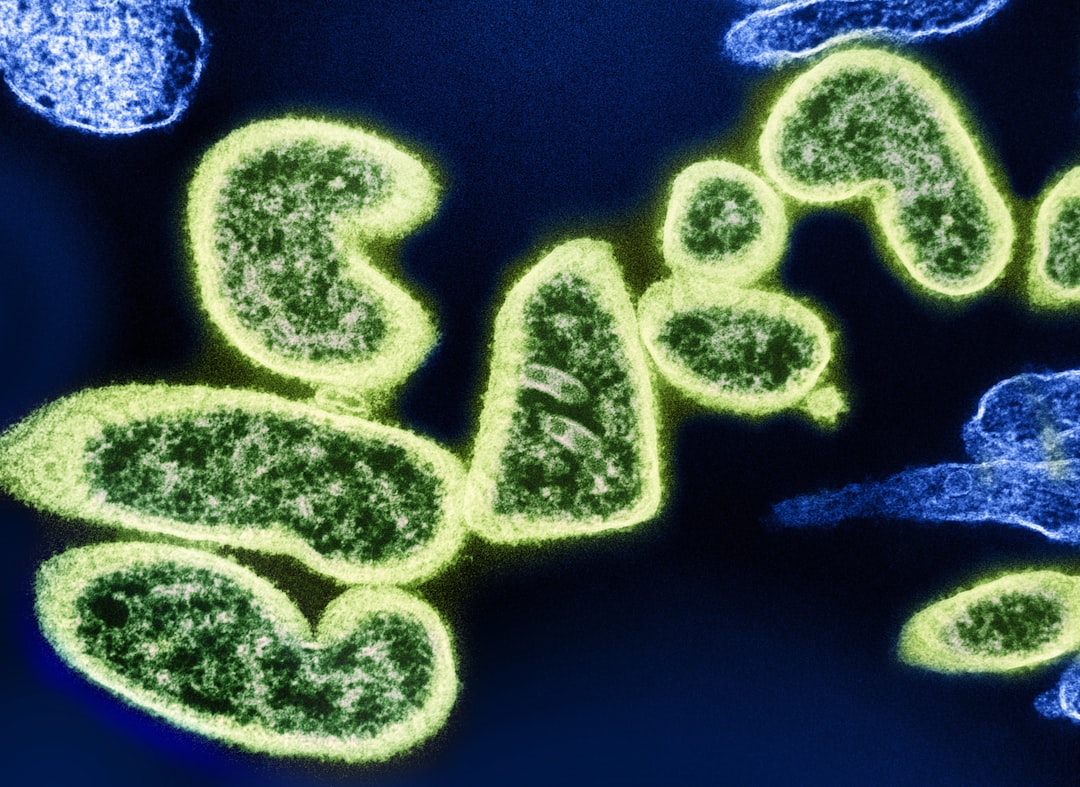
Your heart beats because of electrical impulses. Your brain fires thoughts via electrical signals between neurons. And deep inside nearly every cell, your mitochondria — the organelles responsible for producing energy — operate using an electrical voltage gradient across their inner membrane.
This voltage gradient is called the mitochondrial membrane potential (or “delta psi” in the literature). Think of it as a tiny battery. When that battery is fully charged, your cells produce energy efficiently. When it’s disrupted, things start to go wrong.
Kruse’s central argument is that certain types of electromagnetic radiation — specifically the artificial, man-made kind — can interfere with this electrical system in ways that natural light never does.
Check your EMF exposure
See cell towers, power lines, and substations near any US address.
Search Your AddressNative vs. Non-Native: Not All EMF Is Created Equal
Here’s a distinction Kruse draws constantly, and it’s crucial to understand his entire framework.
Native EMF is the electromagnetic radiation that life on Earth evolved under: sunlight. Sunlight contains a full spectrum — infrared, visible light, and ultraviolet — delivered in a continuous, balanced package. Kruse argues that this full-spectrum signal is what our biology expects and is calibrated to use. Morning sunlight, for example, contains specific wavelengths that trigger processes like melatonin regulation, vitamin D synthesis, and — importantly — the regeneration of light-sensitive receptors in your eyes and skin.
Non-native EMF (nnEMF) is everything we’ve added to the environment since the electrification of society: WiFi, Bluetooth, cell towers, smart meters, and now 5G. These signals operate at specific, narrow frequencies and are pulsed digitally — a pattern that doesn’t exist anywhere in nature.
Kruse’s position: your body can’t “read” these signals the way it reads sunlight. Instead of being processed as useful information, nnEMF acts as noise — and that noise has specific biological consequences.
The Calcium Channel Problem: Where the Disruption Begins
This is where Kruse’s framework intersects with the published research of Dr. Martin Pall, a professor emeritus of biochemistry at Washington State University.
Your cells have structures called voltage-gated calcium channels (VGCCs). These are proteins embedded in cell membranes that open and close in response to changes in electrical voltage — acting like tiny gates that control the flow of calcium ions (Ca2+) into the cell.
Calcium signaling is one of the most fundamental communication systems in your body. It controls muscle contraction, neurotransmitter release, gene expression, immune response, and much more. Because it’s so central, the flow of calcium is tightly regulated. Too little, and things don’t work. Too much, and the cell enters a state of stress.
Pall’s published research (in the Journal of Cellular and Molecular Medicine and elsewhere) proposes that the voltage sensors on VGCCs are extraordinarily sensitive to external electromagnetic fields — roughly 7.2 million times more sensitive than other charged structures in the cell. His hypothesis: even low-intensity, non-thermal EMFs can force these channels open, flooding the cell with calcium it didn’t ask for.
Kruse takes this a step further. He argues that while sunlight interacts with the body’s electrical systems in a “quantized” way — meaning it delivers energy in discrete, biologically recognizable packets that cells can decode and respond to appropriately — nnEMF delivers a non-quantized, continuous signal. The body doesn’t have a protocol for processing this kind of input. It’s the difference between someone speaking to you in a language you understand and someone blasting static at you through a megaphone. Both carry energy, but only one carries information your system can use. The result, in Kruse’s language, is an uncontrolled “leak” of calcium into cells — not the precise, regulated calcium pulses that drive healthy cellular communication, but a chaotic flood that overwhelms the system.
Where mainstream science stands: Pall’s VGCC hypothesis is published in peer-reviewed journals, but it remains debated. Critics note that Pall’s work is largely based on literature review rather than original laboratory experiments, and that claiming VGCCs are the sole mechanism for EMF effects oversimplifies a complex picture. Other researchers acknowledge the plausibility of VGCC involvement but argue more direct experimental validation in human tissue is needed.
The Cascade: From Calcium Flooding to Oxidative Damage

Once you accept (or entertain) the premise that nnEMF causes excess calcium to flood into cells, Kruse maps out a chain reaction. Here’s the simplified version:
Step 1: Calcium overload triggers nitric oxide production. Excess intracellular calcium activates an enzyme called nitric oxide synthase (NOS), which ramps up production of nitric oxide (NO). In small amounts, NO is a beneficial signaling molecule. In excess, it becomes a problem.
Step 2: Nitric oxide reacts with superoxide to form peroxynitrite. Peroxynitrite (ONOO-) is a potent oxidant — a reactive nitrogen species that damages proteins, lipids, and DNA. This is part of what Pall has termed the NO/ONOO- cycle, a self-reinforcing loop of oxidative stress.
Step 3: Iron gets involved — the Fenton reaction. This is where things get particularly destructive. Cells contain iron, and under conditions of oxidative stress, free iron reacts with hydrogen peroxide (a byproduct of normal mitochondrial metabolism) to produce hydroxyl radicals — widely considered the most damaging type of reactive oxygen species (ROS). This iron-catalyzed reaction is called the Fenton reaction, and it’s well-established in mainstream biochemistry.
Published research (including work in Redox Report and Free Radical Biology and Medicine) confirms that hydroxyl radicals produced via the Fenton reaction cause significant damage to mitochondrial DNA, cell membranes, and proteins. The question isn’t whether the Fenton reaction is real — it is. The question is whether nnEMF-driven calcium excess is a meaningful trigger for it in living humans, and that’s where the scientific debate lies.
Step 4: Mitochondrial damage accumulates. Kruse argues this cascade of oxidative damage hits the mitochondria hardest. The inner mitochondrial membrane — where energy production happens — is exquisitely sensitive to oxidative assault. As hydroxyl radicals and peroxynitrite damage the respiratory chain proteins, the mitochondrial membrane potential (that “battery” we mentioned) drops. Energy production falters. The mitochondria swell. The distance between respiratory proteins increases, making the whole system less efficient.
ALAN and Blue Light: The Other Half of the Problem

Before diving into how nnEMF disrupts the body’s light-sensing systems, Kruse emphasizes a point that often gets overlooked in EMF discussions: artificial light at night (ALAN) may be just as damaging as radiofrequency radiation — and the two work together.
Most health conversations focus on diet and exercise. Kruse argues that light hygiene — the quality, timing, and type of light you’re exposed to — is actually the more fundamental variable. Modern humans spend the vast majority of their time indoors, bathed in artificial light that bears little resemblance to the solar spectrum. LED lighting and screens emit a concentrated spike of blue wavelengths (around 460-500 nm) without the balancing red and infrared frequencies that sunlight always delivers alongside it. After dark, this artificial blue light becomes especially problematic.
Why? Because your body contains non-visual photoreceptors — light-sensitive proteins that exist not just in your eyes, but in your skin, your blood vessels, and your organs. The best known of these is melanopsin, a photopigment found in specialized retinal ganglion cells, and more recently discovered in subcutaneous fat and arterial tissue. Melanopsin doesn’t help you see images. It detects blue wavelengths and uses that information to set your circadian clock — the master timing system governing sleep, hormone production, metabolism, and cellular repair.
Here is where Kruse’s framework takes a distinctive turn. He argues that chronic exposure to isolated blue light (from screens and LEDs) and nnEMF disrupts the bond between melanopsin and retinol (vitamin A). In normal operation, retinol is tightly bound to melanopsin and is essential for its function. But when that bond is broken by the wrong light signals, free retinol is released into surrounding tissue. Kruse describes this liberated vitamin A as deeply destructive — it acts as a photosensitizer that damages nearby photoreceptor proteins, B vitamins (particularly riboflavin/B2, which is itself a blue-light-sensitive molecule), and the very structures the cell needs to sense and respond to light properly.
The downstream consequences, in his model, are sweeping. Disrupted melanopsin signaling leads to suppressed melatonin production (melatonin is a powerful mitochondrial antioxidant and DNA repair agent). It impairs the body’s ability to regulate nitric oxide in blood vessels. And critically, it breaks the circadian timing that governs mitophagy — the cellular housekeeping process that identifies and removes damaged mitochondria.
Kruse describes the end result as a “static colony of defective mitochondria” — cells full of damaged, dysfunctional mitochondria that should have been cleared away but weren’t, because the quality-control system (apoptosis and mitophagy) was itself broken by the upstream damage. In his framework, this is the hallmark signature of chronic disease and cancer: not a genetic mutation you inherited, but an acquired failure of mitochondrial quality control, driven by environmental signals your body was never designed to handle.
Where mainstream science stands: The existence and importance of melanopsin-based photoreception is well-established and is now a core topic in chronobiology. The idea that circadian disruption contributes to chronic disease is increasingly accepted in mainstream medicine — the WHO classifies shift work involving circadian disruption as a probable carcinogen. Research has also confirmed that blue light wavelengths can generate reactive oxygen species in retinal tissue. However, Kruse’s specific model — that nnEMF and isolated blue light liberate retinol from melanopsin, creating a cascade that destroys photoreceptors and B vitamins — is his own synthesis. It draws on real biochemistry but connects mechanisms in ways that haven’t been directly validated as a unified pathway in controlled human studies.
What About 5G Specifically?
5G operates across a range of frequencies, some overlapping with existing 4G bands and others pushing into higher millimeter-wave frequencies (above 24 GHz). These higher frequencies don’t penetrate tissue as deeply as lower frequencies, but they interact more intensely with the skin and surface tissues.
Kruse’s concern with 5G is not just the frequency but the density and pulsation pattern. 5G networks require more antennas placed closer together (small cells), meaning greater ambient exposure in urban environments.


The signals are also more heavily pulsed and modulated than previous generations of wireless technology.
His prediction: the 5G rollout will accelerate the very processes described above — calcium channel disruption, oxidative cascading, circadian system damage — leading to increases in metabolic disease, neurodegeneration, autoimmune conditions, and cancer. He is particularly concerned about populations with developing nervous systems. Children and adolescents, whose neurons are not yet fully myelinated (myelin is the protective insulation around nerve fibers), may be especially vulnerable. Kruse has also pointed to the compounding effect: 5G doesn’t replace earlier wireless generations — it layers on top of them, meaning total ambient nnEMF exposure is cumulative and increasing with each new rollout.
In Kruse’s model, 5G’s interaction with surface tissues is particularly relevant because of its effects on sulfation — a biochemical process he considers central to health.
Where mainstream science stands: The WHO states that “no adverse health effect has been causally linked with exposure to wireless technologies, including 5G, at levels below international guidelines.” The ICNIRP updated its RF exposure guidelines in 2020, and regulatory bodies maintain that public 5G exposure remains well within safety limits. However, these limits are primarily designed around thermal effects (tissue heating) and include safety margins. A segment of the scientific community — including organizations like the ICBE-EMF and researchers who authored critiques in Environmental Health — argues that non-thermal biological effects are real, inadequately studied, and not accounted for in current guidelines. A state-of-the-science review found that among 107 experimental studies on RF fields above 6 GHz, reported bioeffects were generally not independently replicated, and the majority of studies had methodological limitations.
The Sulfation Connection: How Sunlight Charges the System
One of the less-discussed but important pillars of Kruse’s framework is sulfation — the process by which sulfate groups (SO4 2-) are attached to proteins, cholesterol, vitamin D, and other molecules in the body. Sulfation makes these molecules more water-soluble and, in Kruse’s model, more electrically functional.
Kruse argues that sunlight — particularly the morning spectrum containing infrared and ultraviolet wavelengths — drives the sulfation of cholesterol and vitamin D in the skin. Sulfated cholesterol and sulfated vitamin D3 have different biological roles than their unsulfated counterparts. Sulfated vitamin D, for example, is produced via a UV- and infrared-dependent process in the skin that is distinct from the calcium-regulating pathway most doctors focus on. Sulfated cholesterol, meanwhile, acts as a non-visual photoreceptor in the skin and brain, and its sulfation status changes seasonally — more electron-rich (HDL-associated) in summer, less so (LDL-associated) in winter.
When sulfation is working properly, blood flows smoothly (sulfated red blood cells carry a stronger negative charge, repelling each other and reducing clotting risk), proteins remain stable and water-soluble, and the body’s detoxification pathways — including the methionine cycle — run efficiently. Sulfate acts as what physicists call a kosmotrope: an order-making molecule that stabilizes the structured water inside cells.
Kruse’s concern with nnEMF and blue light is that they unsulfate the body. By disrupting the precise light-driven chemistry at the skin surface, nnEMF and chronic blue light exposure reduce the sulfation of blood proteins, cholesterol, and vitamin D. The consequences ripple outward: LDL cholesterol rises (because unsulfated cholesterol must be packaged more tightly by the liver), blood becomes more prone to clotting, the methionine cycle slows, and the body loses its ability to efficiently clear heavy metals. In Kruse’s framework, this is why so many people in technology-saturated environments present with heavy metal toxicity, elevated LDL, and disrupted methylation — not because of genetics or diet primarily, but because their sulfation chemistry has been degraded by their light and EMF environment.
Where mainstream science stands: Sulfation is a well-established biochemical process, and the role of sunlight in vitamin D synthesis is beyond dispute. The Hofmeister series and the concept of kosmotropes/chaotropes in protein chemistry are real and well-documented. However, Kruse’s specific claim — that nnEMF and blue light systematically unsulfate blood proteins and that this is a primary driver of conditions like elevated LDL, clotting disorders, and heavy metal accumulation — extends well beyond what has been directly demonstrated in controlled studies. The individual biochemical pathways he references are real; the unified causal chain linking nnEMF to desulfation to metabolic disease remains his own theoretical construction.
What This Might Look Like Clinically
One practical dimension of Kruse’s work is his description of what melanopsin dysfunction and nnEMF exposure look like in lab work and clinical presentation. For readers who work with integrative or functional medicine practitioners, these markers may be worth discussing:
Kruse suggests that patients heavily affected by blue light and nnEMF often present with low vitamin D levels that don’t match their sun exposure or supplementation (because the sulfation pathway is impaired), low B12 without classical signs of malabsorption (because liberated retinol from melanopsin dysfunction degrades B12 endogenously), depressed melatonin and cortisol, elevated homocysteine (reflecting a slowed methionine cycle), and rising retinol-binding protein alongside falling riboflavin (B2) status.
He also argues that many patients diagnosed with “adrenal fatigue,” “leaky gut,” or “MTHFR defects” by functional medicine practitioners are actually presenting with symptoms of melanopsin dysfunction and environmental light mismatch — conditions that no amount of supplementation or dietary intervention will fully resolve if the underlying light and EMF environment isn’t addressed first. His central clinical message: light hygiene must come before diet, supplementation, or detox protocols, because light is what programs the mitochondrial engines that make everything else work.
Where mainstream science stands: Vitamin D deficiency, B12 deficiency, elevated homocysteine, and disrupted cortisol rhythms are all well-recognized clinical findings. The relationships between these markers are actively studied. However, attributing this specific cluster to melanopsin dysfunction caused by nnEMF is Kruse’s clinical framework, not a consensus position. Most conventional and functional medicine practitioners would look to nutritional, genetic, and lifestyle factors first. That said, the growing research on circadian disruption and its metabolic consequences lends some plausibility to the idea that light environment is an underappreciated variable in chronic disease.
Putting It All Together: The Kruse Model in One Page
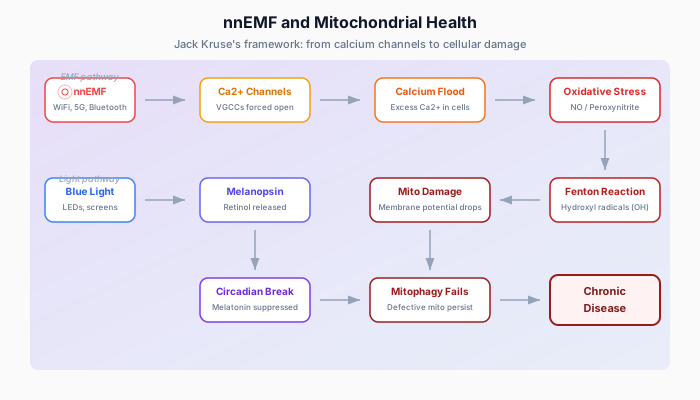
Here’s the full chain, simplified:
-
Your body is an electrical and light-driven system that evolved under the full spectrum of sunlight and Earth’s natural magnetic field.
-
Non-native EMF (WiFi, Bluetooth, cell signals, 5G) and artificial light introduce electromagnetic signals the body cannot process as meaningful biological information.
-
These signals force open voltage-gated calcium channels, flooding cells with excess calcium — a mechanism proposed by Martin Pall and extended by Kruse.
-
Excess calcium triggers a cascade of oxidative damage: nitric oxide overproduction, peroxynitrite formation, and — via the Fenton reaction — a flood of hydroxyl radicals, the most destructive free radicals in the body.
-
The oxidative cascade damages mitochondria, reducing their ability to produce energy and increasing mitochondrial DNA mutations (heteroplasmy).
-
Blue light and nnEMF disrupt melanopsin and other non-visual photoreceptors, liberating free retinol (vitamin A), which damages photoreceptors, degrades B vitamins, scrambles the circadian clock, suppresses melatonin, and impairs mitophagy.
-
Sulfation pathways collapse. Without proper solar input, cholesterol, vitamin D, and blood proteins lose their sulfate groups — degrading blood flow, detoxification, and the methionine cycle.
-
The end result is a buildup of defective mitochondria — cells that can’t produce energy properly, can’t clean up their own damage, and can’t die when they should. In Kruse’s framework, this is the biological substrate of chronic disease.
What to Make of All This

Jack Kruse’s framework is ambitious in scope. It synthesizes real, peer-reviewed science — VGCC activation, Fenton chemistry, circadian photoreception, sulfation biochemistry, mitochondrial dynamics — into a unified theory about how modern technology may be silently degrading human health.
But it’s important to be transparent about its limits. Much of this framework is a synthesis — a connecting of dots across multiple disciplines that hasn’t been validated as a complete, end-to-end mechanism in controlled human studies. Individual pieces are supported by published research; the full chain remains a hypothesis.
For EMF Radar readers, the takeaway isn’t necessarily to panic — it’s to stay informed and think critically. The science of non-thermal EMF effects is still being written. The mainstream institutional position is that current exposure levels are safe, but that position is built on guidelines that a growing number of researchers argue are outdated and incomplete.
Whether Kruse’s specific predictions prove accurate or not, the underlying questions he’s raising — about calcium signaling, mitochondrial health, circadian disruption, and the biological cost of living in an electromagnetically saturated environment — are questions worth asking. And increasingly, they’re questions that mainstream science is beginning to take seriously, even if it hasn’t arrived at the same answers.
If nothing else, Kruse’s framework offers a useful lens: it asks us to think about technology not just in terms of convenience or data speed, but in terms of biological compatibility. Our bodies evolved in a specific electromagnetic environment. We’ve radically altered that environment in a geological blink of an eye. The burden of proof for safety, some would argue, shouldn’t rest solely on those asking the questions.
This article is for educational purposes and does not constitute medical advice. EMF Radar encourages readers to review the cited research and consult qualified health professionals regarding personal health decisions.
Related Articles
- 5G Towers: Health Risks and What the Research Actually Says
- EMF and Sleep: What the Research Actually Shows
- How to Reduce EMF Exposure at Home: A Practical Guide
- Can Grounding Help Near Power Lines or Cell Towers?
Related EMF Radar Articles
- 5G Towers Health Risks: What Does the Science Say? — Our evidence-based review of 5G health research, including the studies Kruse references
- What Is EMF Radiation? — Start here if you want to understand the basics of electromagnetic fields
- EMF and Sleep: What the Research Says — Kruse emphasizes circadian disruption — here’s what controlled studies show
- EMF and Cancer Research — The broader evidence on EMF and cancer risk from human and animal studies
- Electromagnetic Hypersensitivity — Some people report symptoms from EMF exposure — the science behind EHS
- How to Reduce EMF Exposure at Home — Practical steps if you want to lower your daily EMF exposure
- Check your EMF exposure → — Use our free interactive map to see cell towers and wireless infrastructure near your address
Further Reading and Sources
- Jack Kruse’s Blog — Dr. Kruse’s primary platform where he publishes his research synthesis on light, water, magnetism, and mitochondrial health. Start with his EMF and quantum biology series for the ideas discussed in this article.
- Pall, M.L. (2013). “Electromagnetic fields act via activation of voltage-gated calcium channels to produce beneficial or adverse effects.” Journal of Cellular and Molecular Medicine.
- Pall, M.L. (2022). “Low Intensity Electromagnetic Fields Act via Voltage-Gated Calcium Channel (VGCC) Activation to Cause Very Early Onset Alzheimer’s Disease.” Current Alzheimer Research.
- Bhimani et al. (2009). “Hydroxyl radical is produced via the Fenton reaction in submitochondrial particles under oxidative stress.” Redox Report.
- ICBE-EMF (2022). “Scientific evidence invalidates health assumptions underlying the FCC and ICNIRP exposure limit determinations for radiofrequency radiation.” Environmental Health.
- WHO Q&A: “Radiation: 5G mobile networks and health.”
- Simko & Mattsson (2019). “5G mobile networks and health — a state-of-the-science review.”